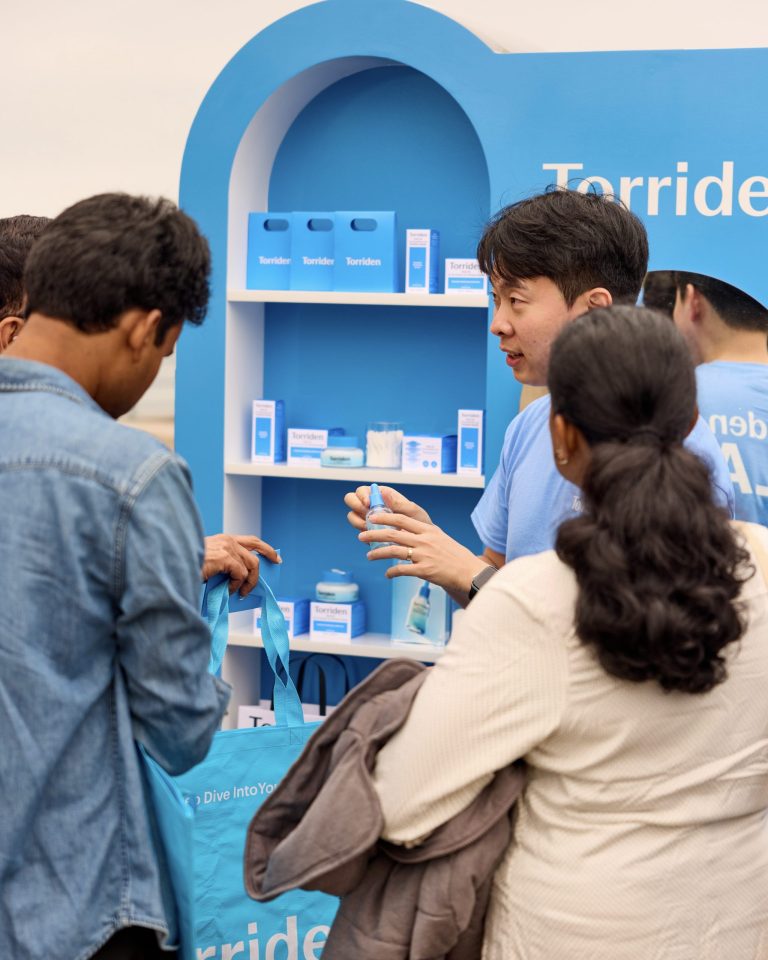
In store sampling is the demo table at the end of the aisle: a brand ambassador, a tray, a product already on the shelf ten feet away. Sidewalk sampling is the same product handed out from a branded vehicle on the street or in the parking lot outside. Both put the product in a shopper’s hands. They differ on who controls the day, what it costs, what it produces and what the retailer gets to say about it. This guide covers how in-store sampling programs work, what in store demo companies charge, where the format falls short, what sidewalk sampling does instead, and the hybrid that uses both to prove sell-through. For the full set of formats, start with product sampling marketing.
Key Takeaways
- In store sampling is a velocity tool: the product is on the shelf, the shopper is in the store, and the only job is to move units today.
- Sidewalk sampling is a launch and reach tool: a bigger crowd, a photo, no retailer fee, and a coupon that still proves sell-through inside.
- The retailer decides what in-store looks like: fixed hours, approved vendors, one store at a time, a fee per demo day.
- The brand decides what sidewalk looks like: the vehicle, the staff, the capture and the content are all yours.
- The hybrid wins launch week: a truck outside, a redemption inside, and the velocity lift shows up in the retailer’s own data.
How In-Store Sampling Works
Most large retailers run their own demo programs or contract them to in-store sampling companies. A brand buys demo days: a trained demonstrator, a cart or table, a set number of hours at a set number of stores. The retailer approves the product, the location in the store, the hours and sometimes the script. Costs run per store day, with product and shipping on top, and the schedule follows the retailer’s calendar.
What you get is proximity. The shopper who tastes the product is standing in the store that sells it, often in the aisle where it lives. For a product already on the shelf, nothing shortens the distance from trial to transaction more.
What you give up is control. Hours are the retailer’s. The demonstrator is often the program’s, not yours. There is one store per demonstrator per day, no photo moment anyone shares, and the data that comes back is the retailer’s to share or not. Shopify’s overview of product sampling is a fair outside summary of in-store sampling as one option among several; the point of this guide is to show where it stops and where the vehicle starts.
What In Store Demo Companies Do
In store demo companies and in-store sampling companies are the vendors retailers approve to run those programs. They recruit and schedule demonstrators, ship the demo kits, handle the store-level paperwork and report hours worked and units sold where the retailer shares it. The good ones are reliable at scale: a hundred store days across a region in a month.
They are not experiential agencies. They do not own vehicles, design builds, file city permits or create a moment anyone photographs. If the brief is “move units in these 40 stores this month,” they are the right call. If the brief is “launch this product in three cities and make people talk about it,” they are not. Our guide to choosing a product sampling company covers how to tell the two apart in a pitch.
Where In-Store Sampling Falls Short
Fixed hours and one store. A demonstrator covers one location for a shift. Reaching ten stores means ten demonstrators or ten days.
No photo. A folding table in an aisle is not content. The launch moment that travels on social does not happen inside the store.
The retailer’s rules. Script, placement, hours, which products can be sampled together, what the demonstrator can say about the competitor on the next shelf. All the retailer’s call.
The fee. Demo days are a line item the retailer or its program collects. On a launch with many stores it adds up quickly.
Data you do not own. Units sold during the demo window are usually visible to the retailer and sometimes to you. Contacts, sign-ups and the shopper’s phone number are not part of the format.
The shopper is already in the store. In-store sampling converts people who walked in. It does not bring anyone to the door. HubSpot’s guide to sampling marketing makes the broader point that sampling works best when it reaches people at the moment of decision; in-store reaches the ones who already decided to shop there.
What Sidewalk Sampling Does Instead
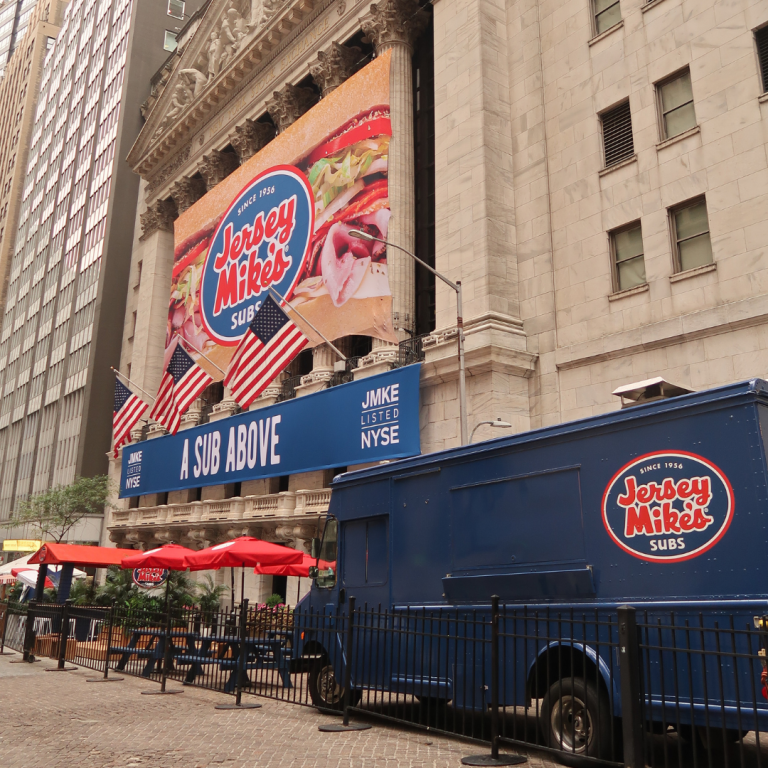
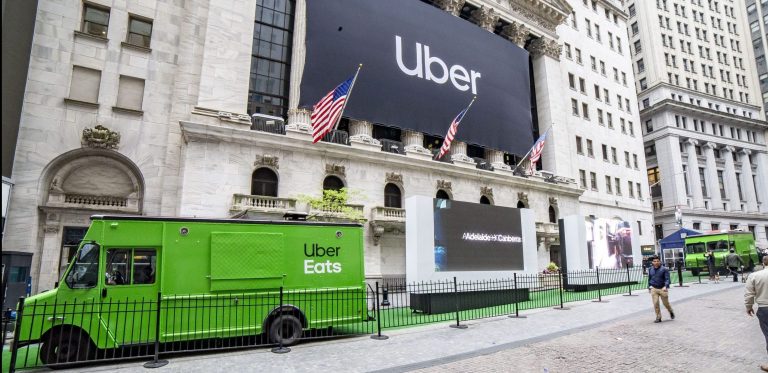
Sidewalk sampling puts the same product on a branded vehicle outside: on the public sidewalk with a city permit, or in the retailer’s parking lot with the property owner’s agreement. The crowd is everyone passing, not just the shoppers inside. The vehicle is the signage, visible from across the street. The staff are yours, trained on the product, the permit conditions and the capture script. The hours are yours. The photo exists.
The economics change too. There is no demo-day fee. The permit or the property agreement replaces it. One vehicle covers a location all day and moves to the next one tomorrow, and the same build runs in another city next week. For a launch, a truck outside three flagship stores in a week usually costs less than demo days across the forty stores it feeds.
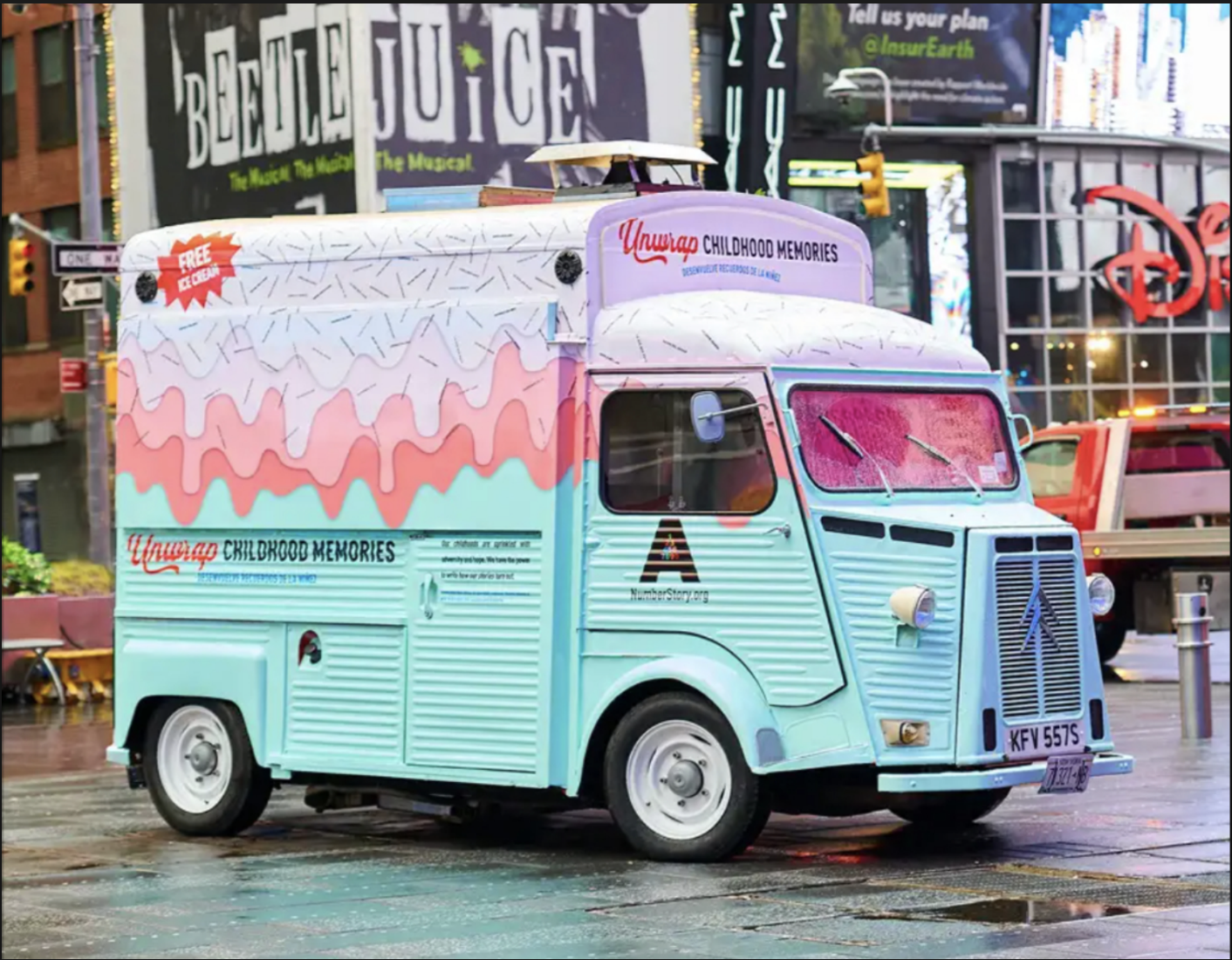
And the format produces data the brand keeps: units distributed, QR scans, SMS opt-ins, and a redemption code that only exists at the truck. Our in-store sampling vs. sidewalk comparison on the service page lists the vehicles that fit a retailer lot: a food cart for a pedestrian entrance, a Metro Mite or Chevy P10 for a suburban lot, a glass truck when the launch needs to be seen from the road.
In-Store vs. Sidewalk Sampling Compared
| In-store sampling | Sidewalk sampling |
|---|
| Where | Inside the retailer, in the aisle | Public sidewalk or retailer parking lot |
| Who controls the day | The retailer or its demo program | The brand and its agency |
| Who samples | Shoppers already in the store | Everyone passing, plus shoppers |
| Staff | Program demonstrators | Brand-trained ambassadors |
| Hours | Retailer’s | Permit hours, usually longer |
| Cost basis | Per store day plus fee | Per activation day, vehicle and permit |
| Photo and content | None | The vehicle is the content |
| Data you keep | Units sold if shared | Units, contacts, redemptions |
| Best for | Velocity on a shelved product | Launch, reach, multi-city, trial at volume |
| Lead time | Retailer calendar, often weeks | Six to eight weeks for a city permit, two to three on private property |
The Hybrid That Proves Sell-Through
The strongest launch-week play uses both. A branded truck parks in the retailer’s lot or on the sidewalk outside the flagship for the first three days. Every sample goes out with a coupon or a QR code redeemable inside that store, that week. The store runs its own demo table in the aisle if it wants to.
What the brand gets is a number the buyer cares about: redemption rate and velocity lift in the activated stores versus a control set over the following four weeks, visible in the retailer’s own data. That number is the sell-in argument for the next end cap, the next region and the next retailer. It is also the reason sidewalk sampling outside a store is not competing with the retailer; it is feeding it.
The mechanics matter. The coupon has to be store-specific so the lift is attributable. The truck has to be within sight of the door. The staff script has to end with “inside, today.” And the retailer has to know it is happening, because a surprised store manager is a cancelled activation. More on the retail side of this in retail marketing strategy and the mobile retail store guide.
When to Use Each
Use in-store sampling when the product is already on the shelf, the goal is velocity in specific stores, the retailer’s demo program is available and affordable, and you do not need content or contacts from the day.
Use sidewalk sampling when you are launching, entering a market, need a crowd larger than the store’s foot traffic, want the photo, need the data, or are running more than one location on one build.
Use both when it is launch week at a retailer that matters. Truck outside, coupon inside, velocity lift in the retailer’s data.
Skip both when the product cannot be sampled in a form that resembles how it is used, the permit cannot be had in time, or the margin cannot absorb the giveaway. Sample a smaller unit or wait for the window.
What It Costs
In-store demo days are priced by the retailer or its program, per store day, with product and shipping on top. Sidewalk sampling from an owned vehicle starts around $40,000 to $75,000 for a cart or tuk tuk day in one US market, $70,000 to $150,000 for a food truck with refrigeration, and $100,000 to $200,000 for a glass truck with a custom interior. The parking lot format usually sits at the lower end because the property agreement replaces the city permit and the footprint is simpler. For 25 formats with costs, see product sampling ideas.
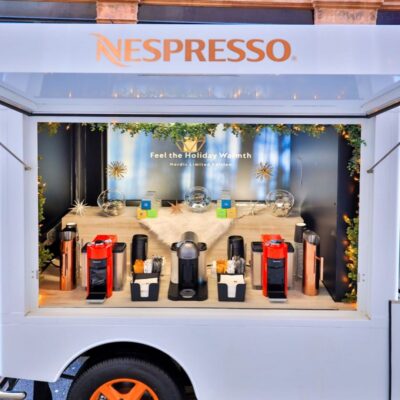
Case Study: Nespresso Mobile Showrooms