Beauty sampling is the format beauty brands use to get a product onto skin before it goes into a cart, and for the K-beauty brands entering the US it has become the launch format: a branded vehicle, a multi-city route, a sample in hand and a retailer to walk into. This guide is written for brand and marketing teams, not for consumers looking for free samples. It covers deluxe minis versus sachets, shade matching and skin consultations on a vehicle, the hygiene rules for cosmetic sampling, fragrance formats from scent bars to blotter-plus-mini, retailer tie-ins with Sephora and Ulta, and why the multi-city tour has become the way K-beauty brands launch in the US. For the broader picture, start with product sampling marketing and our guide to beauty marketing strategies.
Key Takeaways
- Deluxe minis convert; sachets get thrown away. A sealed mini that lasts a week turns a sample into a habit and a habit into a purchase.
- The consultation is the activation. Shade matching, a skin reading or a two-minute routine on a vehicle is what people queue for; the sample is what they leave with.
- Hygiene is a rule set, not a vibe: single-use applicators, no double-dipping, sealed testers, sanitizer in sight, and nothing applied to broken skin.
- Fragrance samples need a second step. A blotter alone is forgotten by the next corner; a blotter plus a mini vial with the name on it is how a scent gets bought.
- For K-beauty, the US launch is a tour: one build, several cities, a retailer partner in each, and sign-ups and sell-through read per city.
Deluxe Minis vs Sachets
The sample unit decides whether beauty sampling produces a customer or litter.
A sachet (a foil single-use packet) is cheap, light and forgettable. It gets used once, usually not that day, and the person has no package to find the product again. Sachets have a place: mass volume at a festival, a bag stuffer, a second product bundled with a mini.
A deluxe mini (a sealed travel-size unit with the brand on it, three to ten days of use) is the unit that converts. It lives on a counter at home, gets used until it runs out, and runs out right when the person is deciding whether to buy the full size. It costs more per unit and it is worth it; brands that have tested both report multiples of the sachet conversion rate, which is why Sephora and Ulta built their sampling programs around minis.
The hand-off matters as much as the unit. A mini handed over with the full-size product visible, a one-line routine (“morning, after cleanser, before SPF”) and a reason to buy (a QR to the retailer, a launch code) is sampling. A mini dropped in a tote is a giveaway.
Shade Matching and Skin Consultations on a Vehicle
The reason a beauty sampling activation outperforms a beauty sampling table is the consultation. A shade match for a cushion foundation, a two-minute skin reading, a cleanser-to-SPF routine demonstrated on the back of a hand: these are the things people queue for, and the queue is the activation.
On a vehicle, that means a counter at the right height, a mirror with daylight-balanced lighting, a seat if the consultation runs more than three minutes, a sink or a handwashing station, and a crew with product training deep enough to answer the second question. Beauty-trained brand ambassadors, or licensed estheticians where the state requires them for anything applied to the face, are a line in the budget that pays for itself in dwell time. See our brand ambassador agency guide for staffing.
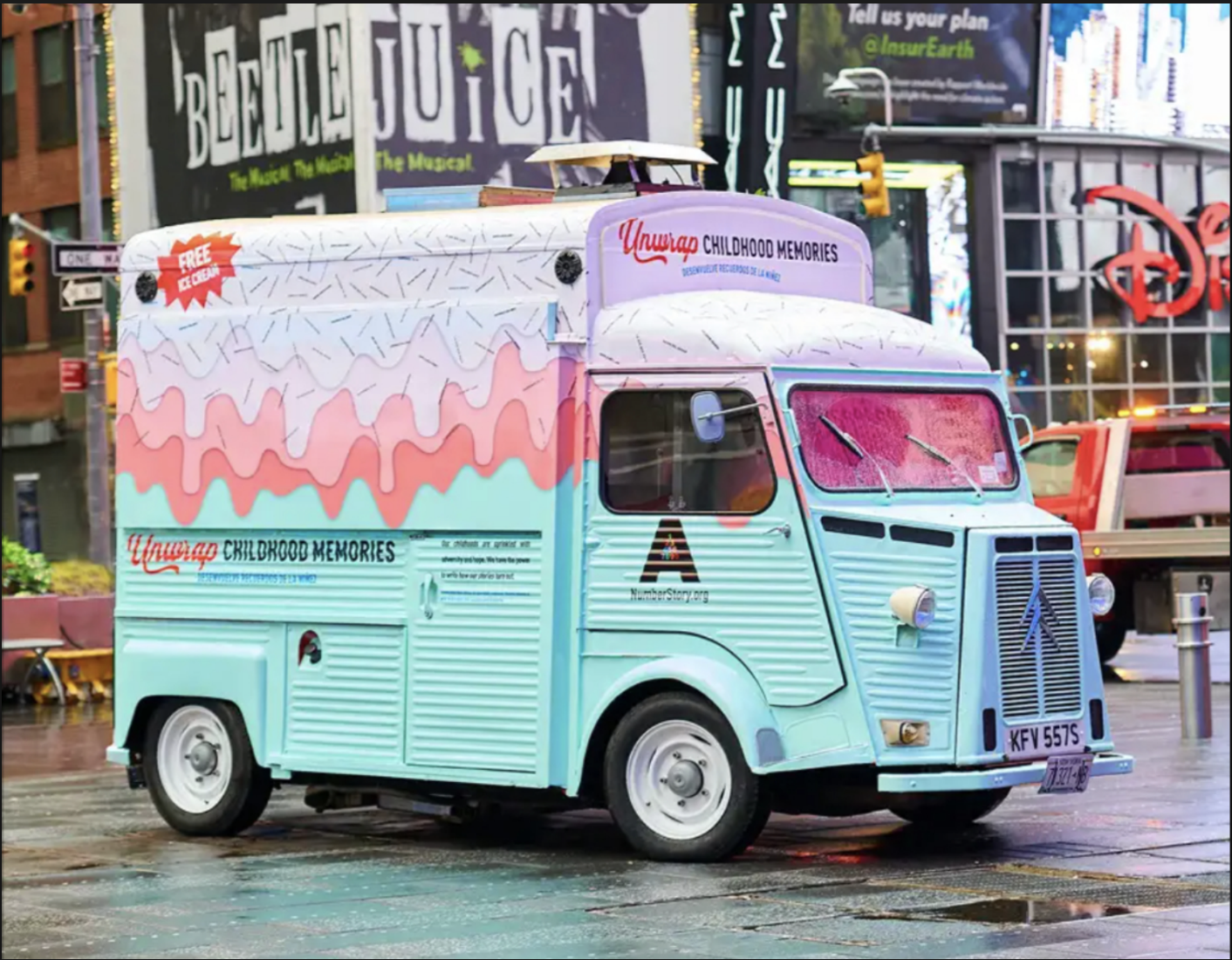
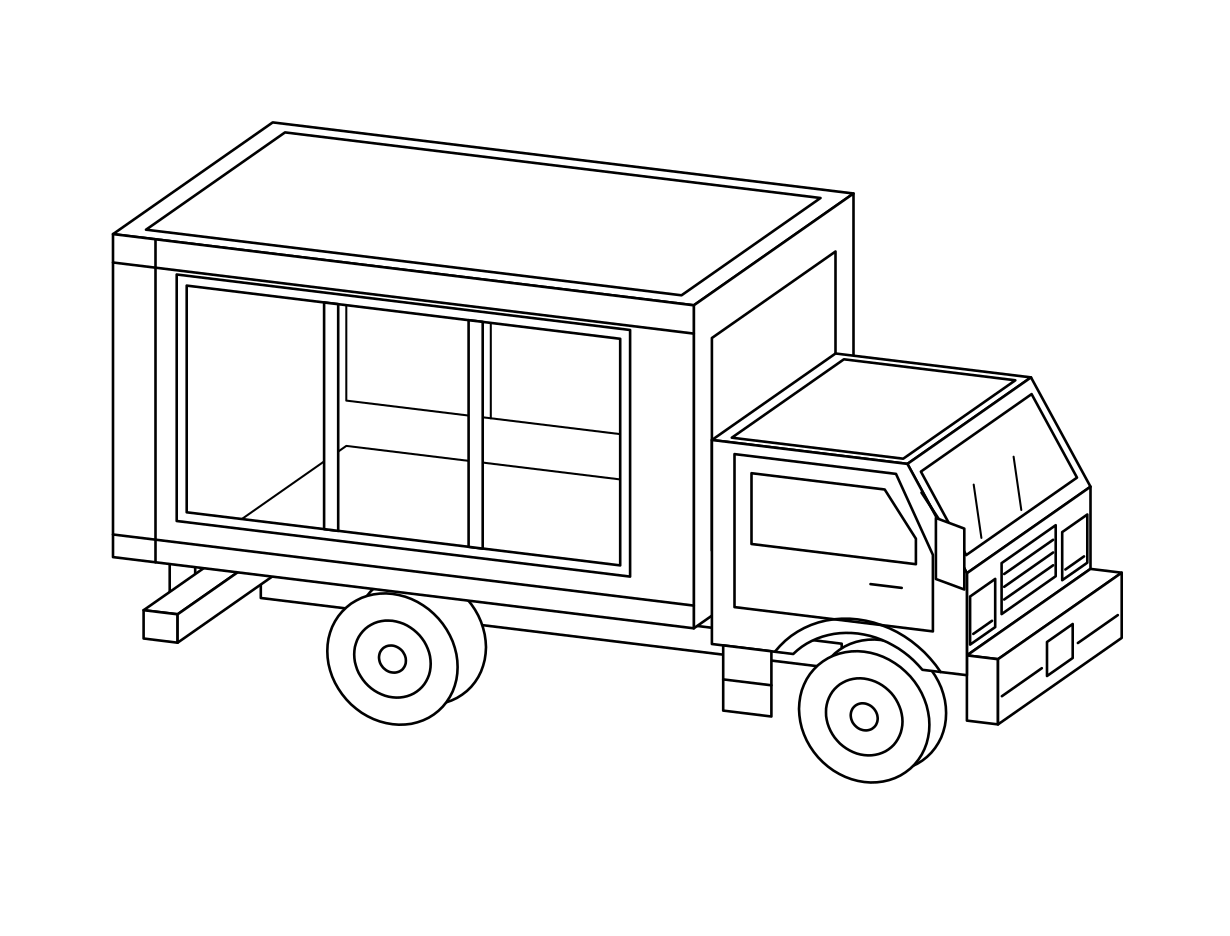
Vehicle fit by format: a food cart for a skincare sampling counter on a pedestrian street, a Citroen for a compact two-station setup, a glass truck for a full shade bar that needs to be seen from across the street. The experiential vehicles page lists footprints.
Hygiene Rules for Cosmetic Sampling
Cosmetic sampling is regulated less formally than food, but the rules are real, retailers enforce them, and a hygiene complaint on social can end an activation. The standard that holds up:
- Single-use applicators for anything that touches skin: spatulas, wands, sponges, cotton. Nothing goes back into a jar.
- Sealed testers, with pump or dropper formats preferred over open pots.
- No double-dipping, no sharing, and testers wiped and sanitized between uses where they are reused at all.
- Sanitizer visible on the counter and used in front of the person.
- Nothing on broken skin, nothing in or near the eye unless the product is designed for it and the crew is trained for it.
- Patch test guidance for actives (retinoids, acids) and a printed ingredient list for every product sampled.
- Fragrance-free zones where the activation also samples scent, so the skincare consultation is not done in a cloud of perfume.
Retailer partners will usually supply their own hygiene standard for a co-branded activation; adopt it as the floor.
Fragrance is the hardest category to sample well, because the product is invisible, the decision takes time and a blotter is forgotten by the next corner. Three formats work.
The scent bar. Three to six fragrances on a counter with blotters, a trained host who can describe the notes in plain language, and a mini vial of the one the person liked, with the name on it. The vial is the step most scent sampling skips and the one that produces the purchase.
The gifting moment. A branded vehicle built as a gift shop, with engraving, wrapping or personalization of the mini or the full size. It turns a sample into a keepsake and photographs well; it is the holiday format.
The discovery tour. A vehicle that travels retail districts and campuses with the scent bar inside, timed to the fragrance calendar: August to September for holiday and the fall launches, January to March for spring. Coach Cherry Parfum ran this way across four cities.
Fragrance sampling has consumer intent online (people searching for free samples), which is why this post is explicit about the brand side. The business case is simple: a blotter costs cents, a mini costs a dollar or two, and a full-size purchase is $80 to $200.
Retailer Tie-Ins With Sephora and Ulta
For most beauty brands in the US, the retailer is the destination and the activation is the route. A vehicle outside or near a Sephora or Ulta, with a store-specific offer, puts the sample in hand and the person in the store the same hour.
How it works in practice: the brand coordinates with the retailer’s field or events team, the vehicle parks on the public street with a city permit or in the center’s lot with the property owner’s agreement, the sample goes out with a QR or code redeemable in that store, and the retailer’s sell-through in the activated stores is compared to a control set over the following weeks. For a brand new to the retailer, that lift is the conversation starter for more doors. For a brand already in, it is the argument for the gondola end.
Two rules. The retailer should know and ideally be in the room; a surprised store manager is a cancelled activation. And the offer has to be store-specific so the lift is attributable.
Why K-Beauty Brands Launch in the US With a Tour
K-beauty brands entering the US face a specific problem: awareness is high among people who already follow K-beauty and near zero everywhere else, the product is often built on textures and routines that need to be felt to be understood, and the retailer wants proof before it commits more doors. A multi-city sampling tour answers all three.
One branded build, designed and rendered once, travels four to twelve cities over a few weeks. In each city it parks near the retail partner, samples the hero product with a consultation, captures sign-ups and hands over a store-specific offer. The same crew runs every stop, so the numbers compare city to city. The brand comes back with a national launch moment, a per-city read on where demand sits, and the sell-through data the retailer asked for.
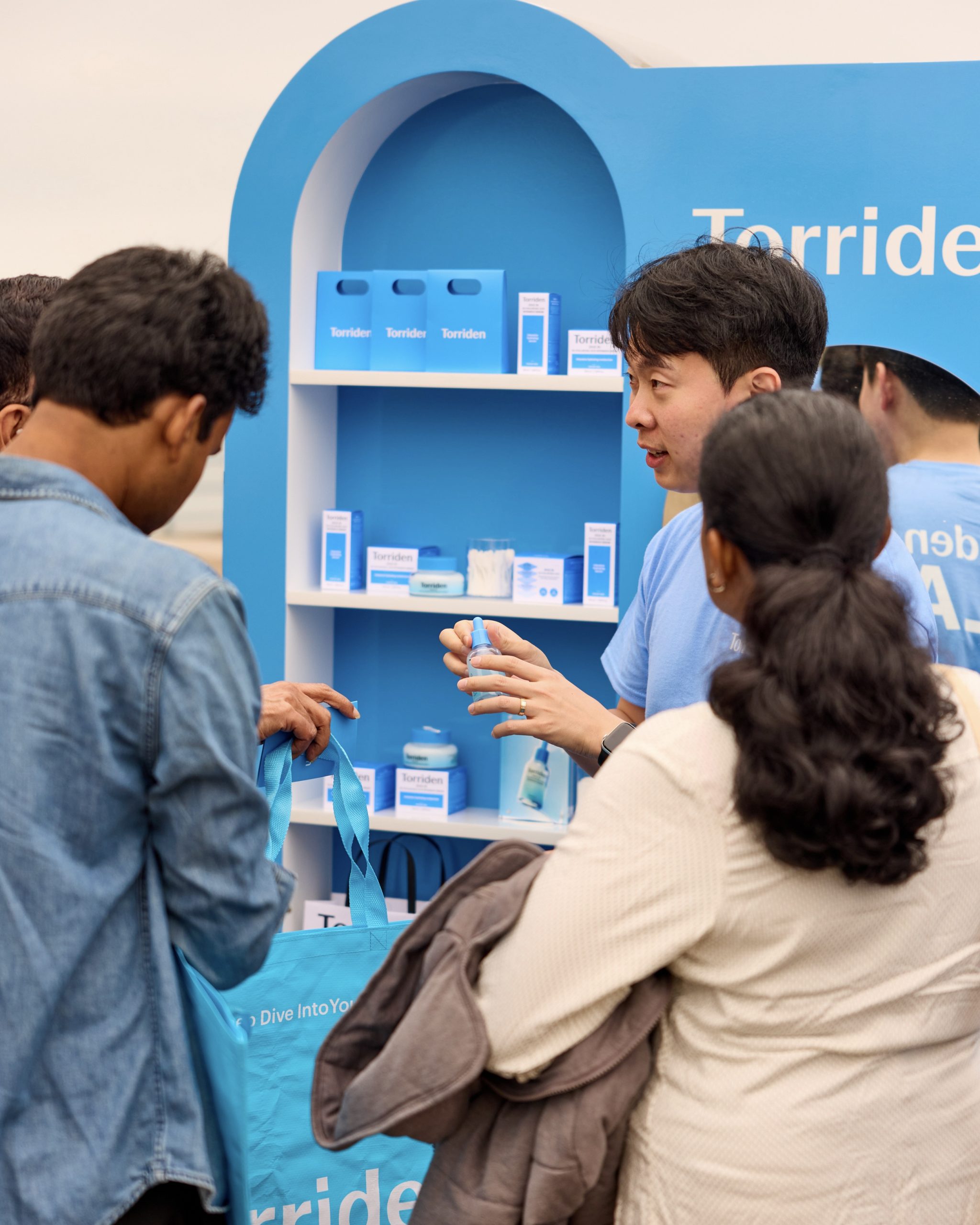
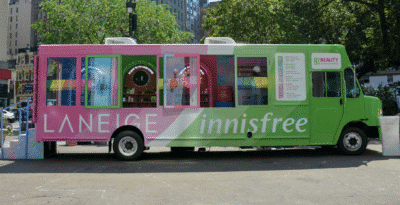
It is the format TIRTIR used for its US launch (47K+ visitors across four cities), LANEIGE x innisfree used for Glow On The Go (12 stops in nine cities), innisfree used for its West Coast tour (3,000+ visitors, 1M+ impressions) and Gisou used for the Honey Glow Truck (20M impressions in three days). Beauty and K-beauty are the largest category Food Truck Promotions activates, and the tour is why. Our mobile product sampling tours guide covers the logistics; the beauty industry page and fragrance industry page cover the formats when they are live.
What Beauty Sampling Costs
Ranges for one activation day in a major US market on an owned vehicle, including vehicle, build, permits, staffing and reporting; the brand supplies product and minis.
| Format | Typical cost | Lead time |
|---|
| Skincare sampling counter on a cart or Citroen | $45,000 to $80,000 | 6 weeks |
| Shade bar or consultation truck | $80,000 to $150,000 | 8 weeks |
| Glass truck beauty showroom with custom interior | $100,000 to $200,000 | 8 to 10 weeks |
| Fragrance scent bar or gifting vehicle | $60,000 to $120,000 | 6 to 8 weeks |
| Multi-city K-beauty launch tour (four cities) | $250,000 and up | 12 weeks |
Holiday and spring windows book earliest: beauty and fragrance should be contracted by August for holiday and by January for spring. Product sampling ideas has the full set of formats with costs by industry.
Case Study: LANEIGE x innisfree Glow On The Go and Coach Cherry Parfum