Food Sampling Guide: Permits, Cold Chain and Costs
Food sampling, for a brand, means putting a bite or a pour of a product into a stranger’s hand in public and having them…
Read moreBy: David Botbol • • 13 min read
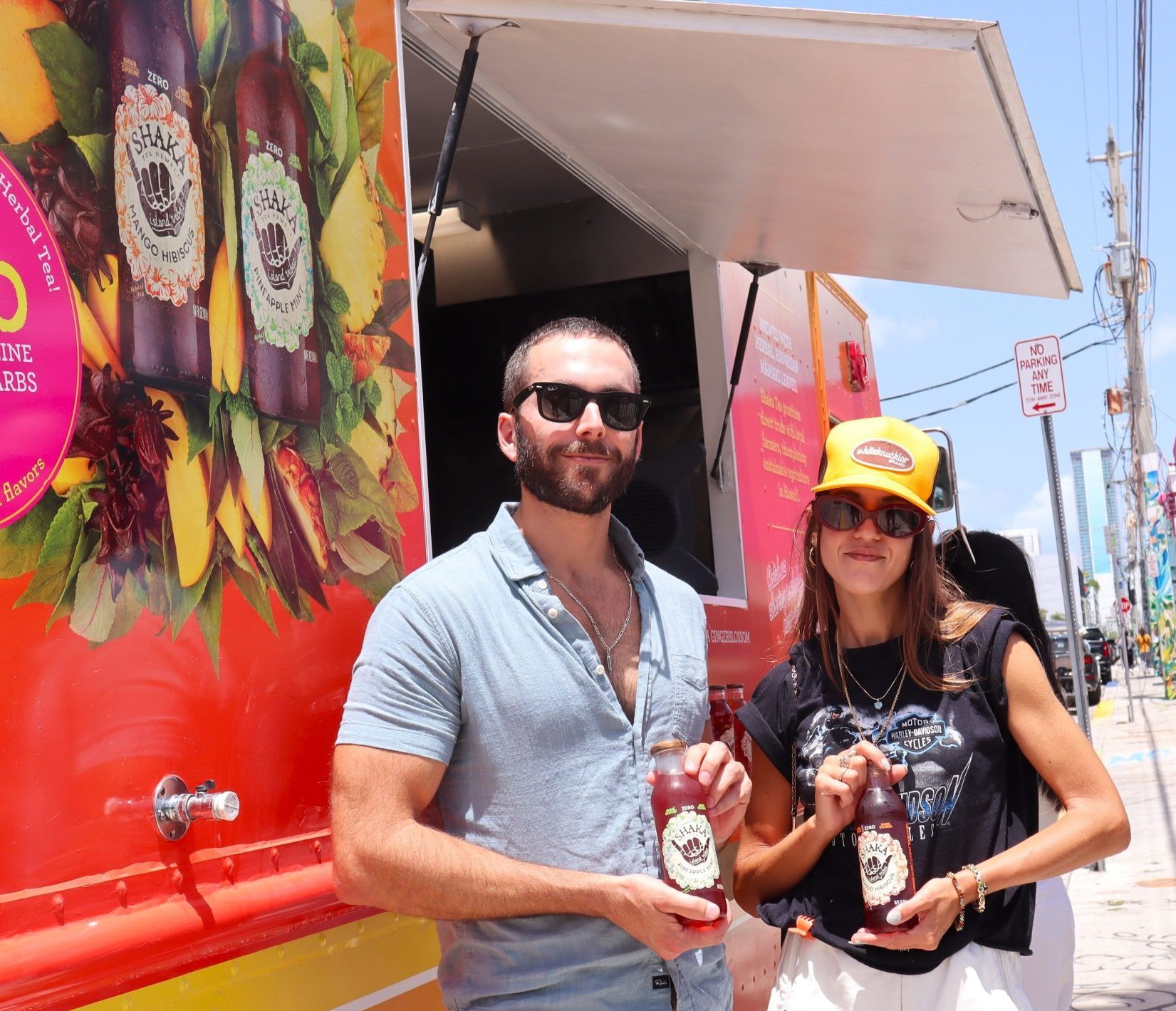
Product sampling marketing is the practice of putting a product in a customer’s hands, mouth or on their skin before they buy it, so the trial does the selling. It is the oldest tactic in consumer marketing and, in 2027, one of the few that still produces a measurable sales lift you can trace to a single day on a single street. This guide covers what product sampling marketing is, why it works, the five formats brands use, what each one costs, how to measure it, and when not to do it at all.
Product sampling marketing is a promotion strategy in which a brand gives consumers a free trial of a product, in person or by mail, to drive first purchase, build awareness and collect feedback. The sample can be a single serving of a beverage, a deluxe mini of a skincare product, a scent blotter with a vial, a bite of a snack or a full-size unit for a considered purchase.
The term covers two very different worlds. Consumer sampling in the sense most people search for is the free-samples-by-mail world: box programs, Amazon’s sampling tools, retailer loyalty samples. Sampling marketing in the experiential sense is the brand running the trial itself, in public, with staff, a location and a capture mechanic. This guide is about the second. If you are a shopper looking for free samples, this is the wrong page. If you are a brand trying to get a product tried by 5,000 people in a weekend, keep reading.
Three mechanisms do the work.
Trial removes risk. A customer who has tasted the drink, felt the cream or smelled the scent has already answered the question an ad can only argue about. HubSpot’s breakdown of sampling marketing frames it as the shortest path from consideration to purchase because the product proves itself.
Reciprocity. A free thing handed over by a person creates a small obligation that advertising never does. The customer who takes a sample is far more likely to read the card, scan the code or walk into the store than one who scrolls past a post.
Memory. Sampling is physical and sensory, and physical memories outlast digital impressions. Bazaarvoice’s guide to product sampling marketing describes sampling as one of the few tactics that creates both the trial and the word of mouth that follows it, because people talk about what they tasted on the way home.
In Food Truck Promotions’ own activations the pattern repeats across categories. When Fever-Tree launched its Espresso Martini mixer range from a mobile bar, more than 5,100 people sampled it, the trial target was beaten by 70 percent, and over 3,400 totes, bottles and coupons went home to finish the sale. The product did the persuading. The truck gave it a place to happen.
Most sampling campaigns fit one of five formats. The right one follows the goal and the product.
A demo table or counter inside a retailer, often run by the retailer’s demo program or a third-party in-store sampling company. Best for products already on the shelf when the goal is velocity in that store. The limits are fixed hours, one store at a time, no photo moment and a retailer fee. Our comparison of in-store sampling vs. sidewalk sampling covers when each wins.
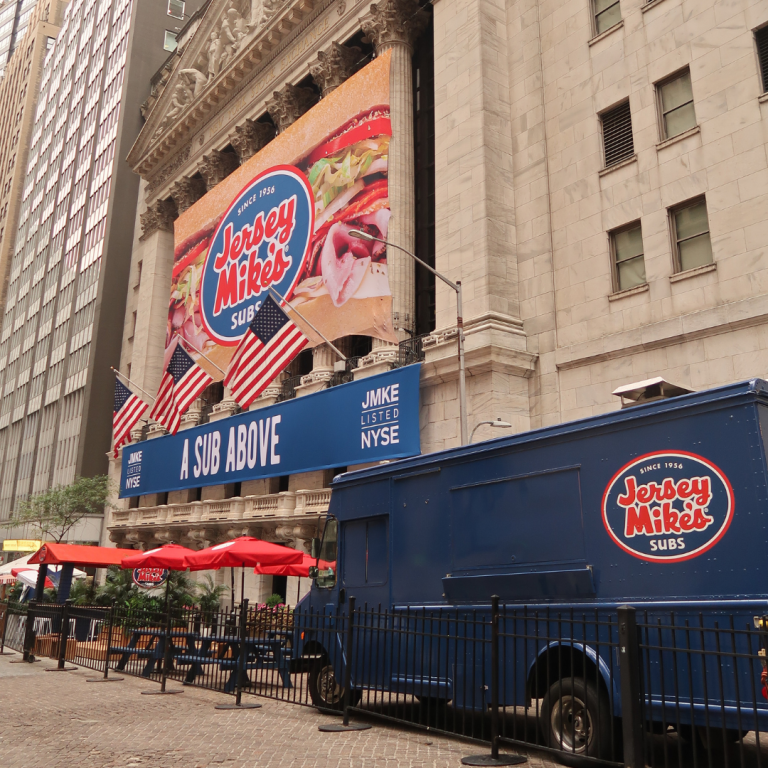
A branded vehicle or cart on a public sidewalk, plaza or retailer parking lot, permitted by the city or agreed with the property owner. Best for launches, trial at volume and any product that photographs well in hand. A food cart or tuk tuk fits narrow streets; a glass truck shows the experience from across the road. This is the format most of the examples in our product sampling examples post use.
Sampling at a festival, marathon, conference, campus event or holiday market, where the organizer supplies the crowd. Best for reaching a defined audience in one day. The trade-offs are organizer fees and deadlines that usually sit earlier than city permits. Parking a permitted vehicle on the public approach to the gate is the lower-cost alternative.
One build that repeats the same sampling experience across several cities. Best for national launches and retailer support where the brand needs the same photo in New York, Chicago and Los Angeles. The economics are the point: the vehicle, the staff script and the capture are built once and the cost per city falls with every stop. See mobile marketing tours.
The contrast case. Sample boxes, mail-in programs and digital sampling platforms that match a product to a consumer profile and ship it. They scale and they target, and they are the right choice for some CPG and beauty programs. What they cannot do is create a moment, a photo, a conversation with a brand ambassador or a redemption inside a nearby store the same hour. Shopify’s overview of product sampling types is a fair summary of the digital end of the spectrum.
In-person sampling is priced by the day, the vehicle, the build and the city.
| Format | Typical single-market cost | What drives it |
|---|---|---|
| Food cart or tuk tuk sampling, one day | $40,000 to $75,000 | Wrap, permit, staff, product handling |
| Food truck sampling, one to two days | $70,000 to $150,000 | Kitchen or cold storage, culinary program, staff |
| Glass truck or Airstream with custom interior | $100,000 to $200,000 | Fabrication, renderings, lighting, staff |
| Event sampling footprint | $80,000 to $150,000 plus organizer fee | Site plan, power, health sign-off |
| Multi-city sampling tour, four cities | $250,000 and up | One build reused, permits per city, routing |
Costs include the vehicle or build, permits, staffing and the activation day. Product is usually supplied by the brand. The number that moves most is cities: a tour reuses the build, so the second stop costs a fraction of the first. For the full planning view, see our mobile pop up shop and product sampling service pages.
Start with the one number. Trials, redemptions, retailer velocity, sign-ups or press. The number decides the format, the location and what the staff say at the hand-off.
Choose the sample format. Single serve for beverages and snacks, deluxe mini for skincare, blotter plus vial for fragrance, a full unit for anything under $5 that is bought on impulse. Deluxe minis convert better than sachets in beauty; a hot drink converts better than a cold one in December.
Pick the vehicle for the curb. A cart fits a pedestrian zone. A tuk tuk fits a plaza and a multi-stop day. A food truck carries refrigeration and heat. A glass truck is the signage. Browse the experiential vehicle lineup.
File the permit first. City permits take six to eight weeks in most US markets and are the long pole on every sampling campaign. Private property (a retailer lot, a plaza, a hotel forecourt) can cut that to two or three weeks.
Build capture into the hand-off. A QR to an offer, an SMS keyword for a second sample, an email for a shade match. Decide it before the wrap is designed so the call to action is part of the vehicle.
Staff for the product, not the headcount. Brand ambassadors who know the product, the permit conditions and the capture script. In our experience a two-person counter can run 300 to 500 hand-offs an hour at peak with the right queue.
Report within two weeks. The campaign that reports fast is the campaign that gets funded again.
Sampling produces four kinds of data if you plan for them.
Add social reach and earned media value from the photos, and you have a report that stands next to any paid channel. Our full measurement framework is in how to measure product sampling.
Sampling is not always the right tactic.
The format is the same; the details change.
Beauty and K-beauty. Deluxe minis, shade matching and skin consultations from a glass truck or cart. Multi-city tours timed to retailer launches. K-beauty brands entering the US have made this their standard launch format.
Fragrance. Scent bars and blotter-plus-vial hand-offs, built for the holiday and spring windows. Fragrance is the highest-repeat sampling category we run.
Food, beverage and CPG. Full food trucks with refrigeration and health department sign-off, tasting bars, and the retailer parking lot format that proves sell-through inside.
Tech and finance. Demo rather than sample, but the hospitality mechanics are the same: a coffee or a treat buys the two minutes the demo needs.
Entertainment. A branded treat tied to a release gives a launch a street moment and a photo. The sample is the invitation.
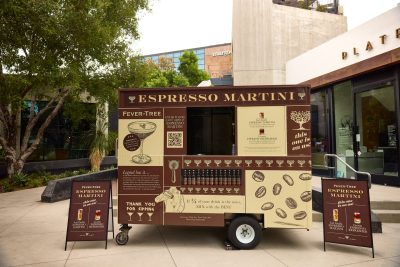
When Fever-Tree launched its Espresso Martini mixer range, the question was whether a mixer could be sampled in the form people would actually drink it. The answer was a mobile bar that served the product in hot mocha and iced variations, staffed to run a fast queue and built so the bar itself was the photo.
More than 5,100 consumers sampled the product, which beat the trial target by 70 percent. Over 3,400 totes, bottles and coupons went home with them, each one a path to the retail purchase that finishes the conversion. The campaign is the clearest demonstration we have of product sampling marketing doing both jobs at once: the trial on the day and the sale in the following weeks. Read the Fever-Tree case study.
Product sampling marketing works because the product does the persuading. The brand’s job is to put it in the right hands, in the right place, with a reason to act next, and to count what happened. In 2027 that means a permitted vehicle on the street the customer already walks, a sample in the form they will actually consume, a capture step at the hand-off and a report within two weeks. If you want a sampling campaign mapped to your launch, request a sampling quote and tell us the number you need to move.
Product sampling in marketing is giving consumers a free trial of a product so they can experience it before buying. In experiential marketing it happens in person, from a branded vehicle, cart or pop up, where the brand controls the setting, the message and the data captured at the hand-off.
Because trial removes the risk an ad can only argue about. A customer who has tasted, felt or smelled the product has already decided whether they like it. Add reciprocity from a free item handed over by a person, and a sensory memory that outlasts a digital impression, and sampling converts at rates few channels match.
Consumer sampling usually refers to free-samples-by-mail programs and box subscriptions aimed at shoppers. Sampling marketing is the brand running the trial itself, in public, with staff, a location and a capture mechanic. The second is what an experiential agency does.
A permitted single-day sampling activation on a cart or tuk tuk starts around $40,000 to $75,000 in one US market. Food trucks run $70,000 to $150,000, custom glass trucks $100,000 to $200,000, and multi-city tours $250,000 and up with a falling cost per city.
It depends on the product, the location and the hours. A two-person counter in a high-traffic location can run 300 to 500 hand-offs an hour at peak, which puts a full day between 2,000 and 5,000 samples. Multi-city tours multiply that by the number of stops.
Anything consumed or applied: beverages, snacks, skincare, cosmetics, fragrance, personal care and pet treats. Products that need refrigeration work on a food truck. Considered purchases such as appliances and software are demoed rather than sampled.
Yes, in almost every US city. Sampling on public property needs a city permit, usually six to eight weeks out, and food, beverage and cosmetic sampling each carry health department rules. Private property such as a retailer lot needs only the owner’s agreement, which is faster.
Count units distributed, contacts captured at the hand-off, redemptions of a code that only exists at the activation, and retail velocity lift in the activated stores versus a control set. Add social reach and earned media value from the photos.
The plan that connects the goal (trial, redemptions, velocity, sign-ups) to the format, the sample unit, the location, the capture mechanic and the report. A strategy that starts from the vehicle rather than the goal usually produces a nice day and no data.
Experiential marketing agencies and specialist sampling companies. Food Truck Promotions designs, builds, permits and staffs sampling campaigns from its own fleet in 30+ cities. Our guide to choosing a product sampling company covers what to ask.
Merlin AI
Pick a vehicle, drop in your website, and Merlin AI brings your brand activation to the streets instantly.
Bring Your Brand to the Streets.®

Author
EVP, Managing Director @ FTP Agency
David Botbol thrives on turning bold ideas into real-world brand moments. As Executive VP and Managing Director of Food Truck Promotions, and a leader within the New York and Los Angeles Food Truck Associations, he draws on a background in business development and startups to help brands connect with audiences through creative, unforgettable mobile experiences.
Food sampling, for a brand, means putting a bite or a pour of a product into a stranger’s hand in public and having them…
Read more →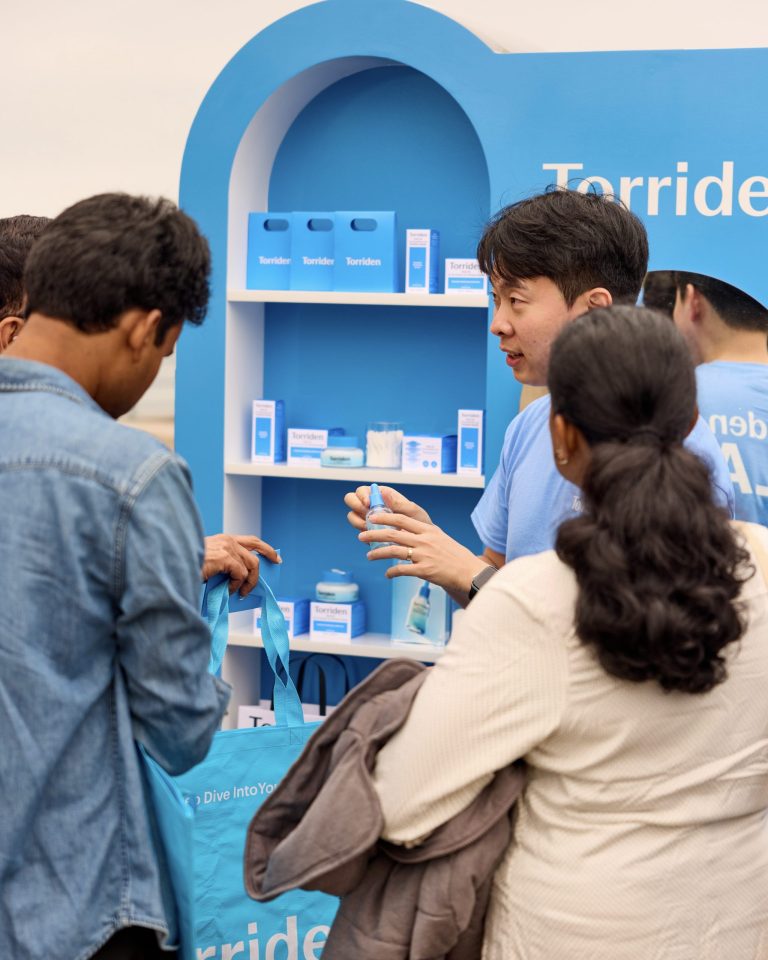
Beauty sampling is the format beauty brands use to get a product onto skin before it goes into a cart, and for the K-beauty…
Read more →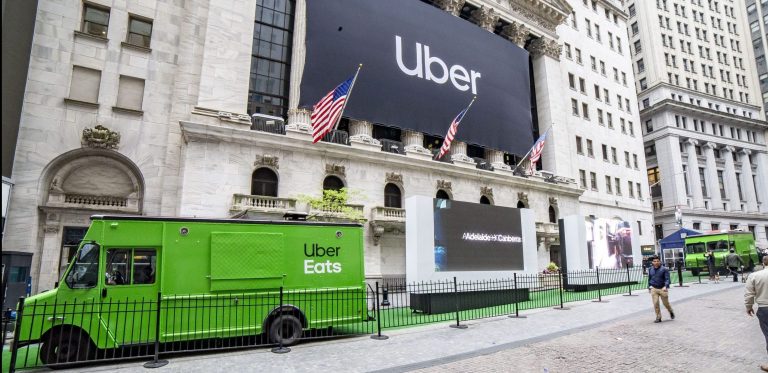
Mobile product sampling tours take one branded vehicle, one sample and one crew through several cities on a route, so a brand gets a…
Read more →



We use and share personal information through cookies and similar technologies on our sites to personalize your shopping experience and ads. Others may use this information for their own marketing and business purposes. . Check our Privacy Policy for more details.
Browser Opt-Out Honored
We use and share your personal information with others to personalize your shopping experience and show you targeted ads on other sites based on your interests and online activities.
Online Info includes cookies, pixel tags, and similar technologies connected to your browser or device. Offline Info includes information associated with your email address based on your other interactions with us.
We use and share your personal information with others to personalize your shopping experience and show you targeted ads on other sites based on your interests and online activities. Information includes cookies, pixel tags, and similar technologies connected to your browser or device (Online Info), as well as information associated with your email address based on your other interactions with us (Offline Info). Others may use this information for their own marketing and business purposes.
You can choose to opt out of sharing one or both types of information.