A brand ambassador agency supplies the people who stand at the counter, hand over the sample, run the demo and capture the sign-up at a brand activation. It is the part of the budget most brands spend the least time on and the part that decides whether the day works. The vehicle gets people to stop. The ambassador decides what happens next. This guide covers what a brand ambassador agency actually does, when to hire one versus staff in house, what to look for, what an ambassador day costs, and how staffing changes between a sampling counter, a multi-city tour and a conference floor. If you need the street-level version of this, our street team marketing guide covers the roaming format; this one covers staffed activations.
Key Takeaways
- A brand ambassador agency recruits, trains, schedules and manages the people on the ground; the good ones also handle permits awareness, product knowledge and the capture script.
- In-house crews beat agency pools on tours and sampling: the same people at every stop means the script, the product knowledge and the data discipline hold across cities.
- Four things to check before you hire: training, product knowledge, permit awareness and capture discipline. Looks and enthusiasm are table stakes.
- Budget $350 to $650 per ambassador day in major US markets, plus a lead or captain at $500 to $900, before travel.
- Staffing changes by format: a sampling counter needs two to four, a tour needs a consistent core crew, and a conference footprint needs demo-trained staff rather than samplers.
What a Brand Ambassador Agency Does
A brand ambassador agency is a staffing and management company for live marketing. The core service is recruiting people who match the brand, training them on the product and the day, scheduling them against the activation calendar, and managing them on site. The better agencies also own the pieces that make an ambassador useful rather than decorative: a training session before the activation, a script that ends in a capture, a captain on site who handles breaks and problems, and a report that says what the team did.
What an agency does not usually do is the activation itself. It does not own a vehicle, design a build, file a city permit or handle the health department. Those sit with the experiential agency or the brand. That split is the reason most brand ambassador agencies are hired as a subcontractor by an experiential agency rather than directly by the brand, and the reason an experiential agency with its own in-house crew can skip the hand-off entirely.
HubSpot’s guide to sampling marketing is a useful outside summary of why sampling works; the point this guide adds is that the sample does not hand itself out.
In-House Crew vs Brand Ambassador Agency
There are three ways to staff an activation.
Brand employees. Your own sales, marketing or retail staff work the activation. Highest product knowledge, lowest cost on paper, and the worst option for anything longer than a day. Employees have jobs to go back to, they are not trained for eight hours on a sidewalk, and nobody has told them what to do when the permit inspector arrives.
A brand ambassador agency. The agency pulls from a pool in each city. Scales fast, works for one-off events, and is the standard model for in-store demo programs. The weakness is consistency: the people in Chicago are not the people who worked Los Angeles, every city restarts the training, and the quality of the day depends on who was available.
An experiential agency with an in-house crew. The people who run the activation are employed or directly managed by the company that owns the vehicle and filed the permit. They have worked the same build before, they know the permit conditions because they were there when the permit was written, and the same core team travels the tour. This is how Food Truck Promotions staffs, and it is the reason a four-city tour comes back with four comparable sets of numbers instead of four different days.
The rule of thumb: one city, one day, product already on the shelf, an agency pool is fine. A launch, a tour or anything with a hard number attached, use a crew that stays the same from the first stop to the last.
What to Look For in a Brand Ambassador Agency
Looks and enthusiasm are the price of entry. Four things separate a team that produces results from one that produces photos.
Training. Ask what happens before day one. A real answer is a session, in person or on video, that covers the product, the brand voice, the day’s run of show and the capture mechanic, with a quiz or a run-through at the end. “We send a brief” is not training.
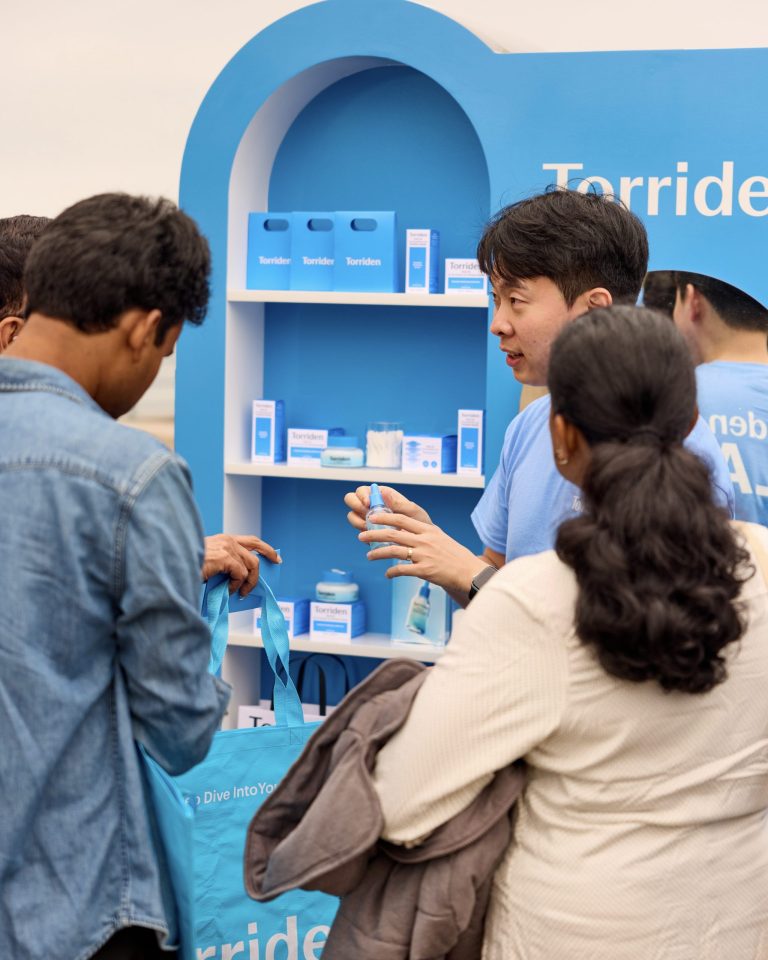
Product knowledge. An ambassador handing out a serum sample should be able to say what it does, who it is for and what to do next. An ambassador pouring an espresso martini should know the spirit, the mixer and the retailer that stocks it. Ask how product knowledge is checked.
Permit awareness. City permits carry conditions: where the footprint ends, whether staff can approach people or must wait to be approached, what can and cannot be handed out, when the generator has to be off. An ambassador who does not know the conditions is how a permit gets pulled at 2 pm. Ask who briefs the team on the permit, and whether the captain carries a copy.
Capture discipline. The script has to end with the QR scan, the SMS keyword or the coupon, every time, without feeling like a transaction. Ask what the capture rate was on the last comparable activation. If the agency cannot answer, the data was never collected.
Two more practical checks: who is the on-site captain and how long have they been with the agency, and what is the no-show and replacement policy for an early call time.
What a Brand Ambassador Costs
Agencies price by the ambassador day, usually six to ten hours including setup and breakdown. Ranges below are for major US markets in 2026; secondary markets run 15 to 25 percent lower.
| Role | Typical cost per day | Notes |
|---|
| Brand ambassador | $350 to $650 | Sampling, greeting, capture |
| Demo specialist | $500 to $800 | Product demos, beauty consultations, tech walk-throughs |
| Team lead or captain | $500 to $900 | Runs the day, manages breaks, handles the inspector |
| Bartender or licensed server | $450 to $750 | Alcohol sampling, plus the local license |
| Tour crew (per person, per day) | $450 to $700 | Plus travel, lodging and per diem |
Training time is often billed as a half day per person. Travel on a tour adds flights or mileage, hotels and a per diem of $60 to $90. A one-day sampling counter in New York with three ambassadors and a lead lands between $2,000 and $3,500 for staff alone. A four-city tour with a core crew of four for twelve activation days runs $25,000 to $40,000 in staffing including travel.
For context against the whole budget, a permitted single-market sampling activation on an owned vehicle starts around $40,000 to $75,000 and the staff line is usually 5 to 10 percent of it. Our guide to product sampling companies breaks down the rest.
Sampling counter or cart. Two to four people: one or two sampling, one capturing, one lead. The lead also restocks and watches the footprint. Beauty sampling adds a demo specialist if there is a shade match or consultation. Food and beverage adds a food handler certification in most cities.
Food truck or glass truck. Three to five: service inside the vehicle, one or two outside working the line, one lead. The line is where the conversation and the capture happen; nobody captures from inside a truck window.
Multi-city tour. A core crew of three to five that travels every stop, plus one or two local hires per city for volume. The core crew carries the script, the capture discipline and the relationship with the product. Local hires handle the line. Swapping the core crew between cities is the single most common reason tour data is not comparable stop to stop. See mobile product sampling tours for the logistics side.
Conference or trade show footprint. Demo-trained staff rather than samplers. The job is a qualified conversation and a lead, not volume. Two demo specialists and a lead for a 10 by 20 footprint; more if the vehicle is on the floor. Badge scanning replaces QR capture.
Festival or race. Volume staffing. Four to eight on a vehicle at a music festival gate, with 300 to 500 interactions an hour at peak. The capture mechanic has to work one-handed. See the event sampling guide.
Retail parking lot. Two to three outside, with a script that ends “inside, today” and a store-specific coupon. The retailer’s own demo staff may be inside at the same time; the two teams should know about each other.
Why FTP Staffs In House
Food Truck Promotions employs and directly manages its activation crews rather than subcontracting to a brand ambassador agency. The practical reasons: the crew has worked the vehicle before, so setup is faster and nothing surprises them; the crew was briefed on the permit by the person who filed it; the same core team travels every tour stop, so the numbers are comparable; and the capture script is the same one that produced the last report, so the next report looks the same. The staffing capability page covers how the crews are built, and the product sampling page covers the formats they run.
When a brand needs volume beyond the core crew, FTP adds local ambassadors under the core team’s lead. The core crew stays the core crew.
How to Brief a Brand Ambassador Team
A good staffing brief is one page. The product and what it does, in the words you want used. The audience and the one thing they should walk away knowing. The run of show by hour. The capture mechanic and the target rate. What staff can and cannot say (claims, competitors, pricing). The permit conditions in plain language. Who the captain calls when something goes wrong. Wardrobe. And the answer to the question every ambassador gets asked: where can I buy this?
Send that a week before training and the team shows up knowing the product. Send it the morning of and you get a team reading a card.
Case Study: TIRTIR World Tour