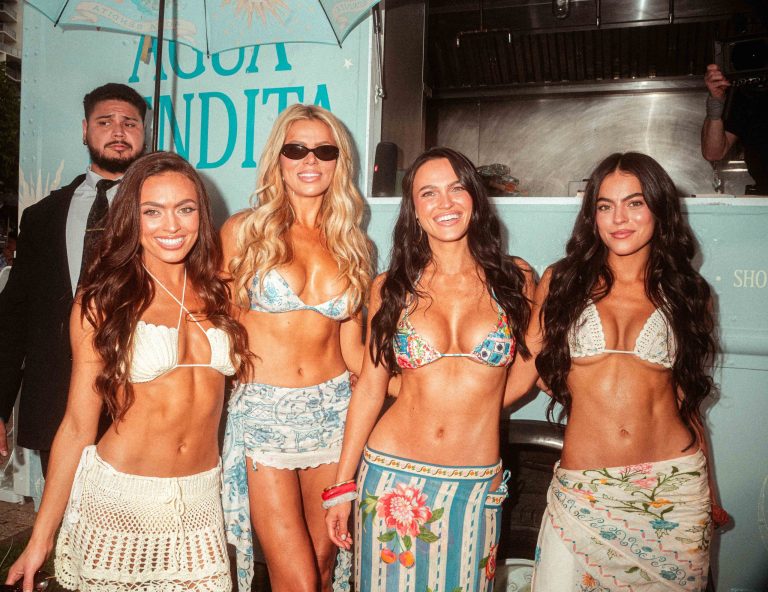
How Experiential Event Marketing Works
Experiential events put people inside a brand rather than in front of it, which is the whole distinction from every other kind of event.…
Read moreBy: Ashley Elarde • • 20 min read
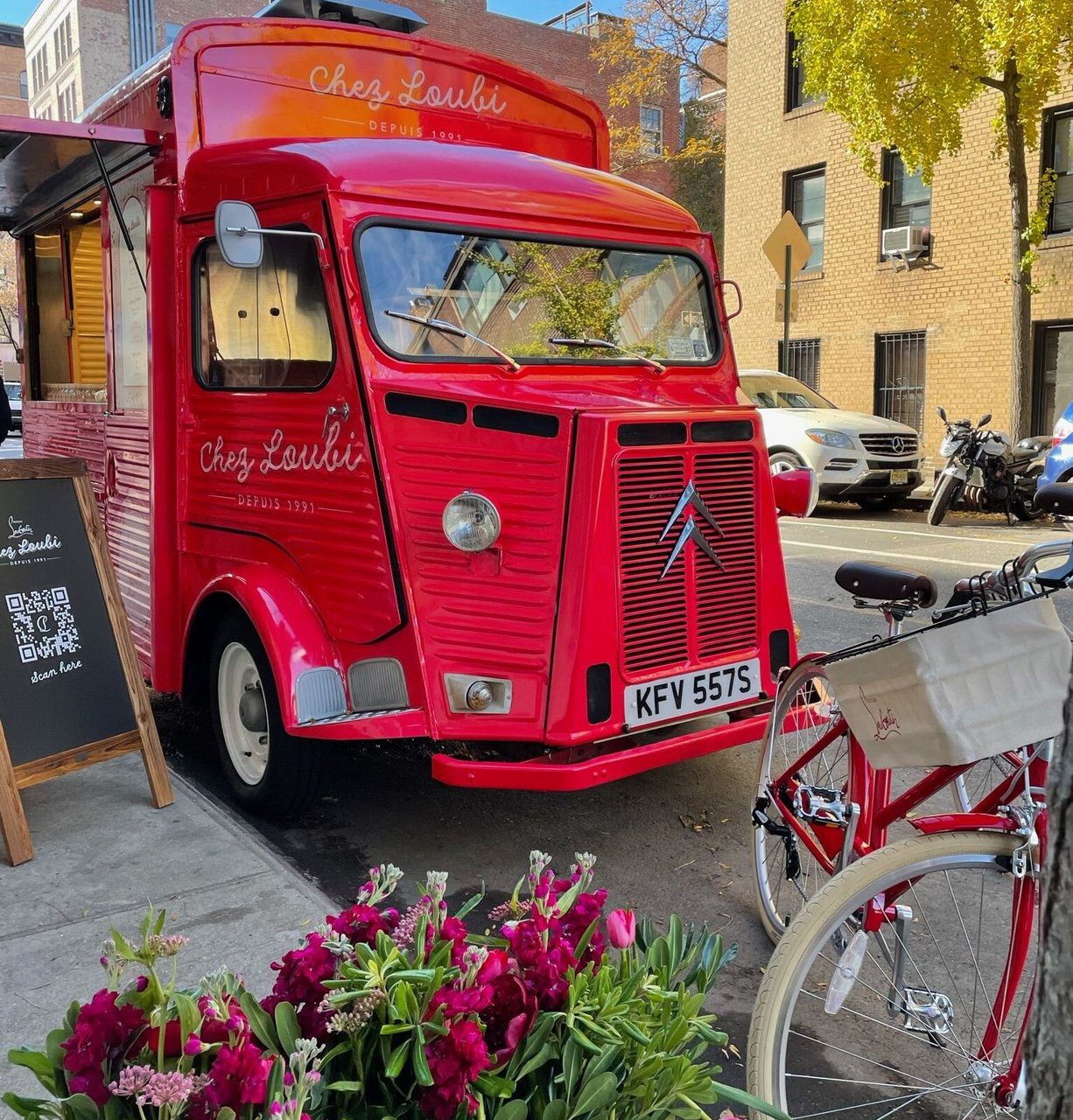
A mobile pop-up shop puts your retail marketing on wheels and takes it to the people, and for brands it offers something a brick and mortar location never will: the ability to choose a new corner, a new neighborhood, or a new city whenever the campaign calls for it. Whether your retail business is just starting or already growing, mobile retail store trucks open doors that a fixed lease keeps closed.
We have built these activations for brands from Adidas to Ralph Lauren, so this guide covers what mobile retail actually is, how brands use it as a marketing campaign, real examples from the street, and how the model compares to a traditional storefront.
Mobility replaces the lease as your biggest asset: A mobile retail store can follow foot traffic, events, and seasons, so location becomes a decision you make weekly rather than a commitment you make for years.
It works as a campaign, not just a business: Most brands use mobile retail marketing as a limited-time effort that builds exposure and drives customers into an existing store, rather than as a permanent storefront replacement.
The vehicle sets the experience: Glass trucks, vintage Citroens, food trucks, and Airstreams each shape a different kind of retail moment, so the format should follow the goal.
In person and online compound each other: These activations are naturally photogenic, so the street campaign feeds the social campaign, and paid content capture makes that reach deliberate rather than accidental.
Low overhead is not zero overhead: Keeping a vehicle on the road, permitted, staffed, and stocked carries real costs, which is why most brands partner with an agency that already owns the fleet.
Mobile retail is growing for a reason that has nothing to do with trucks: physical retail is expanding again after a decade of contraction.
Coresight Research forecasts more than 5,000 new US store openings in 2026, with brands increasingly treating physical space as a brand builder rather than purely as a place to transact.
That shift creates two problems a mobile format solves directly. Competition for foot traffic is rising, so a new location can no longer rely on the address alone to perform. And the cost of committing to a lease before you know whether a market works has not fallen. A vehicle lets you test the demand first and generate the traffic second, which is why brands opening stores and brands avoiding them are both arriving at the same tool.
A mobile retail marketing involves an experiential vehicle, such as a truck, van, cart, or trailer, that has been built out to sell or showcase products directly to customers wherever it parks. It can run as a permanent business in its own right, or as a temporary, branded pop-up that a company uses to launch a product, drive traffic to a physical store, or reach a new market without signing a lease.
The format also goes by a few other names. Mobile boutiques, fashion trucks, mobile pop-up shops, and mobile showrooms all describe versions of the same idea: retail that travels.
Mobile retail marketing can be a permanent option for your business, or a temporary and creative way to market your brand and drive traffic to your brick and mortar location. That second use is where most brands land.
Rather than opening a permanent location, you can open a limited-time mobile pop-up as a marketing effort that earns exposure and puts your product in people’s hands. A branded food truck, a glass truck, or a vintage van creates an immersive experience that a shelf in a store cannot, and it does it in front of an audience that chose to stop and look. The vehicle keeps working between stops too, acting as a moving billboard on every street it drives down.
Below are real examples of mobile retail marketing on the street, spanning brand activations and permanent mobile businesses.
Adidas celebrated the launch of its P.O.D. System sneaker line with a branded mobile kitchen pop-up in the heart of Times Square. Guests were treated to Baohaus cuisine from Eddie Huang and had the opportunity to buy their own pair of P.O.D.s on the spot. Pairing a sneaker drop with a chef collaboration gave the launch a reason to exist beyond the product, which is what turns a sale into an emotional association with the brand.
The takeaway: give the retail moment a cultural hook and the product sells itself.
Few names are as iconic as Chanel. We partnered with the high-end fashion brand to bring their store to the streets of New York City for a guerrilla marketing campaign that played into their brand’s staple red color. Combining social media and in-person views, the branded tuk tuk gained over 5 million impressions, all by serving something as simple as Hot Cocoa. That’s the power of mobile marketing.
The takeaway: you do not need to sell anything on the truck for a retail activation to work.
After a series of guerrilla campaigns from 2017 to 2019, the vintage Citroen coffee truck became a hallmark of the designer coffee brand. The original Ralph’s Coffee truck was such a popular hit that Ralph Lauren replicated it and opened a permanent Ralph’s Coffee location at Rockefeller Plaza.
The takeaway: the strongest mobile retail campaigns can prove demand for a permanent location before anyone signs a lease.
Based in Charleston, South Carolina, the GoGo Books truck sells children’s literature out of a mobile retail truck. Unlike the examples above, GoGo Books does not use its truck as a marketing arm of a brick and mortar store. It is a permanent business built on the advantages the model offers: no rent, high exposure, and the freedom to move.
The takeaway: mobile retail is a viable business model on its own, not only a campaign tactic.
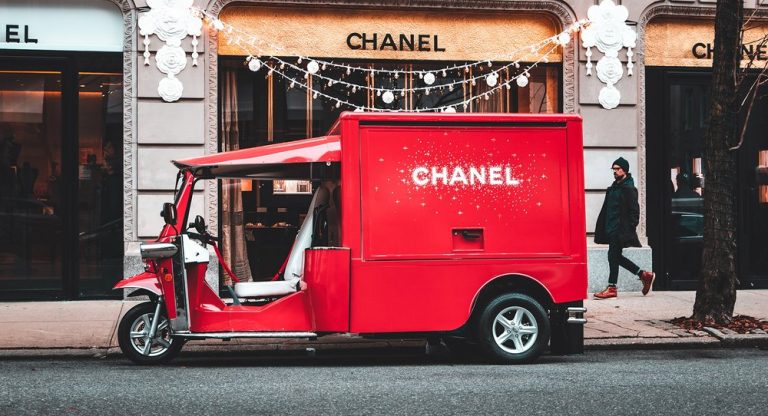
Of every example above, the CHANEL activation is the one worth studying closely, because it sold nothing at all.
We partnered with the fashion house to bring the store to the streets of New York City in a guerrilla marketing campaign built entirely around the brand’s signature red. The mobile retail marketing vehicle was a branded tuk tuk, chosen because it fits corners a truck cannot reach and photographs from every angle. What it served was hot cocoa.
Combining in-person and social views, the activation generated over 5 million impressions.
Why it worked without a transaction: the campaign was not trying to move product on the sidewalk. It was buying attention and association in a market where CHANEL competes for both, and it did so by giving people something genuinely welcome in cold weather rather than a pitch. For brands whose products cannot practically be sold from a vehicle, this is the model. The truck earns the impression, the store or the site closes the sale.
The term brick and mortar refers to a traditional street-side business that offers goods and services from an office or store the business owns or rents. Most businesses are brick and mortar: your local grocery store, nail salon, and corner bank all qualify.
A mobile retail truck is exactly what it sounds like. The business travels, bringing products and services to customers in different locations. For owners, that model offers versatility, adaptability, and the flexibility to operate with lower overhead than a lease.
With food trucks proving the model, the fashion truck concept followed close behind, with owners betting that a mobile alternative to a clothing store could match the success of the food version. Mobile fashion is also an alternative to e-commerce, which matters more than it used to: online shopping cannot let someone touch a fabric, try a shade, or ask a question. Offering people the chance to shop from a food cart, an Airstream, or a concession trailer keeps a brand in front of the customer in a way a website cannot.
Cost is the question every brand asks second and most articles never answer. There is no single figure, because the range is genuinely wide, but the line items are always the same and knowing them is what makes a budget conversation productive.
The vehicle and the build. The largest single cost, and the one that varies most. A wrapped existing vehicle sits at one end and a fully fabricated custom interior with shelving, a counter, and a point of sale sits at the other. This is a fixed cost, which is why it amortizes across every additional stop.
Design and renderings. Concept development, wrap artwork, and 3D renderings before anything is fabricated. Small relative to the build and the place where changes are cheapest.
Permits and location fees. Varies enormously by city, by neighborhood, and by whether you are on a public street or private property. Peak dates in major markets carry a premium.
Staffing. Brand ambassadors per day, plus a supervisor on multi-vehicle or multi-market runs. Product knowledge costs more than presence and is usually worth it.
Product and packaging. Stock to sell or sample, plus branded cups, bags, and takeaways. Forecast with a buffer, because running out early ends the activation while customers are still arriving.
Transport and logistics. Fuel, drivers, transport days between markets, and overnight parking. On a tour this line grows faster than most brands expect, which is why route efficiency matters.
Content capture. Photography and video on the day, which is optional in the budget and rarely optional in practice.
The variable worth understanding is that the build dominates the first campaign and disappears from the second. A vehicle designed to be reused, with replaceable graphics and modular fixtures, changes the economics considerably across a year of activations.
Launching a mobile retail activation follows a sequence, and the order matters more than the budget.
Decide what the campaign must accomplish, whether that is trial, sales, lead capture, or traffic into an existing store, and name the one metric that proves it before anything else is booked.
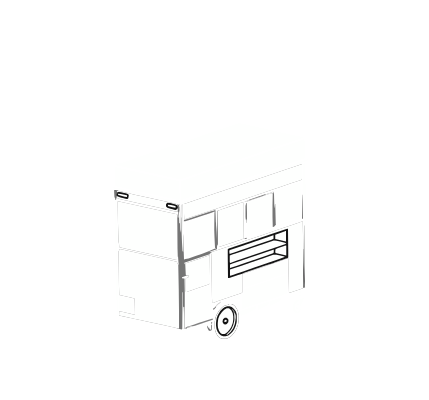
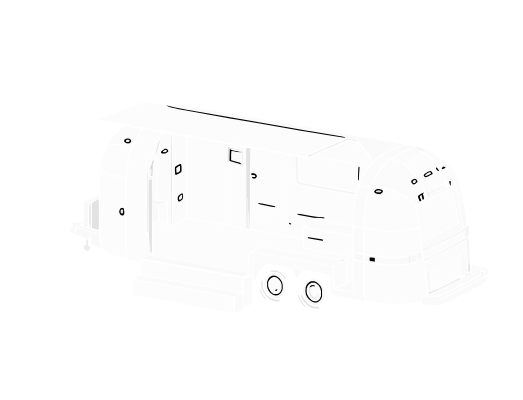
A glass truck makes the product the display, a food truck brings a kitchen and high throughput, an Airstream offers walk-in showroom space, and a vintage Citroen or tuk tuk brings charm to a tight urban corner.
Foot traffic, events, and proximity to your own store or retail partner all belong in the decision. Parking beside the place the purchase happens is the sharpest version of this.
Location permits, insurance, and food service compliance vary by city and venue, and approval timelines are outside your control. Peak summer dates should be booked two to three months ahead.
Brand ambassadors who can talk product, invite the photo, and capture data turn a busy truck into a productive one.
A QR code, a sign-up, or a promo code on the takeaway is what connects the sidewalk to a reportable result.
For brands, the practical question is build versus partner. Owning a vehicle means owning storage, insurance, maintenance, and the biggest ongoing line item of all, which is simply keeping the thing on the road. Partnering with an agency that already owns and maintains a fleet removes all of it and lets you choose a different format for every campaign.
Choose brick and mortar when the assortment is large, the browsing session is long, and the market is already proven. Choose mobile retail when you want to test a market before committing, reach several neighborhoods from one build, support an existing store with street-level traffic, or launch a product where the audience already gathers. Many brands run both, using the truck as the top of the funnel and the store as the place the sale closes, which is exactly what Ralph Lauren’s coffee truck did.
If the campaign involves an actual transaction rather than sampling, the build has requirements that a marketing brief rarely mentions and that determine whether the day runs smoothly.
A working point of sale. Card payment needs connectivity, and connectivity on a street corner is not guaranteed. Offline-capable payment hardware and a mobile hotspot are standard practice rather than contingency planning.
Stock storage that is not visible. Customers should see product for sale, not the boxes it arrived in. Concealed storage has to be designed into the fabrication, particularly in a glass truck where nothing can be hidden after the fact.
Power. Payment terminals, lighting, refrigeration, and screens all draw from somewhere. Generator or shore power capacity is calculated at the build stage, not discovered on site.
A queue that does not block the sidewalk. Where people stand while they wait is a design decision. Get it wrong and you create a permit problem alongside a customer experience problem.
Returns and receipts. A short campaign still needs an answer for a customer who wants to return something after the truck has gone. Deciding that in advance avoids an awkward conversation on the street.
Restocking mid-day. Popular items sell out. Whether replenishment happens from the vehicle, a nearby van, or a partner store changes the layout and the staffing.
None of this is complicated, but all of it is easier to solve on a drawing than on a sidewalk. It is also the clearest practical argument for partnering with a team that has run the format before.
Mobile retail truck marketing spans everything from experiential showrooms to mobile boutiques and pop-up shops. The ability to move to event locations and to the areas of a city with the heaviest foot traffic raises the odds of reaching a first-time customer or an entirely new demographic.
The approach is impactful because it is fast and flexible. A brand can promote without being tied to one location, which opens up building engagement, testing new markets and products, generating buzz and awareness, and lifting visibility and sales. Every business understands the need to reach new audiences. Doing it in person is the hard part, and mobility is what makes it possible.
Mobile retail works across categories, but it does not work equally, and the difference comes down to whether the product benefits from being experienced.
Beauty and skincare. The strongest fit. Shade matching, texture, and scent are the exact reasons people hesitate to buy online, and all three are solved in person. Sampling converts quickly and the visual nature of the category produces content.
Fashion and accessories. Fabric, fit, and finish need touching. Mobile boutiques also suit drop culture, where scarcity and a specific location are part of the appeal rather than an inconvenience.
Footwear. Try-on is the whole sale, as the Adidas example above shows. Sizing logistics are the constraint, so most footwear activations pair a limited on-truck range with a route to the full assortment.
Food and beverage. The native category. Taste settles the argument instantly, throughput is high, and the format needs no explanation to anyone walking past.
Consumer packaged goods. Sampling at scale in high-traffic locations, often near the retailer that stocks the product, which turns street traffic into shelf traffic.
Books, toys, and collectibles. Visual, giftable, and impulse-friendly, and they photograph well behind glass.
The harder fits are considered purchases with long decision cycles, anything requiring extensive fitting or installation, and products with no visual or sensory hook. Those can still work, but they need a showroom format with dwell time rather than a sampling cart, and the metric should be leads rather than sales.
Timing does more for turnout than budget does, and the retail calendar hands you several windows where the audience assembles itself.
Spring, March to May. Festival season begins, weather turns, and outdoor foot traffic returns. Mother’s Day is a concentrated retail moment that suits gift-led activations.
Summer, June to August. The strongest window for street-level retail. Long days, heavy foot traffic, and a dense events calendar. Book permits two to three months ahead, because prime summer dates in major markets go early.
Back to school, August to September. Campus markets and family shopping both peak. A distinct audience with its own calendar.
Holiday, November to December. The highest-spending window of the year and the most competitive. Themed builds and prime placements need eight to twelve weeks of lead time.
Store opening dates. Independent of the calendar. An opening is the largest attention moment a location will ever get, and a street activation converts that attention into a first visit.
Product launch dates. Also calendar-independent, and usually the strongest single reason to run a campaign at all.
The two windows most brands underuse are the shoulder periods in early spring and late autumn, when competition for locations and permits drops sharply while foot traffic is still strong.
As impactful as in-person marketing is, a campaign is not complete without the social layer.
Without much conscious effort, the creative experiences a mobile retail store creates make for excellent photo opportunities that organically bring awareness into the digital space. Guests post because the moment is worth posting, not because you asked.
Beyond that organic coverage, adding your own social marketing is the extra touch that lifts a promotion to the next level. Hire photographers and videographers or capture your own content for your channels, and give the campaign one branded hashtag so guest posts and brand posts thread into a single feed people can scroll.
Mobile retail is worth understanding as two things at once: a legitimate business model with low overhead and high exposure, and a marketing format that lets established brands test markets, launch products, and pull customers into their stores. The vehicle is the same. Only the goal changes.
To learn more about the marketing side of mobile retail, get in touch. Get your mobile retail store on the road.
Most mobile retail campaigns that disappoint fail for the same handful of reasons, and every one of them is avoidable at the planning stage.
Choosing the vehicle before the goal. The build should follow what the campaign has to achieve. Picking the truck first because it looks impressive is how brands end up with a beautiful vehicle that cannot do the job.
Treating location as a detail. Two blocks can mean ten times the foot traffic. Location deserves as much attention as the creative, and it should be shortlisted for what is actually approvable rather than what sounds good.
Starting permits late. This is the most common cause of a campaign moving or shrinking. Approval timelines are outside your control, and no amount of budget compresses them.
No capture mechanism. An activation without a QR code, sign-up, or promo code produces a good day and no evidence. Build the measurement in before the build itself.
Understaffing. A busy vehicle with too few ambassadors converts worse than a quieter one with enough. Queues that stop moving lose the people at the back.
Running out of stock. Forecast with a buffer. Closing at two in the afternoon on the busiest day wastes the permit, the staffing, and the location.
Forgetting the content plan. The activation is a shoot as much as a sale. Assign capture in advance rather than hoping someone photographs it.
Judging it on impressions alone. The format loses on cost per impression and wins on cost per acquired customer. Measuring the wrong number makes a successful campaign look mediocre.
A mobile retail store is a vehicle such as a truck, van, cart, or trailer built out to sell or showcase products wherever it parks. It can operate as a permanent business or as a temporary branded pop-up used to launch a product, test a market, or drive traffic to an existing store.
A traditional pop-up occupies a leased space for a fixed period. A mobile retail store is built into a vehicle, so it can change locations daily, run a multi-stop tour, and carry an identical experience to every stop while doubling as a moving billboard in between.
Overhead is generally lower because there is no lease, but the model is not free. Vehicle acquisition, build-out, permits, licensing, insurance, staffing, and stock all carry real costs, and keeping the vehicle on the road is an ongoing expense many first-time owners underestimate.
Fashion, beauty, food and beverage, footwear, books, and specialty retail all use the format. Established brands run them as marketing campaigns to launch products and support stores, while independent owners run them as permanent businesses built on flexibility and low rent.
It depends on the goal. Glass trucks turn the whole vehicle into a display case, food trucks bring a full kitchen for sampling, Airstreams and trailers offer walk-in showroom space, and vintage Citroens, tuk tuks, and carts fit tight urban corners while photographing beautifully.
Yes. Most cities require location permits and proof of insurance, and serving food or drink adds health and food-service compliance. Requirements vary by city and venue, so start this workstream as soon as locations are shortlisted, since approval timelines are outside your control.
Yes, and it is one of the format’s strongest uses. Parking the vehicle outside your own store or a retail partner turns street traffic into store traffic with almost no distance to travel, which is how Ralph Lauren’s coffee truck eventually justified a permanent location.
Set one primary metric before launch, then track against it: units sold, samples served, interactions, leads captured, promo redemptions, and social reach. Build a capture mechanism such as a QR code or promo code into every takeaway so results connect to the activation.
It is a complement more than a replacement. Online shopping wins on convenience and assortment, but it cannot let someone touch a product, try a shade, or ask a question. Mobile retail supplies exactly that, and it sends people back online with a reason to buy.
No. Brands running mobile retail as a marketing campaign typically partner with an experiential agency that owns and maintains a fleet, then designs and builds the vehicle for the campaign. That removes storage, insurance, and maintenance and allows a different format each time.
Merlin AI
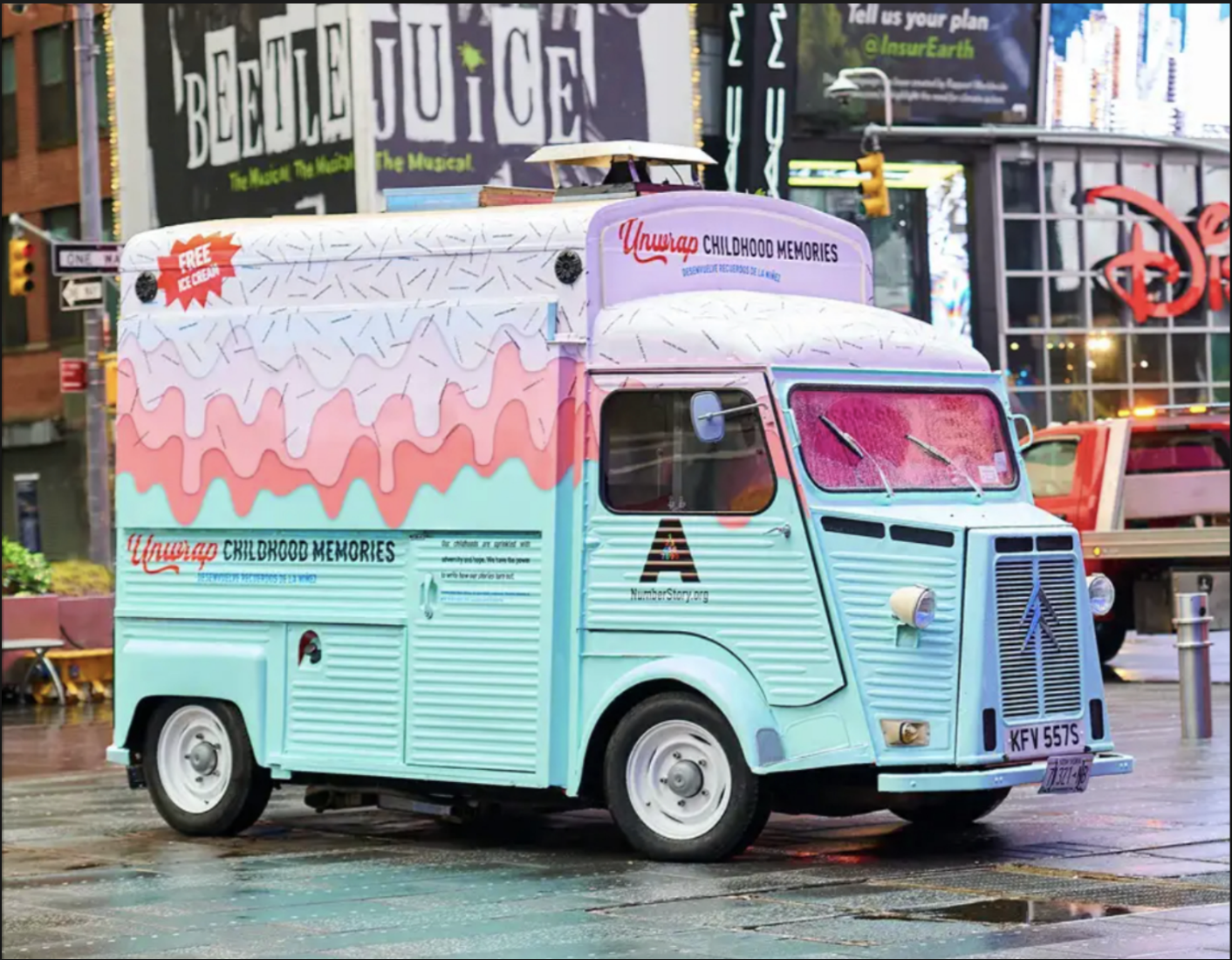
Pick a vehicle, drop in your website, and Merlin AI brings your brand activation to the streets instantly.
Bring Your Brand to the Streets.®

Author
Social Media Manager @ FTP Agency
Ashley Elarde is a social media strategist, content creator, and experiential marketing professional with experience bringing brands to life through engaging digital content. She has helped execute campaigns for brands across beauty, fashion, retail, and entertainment, developing campaigns that drive engagement and meaningful consumer connections.
Experiential events put people inside a brand rather than in front of it, which is the whole distinction from every other kind of event.…
Read more →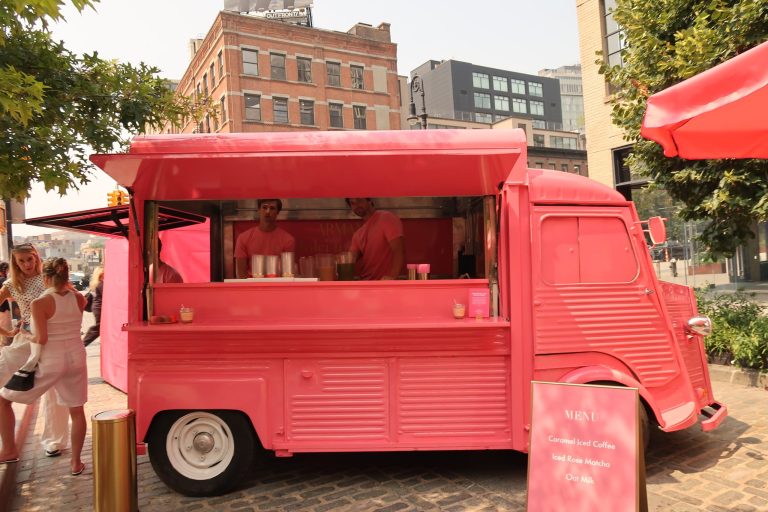
Experiential design is the practice of designing a space people move through rather than a surface people look at, and that single difference is…
Read more →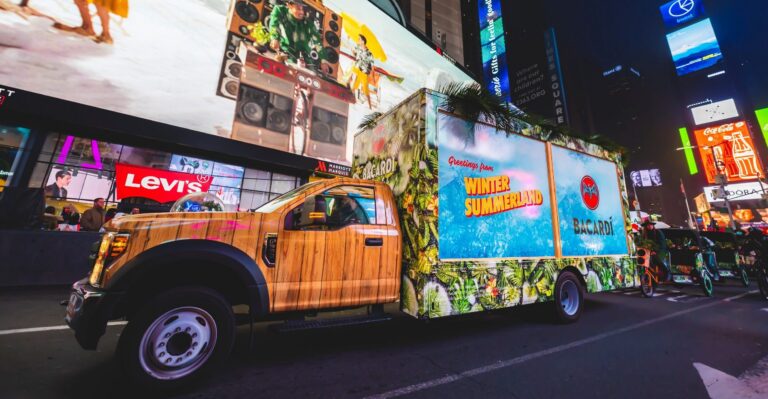
Choosing a brand activation company is difficult for a specific reason: every portfolio looks good, and none of them show you the part that…
Read more →
We use and share personal information through cookies and similar technologies on our sites to personalize your shopping experience and ads. Others may use this information for their own marketing and business purposes. . Check our Privacy Policy for more details.
Browser Opt-Out Honored
We use and share your personal information with others to personalize your shopping experience and show you targeted ads on other sites based on your interests and online activities.
Online Info includes cookies, pixel tags, and similar technologies connected to your browser or device. Offline Info includes information associated with your email address based on your other interactions with us.
We use and share your personal information with others to personalize your shopping experience and show you targeted ads on other sites based on your interests and online activities. Information includes cookies, pixel tags, and similar technologies connected to your browser or device (Online Info), as well as information associated with your email address based on your other interactions with us (Offline Info). Others may use this information for their own marketing and business purposes.
You can choose to opt out of sharing one or both types of information.