Top 5 Experiential Marketing Strategies to Elevate Your Brand

By: Benjamin Goldberg 11 min read

experiential marketing strategies

Experiential marketing strategies turn advertising into something people take part in, and in a market saturated with digital ads, that participation is what makes a brand memorable. Today’s consumers crave authentic, immersive moments that connect them to a brand beyond a single transaction, and the right strategy delivers exactly that: real-world, interactive experiences that engage people on a deeper level than a banner ever could.

This guide breaks down five proven experiential marketing strategies, pop-up shops, mobile food trucks, interactive installations, live events, and guerrilla marketing, with why each works, how to use it, and a real activation that shows it in action. Then it covers how to choose the right one for your goal.

Key Takeaways

  • Participation beats promotion: The best experiential strategies invite people to touch, taste, and interact, not just watch, which is what makes them stick.
  • Five strategies, five jobs: Pop-ups, food trucks, interactive installations, live events, and guerrilla marketing each create a different kind of brand moment.
  • Match the strategy to the goal: Exclusivity points to a pop-up, sampling to a food truck, immersion to an installation, and buzz to a guerrilla stunt.
  • Design for sharing: Every strategy below works harder when it is built to be photographed and posted, turning attendees into a distribution channel.
  • Real brands prove the model: From Spindrift’s immersive glass-truck build to branded food-truck tours, these strategies drive real, on-brand activations.

What Is an Experiential Marketing Strategy?

An experiential marketing strategy is a plan for connecting with an audience through a live, hands-on experience rather than a one-way ad. Instead of promoting a product, it crafts a multi-sensory moment, a pop-up, a sampling tour, an immersive installation, that people participate in and remember. It is a fast-growing approach for good reason: the events and experiential marketing segment dominated the broader immersive marketing market in 2024, according to Grand View Research.

The five strategies below are the most effective ways to put that approach to work. Each breaks away from conventional advertising to bring a brand directly to its audience in a memorable, interactive way.

5 Experiential Marketing Strategies That Elevate Your Brand

Use these experiential marketing strategies to drive more in-person engagement with your brand.

1. Pop-Up Shops: Create Exclusivity and Urgency

Pop-up shops are one of the most effective experiential marketing strategies because they engage customers in a limited-time, exclusive setting. Unlike a permanent storefront, a pop-up creates urgency: people know they have a short window to visit, which makes them more inclined to show up and take part. They generate buzz and media attention, give customers a hands-on way to interact with products and staff, and let a brand test new locations or markets before committing to a permanent space.

To maximize engagement, design the pop-up with a unique theme, interactive elements, and exclusive products or offers, and build in photo-worthy moments people want to share. A beauty brand might run a try-before-you-buy pop-up with mini-makeovers and live tutorials, while a fashion label could preview a seasonal collection before it hits stores. For a deeper look at the format, see our guide to mobile pop-up shops.

2. Mobile Food Trucks: Bring the Brand to the People

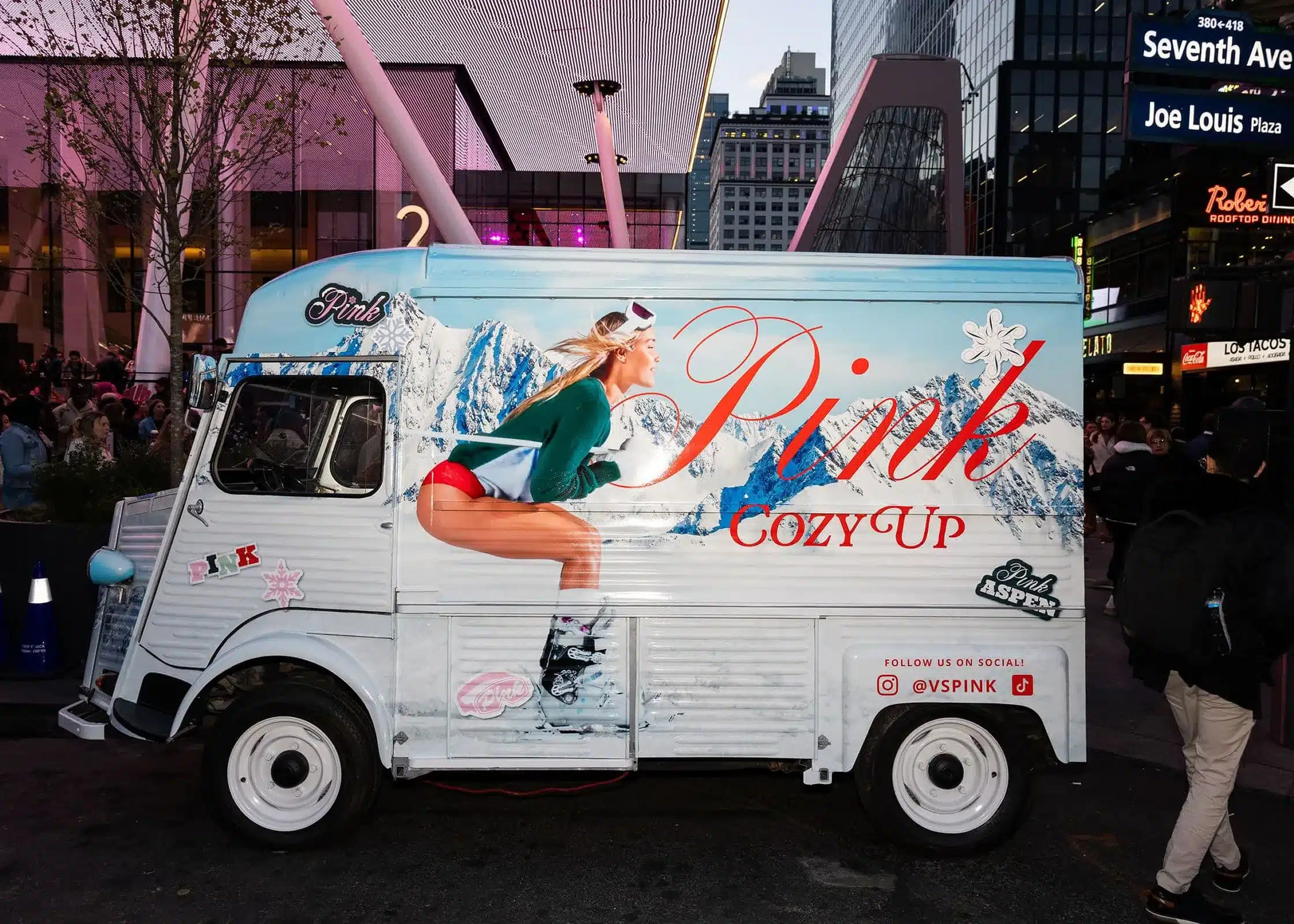
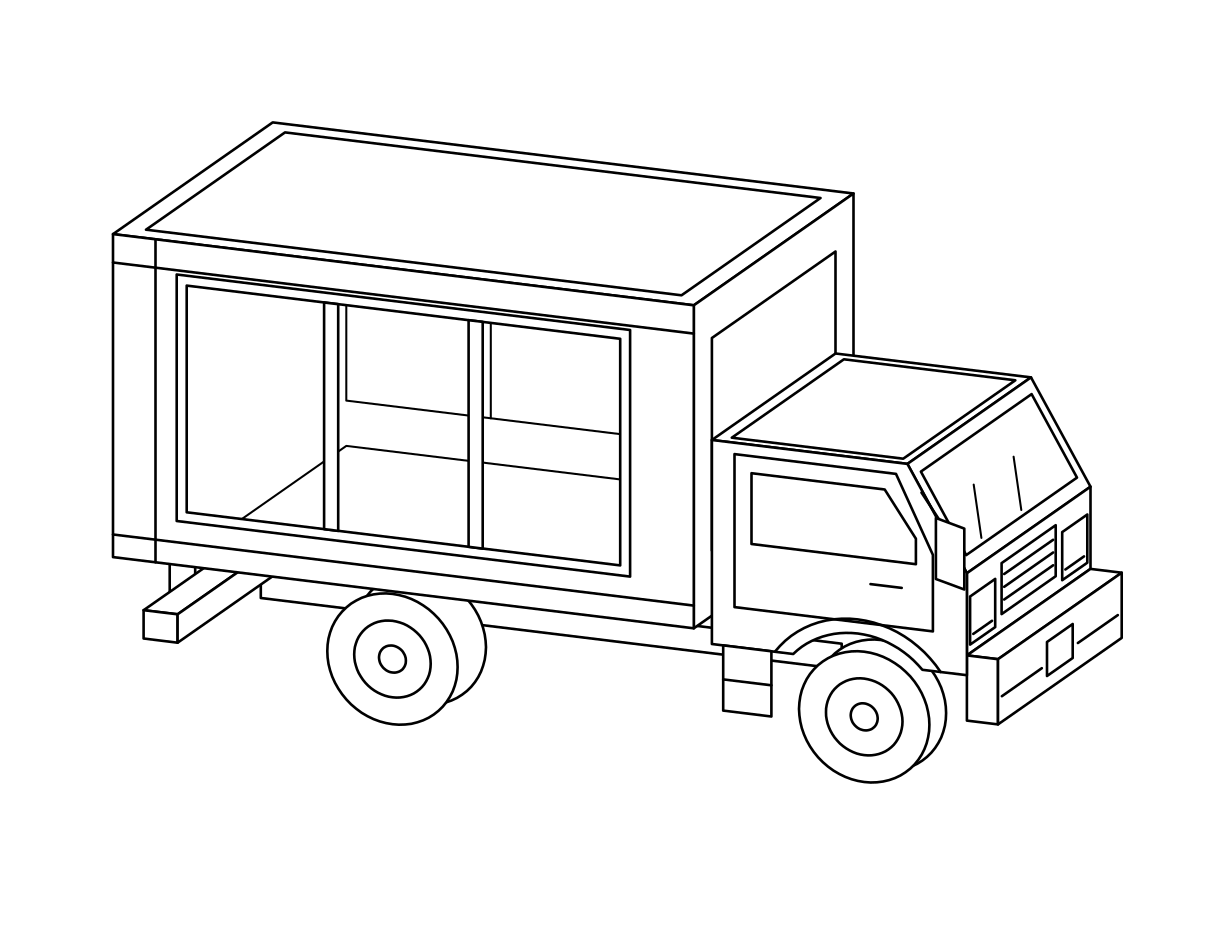
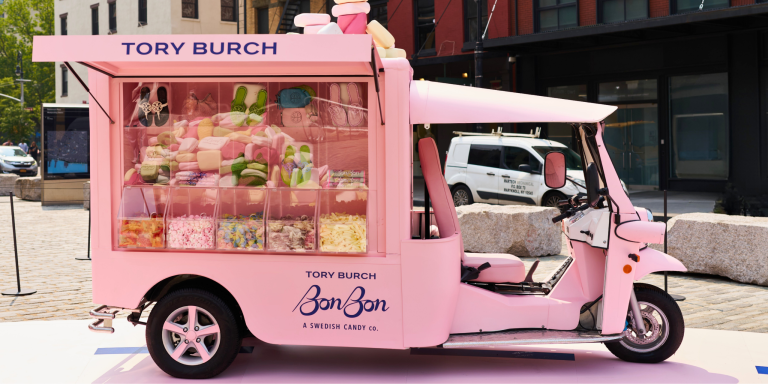
Food trucks are not just for street food, they are a powerful experiential marketing tool that brings a brand directly to its audience. They create high-touch, face-to-face engagement, they are mobile so a brand can reach different demographics and locations easily, and they combine taste, smell, and visual branding into a single sensory experience. Even brands outside the food world use them: a coffee brand can tour a branded truck between cities offering free samples, or a wellness brand can run a healthy-bites truck alongside fitness demos.

Fever-Tree took a branded mixer truck on the road with FTP to serve crafted mocktails and espresso martinis, handing out samples and beating its campaign goal by 70 percent. To make the strategy work, the truck should be fully branded with engaging design and an interactive element, a tasting, a live demo, or a giveaway. For help picking the right vehicle, see our guide to experiential marketing vehicles.

3. Interactive Installations: Make the Brand an Experience

Static ads can only go so far, but an interactive installation turns marketing into an unforgettable real-life experience. Whether it is a 360-degree photo moment, an immersive themed build, or a hands-on demo, an installation makes people feel like part of the brand story. It builds emotional connection by engaging people directly, it encourages social sharing because people love posting these moments, and it engages multiple senses at once with visuals, sound, touch, and even scent.

The key is designing an installation that immerses people in the brand’s narrative. A sneaker brand could build a custom shoe-design station inside a glass truck where visitors personalize footwear while onlookers watch, and a travel brand could create a virtual destination experience inside an Airstream. Spindrift shows the strategy at its best, which is covered in the case study below.

4. Live Events and Brand Activations: Engage in Real Time

Live events and brand activations bring a product to life, giving customers a first-hand experience no ad can match. Whether it is a concert, a festival, a product launch, or a charity event, a live activation lets people engage with the brand face to face in a memorable setting. It builds personal relationships through direct interaction, it creates excitement and exclusivity that deepen loyalty, and it opens the door to collaborations with influencers, musicians, and local partners.

To use the strategy well, build in live entertainment, giveaways, interactive booths, and exclusive product reveals so every visitor leaves with a memorable moment. A sportswear brand launching a new line, for example, can create a high-energy event that immerses both new and loyal customers in the brand rather than relying on digital ads alone.

5. Guerrilla Marketing: Unexpected and Unforgettable

Guerrilla marketing is all about surprise and creativity, using unconventional tactics to grab attention where people least expect it. Flash mobs, public stunts, surprise giveaways, and interactive street art all thrive on creating viral-worthy moments. It creates high-impact impressions without a massive budget, it generates organic buzz through word-of-mouth and social shares, and it lets a brand be disruptive in a way that sets it apart from competitors.

Guerrilla marketing works best when it is bold, unexpected, and highly shareable. Picture a fashion brand staging a pop-up runway show in a busy square, or a coffee company setting up surprise espresso stations in unexpected places. Even a tech brand can join in with an augmented-reality scavenger hunt that leads people to hidden discounts, so long as the moment is memorable enough to share.

Case Study: Spindrift’s Immersive Glass-Truck Installation
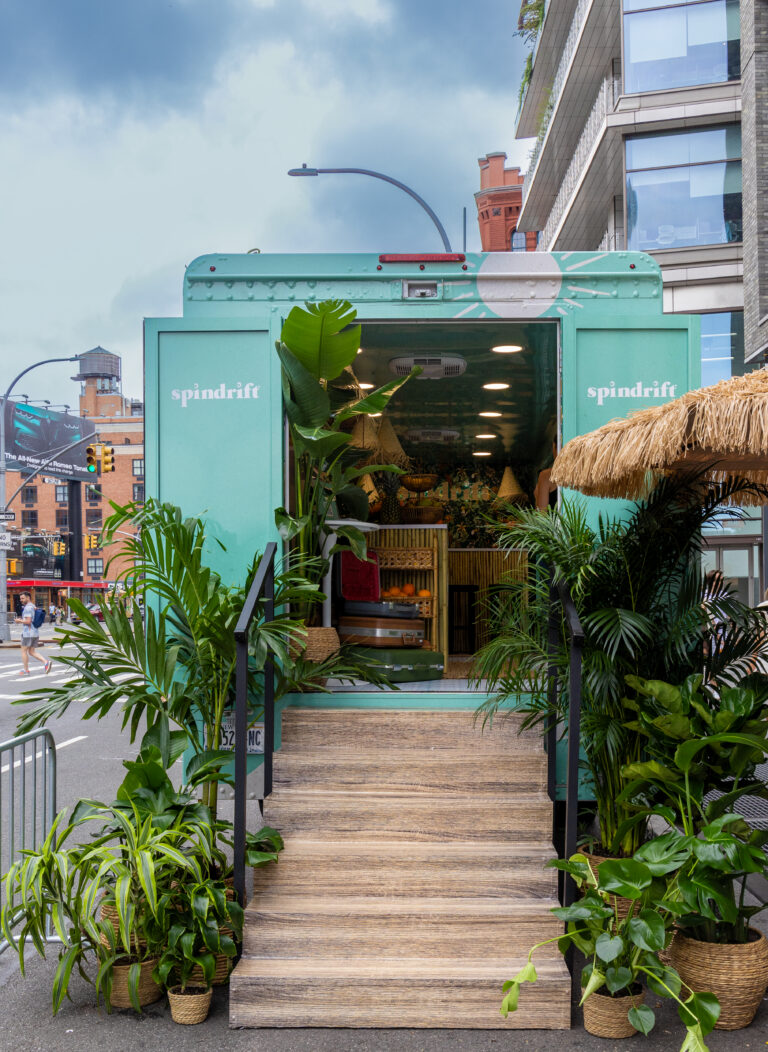
Green Spindrift pop-up truck with plants and wicker furniture parked on a busy city street.

Spindrift‘s Greetings from Paradise activation shows the interactive-installation strategy at its best. In the middle of a scorching New York summer, the sparkling-water brand wanted to transport people to a tropical paradise, so FTP Agency transformed a glass truck into an interactive beach bar stationed in front of the Broadway-Lafayette subway in SoHo.

The build engaged all five senses: flavor sampling, a vacation playlist, and air conditioning standing in for a sea breeze, while the truck’s transparent walls turned the whole tropical scene into a rolling window display people could see from across the street. Guests snapped Polaroids, sent postcards with free-drink offers, and booked mocktail tastings at the Tiki Bar.

That is what an interactive installation does that a standard ad cannot: it turns a product into a place people step into and want to share. The immersive, multi-sensory design gave passersby a reason to stop, participate, and post, extending the brand’s reach far beyond the crowd on the sidewalk.

How to Choose the Right Experiential Marketing Strategy

With five strategies on the table, choosing between them comes down to the outcome you want most. If the goal is exclusivity and urgency, run a pop-up. If it is sampling and face-to-face reach, use a food truck. If it is deep immersion and social content, build an interactive installation. If it is real-time relationship-building, host a live event. And if it is maximum buzz on a lean budget, go guerrilla.

The strongest campaigns often combine a few: a food truck with an installation built into it, or a pop-up amplified by a guerrilla stunt. Whichever you choose, the reason they all work is the same, and it is worth understanding before you invest. See our breakdown of the benefits of experiential marketing for why participation beats promotion every time.

The Bottom Line

Experiential marketing is redefining how brands connect with people by trading passive advertising for interactive, immersive moments that leave a lasting impact. Pop-up shops create exclusivity, food trucks bring the brand to the people, interactive installations make the brand an experience, live events build real-time relationships, and guerrilla marketing generates unforgettable buzz. The best strategy is the one that fits your goal, and the best campaigns turn customers from observers into participants. Start with the outcome you want, pick the strategy that delivers it, and design the experience to be worth sharing.

Frequently Asked Questions

An experiential marketing strategy is a plan for connecting with an audience through a live, hands-on experience rather than a one-way ad. Instead of promoting a product, it creates a multi-sensory moment, like a pop-up, sampling tour, or immersive installation, that people participate in, remember, and share.

Five of the most effective are pop-up shops, mobile food trucks, interactive installations, live events and brand activations, and guerrilla marketing. Each creates a different kind of brand moment, from exclusivity and sampling to immersion and buzz, so the best choice depends on your specific goal.

Start with the outcome that matters most. Exclusivity points to a pop-up, sampling and reach point to a food truck, immersion and social content point to an installation, relationship-building points to a live event, and maximum buzz on a lean budget points to guerrilla marketing.

Because it invites participation instead of demanding attention. People engage with the brand in person, which builds emotion, memory, and trust far more strongly than a passive impression, and they naturally share the moment, extending the reach well beyond the people on site.

A pop-up shop is a temporary, branded retail or experience space that creates urgency and exclusivity. Because it is only around for a limited time, it drives people to visit, generates media and social buzz, and lets a brand test new markets or products before committing to a permanent location.

Brands use branded food trucks to bring a live, sensory experience directly to their audience, offering samples, demos, or giveaways in high-traffic locations. Even non-food brands use them as mobile activation platforms, since the truck combines eye-catching branding with face-to-face, hands-on engagement.

Guerrilla marketing uses unconventional, surprising tactics, like public stunts, flash mobs, or interactive street art, to grab attention where people least expect it. It aims for high-impact, shareable moments that generate organic buzz and word-of-mouth, often without the large budget a traditional campaign requires.

It depends on the launch. A pop-up or interactive installation works well for a high-visibility reveal, a food truck suits a sampling-driven launch, and a live event fits a headline moment. Many launches combine strategies, such as a branded truck placed inside a larger live activation.

Set one primary metric before launch, then track it: foot traffic, samples served, engagement, social impressions and shares, sign-ups, or earned media value. Building a capture step into the experience, like a branded hashtag or a QR code, ties the in-person moment to a result you can report.

Yes, and the strongest campaigns often do. A food truck can house an interactive installation, a pop-up can be amplified by a guerrilla stunt, and a live event can feature several formats at once. Combining strategies layers different kinds of engagement into a single, higher-impact activation.

Benjamin Goldberg

Author

Benjamin Goldberg

CEO @ FTP Agency

Benjamin H. Goldberg is passionate about bringing brands to life on the streets. As CEO of Food Truck Promotions and co-founder of the New York and Los Angeles Food Truck Associations, he helps create unforgettable mobile experiences that blend great food, creative branding, and meaningful connections with audiences everywhere.

More posts
How Mobile Tours Maximize Your Marketing ROI