How to Choose the Right Experiential Marketing Vehicle for Your Brand

By: David Botbol 12 min read

Experiential Marketing Vehicle

Experiential marketing vehicles are custom-branded vehicles that bring a brand directly to customers through a live, hands-on experience, and choosing the right one is the first real decision of any activation. A food truck, a tuk tuk, a vintage Citroen, and a glass truck each create a very different moment, so the vehicle you pick shapes the budget, the locations, the audience, and the kind of result you can expect.

This guide walks through the main experiential marketing vehicles in one place: what each one is, why it works, a real brand that used it, and who it fits best. Then it lays out a simple way to choose between them, so by the end you will know exactly which vehicle matches your goal.

Key Takeaways

  • The vehicle sets the experience: A food truck, a tuk tuk, a Citroen, and a glass truck each shape a different kind of brand moment, so the format should follow the goal.
  • Match the format to the product: Food and drink point to a truck or cart, product display points to a glass truck, and premium beauty points to an Airstream or Citroen.
  • Size and placement matter: Compact vehicles like carts, tuk tuks, and the Metro Mite fit tight and indoor spaces, while trucks and Airstreams suit larger footprints and tours.
  • Real brands prove the format: From Fever-Tree and Ralph Lauren to KAYALI and Spindrift, each vehicle below has driven a real, on-brand activation.
  • Start with the goal, not the vehicle: Name the one outcome that matters most, and the right vehicle usually becomes obvious.

What Is an Experiential Marketing Vehicle?

An experiential marketing vehicle is a custom-branded vehicle, a food truck, cart, tuk tuk, Airstream, glass truck, and more, used to bring a brand directly to customers in person rather than to sell food or freight. Instead of an ad people scroll past, it creates a live, sensory moment people can taste, touch, and photograph, which is why live experiences consistently outperform passive ads: EventTrack research finds most consumers are more inclined to purchase after attending an event.

The vehicles below all do that job, but each does it differently. Here is the full lineup, with a real brand example for each, followed by how to choose.

The Best Experiential Marketing Vehicles

Below, are the top experiential marketing vehicles for driving in-person brand engagement.

Food Truck

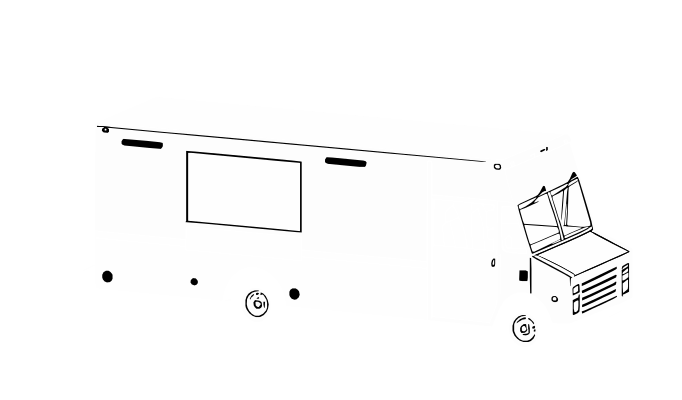
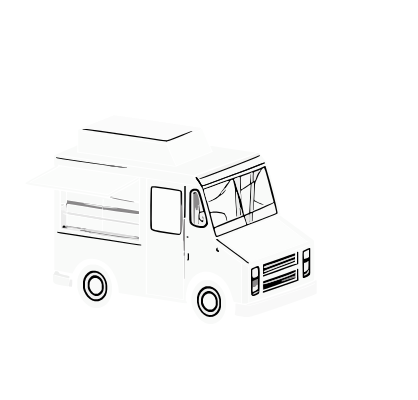
The food truck is the all-in-one mobile powerhouse and the most recognizable experiential marketing vehicle there is. It moves between high-traffic locations under its own power, carries a full-coverage wrap, and can include real kitchen capability, so it serves food, drinks, or samples on the spot. That versatility makes it the default for sampling campaigns, launches, and multi-city tours.

Example: Fever-Tree took a branded mixer truck on the road with us to serve crafted mocktails and espresso martinis, handing out samples and beating its campaign goal by 70 percent. When taste is the pitch, the food truck delivers it.

Food Cart

For a smaller, more intimate setup, the food cart is compact, portable, and agile. It fits where larger vehicles cannot, indoor venues, mall atriums, plazas, and tight street corners, and it puts the brand at eye level right in the flow of foot traffic. It is also more cost-effective, which makes it a strong choice for a focused sampling moment or an added touchpoint at a larger event.

Example: Revlon’s Red Hot Cocoa Cart served over 1,000 people and drove 6M+ impressions from a single, well-placed cart, proof that a compact format can create an outsized moment.

Tuk Tuk

The tuk tuk, also called the E-tuk, is exotic, fun, and endlessly eye-catching. Its compact, three-wheeled silhouette turns heads and earns social shares, and its nimble build weaves into festivals, campuses, and dense urban streets a truck cannot reach. It is the format for playful, photogenic, social-first activations that want a big impression in a small footprint.

Example: Nespresso built a vintage E-tuk into a dual showroom and coffee shop for its first national tour, hitting four cities and handing out tens of thousands of samples, while Miu Miu used one as a fashion-forward mobile showroom.

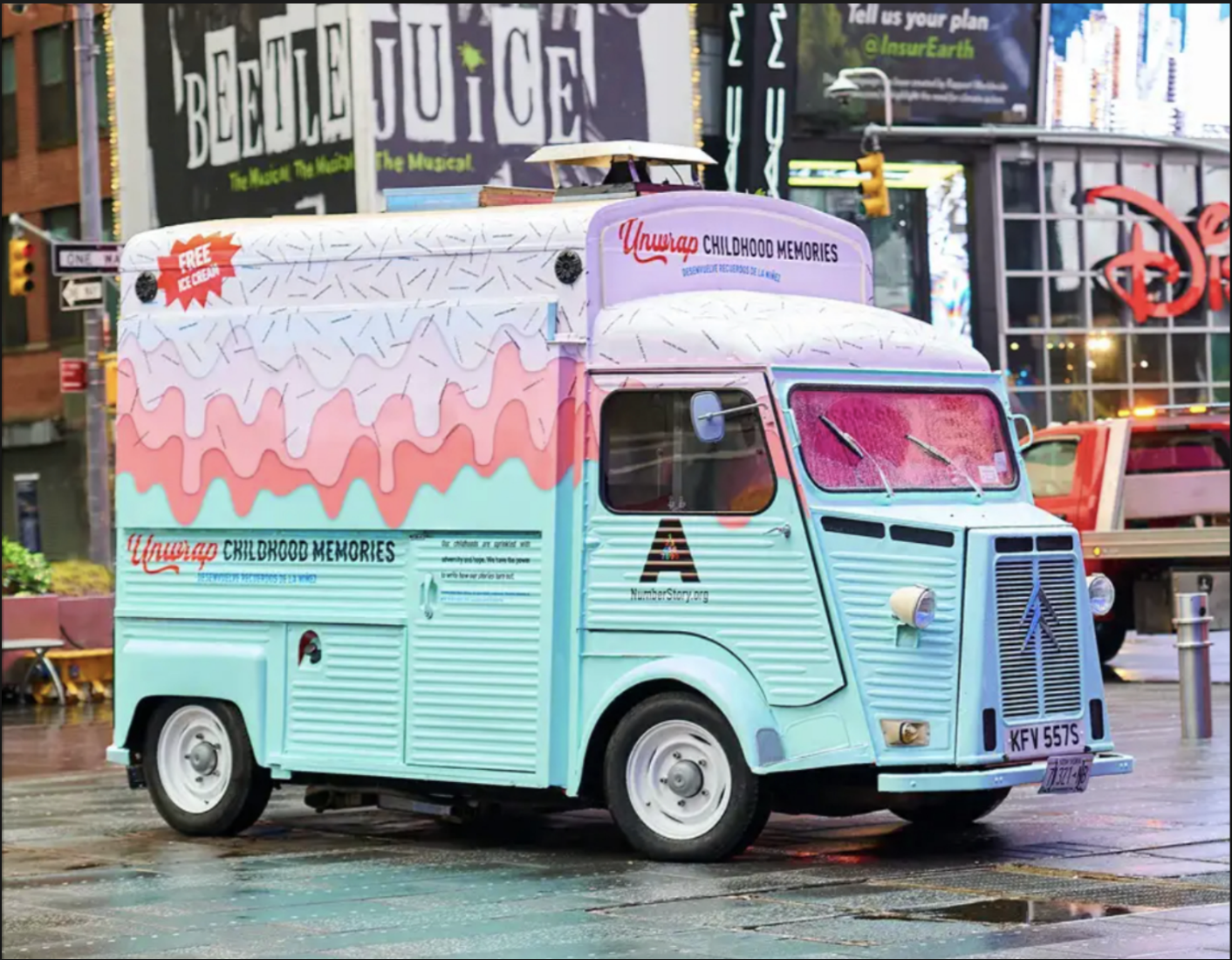
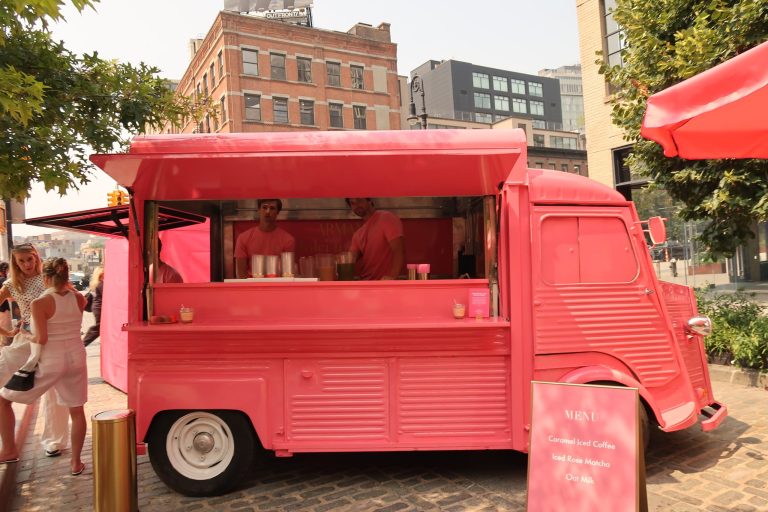
Citroen

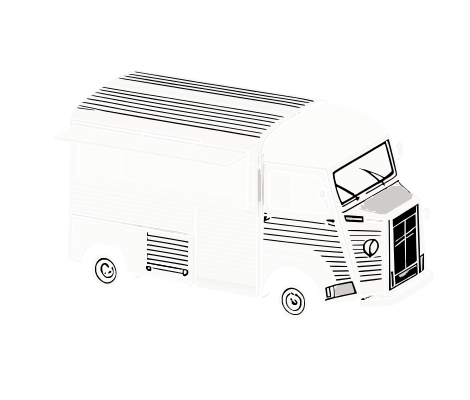
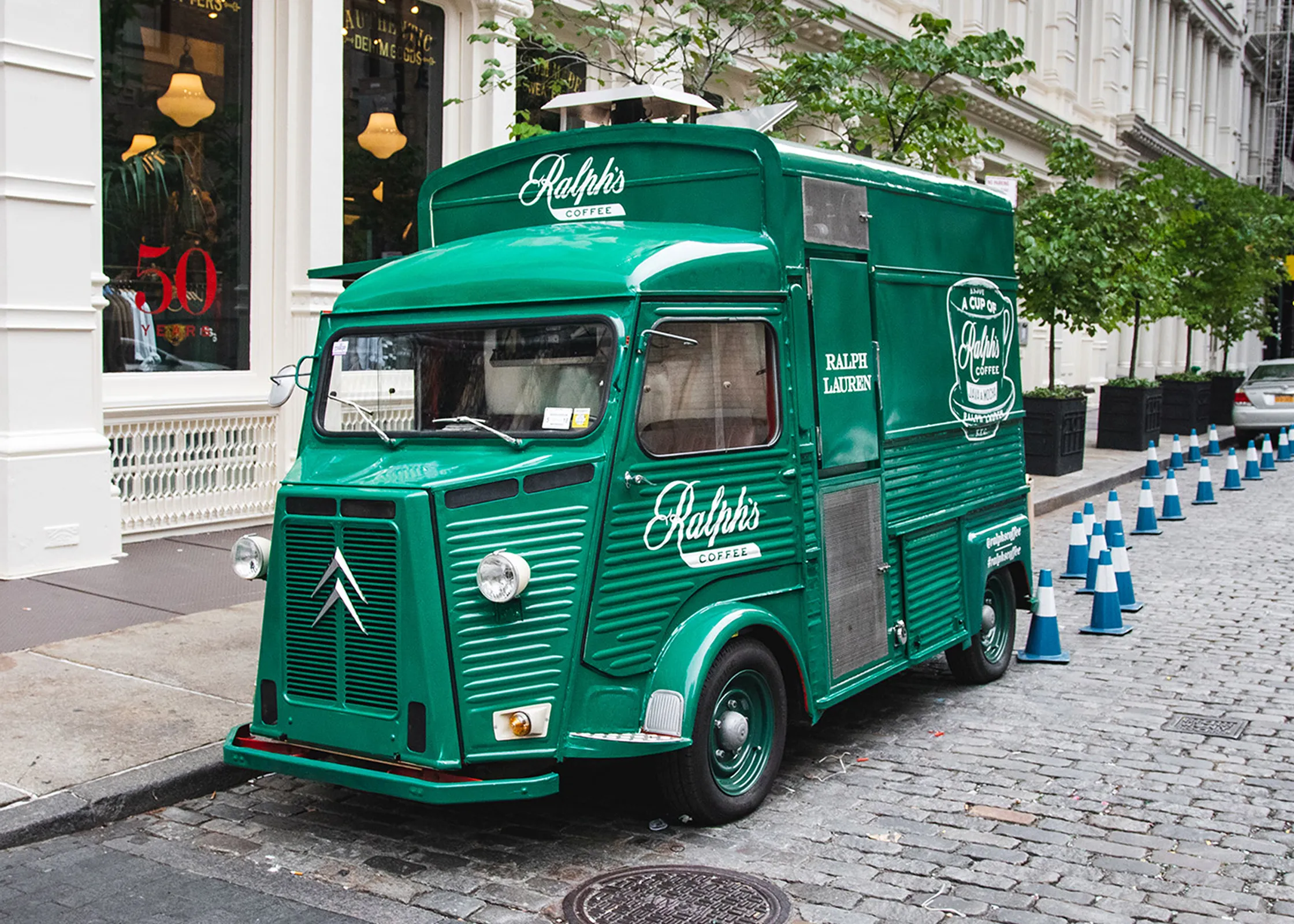
The classic Citroen brings vintage style together with modern branding. Its timeless French silhouette reads as premium the moment people see it, and its service window makes it a natural refined coffee-and-treats moment. That built-in charm makes it a favorite for fashion, beauty, and luxury brands that want the vehicle itself to feel like a boutique.

Example: Zara wrapped a vintage Citroen in a minimalist, elegant design to welcome its Hudson Yards store to the neighborhood, serving coffee and branded cookies. For the fuller Citroen story, see the Ralph Lauren case study below.

Chevy P10

The Chevy P10 is a retro step van that blends nostalgia with trendiness. Its classic silhouette and bold, flat sides make it one of the best canvases in the fleet for a fully themed build, not just a wrap but props, walls, and photo installations, so a brand can construct a whole world around the vehicle. It is photo-first by design.

Example: Tree Hut turned a Chevy P10 into a full Electric Beach pop-up in Miami, with a surfboard display wall, a life-ring photo op, and a calligraphy station, the vehicle becoming the entire scene.

Metro Mite

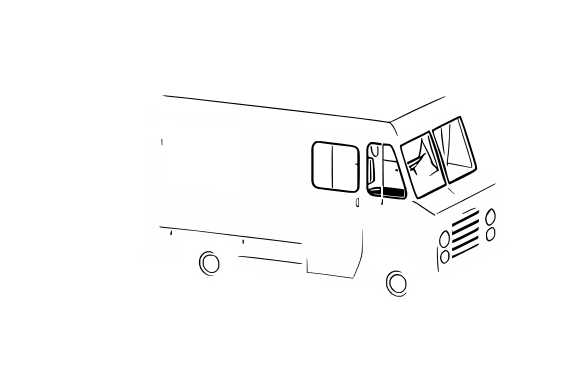
The Metro Mite is compact yet impactful, an ultra-compact retro step van that navigates narrow streets and tight spaces a full-size truck cannot. Despite its size, it has a pop-out vendor window and an on-board fridge, so it can actually serve drinks and samples, which makes it ideal for a mobile espresso bar or an intimate sampling moment in a mall atrium or plaza. 

Best for: a compact, food-capable presence in dense or indoor spaces, for example a coffee brand running a mobile espresso bar in a busy city center.

Airstream Bambi

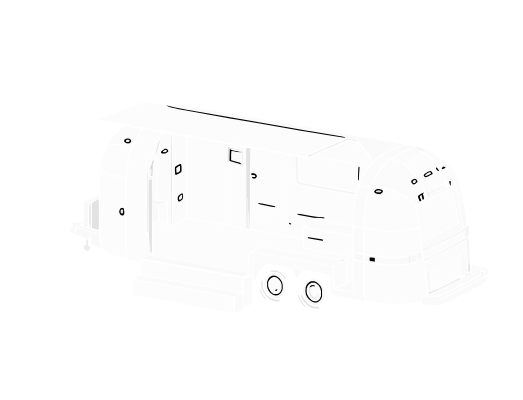
The Airstream Bambi is compact elegance on wheels, and unlike a service-window vehicle, it has a spacious, polished interior that guests step inside. Its iconic silver silhouette reads as premium and sophisticated, which makes it a natural walk-in showroom, lounge, or beauty studio for high-end brands.

In practice: KAYALI built a fragrance café inside an Airstream Bambi that traveled from New York to Miami, turning a scent into a space guests could physically step into.

Glass Box Truck

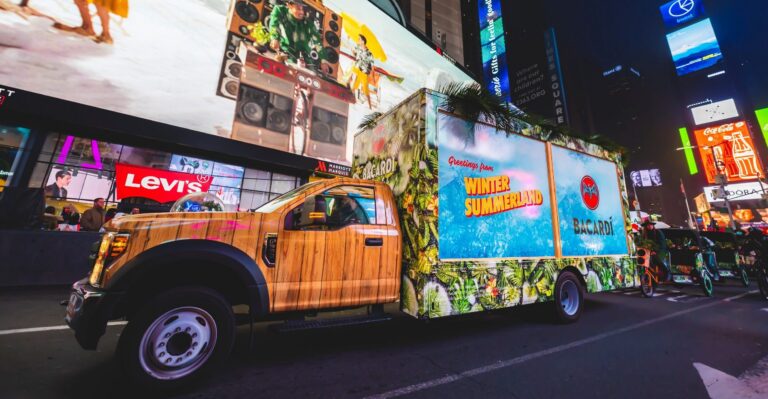
The glass truck, or glass box truck, is a moving showcase with transparent walls that put the product on full display from every angle. It is a rolling storefront window, ideal for product launches, live demonstrations, and immersive reveals where visibility is the whole point, and it is especially striking at night with interior lighting glowing through the glass.

Example: Spindrift transformed a glass truck into a see-through tropical beach bar in SoHo, and Loungefly used one as a pastel polka-dot Disney showroom at The Grove, both letting people see the entire experience from across the street.

Airstream Stage

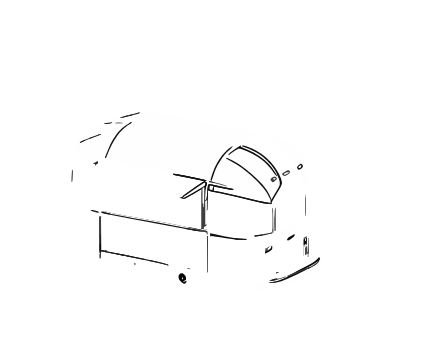
The Airstream Stage is a show-stopping mobile venue that folds out into a performance space. It is built for live music, DJs, speeches, and product launch presentations, a ready-made branded stage that puts the brand center stage at festivals, concerts, and community events, with an iconic silhouette that draws a crowd on its own.

Best for: a live, headline moment where an audience gathers to watch, for example a brand hosting a small performance or a product reveal at a festival.
How to Choose the Right Experiential Marketing Vehicle

With the full lineup in view, choosing between these experiential marketing vehicles comes down to a few clear questions, applied in order.

Start With Your Goal

Name the one outcome that matters most. Sampling and trial point to a food truck or cart, deep product display points to a glass truck, a premium walk-in experience points to an Airstream Bambi or Citroen, a live performance points to the Airstream Stage, and a playful, social-first moment points to a tuk tuk. The goal usually eliminates most of the list at once.

Match the Format to the Product

The product sets the physical requirements. Food and beverage needs kitchen or refrigeration, like the food truck or the Metro Mite’s vendor window and fridge. A product you want seen from every angle needs a glass truck. A premium beauty or fashion item suits the Citroen or Airstream. Let the product point to the format.

Consider Size, Placement, and Route

Where the activation lives narrows the field further. Tight urban sidewalks, indoor venues, and mall atriums favor carts, tuk tuks, and the Metro Mite. Multi-city tours favor road-ready trucks and Airstreams. Festivals and campuses have their own access rules that often decide the format before anything else does.

Let an Agency Match It to You

With the lineup and these filters in hand, the last step is easy. We match the vehicle to your goal, product, audience, and route from our own fleet, then handle the wrap, fabrication, permits, and staffing, so you show up to a finished activation built around the right vehicle.

Case Study: Ralph Lauren's Vintage Citroen

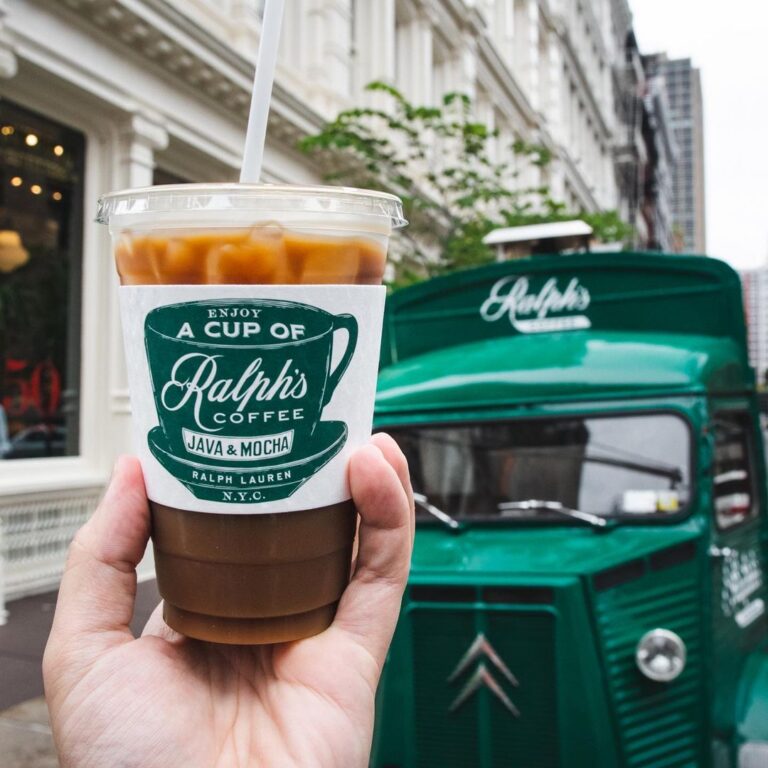
Hand holding an iced coffee in front of a green Ralph’s Coffee truck on a busy city street.

Ralph Lauren’s Citroen is the clearest proof of what the right experiential marketing vehicle can do. When the brand launched Ralph’s Coffee, they asked FTP Agency to fabricate a custom 1943 vintage Citroen to promote the opening of its first coffee shop at the Fifth Avenue flagship. The eye-catching Citroen served Ralph’s Coffee blends to New Yorkers passing by, and it fit the brand’s premium, heritage identity perfectly.

It worked so well that Ralph Lauren brought the Citroen back for years of special occasions, from the SoHo Polo men’s store opening to cold brew and coffee soft serve moments. The vintage Citroen coffee truck became such a hallmark of the brand that Ralph Lauren went on to open permanent Ralph’s Coffee locations. That is what happens when the vehicle and the brand are a true match: the activation stops being a one-off and becomes part of the brand’s story.

The Bottom Line

There is no single best experiential marketing vehicle, only the right one for the job. A food truck serves at volume, a cart fits where nothing else can, a tuk tuk turns heads, a Citroen brings premium charm, a Chevy P10 is a themed canvas, a Metro Mite packs food capability into a tiny footprint, an Airstream Bambi is a walk-in showroom, a glass truck puts the product on full display, and an Airstream Stage gives the brand a live stage. Start with the goal, let it point to the format, let the product and the route narrow it further, and the choice becomes clear. Get the vehicle right and every later decision, the build, the locations, the staffing, follows naturally from it.

Frequently Asked Questions

An experiential marketing vehicle is a custom-branded vehicle, such as a food truck, cart, tuk tuk, Airstream, or glass truck, used to bring a brand directly to customers through a live, in-person experience. Instead of an ad people scroll past, it creates a real moment people can taste, touch, and share.

The main types are food trucks, food carts, tuk tuks, vintage Citroens, the Chevy P10, the Metro Mite, the Airstream Bambi, glass box trucks, and the Airstream Stage. Each shapes a different kind of brand moment, from high-volume sampling to premium walk-in showrooms to live performance stages.

Start with your single most important goal. Sampling points to a food truck or cart, product display points to a glass truck, a premium walk-in experience points to an Airstream or Citroen, live performance points to the Airstream Stage, and a playful social moment points to a tuk tuk. The goal usually makes the choice clear.

A food truck is a full-size mobile kitchen that drives itself and handles volume, weather, and multi-city tours. A food cart is compact, fits tight and indoor spaces, and suits close, one-on-one sampling. Many brands pair the two to cover both high-volume and intimate moments in one campaign.

It depends on the product. A glass truck is ideal when you want the product seen from every angle, an Airstream or Citroen suits a premium beauty or fashion launch, and a food truck or cart works when sampling drives the launch. The Chevy P10 is strong for a fully themed, photo-first reveal.

The most distinctive silhouettes are the tuk tuk, the vintage Citroen, the Chevy P10, and the iconic Airstream, each a natural photo moment. The glass truck also stands out, especially lit at night, because passersby can see the entire experience through its transparent walls.

Yes. Most are built for mobility, from a single-location pop-up to a multi-city tour. Road-ready trucks and Airstreams are especially suited to long tours, while compact vehicles like carts and tuk tuks excel at dense, high-traffic placements within a market. The route is planned as a sequence with logistics handled.

Cost depends on the vehicle, the build and wrap, the length of the activation, staffing, and the number of markets. Compact formats like carts and tuk tuks generally cost less than a full truck or Airstream tour. The best approach is to scope the campaign to your goal with an experienced partner.

Beauty, food and beverage, fashion, tech, entertainment, and lifestyle brands use them most, though nearly any brand can. The best fit is any product that becomes more compelling when customers see, touch, taste, or try it in person rather than only seeing it advertised.

Apply three filters in order: start with your primary goal, match the format to your product’s physical needs, then factor in size, placement, and route. An experiential agency walks you through this during the proposal stage and matches the vehicle to your goal, audience, and markets.

David Botbol

Author

David Botbol

EVP, Managing Director @ FTP Agency

David Botbol thrives on turning bold ideas into real-world brand moments. As Executive VP and Managing Director of Food Truck Promotions, and a leader within the New York and Los Angeles Food Truck Associations, he draws on a background in business development and startups to help brands connect with audiences through creative, unforgettable mobile experiences.

More posts
The 5 Biggest Benefits of Experiential Marketing (and Why They Work)