The best fashion marketing campaigns do not just look good in a case study deck, they get people to show up, try something, and buy.
Plenty of roundups list campaigns without explaining the mechanics. This one breaks down what the brand actually did, why the format worked, and the takeaway you can apply to your own launch.
Key Takeaways
- Every strong campaign has one clear moment: a launch, an opening, or a collaboration gives the work a reason to exist and a date to build toward.
- Physical experiences generate the content: the photos and video that power weeks of social almost always come from something that happened in real life.
- Format follows product: a fragrance launch, a collection drop, and a collab each need a different kind of activation.
- Location does half the work: parking outside a boutique opening or inside a festival puts you in front of an audience that is already assembled.
- Trial beats description: letting people touch, wear, or smell the product is the shortest route from interest to purchase.
What Makes a Fashion Marketing Campaign Work?
A fashion marketing campaign is a coordinated push built around a specific moment, such as a product launch, a store opening, a collaboration, or a season. The strongest campaigns share four traits: a single clear idea, a physical or visual centerpiece, a location where the target audience already gathers, and a content plan that keeps the moment alive after the day itself.
Context matters too. With the industry forecast for another year of low single-digit growth and consumers actively hunting for value, campaigns that earn organic attention are worth more than campaigns that only rent it. (Source: The Business of Fashion State of Fashion report.)
8 Fashion Marketing Campaign Examples and Why They Worked
1. Coach Cherry Parfum: Make a Fragrance Touchable
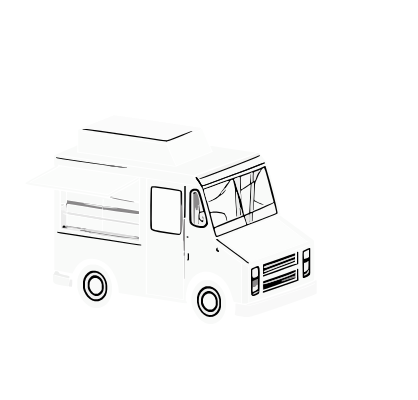
Fragrance is the hardest category to sell online because the product cannot be experienced through a screen. Coach solved that by bringing the Coach Cherry launch to customers in a branded mobile setting where they could actually smell it. The takeaway: when the product needs to be experienced, put it in the street, not just in the feed.
See the build in our Coach fragrance activation case study.
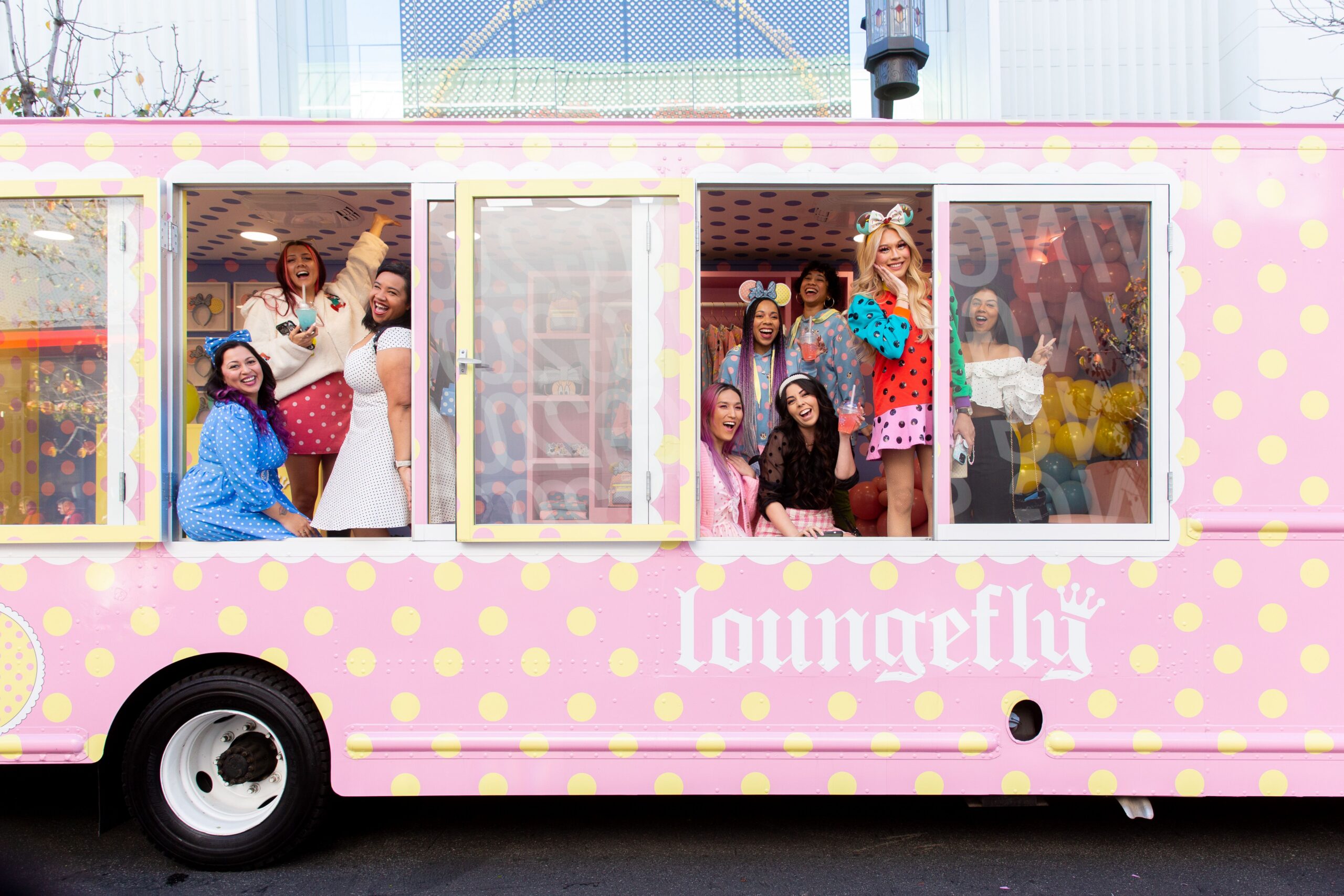
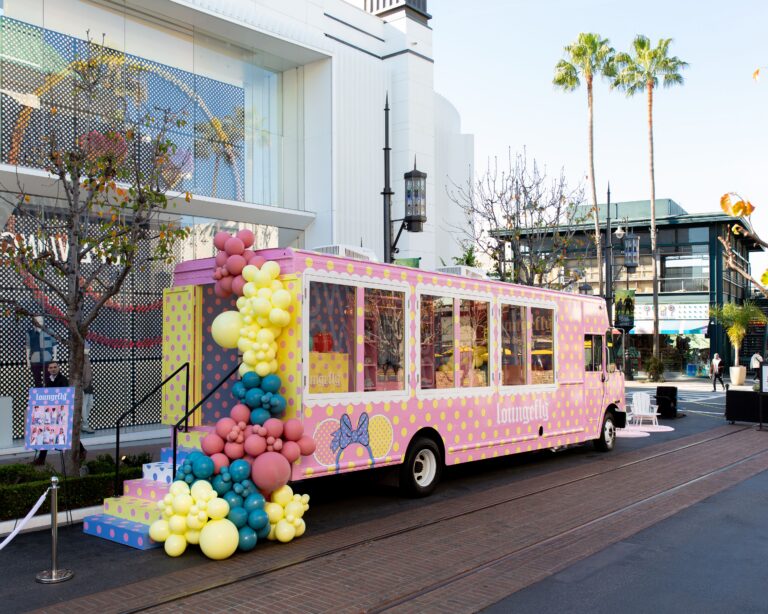
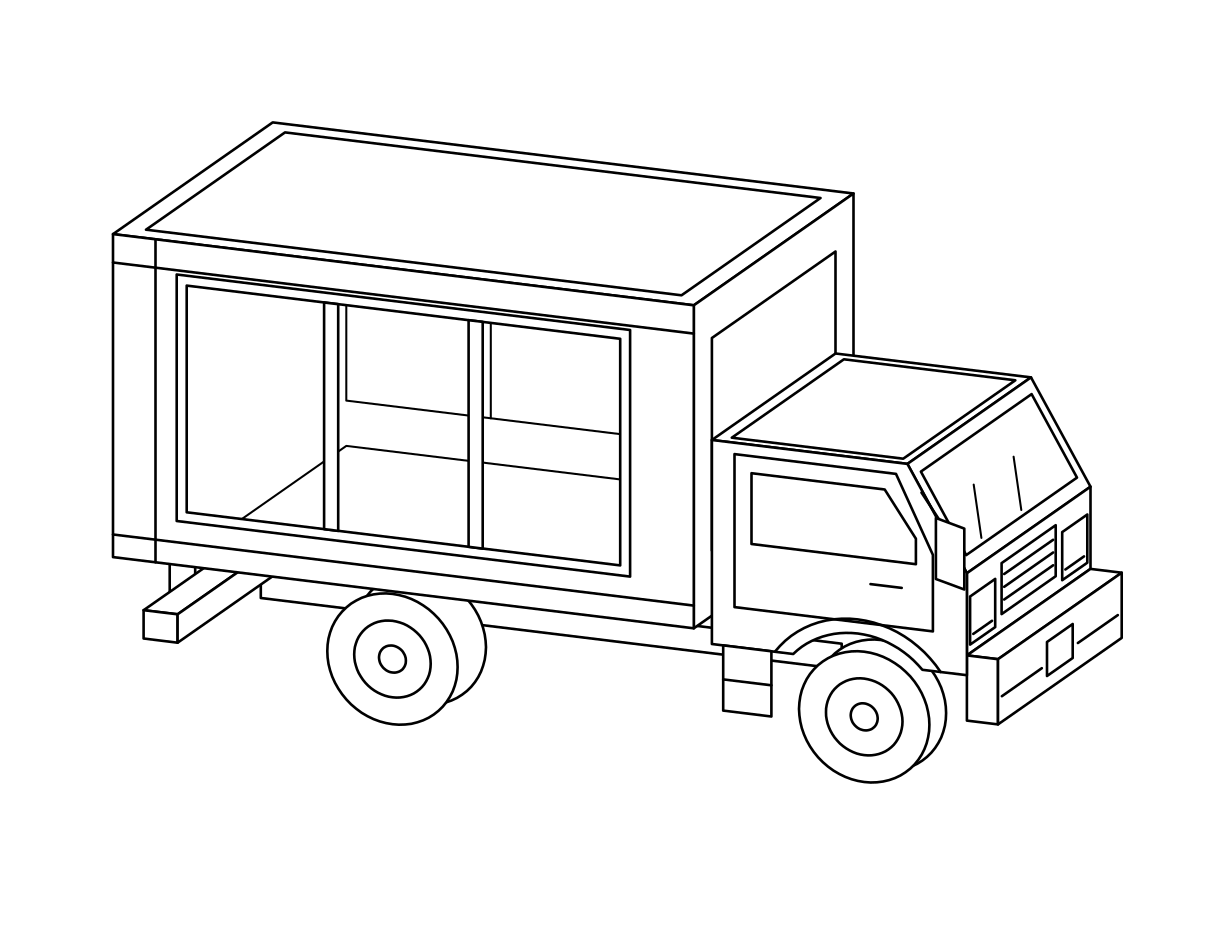
2. Loungefly Polka Dot Glass Truck: Turn Product Into the Ad
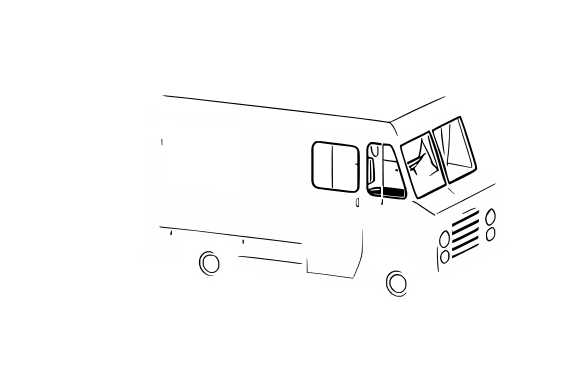
Loungefly leaned on visibility. A glass truck makes the merchandise itself the advertisement, visible from the sidewalk before anyone reads a word of copy. The takeaway: for highly visual, collectible products, transparency beats messaging.
Full details are in our Loungefly glass truck pop-up case study.
3. Boutique Opening Takeovers: Borrow the Crowd
A branded vehicle parked outside a store opening converts a private event into a public one. Passersby who were never on the invite list become part of the campaign. The takeaway: put the activation where a crowd already exists rather than building one from zero.
4. Multi-City Tours: Compound the Reach
One custom build that travels across several cities produces far more impressions than a single-market event, and each stop generates its own local content and press. The takeaway: if the build is good, make it work more than once.
5. Festival Activations: Meet the Audience Mid-Moment
Festival crowds are already in a social, photo-taking mindset, which raises the share rate on anything worth photographing. The takeaway: audience mindset is as important as audience size.
6. Collaboration Drops: Two Audiences, One Event
Collaborations work because each brand brings a distinct customer base to the same moment. The takeaway: a collab activation should feel like neither brand alone, or you lose the reason people paid attention.
7. Seasonal and Holiday Pop-Ups: Ride an Existing Occasion
Holiday shopping periods hand you built-in intent and foot traffic. The takeaway: the calendar is free demand, and campaigns timed to it start ahead. Our roundup of holiday pop-up shop ideas covers formats that work in that window.
8. Sampling Moments: Buy Trial, Not Impressions
Handing someone the product converts at a rate impressions never will, especially for beauty-adjacent fashion items and accessories. The takeaway: measure samples and try-ons, not just reach.
How to Apply These to Your Own Campaign
Start with the moment, then choose the format that fits the product and the city. A collection that needs to be seen up close calls for a mobile showroom; a collectible or highly visual product calls for a glass truck; a dense urban district may call for something smaller.
Our guide to experiential marketing vehicles compares the formats side by side, and you can see the full range of experiential vehicles we build and operate.
Case Study: How a Glass Truck Made the Product the Campaign