Fashion marketing has never been more crowded, more expensive, or more dependent on getting a real person to stop and pay attention.
The feed is saturated. Paid social costs climb every year. Meanwhile the brands pulling ahead are the ones creating moments people choose to show up for, photograph, and post, whether that is a collection launch, a boutique opening, or a mobile pop-up parked outside the store.
This guide covers what fashion marketing actually involves in 2026: the channels that matter, how campaigns are structured, and where in-person brand experiences fit into the mix.
Key Takeaways
- Fashion marketing is multi-channel by default: social, influencer, email, retail, and experiential all work together rather than competing for the same job.
- Attention is the scarce resource: with executives bracing for a tougher year, campaigns that earn organic reach beat campaigns that only rent it.
- Physical moments drive digital results: a launch event or pop-up generates the content that fuels weeks of social and email activity.
- Product trial converts: letting customers touch, wear, or sample a product shortens the distance between discovery and purchase.
- Measurement is the weak link: foot traffic, samples, content captured, and post-event sales should be tracked from the start, not estimated afterward.
What Is Fashion Marketing?
Fashion marketing is the practice of promoting apparel, footwear, and accessories brands through a mix of brand building and direct response. It covers everything from seasonal campaign creative and influencer partnerships to retail merchandising, email, paid media, and live brand experiences that put product in front of customers.
It differs from general retail marketing in one important way: fashion sells identity as much as product. A customer is not only buying a jacket, they are buying what the jacket says about them. That means storytelling, aesthetics, and cultural relevance carry more weight than specifications or price comparisons.
The State of Fashion Marketing in 2026
The pressure is real. In the tenth annual State of Fashion report from McKinsey and The Business of Fashion, 46 percent of fashion executives said they expect industry conditions to worsen in 2026, up from 39 percent the year before, with the industry forecast to post another year of low single-digit growth.
That backdrop changes what good marketing looks like. When growth is scarce and customers are value-conscious, brands cannot buy their way to relevance with media spend alone. The winners create things worth talking about, then let earned attention do part of the work paid media used to do.
The Core Channels of Marketing for Fashion Brands
Social and Content
Social remains the front door for discovery, but organic reach rewards content that feels like culture rather than catalog. Behind-the-scenes footage, styling, founder POV, and event coverage consistently outperform flat product shots.
Influencer and Creator Partnerships
Creators supply credibility and reach. The highest-performing partnerships give the creator something to do, not just something to wear, which is why brands increasingly build creator moments into live activations.
Email and Owned Channels
Email is where launches convert. It is also the channel most improved by having real events to announce: early access, RSVP lists, and recap content all give you a reason to send.
Retail and In-Store
Stores are media. A flagship opening or a seasonal takeover is a marketing event, and treating it like one changes how much reach it generates.
Experiential and Brand Activations
This is the layer most fashion brands underuse. A brand activation turns a launch into a place people can go, which produces the photos, the press, and the word of mouth that the other four channels then distribute.
How Experiential Fits Into a Fashion Marketing Strategy
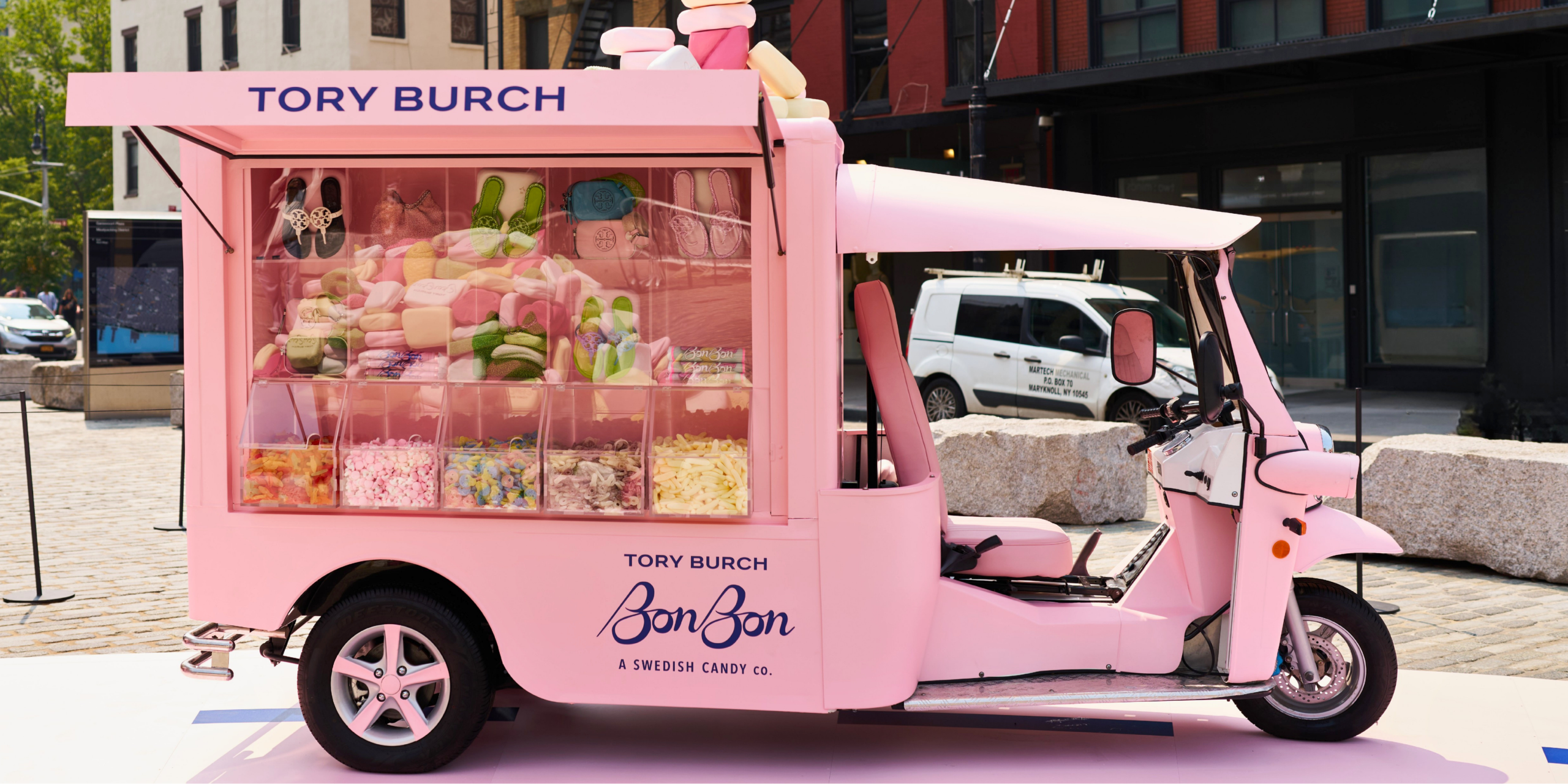
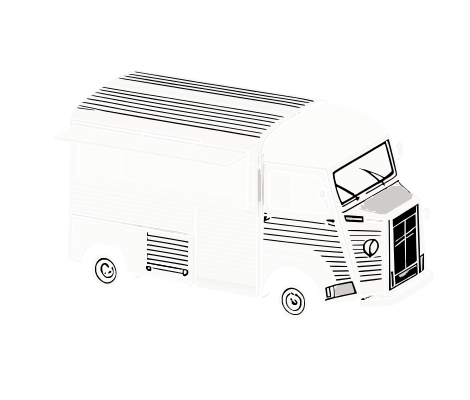
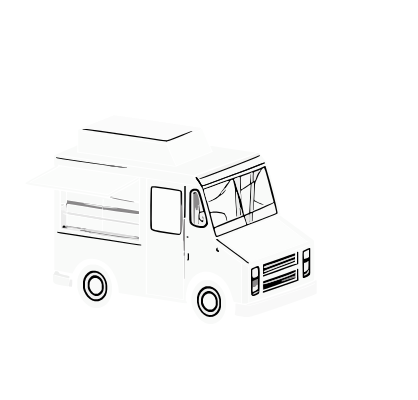
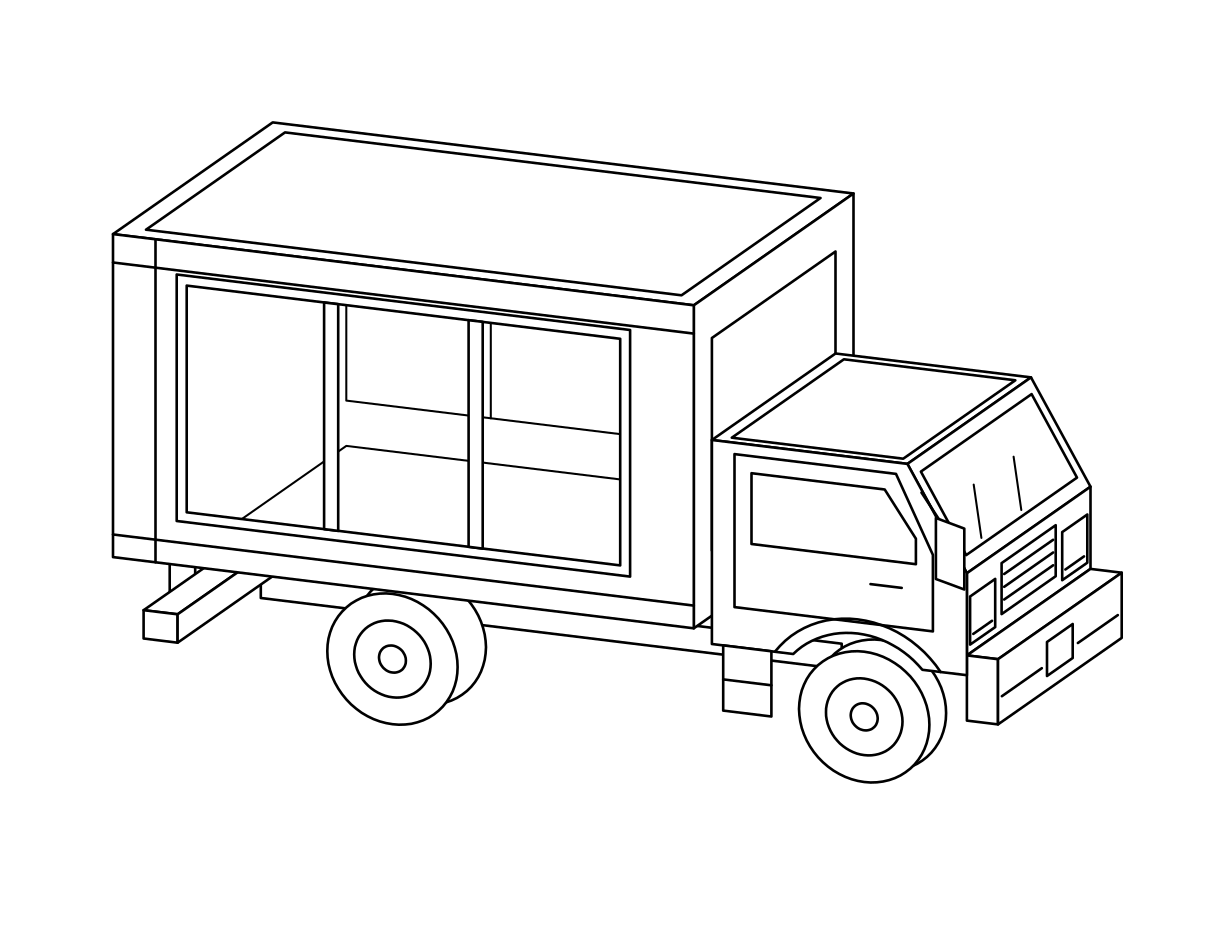
Experiential is not a replacement for paid or social. It is the thing that gives them something to say. A mobile pop-up outside a boutique opening, a branded vehicle at a festival, or a sampling moment during fashion week creates a physical center of gravity for a campaign.
Formats fashion brands use most often:
Boutique and flagship openings
A branded vehicle parked outside turns a store opening into a street-level event.
Collection and product launches
A mobile showroom lets customers see and touch the product before it hits full distribution.
Multi-city tours
One build travels to several markets, compounding reach at every stop.
Festival and cultural moments
Meeting the audience where they already gather, rather than asking them to come to you. Choosing the right vehicle matters as much as the concept. Our guide to experiential marketing vehicles breaks down which format fits which goal, and experiential marketing trucks covers the truck options in detail.
How to Build a Fashion Marketing Campaign
Define the moment
A launch, an opening, a collaboration, or a season. Campaigns without a moment become ongoing content, which is harder to measure.
Pick the audience and the place
Decide who you need in the room, then choose locations where they already spend time.
Design the experience
What do people see, do, taste, or take home? The answer determines whether they post about it.
Plan the content capture
Assign photo and video coverage before the event, not during it.
Sequence the channels
Tease on social and email, activate in person, then run recap content for the weeks that follow.
Measure what happened
Track attendance, samples, sign-ups, content produced, and sales lift in the market where you activated. If you are starting from scratch, our walkthrough on how to develop an experiential marketing strategy covers the planning framework in more depth.
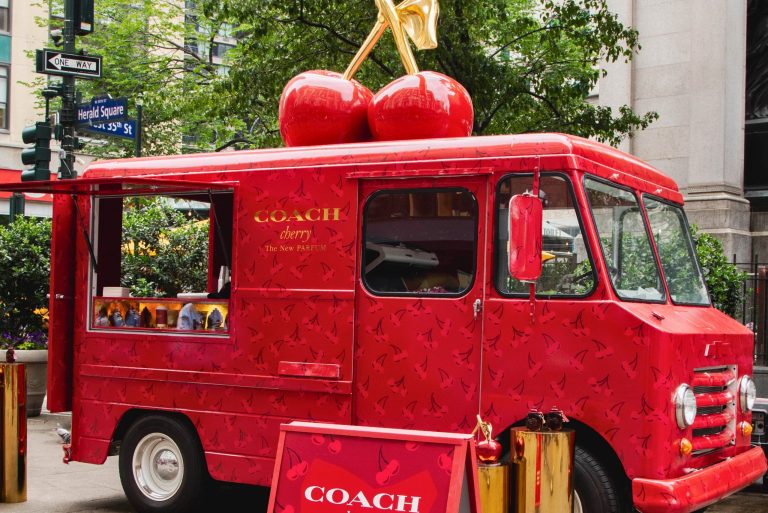
Case Study: Coach Cherry Parfum Mobile Activation