The 5 Beauty Marketing Strategies That Build a Cult Following

By: Ashley Elarde 7 min read

beauty marketing strategies

Beauty marketing lives or dies on one thing: getting the product onto an actual face, in an actual hand, in front of an actual person.

No other category converts on trial the way beauty does. A sample changes a shopper’s mind faster than any amount of copy, which is why the brands that break out are usually the ones that solve distribution of experience, not just distribution of product.

This guide covers how beauty brands market in 2026: the strategies that build community, the campaign formats that drive trial, and where mobile activations fit.

Key Takeaways

  • Trial is the conversion event: sampling shortens the path from awareness to purchase more reliably than any other tactic in beauty.
  • Community outperforms broadcast: brands that build repeat relationships with customers and creators grow more cheaply than brands that only buy reach.
  • Content is a byproduct of experience: the strongest social assets come from real moments, not studio shoots.
  • Online discovery still ends in person: with a large share of beauty sales moving through digital channels, physical moments are how brands cut through the scroll.
  • Tours scale the moment: one activation build can serve a dozen cities, turning a single concept into a national campaign.

What Is Beauty Marketing?

Beauty marketing is the promotion of skincare, cosmetics, hair care, and fragrance brands through a combination of education, community building, and product trial. It spans social and creator content, retail and specialty distribution, email and loyalty programs, and live experiences such as sampling events and mobile pop-ups.

What separates it from other consumer categories is the role of proof. Customers want to see texture, shade, scent, and result before committing, so the marketing job is less about persuasion and more about creating opportunities to try.

Why Beauty Marketing Is Getting Harder

The category is big and still growing, which means more competition for the same attention. The global beauty and personal care market is projected to generate roughly 698 billion dollars in revenue in 2026, with online sales accounting for about 31 percent of that total. 

More brands, more launches, and more of the buying journey happening on a screen all push in the same direction: the moments where a customer physically encounters your product become more valuable, not less.

Core Beauty Marketing Strategies

Sampling and Product Trial

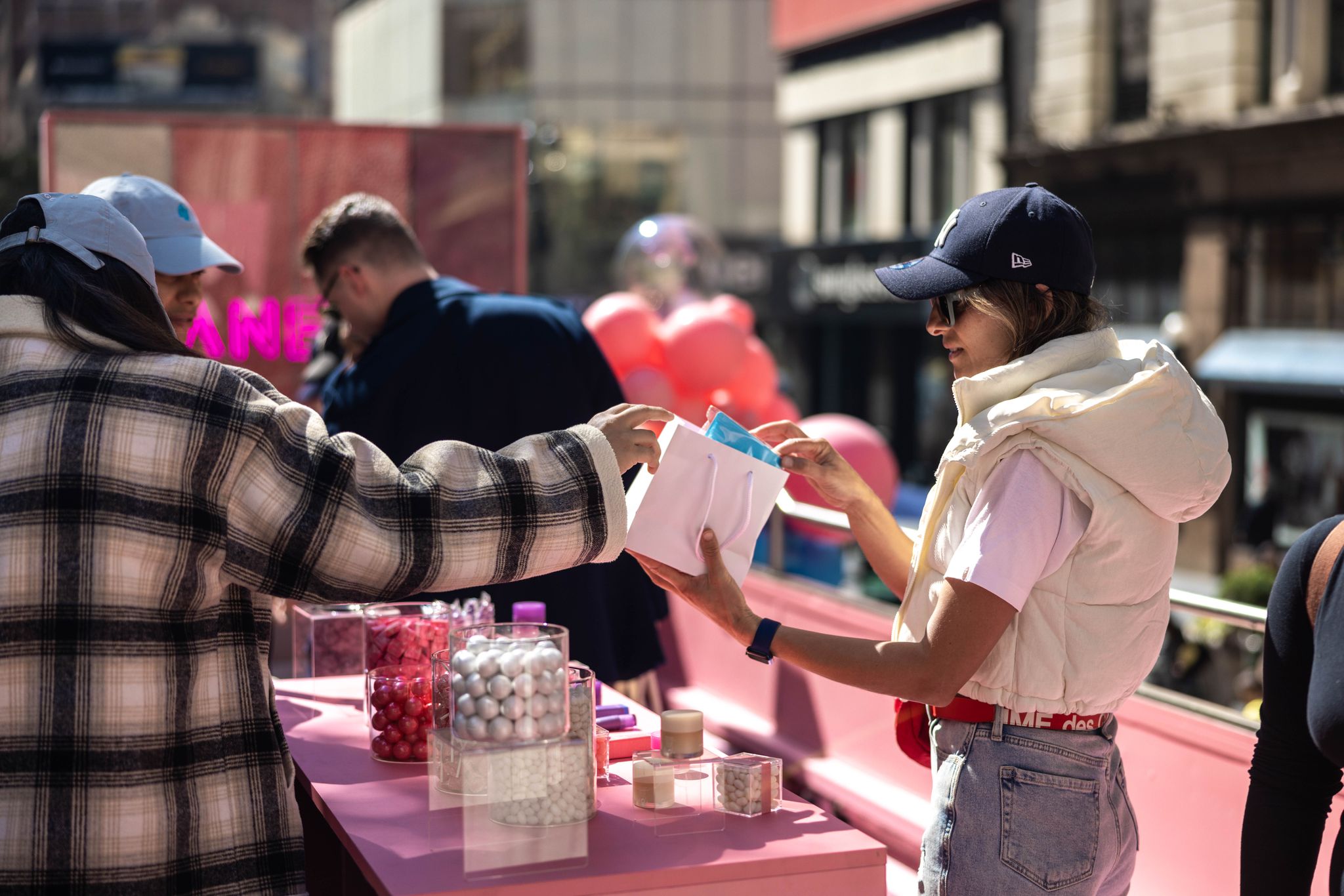
Sampling is the highest-intent tactic in beauty. Handing someone a product to try converts at a rate impressions cannot match, and it produces immediate feedback on which shades, scents, or formulas resonate.

Community and Loyalty

Repeat customers and superfans carry beauty brands. Loyalty programs, early access, and direct community engagement lower acquisition costs over time and create the word of mouth that paid media cannot buy.

Creator and Influencer Seeding

Creators provide both reach and demonstration. The strongest partnerships put creators inside a real moment, such as a launch event or tour stop, so the content has a setting rather than a background.

Retail and Specialty Partnerships

Placement in specialty retail brings discovery, but shelf space alone rarely creates demand. Brands increasingly pair a retail launch with an activation nearby to drive traffic to the shelf.

Experiential Activations

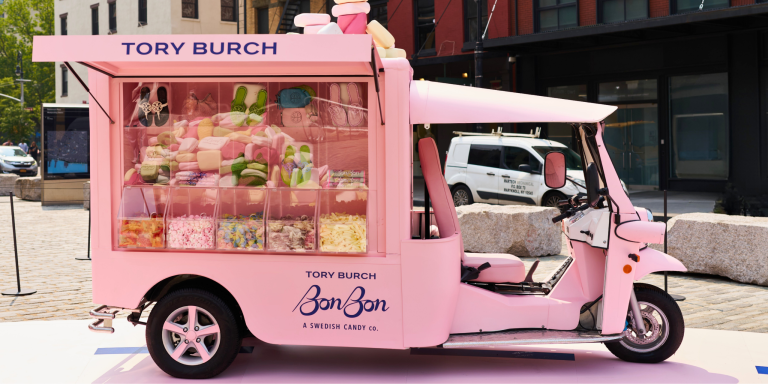
This is where trial, content, and community intersect. A well-designed brand activation gives customers a place to sample the product, creators something to film, and the brand a stream of assets for the months that follow.

Beauty Marketing Campaign Formats That Work

  • Launch pop-ups: concentrate attention on a new product with a short, high-energy window in a busy location.
  • Multi-city tours: take one concept to several markets so each stop compounds the reach of the last.
  • Sampling trucks: put product directly into hands at scale in high-foot-traffic districts.
  • Sensory and scent-led experiences: build the activation around what the product does, which works especially well for fragrance and hair care.
  • Retail-adjacent activations: park near the store or counter to convert street traffic into shelf traffic. Choosing the format is largely a question of product and city. Our comparison of experiential marketing vehicles walks through which build fits which goal, and our roundup of the best pop-ups shows several beauty examples in practice.

Case Study: LANEIGE x innisfree Glow On-The-Go Tour

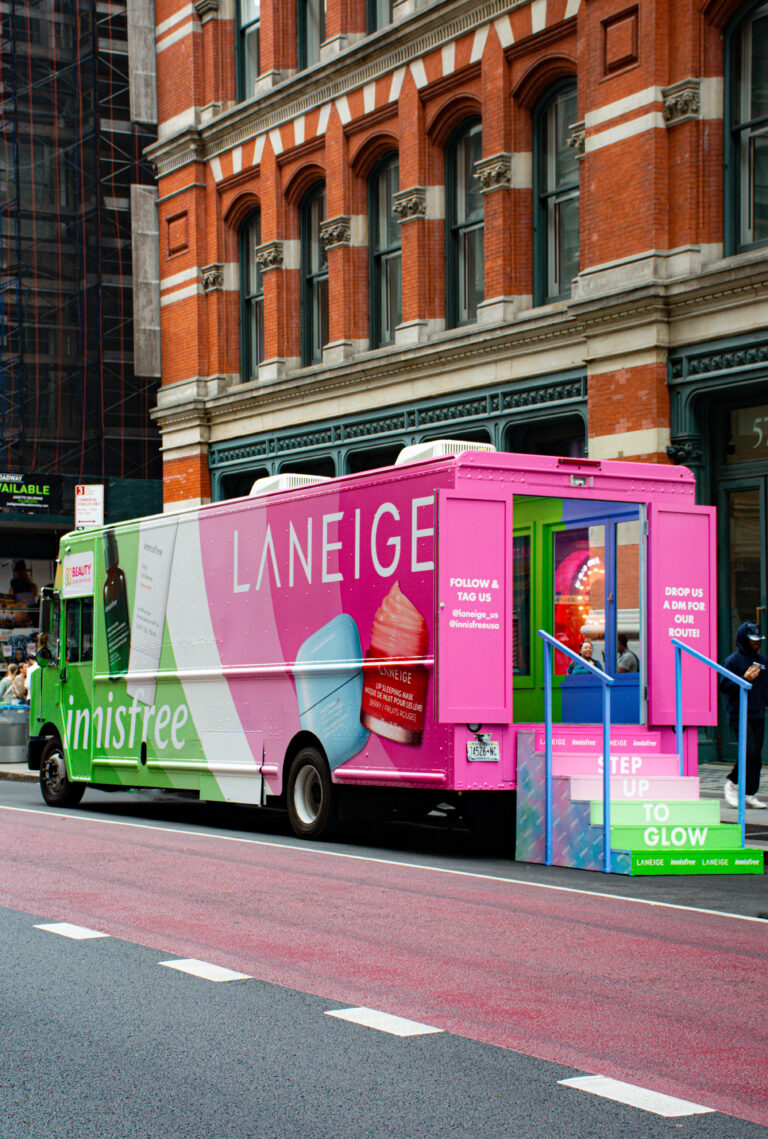
LANEIGE x innisfree skincare truck with product images and open doorway on city street.

When two of K-beauty’s most recognizable brands, LANEIGE and innisfree, came together, the goal was reach across markets rather than a single flagship moment. We built the Glow On-The-Go Tour as a mobile activation that traveled the country.

The tour made 12 stops across 9 cities, running from New York to Houston, and generated approximately 50 million impressions along with coverage from outlets including V Magazine, Shop GMA, NBC 6, and Fox 26. It is a clear demonstration of how a touring format multiplies a single build into a national campaign.

Read the full breakdown in our LANEIGE x innisfree mobile tour case study.

The Bottom Line

Beauty marketing works when customers get to try the product. Community, creators, and content all amplify that moment, but the moment itself is what converts, and it is the piece most brands underinvest in while competing for the same digital impressions as everyone else.

If you have a launch or tour on the calendar, we design and operate the physical side. Explore our experiential marketing services or contact our activation team to talk through it.

Frequently Asked Questions​

Beauty marketing is the promotion of skincare, cosmetics, hair care, and fragrance brands through education, community building, and product trial. It combines social and creator content, retail partnerships, email and loyalty, and live experiences such as sampling events and mobile pop-ups.

Beauty is a proof category. Customers want to see texture, shade, scent, and result before they commit, so trying the product removes the main purchase barrier. Sampling converts at rates impressions cannot match and provides direct feedback on which products resonate.

A traditional pop-up occupies a leased storefront or space for a fixed period, while a mobile pop-up is built into a vehicle and can change locations daily. The mobile version carries an identical brand experience across stops and doubles as a moving billboard between them.

Launch pop-ups, multi-city tours, sampling trucks, sensory or scent-led experiences, and retail-adjacent activations all perform well. The right choice depends on the product, the market, and whether the goal is depth in one city or reach across several.

A mobile tour takes one branded build to multiple cities on a planned route, sampling product and capturing content at each stop. It lets a single concept reach several markets, which is why K-beauty and skincare brands use the format for national launches.

Cost depends on the build, the number of cities, the length of the activation, product volume, and staffing. A one-city launch pop-up and a 12-stop national tour sit at very different price points, so a scoping conversation gives the most accurate number.

Track samples distributed, on-site interactions, sign-ups and loyalty enrollments captured, content and press generated, social engagement, and sales lift in the activation market. Setting these metrics before launch makes results comparable across campaigns.

Yes, and often better than for established ones. New brands need trial more than awareness, and a sampling activation puts product directly into hands while generating the content and social proof a young brand does not yet have.

Sampling is the mechanic of giving customers product to try. A pop-up is the temporary physical space where that happens, often a branded vehicle or installation. Most beauty pop-ups include sampling, but a pop-up can also focus on consultations or product discovery.

Plan early enough to cover design, fabrication, permits, product supply, and staffing, and to secure the cities and dates you want. Tours need more lead time than single-city events because each stop requires its own permits and logistics.

Define the product, the goal, and the markets that matter most, then choose a format that fits. From there a partner can handle design, build, routing, permits, and staffing. Share your launch window with our team and we will map the activation around it.

Ashley Elarde

Author

Ashley Elarde

Social Media Manager @ FTP Agency

Ashley Elarde is a social media strategist, content creator, and experiential marketing professional with experience bringing brands to life through engaging digital content. She has helped execute campaigns for brands across beauty, fashion, retail, and entertainment, developing campaigns that drive engagement and meaningful consumer connections.

More posts
How the Best Brands Win at Fashion Marketing in 2026