The 5 Luxury Brand Marketing Strategies Used by the Top Fashion Houses
Luxury brand marketing strategies work by inverting almost every rule the rest of marketing follows. Mass brands chase reach, discount to convert, and optimize…
Read moreBy: corey • • 8 min read
Retail experiential marketing exists to solve one problem: thousands of people walk past your store every day and almost none of them come in.
No amount of paid media fixes that, because the person is already there. What changes the outcome is something on the sidewalk that gives them a reason to stop, and someone standing next to it who can start a conversation.
This guide covers the formats, what each one costs you in permits and staffing, how the economics compare with paid media, and a retail activation we ran with Ulta Beauty.
Retail experiential marketing is the use of live, in-person brand experiences to drive traffic and sales for a retail location or product. In practice it means a branded vehicle, cart, or installation placed at or near the point of sale, offering sampling, demonstration, or a giveaway, staffed by people who can explain the product and direct customers inside.
It differs from in-store merchandising in that it reaches people who had not decided to shop with you, and from advertising in that the customer can act on it immediately.
Here are the different ways to deploy retail experiential marketing.
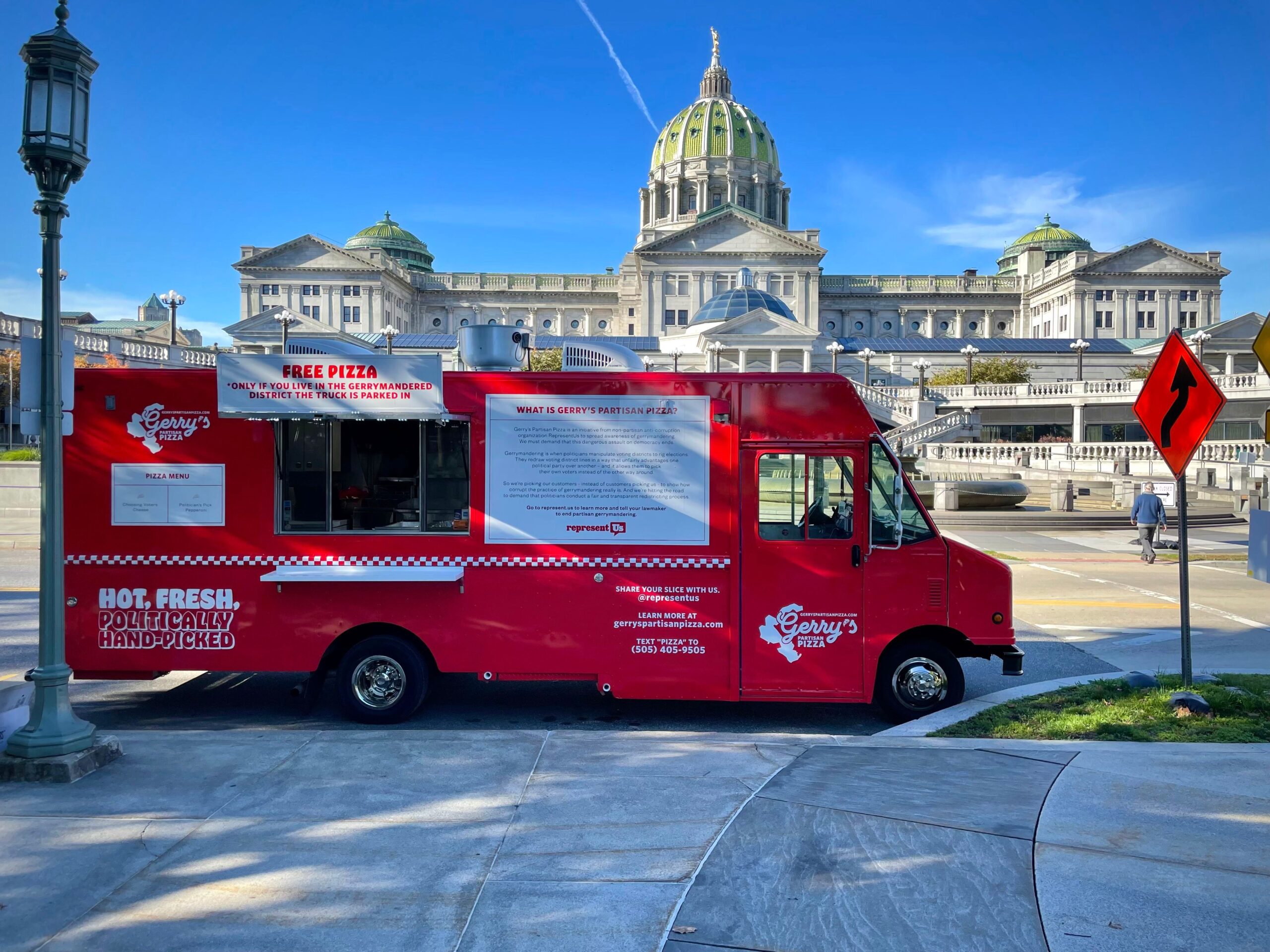
A cart or truck outside the store handing out product or a complementary treat. The most direct format and the cheapest to run, best suited to food, beverage, and beauty where trial converts quickly.
A build people step into to see and try a considered purchase. Slower throughput, far higher intent, and the right choice when the product needs demonstrating rather than tasting.
A concentrated push on the highest-attention day the location will ever have, designed to convert curiosity into a first visit and a mailing list entry.
Placed at or outside a retailer that stocks you, driving traffic to their shelf. This is the format retail partners most value, because it delivers traffic to their store rather than only to your brand.
Higher rent than a sidewalk but far simpler permitting, since you negotiate with the property manager rather than the city. Often the fastest route to a placement.
For format comparisons across the wider range, see our guide to experiential marketing trucks.
The honest comparison is not cost per impression, because an activation loses that outright. It is cost per acquired customer.
A sidewalk activation produces a smaller number of much deeper interactions: a sample used, a question answered, a sign-up captured, a card redeemed. Judge it on sign-ups, redemptions, and sales lift in the store rather than on reach, and compare that figure against what a paid local campaign delivers for the same spend.
The other value is durable. The contact list and the content produced both outlast the activation, which a media flight does not. Our guide to the impact of experiential marketing on consumers covers the research behind why the interaction sticks.
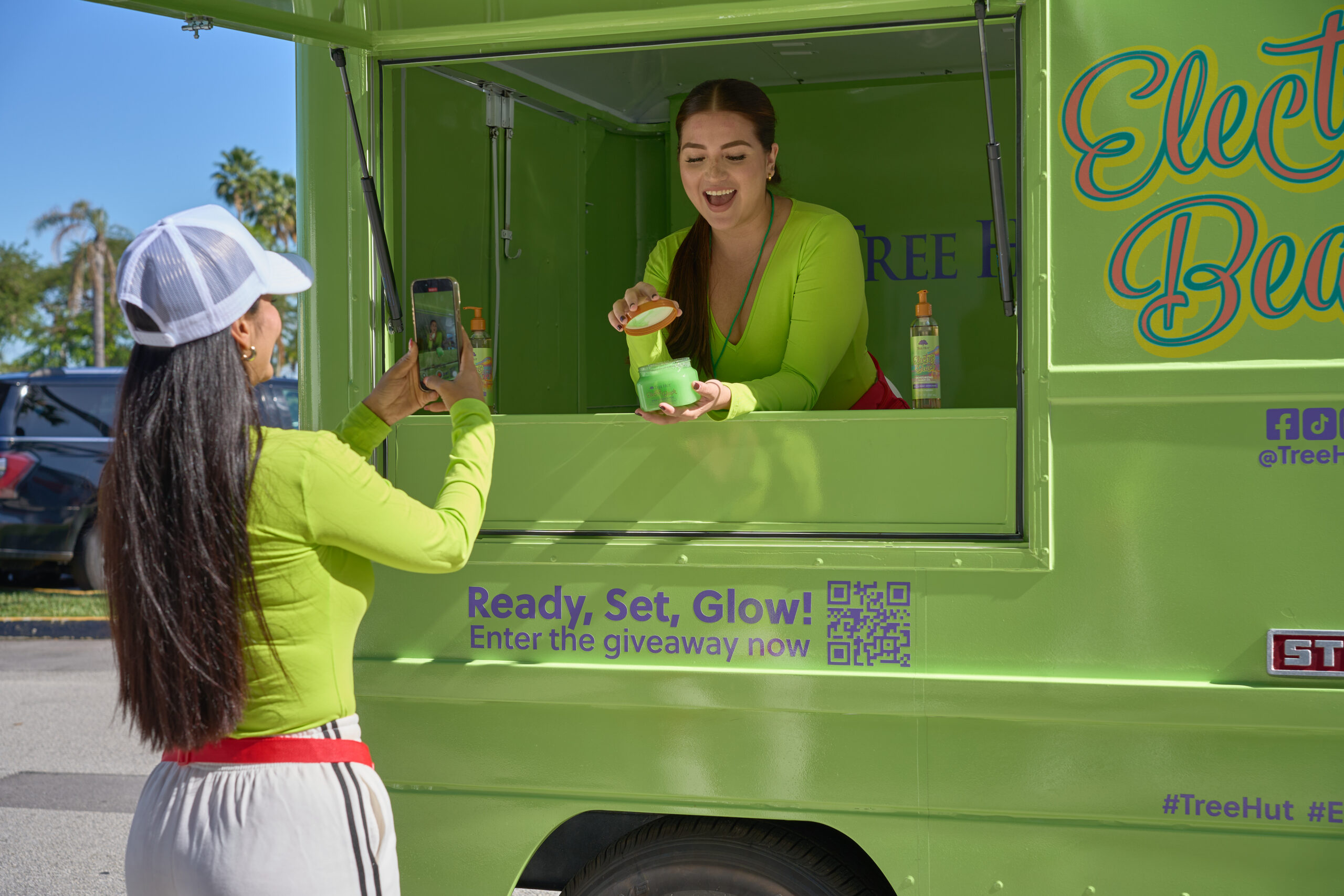
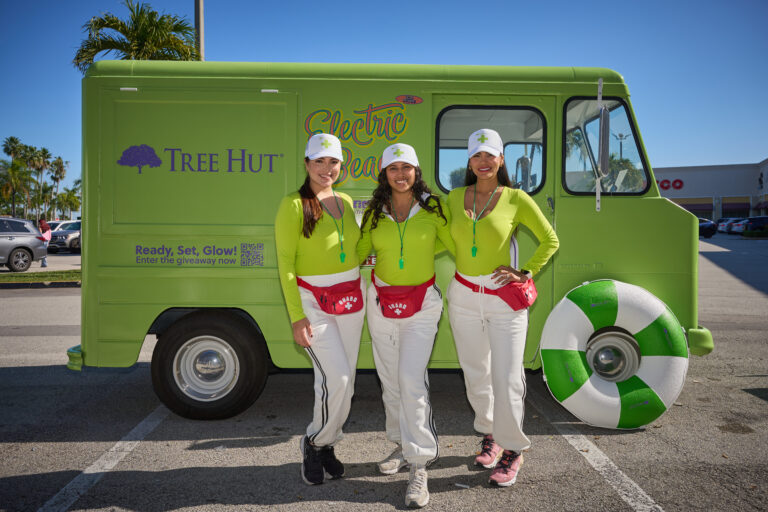
Tree Hut needed to drive traffic to Ulta Beauty in Miami while making the brand’s shea-based body care feel like the season it was launching into.
We built the Electric Beach pop-up outside the store, a summer-themed activation that gave passersby a reason to stop on a hot Miami street and a clear route inside to buy.
Why it worked as retail experiential: the activation served the retailer as well as the brand. Ulta received foot traffic, Tree Hut received trial and shelf visibility, and the customer got something genuinely welcome in the heat. That three-way benefit is why retail partners agree to these placements and repeat them. Read the full build in our Tree Hut Electric Beach case study, or browse more brand activation case studies.
Retail experiential marketing works because it closes the shortest distance in marketing, from the sidewalk to the till. The formats are straightforward; what determines the result is placement, permits, staffing, and having a capture mechanic so the day produces something you can measure afterward.
If you have a store, an opening, or a retail launch that needs traffic, that is exactly what we build. Explore our mobile pop-up shop services or contact our team to scope it.
Retail experiential marketing uses live, in-person brand experiences to drive traffic and sales for a store or product. It typically means a branded vehicle, cart, or installation at or near the point of sale, offering sampling or demonstration and staffed to direct customers inside.
By removing the last barrier. The person is already within yards of the purchase, so a sample, a demonstration, or a free item gives them a reason to stop, and a staffed conversation plus a bounce-back card gives them a reason to go inside.
A traditional pop-up occupies a leased storefront or space for a fixed period, while a mobile pop-up is built into a vehicle and can change locations daily. The mobile version carries an identical brand experience across stops and doubles as a moving billboard between them.
Usually yes. The sidewalk outside a store almost always belongs to the city, so a street placement needs a permit. Private property such as a mall forecourt needs an agreement with the property manager instead, and food service adds a health permit.
Six to eight weeks is a realistic floor for a single location, covering permits, build or vehicle scheduling, staffing, and stock. Mall and shopping center placements can move faster because you negotiate with a property manager rather than a city.
It depends on the format, the vehicle or build, the number of days, product volume, staffing, and permits. A cart-based sampling day and a custom mobile showroom sit at very different price points, so scoping early gives the most accurate figure.
Bounce-back redemptions are the most useful metric because they connect a sidewalk stop to a purchase. Also track store conversion rate during the activation, samples served, sign-ups captured, product sales lift, and cost per acquired customer.
It is different. Paid media wins on reach and cost per impression; an activation wins on depth, trial, and data captured. The fair comparison is cost per acquired customer, and the activation also leaves you a contact list and content afterward.
Anything where trial closes the sale: food, beverage, beauty, fragrance, and personal care. Considered purchases such as appliances or technology work too, but they need a showroom format with more dwell time rather than a sampling cart.
Yes, and retail partners often welcome it because the activation delivers traffic to their store. These placements are usually negotiated with the retailer directly, and they tend to repeat once a first activation performs.
Identify the store or market, the goal, and the window. From there a partner can handle the build, permits, staffing, and stock. Share your launch or opening date with our team and we will map the activation around it.
7 steps, 37 checkpoints, and a one-page brief to plan and launch a mobile pop-up shop that converts.
Instant PDF · No Cost
Author
Luxury brand marketing strategies work by inverting almost every rule the rest of marketing follows. Mass brands chase reach, discount to convert, and optimize…
Read more →
The nonprofit marketing campaigns that raise money are rarely the ones with the biggest budget, they are the ones where the mechanic does the…
Read more →
Fashion marketing has never been more crowded, more expensive, or more dependent on getting a real person to stop and pay attention. The feed…
Read more →We use and share personal information through cookies and similar technologies on our sites to personalize your shopping experience and ads. Others may use this information for their own marketing and business purposes. . Check our Privacy Policy for more details.
Browser Opt-Out Honored
We use and share your personal information with others to personalize your shopping experience and show you targeted ads on other sites based on your interests and online activities.
Online Info includes cookies, pixel tags, and similar technologies connected to your browser or device. Offline Info includes information associated with your email address based on your other interactions with us.
We use and share your personal information with others to personalize your shopping experience and show you targeted ads on other sites based on your interests and online activities. Information includes cookies, pixel tags, and similar technologies connected to your browser or device (Online Info), as well as information associated with your email address based on your other interactions with us (Offline Info). Others may use this information for their own marketing and business purposes.
You can choose to opt out of sharing one or both types of information.