How the Best Brands Win at Fashion Marketing in 2026
Fashion marketing has never been more crowded, more expensive, or more dependent on getting a real person to stop and pay attention. The feed…
Read moreBy: David Botbol • • 11 min read
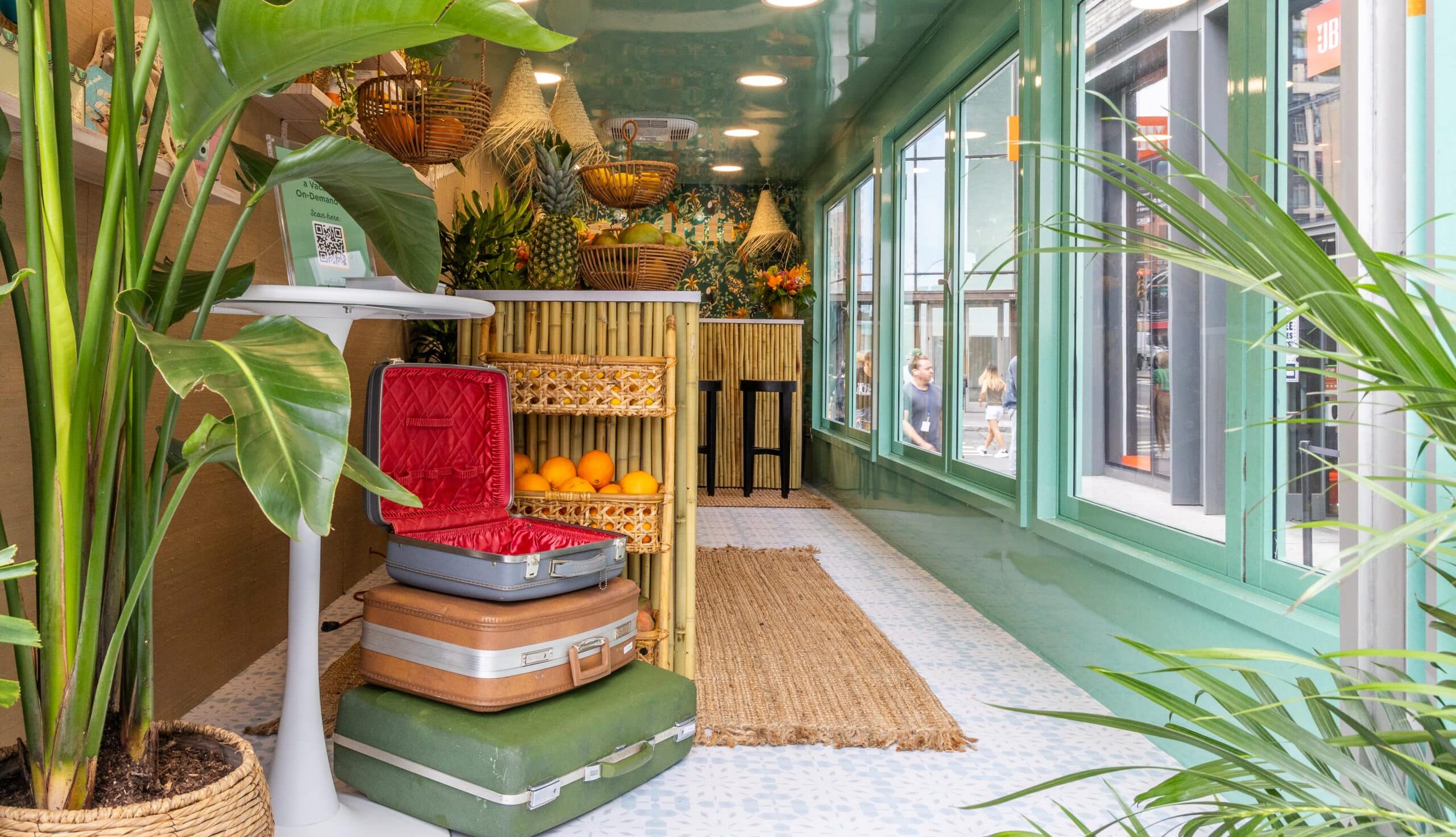
A mobile pop-up shop lives or dies on its design. The vehicle, the wrap, the interior build-out, and the layout decide whether people walk past or pull out their phones, get in line, and tag your brand. And unlike a static retail space, a mobile pop-up shop has to do all of that in seconds, from the curb, in a location that changes by the day.
The good news is that great pop-up design follows a repeatable process. In this guide, we break down how to design a mobile pop-up shop from the first sketch to opening day: setting the goal, choosing the vehicle, branding the exterior, building out the interior, and engineering the moment people can’t help but photograph.
Mobile pop-up shop design is the process of turning a vehicle into a temporary, branded retail or sampling environment. It covers four layers that have to work together: the vehicle selection, the exterior branding (wrap, signage, and dimensional elements), the interior build-out (fabrication, lighting, shelving, and props), and the layout that moves guests through the experience. Done well, the result reads as a fully realized brand world on wheels rather than a decorated truck.
That last distinction matters. Consumers can tell the difference between a logo slapped on a rental and an environment designed around them, and the second one is what earns lines around the block.
Before any design decision, define what the pop-up needs to accomplish and map the journey a guest will take through it. Every physical choice that follows, from vehicle size to counter placement, should trace back to those two things.
A sampling activation needs fast throughput: a serving window and product in hands within a minute. A retail pop-up needs browsing space, display, and a checkout point. A brand-awareness play needs dwell time and something worth photographing. Write the journey as steps: what stops someone on the sidewalk, what they do inside, and what they leave with. Design fills in each step.
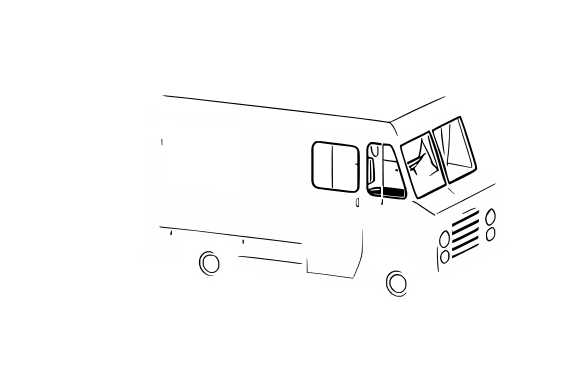
The vehicle determines your footprint, your sightlines, and what kind of experience is physically possible, so treat the choice as a design decision rather than a logistics one. Here are the formats we build on most, and what each does best. You can see the full lineup on our experiential vehicles page.
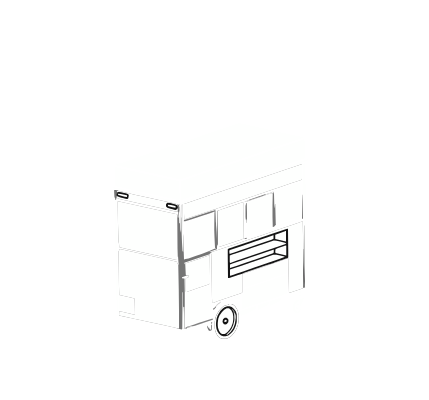
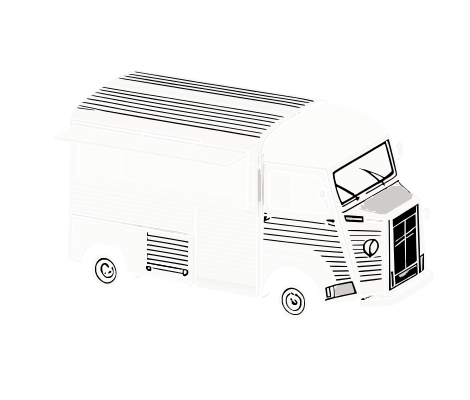
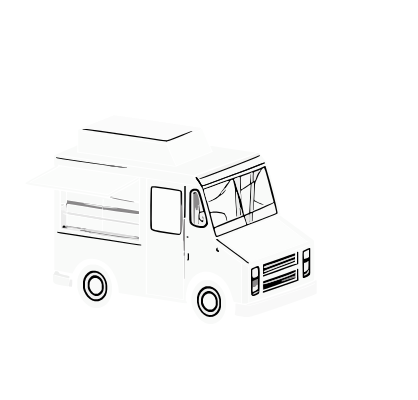
The classic. A serving window creates a natural interaction point, which makes food trucks ideal for sampling, giveaways, and themed menus that tie into a product launch. The large, flat sides also take a wrap beautifully.
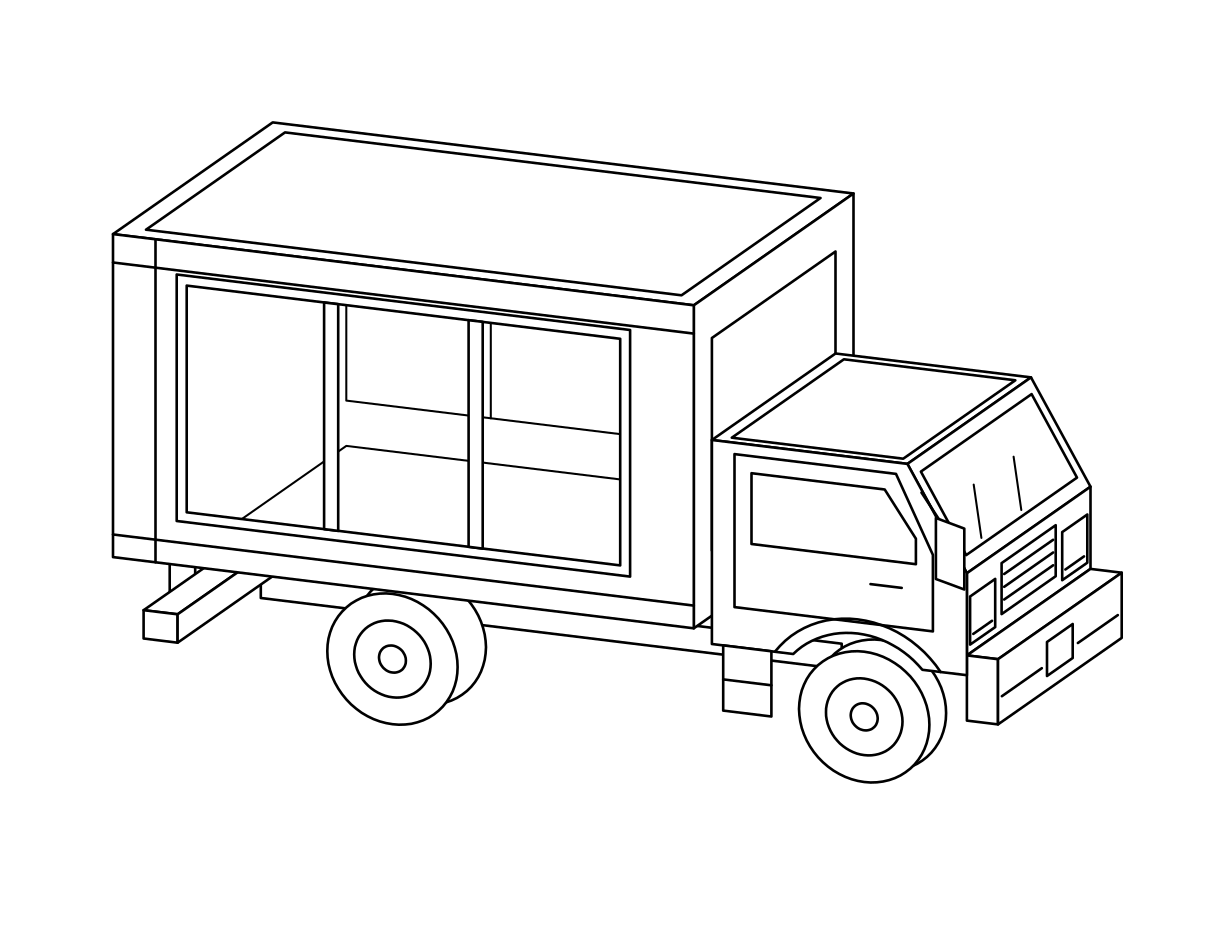
A glass truck is a rolling display case, which makes the product itself the design centerpiece. Brands like Spindrift have used our glass trucks as see-through pop-up showrooms that stop foot traffic because people can see the whole branded world inside before they ever step up.
Buses offer the most interior real estate of any mobile format, and a double-decker adds a second level plus a rooftop. That footprint supports multi-room experiences: consultation areas, product displays, and separate themed zones in a single vehicle.
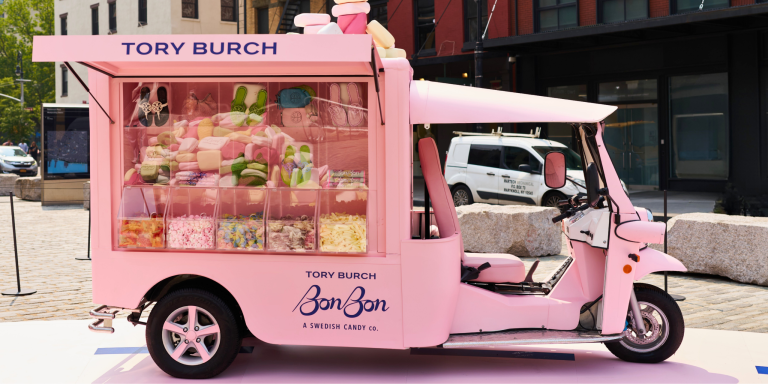
Small-format vehicles like tuk tuks trade space for charm and agility. They fit sidewalks, plazas, and indoor venues where trucks can’t go, and their vintage silhouettes photograph beautifully, which makes them a favorite for beauty and lifestyle brands.
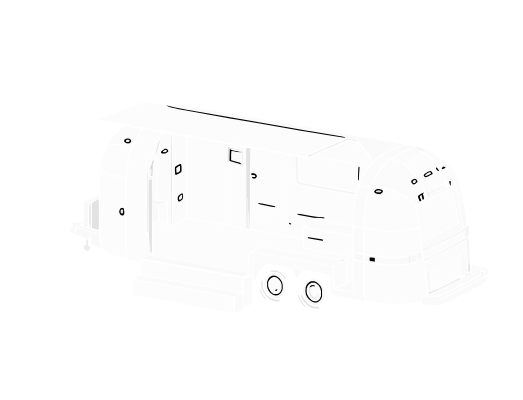
An Airstream Bambi brings a distinctive, retro-premium look and a walk-in interior that feels like a boutique. Trailers can be dropped and staffed for multi-day residencies while the tow vehicle works elsewhere.
The exterior has one job: communicate the brand and the reason to approach, instantly, from across the street. Passersby will give it a glance, not a read, so design for the glance.
A full vinyl wrap in the brand’s colorway is the foundation. From there, keep the hierarchy ruthless: brand mark, one line about what’s happening (“Free samples today”), and a social handle or hashtag. Dimensional elements take it further: oversized product replicas, marquee signage, balloon installations, and rooftop props break the silhouette so the vehicle stops reading as a truck and starts reading as an event. The exterior will appear in more photos than the interior, so treat every face, including the back, as a designed surface.
Inside is where a vehicle becomes a brand environment, and it’s where fabrication quality shows. Our design and fabrication team handles this stage end to end, from 3D renderings to the finished build, which you can see in detail on our capabilities page.
Design the interior as a one-way journey wherever possible: a clear entry, a sequence of touchpoints, and an exit that lands at the takeaway (a sample, a gift bag, a QR code). Choke points kill an activation, so give every stop enough room that a guest lingering at one doesn’t stall the line behind them.
Custom counters, display walls, and built-ins should look like permanent retail, not event rental. Materials need to survive travel, weather, and thousands of touches while still photographing like a flagship store.
Lighting sets the mood and makes or breaks photos. Layer it: ambient lighting for the space, accent lighting on product, and flattering light at any photo moment, because guests will not share a dim picture.
Shelving should present product the way the brand’s best retail partner would, at eye level and in reach. Props carry the theme: the right oversized installation or set piece turns a display into a story guests can step inside.
Every mobile pop-up shop needs one moment engineered to be photographed, because that single design choice determines how far the activation travels beyond the sidewalk. It should be intentional, on-brand, and irresistible.
The formula: a distinctive backdrop or installation, flattering light, room to pose, and the brand mark visible in frame without dominating it. Think a sculptural couch, a candy wall, a mirror moment, or an oversized product prop. Position it so photos happen naturally within the flow of the experience rather than as an awkward detour, and staff nearby so someone is always available to take the shot.
The small touches finish the design and follow guests home. They’re also the cheapest square footage of branding in the whole build.
Branded sampling cups, gift bags, tissue, and stickers extend the experience past the event. Staff uniforms should read as part of the set design, styled to the same palette as the vehicle. And the giveaway itself should feel designed rather than generic: a themed swag bag that matches the activation will get photographed and kept, while a plain tote gets forgotten. If you want inspiration for how these details come together across formats, browse our work.
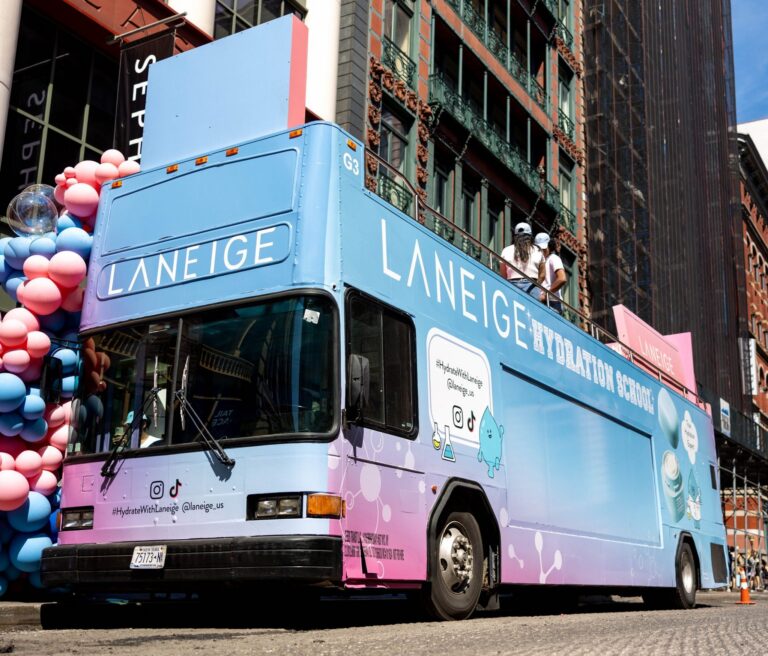
When LANEIGE set out to promote its Water Bank Hydration Collection and cult-favorite Lip Sleeping Mask, our team proposed the biggest canvas in the fleet: a custom double-decker bus, designed and fabricated over two months of planning and brought to life in Soho and Herald Square Park in New York City.
Every design layer in this guide shows up in the LANEIGE pop-up bus. The vehicle choice created two distinct worlds in one footprint: a first level designed entirely in blue with science-lab walls to carry the hydration story, and a rooftop level in all pink, decorated with giant Lip Sleeping Mask props. A vinyl wrap and a pink and blue balloon installation made the exterior unmissable. The interior build-out included a consultation booth, product shelves, an interactive prize wheel, and a hydration sampling booth, all sequenced as a journey: spin the wheel at the entrance, learn and sample downstairs, then climb the colorful staircase to redeem your prize upstairs. And the photo-worthy moment was engineered in from the start, with a lip-shaped couch backdropped by a decorative candy wall where brand ambassadors snapped guests’ photos before they left with branded gift bags.
It’s a clear picture of what design does for a mobile pop-up shop: the same products in a plain vehicle would have been a sampling table. The designed version was an experience people lined up for, photographed, and shared.
A mobile pop-up shop is a design project first and a logistics project second. Get the goal and journey right, choose the vehicle that fits the experience, brand every exterior surface for the five-second glance, build an interior that guides guests to a share-ready moment, and finish the details they take home.
Mobile pop-up shop design is the process of transforming a vehicle into a temporary branded retail or sampling environment. It spans vehicle selection, exterior wrap and signage, interior fabrication and layout, lighting, props, and the branded details guests take home, all built around a defined customer journey.
Timelines vary with the complexity of the build. A straightforward wrap and interior refresh moves quickly, while a fully fabricated, multi-level experience like LANEIGE’s double-decker took about two months from planning to launch. Start the design conversation as early as your campaign calendar allows.
It depends on the goal. Food trucks excel at sampling through a serving window, glass trucks turn product into a rolling display, buses and double-deckers support multi-room experiences, and carts or tuk tuks fit tight urban spaces. Match the vehicle’s footprint and sightlines to your customer journey.
No. Most brands work with an experiential agency that owns and maintains a fleet, then designs and fabricates the build-out for the campaign. That approach removes storage, insurance, and maintenance from your plate and lets you choose a different format for every activation.
A deliberate installation with a distinctive backdrop, flattering light, space to pose, and the brand visible in frame. It should sit naturally within the flow of the experience so photos happen without prompting, and staff should be positioned to offer to take the shot.
Start with a full vinyl wrap in the brand palette, then keep the message hierarchy simple enough to read in five seconds: brand mark, one-line offer, and a handle or hashtag. Dimensional elements like oversized props and signage make the vehicle read as an event rather than a truck.
Whatever the customer journey requires, built to retail quality: display shelving at eye level, an interaction point such as a counter or consultation booth, layered lighting, themed props, and a photo moment. Keep the flow one-directional where possible so the space never bottlenecks.
Because the entire environment travels with the vehicle, the experience stays consistent by default, which is one of the format’s biggest design advantages. Build durable fabrication that survives the road, document the setup, and brief local staff so every stop delivers the same experience.
The most common: choosing the vehicle before defining the goal, cluttering the exterior with too much copy, underlighting the interior, skipping the photo moment, and treating giveaways as an afterthought. Each one weakens the journey the rest of the design works to create.
Specialist experiential teams handle it end to end. At Food Truck Promotions, our in-house team takes builds from concept and 3D renderings through fabrication, wrap, staffing, and permits, so brands approve a design and step into a finished environment on opening day.

Author
EVP, Managing Director @ FTP Agency
David Botbol thrives on turning bold ideas into real-world brand moments. As Executive VP and Managing Director of Food Truck Promotions, and a leader within the New York and Los Angeles Food Truck Associations, he draws on a background in business development and startups to help brands connect with audiences through creative, unforgettable mobile experiences.
Fashion marketing has never been more crowded, more expensive, or more dependent on getting a real person to stop and pay attention. The feed…
Read more →
Beauty marketing lives or dies on one thing: getting the product onto an actual face, in an actual hand, in front of an actual…
Read more →
The best fashion marketing campaigns do not just look good in a case study deck, they get people to show up, try something, and…
Read more →
We use and share personal information through cookies and similar technologies on our sites to personalize your shopping experience and ads. Others may use this information for their own marketing and business purposes. . Check our Privacy Policy for more details.
Browser Opt-Out Honored
We use and share your personal information with others to personalize your shopping experience and show you targeted ads on other sites based on your interests and online activities.
Online Info includes cookies, pixel tags, and similar technologies connected to your browser or device. Offline Info includes information associated with your email address based on your other interactions with us.
We use and share your personal information with others to personalize your shopping experience and show you targeted ads on other sites based on your interests and online activities. Information includes cookies, pixel tags, and similar technologies connected to your browser or device (Online Info), as well as information associated with your email address based on your other interactions with us (Offline Info). Others may use this information for their own marketing and business purposes.
You can choose to opt out of sharing one or both types of information.