Planning a summer mobile marketing tour comes down to one decision that shapes everything else: which cities you stop in.
Get the route right and a single build produces months of activity, local press, and content in market after market. Get it wrong and you pay for the same truck to sit in a city where nobody is walking past it.
This guide covers how to choose tour cities, the five markets that consistently perform, rising markets worth a stop, and a real 9-city tour that generated roughly 50 million impressions.
Key Takeaways
- Density beats size: a walkable district with heavy foot traffic outperforms a larger city where people drive between destinations.
- Summer supplies the crowds: festivals, outdoor events, and warm-weather foot traffic concentrate your audience in predictable places.
- The growth map has shifted: the South has held most of the nation’s fastest-growing counties every year since 2020, which is changing where brands tour.
- Permits decide feasibility: every city has its own rules and lead times, and the best summer dates go early.
- More stops lower your cost per interaction: the build is the fixed cost, so routing efficiently is where the economics improve.
What Is a Mobile Marketing Tour?
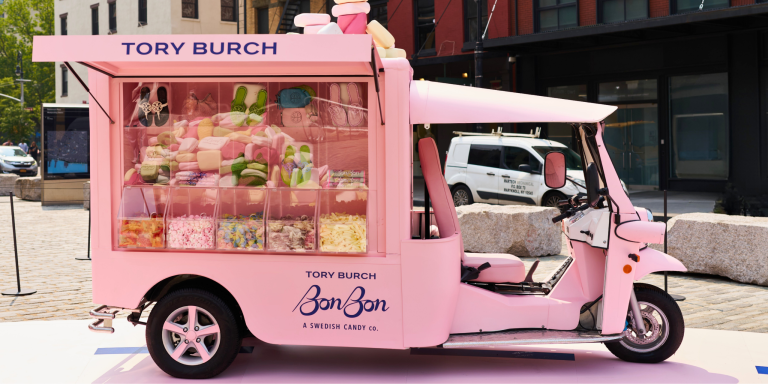
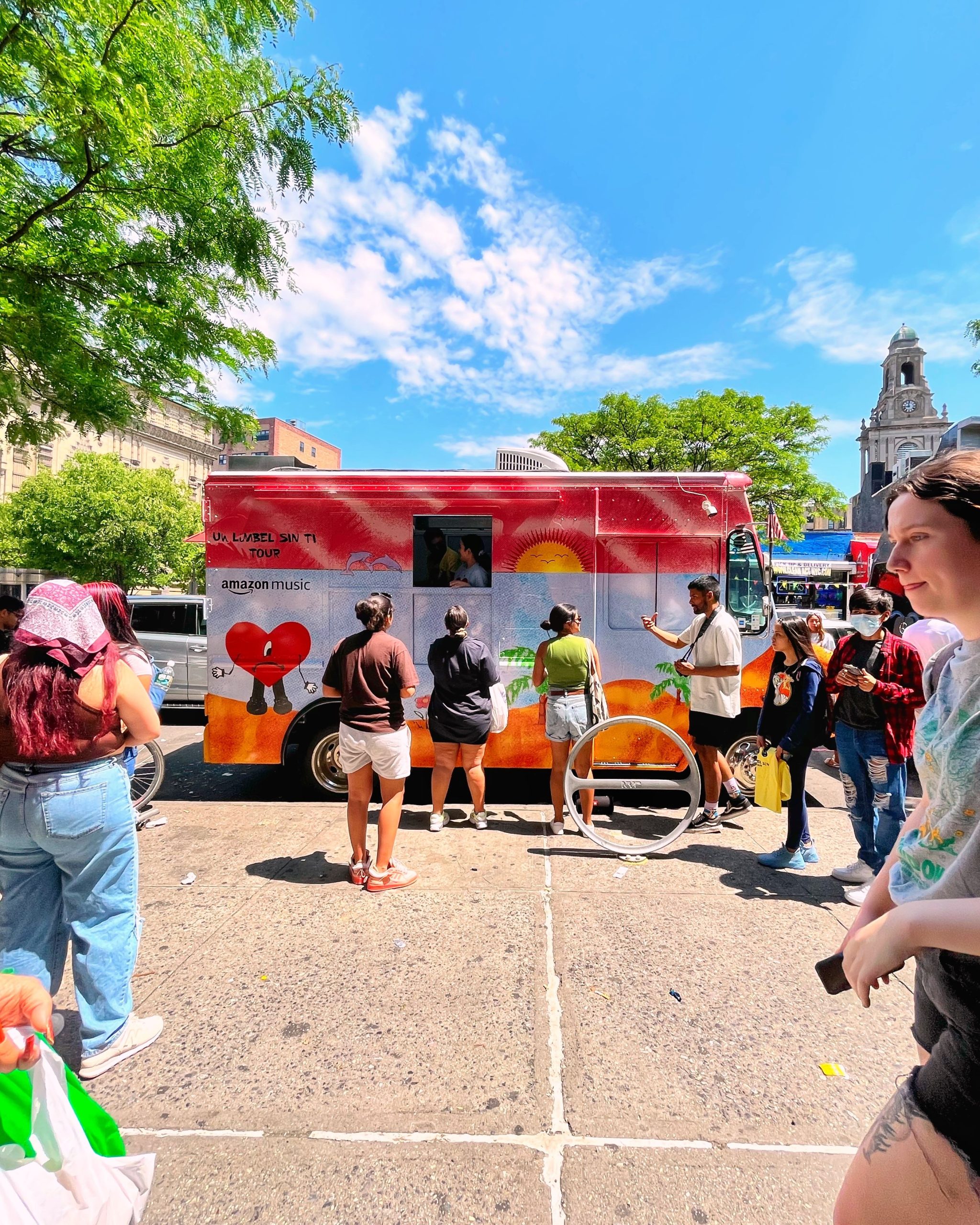
A mobile marketing tour is a campaign in which a branded vehicle travels between cities or neighborhoods on a planned route, activating at each stop. Formats include sampling trucks, mobile showrooms, glass trucks, and branded carts, and the tour typically runs from a few days to several months.
The advantage over a fixed activation is leverage. One custom build serves every market on the route, so each additional stop adds reach without adding fabrication cost. Our guide to mobile pop-up shops covers the formats in more detail.
How To Choose Your Tour Cities
Population is the obvious starting point and the least useful on its own. These six criteria matter more:
- Walkable density. You need people on foot. A dense retail or entertainment district produces more interactions per hour than a larger but car-dependent city.
- Summer event calendar. Festivals, concerts, sports, and street fairs assemble your audience for you. Activating adjacent to an existing event is almost always cheaper than building a crowd.
- Audience match. Cities have distinct demographic and cultural profiles. Choose markets where your actual customer lives rather than the biggest name on the map.
- Permit feasibility and lead time. Rules vary widely by city and by neighborhood, and prime summer weekends book out months ahead.
- Route efficiency. Drive time between stops is real cost. A tight regional cluster usually beats a scattered national route on cost per interaction.
- Media market value. Some cities generate disproportionate press and social amplification, which extends the activation beyond the people present.
Where the Audience Is Moving
Two data points are worth knowing before you lock a route.
First, metro areas are where the people are. Nearly 294 million people, about 86 percent of the US population, live in a metro area, and metro population grew by roughly 3.2 million in a single year, slightly outpacing national growth.
Second, the growth is concentrated in the South. Census Vintage 2025 estimates show the region has had most of the nation’s fastest-growing counties every year since 2020, with growth driven heavily by outlying metro counties.
The practical read: the established coastal markets still deliver the density and media value a tour needs, but a route built only on the traditional big five is increasingly missing where the audience is growing fastest.
The Best Cities for a Summer Mobile Marketing Tour
Here are the top cities in the US to do a summer mobile marketing campaign.
1. New York, NY
No US city matches New York for density, which is the single most important variable for street-level activation. The neighborhoods function as distinct markets, so a partner who knows them can place you in front of a specific audience rather than a general crowd.
Recommended areas: SoHo, Herald Square, Williamsburg, Hudson Yards.
Summer events: Governors Ball, NYC Pride, Electric Zoo, and an unusually dense calendar of street fairs.
Note: permits are competitive and lead times are long. Book early.
2. Los Angeles, CA
LA sets trends and amplifies them, which makes it valuable well beyond the people who attend. The trade-off is sprawl: success depends entirely on picking the right walkable pockets rather than treating the city as one market.
Recommended areas: The Grove, Venice Beach, Melrose, Abbot Kinney, Santa Monica.
Best for: beauty, fashion, entertainment, and any brand where creator and press amplification is the goal.
3. Chicago, IL
Chicago‘s long winters create genuine pent-up demand for outdoor activity, and when summer arrives the lakefront and main commercial corridors fill reliably. It is also the largest Midwest media market, which makes it efficient for national brands needing coverage beyond the coasts.
Recommended areas: Michigan Avenue, Lincoln Park, the Lakefront Trail, Wicker Park, Wrigleyville.
Summer events: Lollapalooza, Chicago Pride, and a heavy neighborhood festival calendar.
4. Miami, FL
Miami has become a fixture on national tour routes, combining strong population growth, a highly visual outdoor culture, and a large bilingual audience. Activations photograph well, which matters for the content half of a tour’s value.
Recommended areas: Wynwood, Lincoln Road, Brickell, Design District.
Note: plan around the heat. Early evening slots typically outperform midday in peak summer.
5. Austin, TX
Austin remains one of the strongest markets for reaching younger and tech-oriented audiences, with a compact and genuinely walkable core. Its climate also means activations work well outside the traditional summer window, which helps when you are extending a route across seasons.
Recommended areas: Rainey Street, South Congress, Zilker Park, the 6th Street district.
Best for: technology, beverage, and brands targeting a younger audience.
Rising Markets Worth a Stop
- Atlanta, GA: a major cultural and media hub with strong growth and a large, influential audience across music and entertainment.
- Nashville, TN: exceptional foot traffic in a compact entertainment district, plus a constant events calendar.
- Charlotte, NC and Phoenix, AZ: both among the leaders for numeric population growth, and both far less contested by competing activations than the traditional big five.
- San Francisco, CA: still the right call for technology and business audiences, with a distinct demographic profile from Los Angeles and proximity to Bay Area campuses. See where we operate on our locations page.
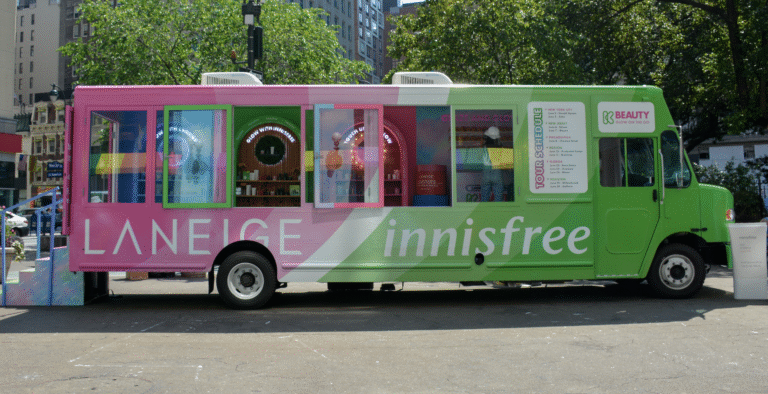
Case Study: The LANEIGE x innisfree Glow On-The-Go Tour