Top 7 Experiential Marketing Examples to Inspire Your Next Campaign

The best experiential marketing examples share one thing: they gave people a reason to stop, and then a reason to remember. Not an ad they scrolled past, but a moment they stood in, tasted, photographed, and told someone about.

We have produced hundreds of these campaigns for brands like Zara, Mastercard, Adidas, and Ralph Lauren, so every example below is a campaign we built ourselves, with the concept, the vehicle, the result, and the takeaway you can apply to your own brand. Seven campaigns, seven different jobs to do.

Key Insights

Every campaign needs one job: The examples below each solved a specific problem, whether that was cause alignment, product education, a launch, or store traffic, and the design followed from the goal.

Give people something to hold: Free coffee, a sample, a hot dog, or a sneaker in hand converts a passerby into a participant faster than any message on a wall.

Location is half the idea: A subway station at rush hour, a Pride parade route, or the sidewalk outside your own flagship each do work that no creative brief can replace.

The best activations become the story: A 3D Pride flag built from 9,000 bottles is not decoration, it is the reason a campaign earns a million impressions instead of a few hundred photos.

A great experience can outgrow itself: Ralph Lauren’s coffee truck proved demand so convincingly that the brand opened a permanent location, which is the strongest campaign result there is.

What Is Experiential Marketing?

Experiential marketing is a strategy that engages customers through direct, in-person brand experiences rather than one-way advertising. Instead of telling people about a product, it lets them touch, taste, try, and interact with it, usually somewhere they already are: a sidewalk, a festival, a campus, or outside a store. The goal is an emotional connection strong enough to change behavior, whether that is a purchase, a sign-up, or a post.

Mobile activations are one of the most effective versions of the format, because the vehicle brings the experience to the audience rather than waiting for the audience to find it.

7 Experiential Marketing Examples

Zara Embraces Cause Marketing by Showing Its ‘Pride’

The job: show up authentically inside a cultural moment.

A 2018 survey revealed more than 50% of Gen-Zers said knowing a brand is socially conscious influences their purchasing decisions. 

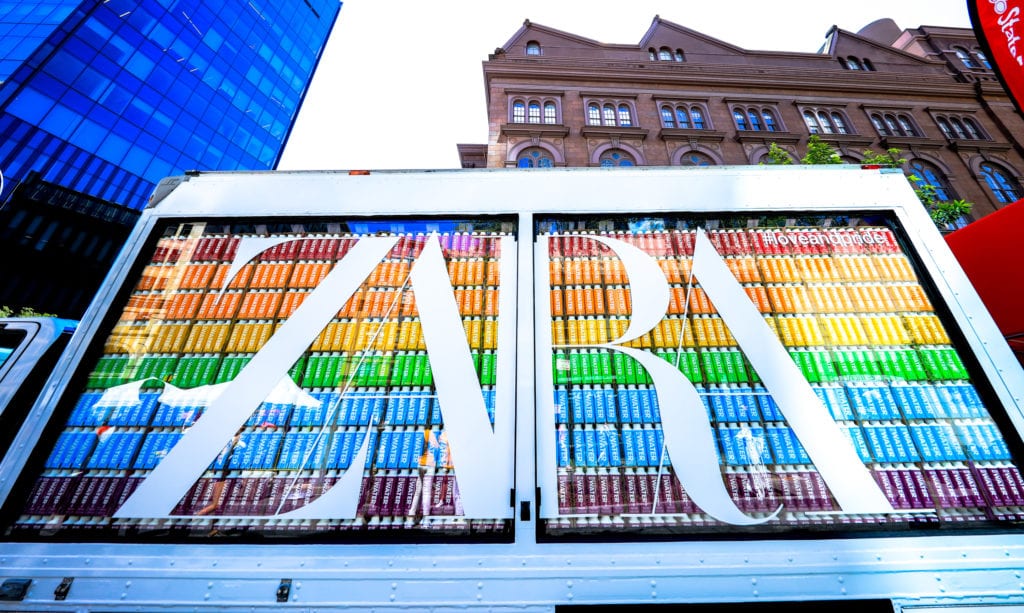
New York’s 2019 Pride Parade commemorated the 50th anniversary of the Stonewall Riots, and Zara and JustWater wanted to take part. We transformed a three-sided glass truck into a 3D Pride flag built from 9,000 bottles of JustWater, and Zara’s field marketing team kept paradegoers hydrated with a rainbow selection of complimentary drinks.

The cause campaign netted over one million impressions on social media worldwide while highlighting the brand’s support for the LGBTQ+ community.

The takeaway: cause marketing works when the brand contributes something the moment actually needs. On a hot parade route, that was water. The flag made it unmissable.

Glass Truck Experiential Marketing Example

User-Generated Content Helps Ocean Spray Reach Its ‘Dreams’

User-generated content is one of the most organic experiential marketing examples. What it lacks in finesse, it makes up for with authenticity, which is always valuable. Over the past few years, content created by consumers has become a cornerstone of many marketing strategies. In a 2020 study, 86% of brands are repurposed their social media followers’ content. 

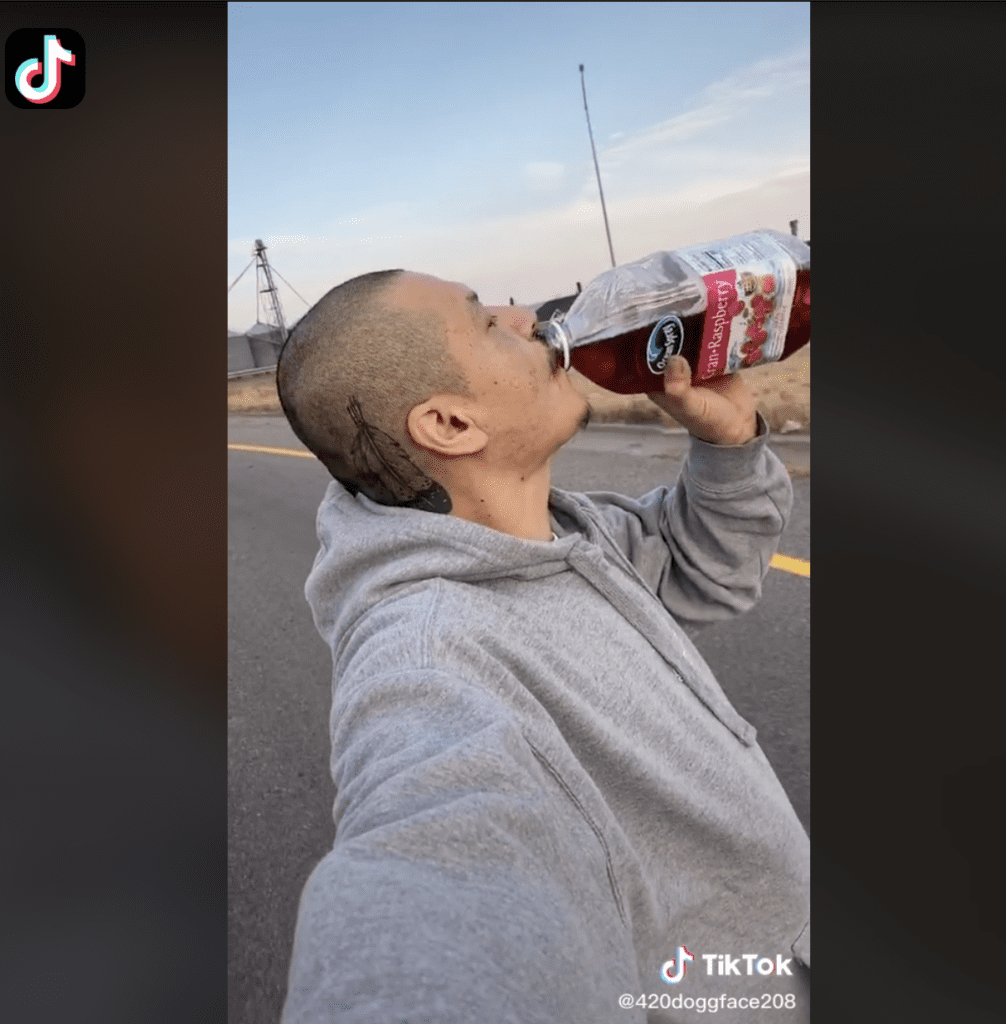
Last fall, Nathan Apodaca combined skateboarding, Ocean Spray cranberry juice, and Fleetwood Mac’s “Dreams” to create a viral moment. His TikTok took the Internet by storm, with celebrities, Ocean Spray’s CEO, and even Fleetwood Mac co-founder Mick Fleetwood uploading their renditions. Brands that take advantage of user-generated content endear themselves to consumers who appreciate messaging that’s made by people just like them.

The takeaway: You cannot manufacture a moment like this, but you can decide how you answer one. Ocean Spray’s reply was not a caption, it was a truck in a driveway. When something goes right for your brand online, the strongest move is almost always to respond in the physical world, because a gesture someone can sit in, drink, or drive away earns a second story that a repost never will.

Ocean Spray Tik Tok

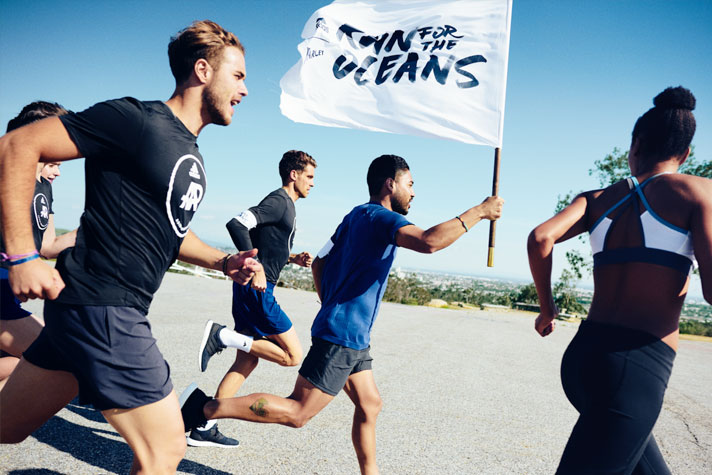
Adidas’ ‘Run For The Oceans’ Stresses the Importance of Sustainability

In 2018, Adidas created Run For The Oceans, uniting one million runners and raising $1 million to educate and empower 100,000 families living in coastal areas affected by plastic pollution. Adidas created five million pairs of shoes using recycled ocean plastic. 

The job: give a product drop a cultural hook.

Adidas celebrated the launch of its P.O.D. System sneaker line with a branded mobile kitchen pop-up in the heart of Times Square. Guests were treated to Baohaus cuisine from Eddie Huang and had the chance to buy their own pair of P.O.D.s on the spot.

The takeaway: a sneaker launch is a sneaker launch. A sneaker launch with a chef collaboration in Times Square is a reason to show up. Borrow credibility from a partner your audience already follows.

Adidas Experiential Marketing Example

Activating Experiential Marketing Examples Without Leaving ‘Höme’

COVID-19 has forced brands to rethink how they launch multi-sensory engagement without the impact of in-person experiences. Over the past year, industries have activated experiential marketing examples that bring those moments to consumers’ homes. 

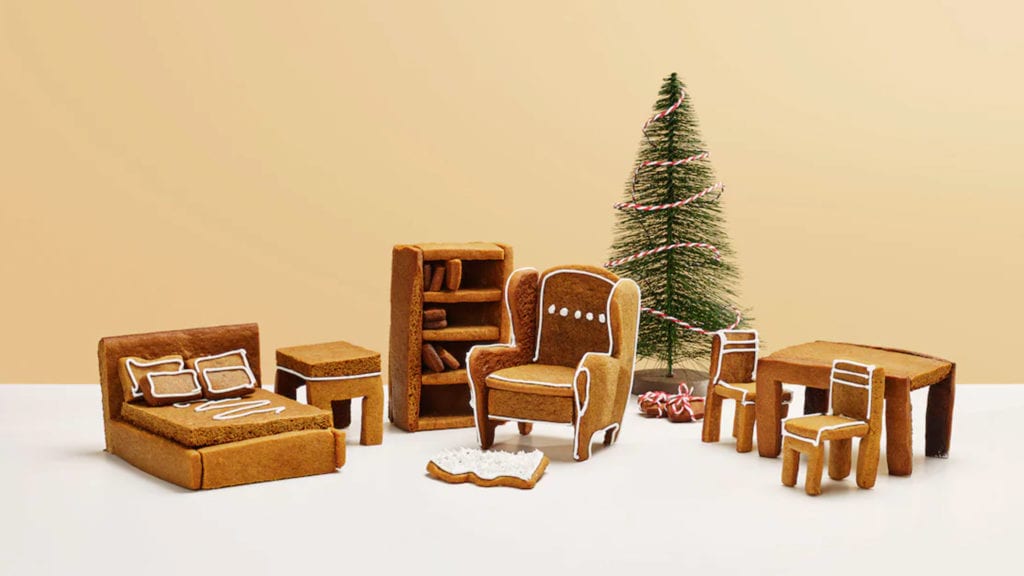
Last holiday season, IKEA offered customers a free “Gingerbread Höme” kit allowing them to furnish gingerbread houses with edible versions of the brand’s famous furniture. To boost impressions, IKEA encouraged customers to share their creations on social media using the hashtag #IKEAHoliday.

Ikea Gingerbread Home

Mastercard’s IRL Demonstration Showcases Immersive Promotions

The job: educate customers by letting them try the product.

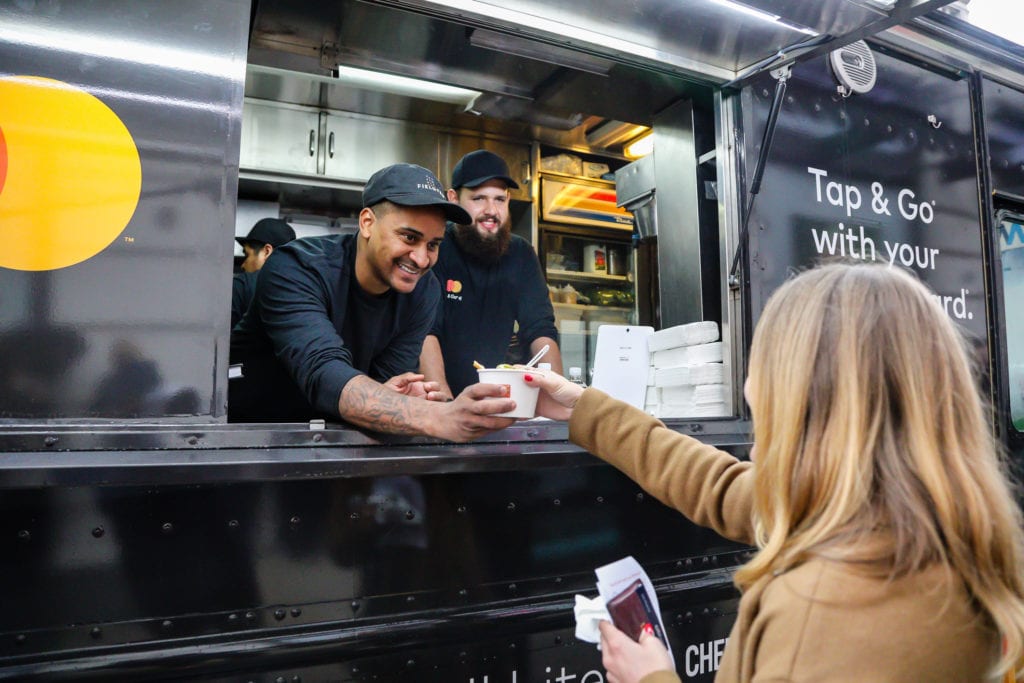
As contactless payment became the preferred way to transact, Mastercard launched Tap & Go and needed New Yorkers to feel how simple it was. We built a branded food truck with complimentary cuisine from New York chef JJ Johnson and set up interactive stations at three busy Manhattan subway stations. Commuters tested the speed of Tap & Go themselves and received free MetroCards for participating.

The takeaway: if your product’s advantage is speed, prove it during rush hour. Putting the demo exactly where the pain lives beats explaining it anywhere else.

Mastercard Experiential Marketing

Experiential Marketing Examples That Enhance Everyday Life

Some of the most successful experiential marketing examples allow consumers to imagine how products can improve their lives. Experiential marketing that hits close to home already has one foot in the door with winning over consumers. 

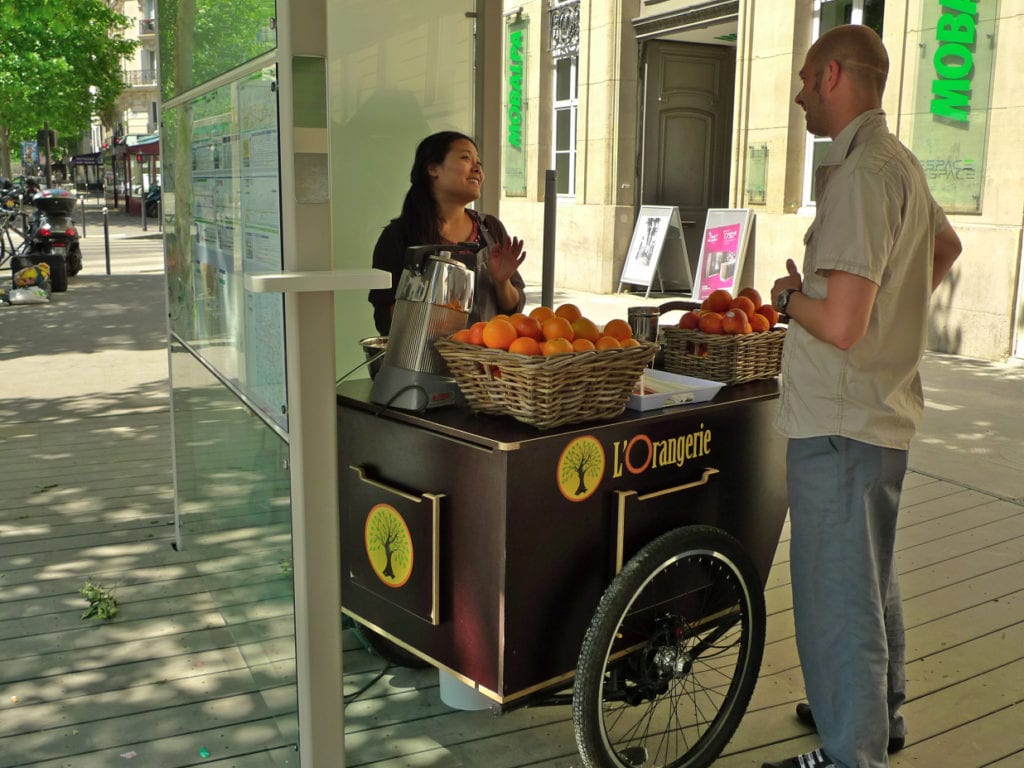
Located at Paris’ Boulevard Diderot, designer Marc Aurel created the bus stop of the future,” a multi-purpose public space designed to blend into the surrounding urban environment. Aside from purchasing a bus ticket, passengers can have a coffee, borrow a book, recharge their phones, and more. By reimagining the ordinary, Paris made the conventionality of waiting for the bus an experience that fosters social interaction and engagement.

Woman at juice cart with oranges talks to man on sunny sidewalk; trees and shops behind them.

Montana Inspires Virtual Wanderlust

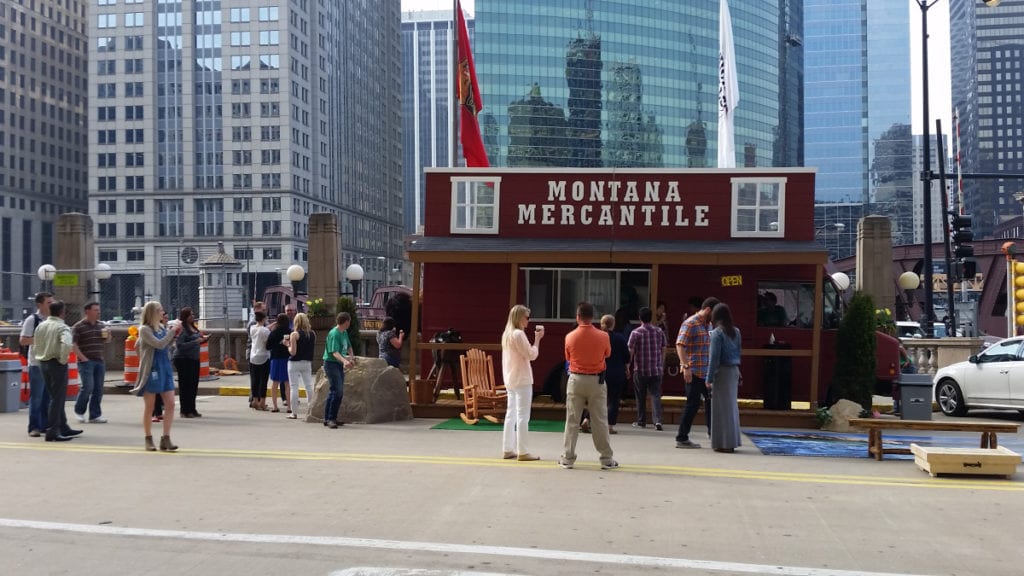
In 2016, to boost tourism, VisitMT.com brought “Big Sky Country” to the streets of Chicago, Minneapolis, and Seattle. Montana might not be on everyone’s wish list, but the “Treasure State” wanted to show what it has to offer.

VisitMT’s experience featured knowledgeable brand ambassadors and a food truck converted into the state-landmark Polebridge Mercantile. Receiving complimentary “made-in-Montana” huckleberry ice cream and bison jerky, visitors got a taste of the real Montana experience.

Visit Montana Experiential Marketing

What the Best Experiential Marketing Examples Have in Common

Look across all seven and the same pattern repeats.

Each campaign had one clear job, and you can name it in a sentence. Each gave people something to hold, whether a drink, a sample, a meal, or a sneaker. Each chose a location that was part of the idea, not just an address with a permit. Each built one thing worth photographing, so the reach extended past the people physically present. And each connected the moment to a next step, from a MetroCard to a purchase to a permanent store.

None of them relied on the vehicle alone. The vehicle got attention. The idea earned the memory.

How to Apply These Examples to Your Campaign

Start by naming the job. Are you launching a product, educating customers, aligning with a cause, driving traffic into a store, or testing whether a market wants what you sell? The examples above map neatly onto each of those, and the answer decides everything that follows.

From there, choose the format and vehicle to fit. Sampling at volume points to a food truck, product display points to a glass truck, and charm-led launches point to a vintage Citroen or cart. Then design one photo-worthy moment on purpose, plan the location like a strategy, staff it with people who know the product, and build a capture mechanism into whatever guests take home so the results are countable.

Set Your Brand Up for Success

Every marketing campaign is different, but the goal is always the same: reach new customers and keep the ones you have. These experiential marketing examples work because they stir genuine, positive emotion, and brands that manage that can change the conversation.

Food Truck Promotions has the fleet, the fabrication team, and the production experience to execute your own campaign, from concept to curb. Take a look at our work and get in touch to get started.

Frequently Asked Questions

Experiential marketing is a strategy that engages customers through direct, in-person brand experiences instead of one-way advertising. Rather than describing a product, it lets people touch, taste, try, and interact with it where they already are, aiming for an emotional connection strong enough to change behavior.


Strong examples include Zara’s 3D Pride flag glass truck built from 9,000 JustWater bottles, Mastercard’s Tap & Go demo stations in Manhattan subway stations, Adidas’ P.O.D. System launch with chef Eddie Huang in Times Square, and Ralph Lauren’s Citroen coffee truck that became a permanent Rockefeller Plaza location.


One clear job, something physical for people to hold, a location that is part of the idea, one deliberately photo-worthy moment, and a next step that connects the experience to a measurable outcome. Campaigns that skip any of these tend to earn attention without earning results.


Traditional advertising interrupts people with a message and hopes it lands. Experiential marketing invites participation, so the customer forms their own impression through direct contact with the product. That difference is why experiential activations generate stronger recall and far more organic social content.


Cause marketing aligns a brand with a social issue its customers care about. It works when the brand contributes something the moment genuinely needs, the way Zara and JustWater kept a Pride parade route hydrated, rather than simply appearing at an event with a logo and a message.


Very well, because a launch benefits from trial more than explanation. Adidas paired its P.O.D. System drop with a chef collaboration in Times Square, and Origins translated its GinZing formula into an orange-wrapped pop-up serving coffee, which drew 4,000 visitors and distributed every sample.


Yes, and it is one of the format’s most valuable uses. Ralph Lauren’s coffee truck proved demand across a series of guerrilla campaigns from 2017 to 2019, and the brand later opened a permanent Ralph’s Coffee location at Rockefeller Plaza on the strength of it.


Set one primary metric before launch, then track against it: samples served, interactions, leads captured, promo redemptions, social reach, and press earned. Zara’s World Pride truck reported over one million social impressions worldwide, which mapped directly to its awareness goal.


Food trucks, glass trucks, Airstreams, trailers, vintage Citroens, tuk tuks, buses, and carts. Each shapes a different experience: kitchens for sampling at volume, glass walls for product display, walk-in space for showrooms, and compact vintage formats for charm on tight urban corners.


Specialist experiential agencies with in-house design, fabrication, and production. At Food Truck Promotions, that covers the vehicle, build-out, wrap, permits, insurance, staffing, and reporting as one production, so brands approve the concept and arrive at a finished activation.

MORE POSTS
FOLLOW US ON INSTAGRAM
Creative Technology in Experiential Marketing