Top 6 Types of Pop-Up Shops: Which Format Fits Your Brand?
There is no single kind of pop-up shop, and the different types of pop-up shops each do a different job. A sampling truck built…
Read moreBy: Benjamin Goldberg • • 11 min read
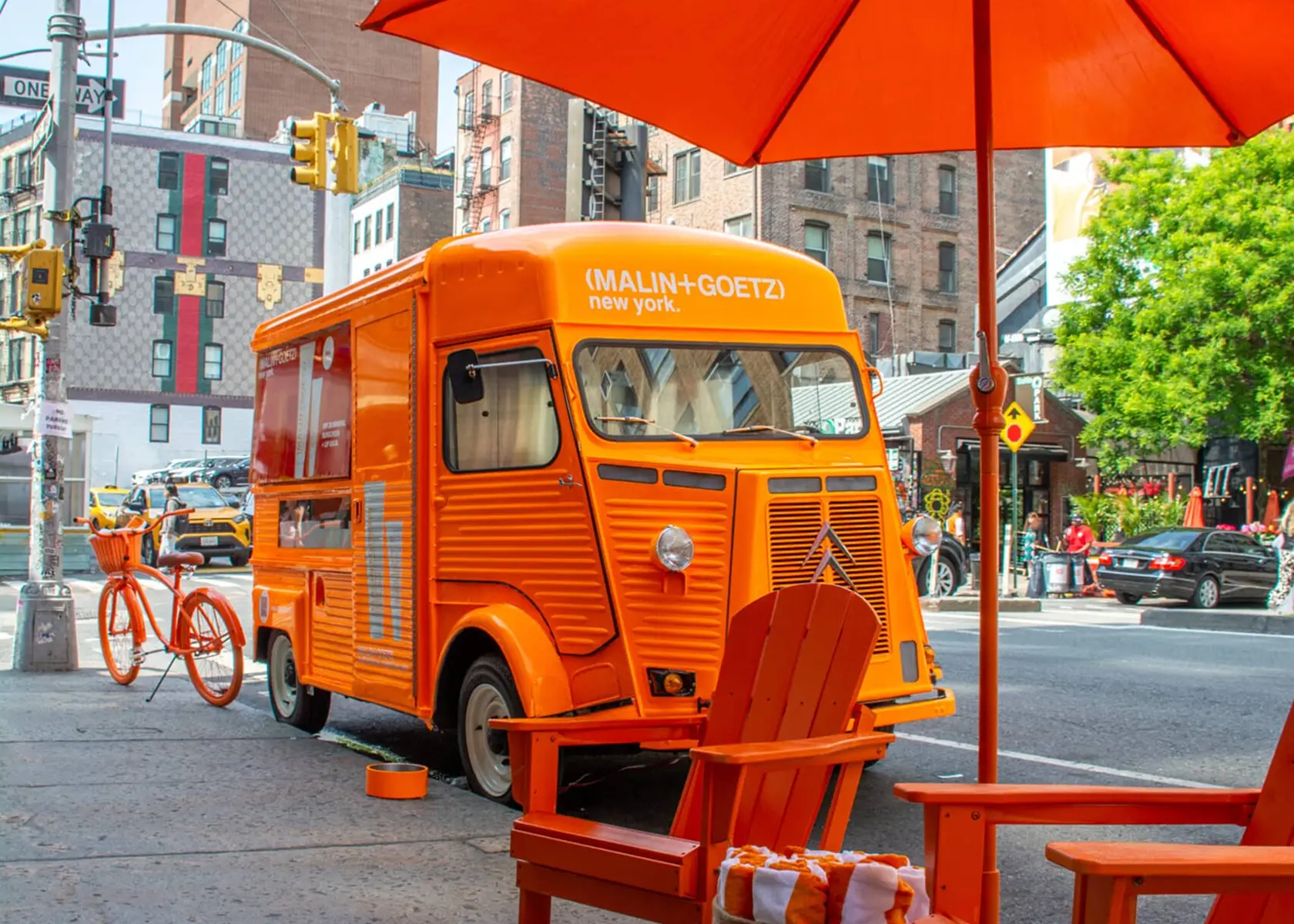
Promotion trucks are mobile, fully customizable vehicles that let a brand hit the streets, visit high-traffic locations, and connect with a target audience in a way that feels personal, exciting, and impossible to ignore. Instead of waiting for customers to find your message, a promotional truck brings the message directly to them.
People are tired of being the target of another ad. They want something real: an experience they can step into, a product they can hold, and a moment that sticks. That is why more brands are turning to promotional trucks to bring their message to life. This guide explains what promotion trucks are, why they work, the main types to choose from, and how to use one to reach the right audience.
Promotional trucks combine mobility, creativity, and direct audience interaction, three things traditional advertising struggles to deliver at once. Here is why they are so effective in modern marketing.
A promotional truck is your brand on wheels. Whether you are activating in a busy city center, outside a stadium, or at a festival, you meet people where they already are and where they are most receptive. You are not hoping the right audience sees an ad. You are driving straight to where they gather, which is why experiential marketing spending has climbed past pre-pandemic records.
Unlike a static billboard or an online ad, a promotional truck lets you build an experience. From interactive displays to sampling and live demos, the truck turns your message into something people can touch, taste, hear, and remember long after they walk away, which is what makes the impression last.
A well-designed truck commands attention the moment it arrives. Bright graphics, bold branding, and a creative setup help you stand out in crowded environments and reach a large audience quickly. In a busy street or a packed event, the truck is the thing people stop and photograph.
A promotional truck is not a guess. With GPS tracking, foot-traffic counters, QR codes, and digital lead capture, you can measure reach and engagement and prove the impact of the campaign. That data is what turns a memorable day into a reportable marketing result.
Mobility is the secret power of a promotional truck. You can adjust your strategy in real time, shifting locations, adapting to weather, or responding to an unexpected crowd. A fixed billboard cannot move to where the people are. A truck can, on the same afternoon.
Not all promotion trucks are the same. Depending on your goals, audience, and vision, you can choose from a range of vehicles, each with its own strengths. Here are the most popular options.
A food truck is one of the fastest ways to draw a crowd. Whether you are serving branded snacks, themed menu items, or pairing food with a product demo, food trucks naturally pull foot traffic and keep people engaged longer. They are ideal for festivals, campuses, trade shows, and busy city streets, anywhere people are already looking for something to eat.
Glass box trucks have transparent walls that turn the interior into a moving display case, essentially a mobile showroom on wheels. They are perfect when you want to showcase a product, run a live demonstration, or create a striking installation people can see from every angle. The premium, polished look instantly elevates the campaign.
Few vehicles have the visual impact of an Airstream. The iconic silver exterior and spacious interior make it a favorite for brands wanting a stylish, elevated presence, and it can be transformed into a pop-up shop, tasting lounge, mobile studio, or experience hub. It blends nostalgia and sophistication in a way that stands out at events and festivals.
If you want something quirky, compact, and full of personality, a tuk tuk is a standout choice. Its small size makes it ideal for weaving through tight urban spaces, pedestrian zones, and high-traffic city centers where larger trucks cannot go. The charm alone grabs attention and sparks conversation.
A promotional truck is not just about mobility. It is about strategic planning and smart logistics. Used well, a truck reaches the right audience at the right time and place. Here is how.
You can position the truck where your audience already gathers: shopping districts, stadium entrances, business parks, beaches, and university campuses. Placing the activation among people who are already active and engaged means your campaign reaches customers who are open to a new experience rather than tuning it out.
If one location is not performing, you move. If a crowd forms unexpectedly, you pivot toward it. This level of control is something static advertising simply cannot match, and it means fewer wasted hours in front of the wrong audience and more time in front of the right one.
A truck activation does not have to live only on the street. Amplify it with social media videos, live streams, QR codes, and digital contests, and a single physical moment becomes a multi-platform campaign. The people who see it in person become the content that reaches everyone who did not.
A promotional truck lets trained staff and brand ambassadors interact with customers face to face. That direct contact builds trust, sparks conversation, and forms the kind of meaningful connection that a banner ad or a scrolled-past video never will.
In a time when digital overload is real and attention spans are shorter than ever, brands need more than ads — they need experiences.
Strong experiential marketing doesn’t just cut through the noise…it also creates moments people remember, talk about, and share.
And that’s where Food Truck Promotions comes in.
We believe in creativity over conformity, and our work reflects that philosophy. Our team builds immersive, one‑of‑a‑kind brand experiences that spark curiosity, delight your audience, and leave a lasting impression.
From concept development to full‑scale execution, every project is handled with care, creativity, precision, and passion.
Whether your goal is to launch a new product, connect with your community, or elevate brand awareness, Food Truck Promotions has the expertise, resources, and creative vision to bring your ideas to life. Our custom food trucks are designed around your objectives, turning each activation into a powerful mobile marketing vehicle that helps your brand stand out in even the most crowded marketplace.
A promotion truck works because it does what most advertising cannot: it goes to your customers, turns your message into an experience, and gives you the flexibility to adapt in real time while still measuring the result. The right vehicle depends on the goal, a food truck to pull a crowd, a glass truck to showcase a product, an Airstream for style, a tuk tuk for tight spaces, but the underlying advantage is the same. In a world of digital overload and shrinking attention spans, a branded truck parked where your audience already is creates a moment people remember, talk about, and share. That is the whole point of experiential marketing, and a promotion truck is one of the most direct ways to deliver it.
A promotion truck is a mobile, customizable vehicle a brand uses to market itself in person, traveling to high-traffic locations to connect with customers directly. Also called a promotional or marketing truck, it acts as a moving billboard and an interactive experience, bringing the brand to the audience instead of waiting for the audience to find it.
A promotional truck is wrapped and built to represent a brand, then deployed to locations where the target audience gathers, such as events, city centers, or campuses. Staff engage passersby with sampling, demos, or giveaways, while the vehicle draws attention in transit and while parked. Tracking tools then measure the reach and engagement it generates.
The most common types are food trucks, which pull crowds with branded food; glass trucks, which act as a mobile showroom; Airstreams, which bring retro style and interior space; and tuk tuks, which are compact enough for tight urban spaces. The right one depends on your product, audience, and goals.
They combine mobility, creativity, and direct interaction in a way traditional advertising cannot. A truck meets people where they already are, turns a message into a hands-on experience, captures attention instantly, and gives brands the flexibility to move to where the audience is, all while producing measurable engagement data.
Costs vary widely by vehicle type, build complexity, campaign length, and number of markets. A single-day local activation costs far less than a multi-city tour with a fully custom build. Because the vehicle can be reused across a campaign, a promotional truck often spreads its cost across many activations rather than a single event.
Yes. GPS tracking, foot-traffic counters, QR-code scans, and digital lead capture all turn a physical activation into measurable data. Setting one primary metric before launch, such as samples served, scans, or sign-ups, and tracking it consistently is what proves the campaign’s impact and informs the next one.
Anywhere your audience gathers: shopping districts, stadium entrances, business parks, beaches, university campuses, festivals, and busy city streets. The advantage of a truck is that it is not locked to one spot, so you can move between high-traffic locations to keep the brand in front of the right people throughout the campaign.
Brands across nearly every category, including beauty, fashion, food and beverage, technology, wellness, and entertainment. Any brand that benefits from reaching customers in person can use a promotional truck, and the vehicle type is simply matched to the product, whether that means a food truck, a glass showroom truck, or a branded Airstream.
A billboard is fixed and passive: it waits in one place for people to pass. A promotional truck is mobile and interactive: it travels to the audience, markets the brand everywhere it drives, and lets people engage with the product face to face. One broadcasts a message; the other creates an experience.
Start with your goal and audience, choose the vehicle type that fits, then plan the build, the locations, the staffing, and the permits, which vary by city and venue. Working with an experiential marketing agency that owns its fleet and handles fabrication, permitting, and logistics is the fastest way to get a professional activation on the road.
Author
CEO @ FTP Agency
Benjamin H. Goldberg is passionate about bringing brands to life on the streets. As CEO of Food Truck Promotions and co-founder of the New York and Los Angeles Food Truck Associations, he helps create unforgettable mobile experiences that blend great food, creative branding, and meaningful connections with audiences everywhere.
There is no single kind of pop-up shop, and the different types of pop-up shops each do a different job. A sampling truck built…
Read more →
The best pop-up shop ideas don’t start with a vehicle or a venue; they start with a concept strong enough that people line up,…
Read more →
Mobile pop-up shops have become the way ambitious brands go offline: a store, a sampling bar, or a showroom built into a vehicle,…
Read more →We use and share personal information through cookies and similar technologies on our sites to personalize your shopping experience and ads. Others may use this information for their own marketing and business purposes. . Check our Privacy Policy for more details.
Browser Opt-Out Honored
We use and share your personal information with others to personalize your shopping experience and show you targeted ads on other sites based on your interests and online activities.
Online Info includes cookies, pixel tags, and similar technologies connected to your browser or device. Offline Info includes information associated with your email address based on your other interactions with us.
We use and share your personal information with others to personalize your shopping experience and show you targeted ads on other sites based on your interests and online activities. Information includes cookies, pixel tags, and similar technologies connected to your browser or device (Online Info), as well as information associated with your email address based on your other interactions with us (Offline Info). Others may use this information for their own marketing and business purposes.
You can choose to opt out of sharing one or both types of information.