Services

Mobile Showrooms

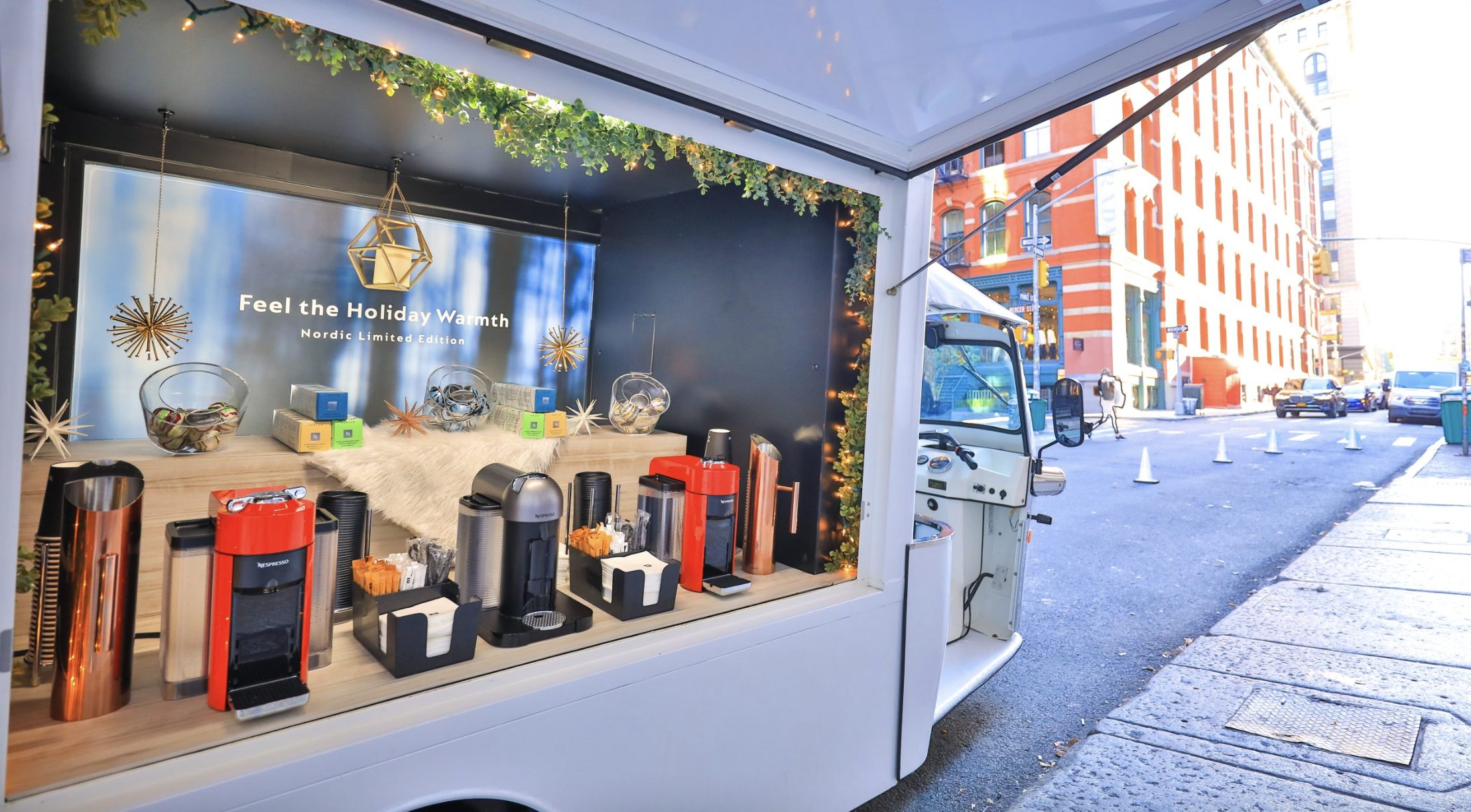
A mobile showroom is a branded environment built into a vehicle where customers try the product instead of hearing about it. We build the room, take it to them, and staff it with people who can answer the question that decides the sale.

Contact

Experiential marketing partner for top brands:

Samsung logo with white letters on a blue oval background. DIOR in large, bold black serif letters on a light background. Calvin Klein logo in black sans-serif font on a light background, minimalist style. ULTA Beauty logo with "ULTA" above "BEAUTY" and a curved line under the "U. A person in a wheelchair reaches up to place a book on a high library shelf, showing accessibility. Uber Eats logo with "Uber" in black and "Eats" in green on a light background.

Some Products Only Convince in Person

There are things a photograph cannot settle. Weight, texture, finish, how a formula feels, how a platform actually behaves. If your product wins the moment someone handles it, the whole job is getting it into their hands.

Nothing Leaves, So You Can Show Everything

A shop is limited to what it can carry and replace. A showroom is not. One of each is enough, which means the full range, the top of the line, and the version too expensive to hand out can all sit in the same vehicle.

You Hear What Customers Actually Think

A showroom is a research instrument as much as a marketing one. People handle the product in front of you and say what they think unprompted, which is a quality of feedback no survey gets and no analytics dashboard will ever show you.

Brand Activation Services

Mobile Pop-Up Shops

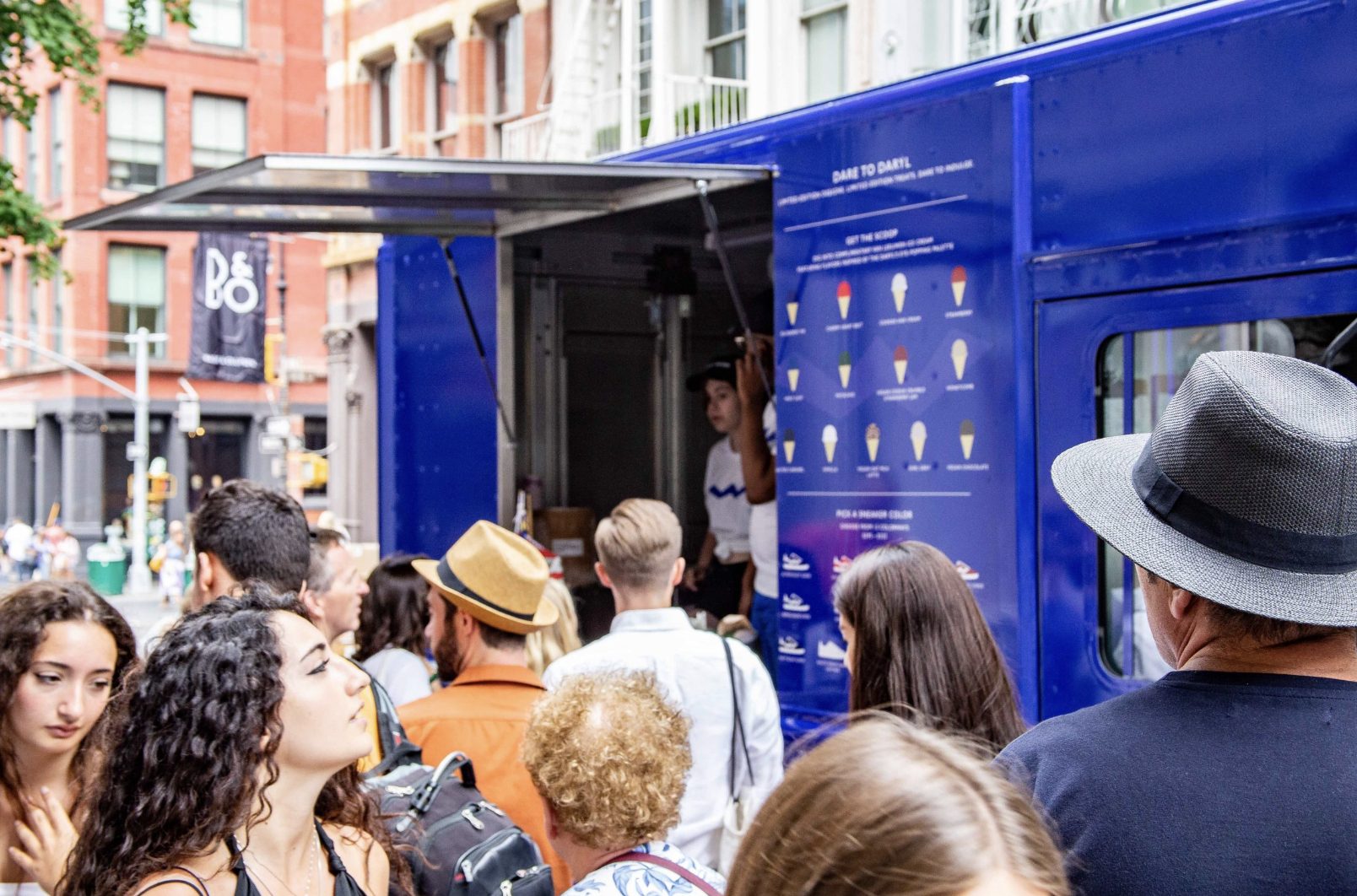
The other side of the same vehicle. A shop carries stock and closes the sale on the spot, which suits impulse and limited drops rather than a purchase people need to think about.

B2B Marketing

The natural fit. Platforms, equipment, and services all live or die on the demo, and a showroom gives decision-makers a hands-on version of a pitch they would otherwise sit through.

Event Marketing

Conferences and trade shows assemble people who came specifically to evaluate things. A showroom meets them in exactly the frame of mind the format needs.

Mobile Marketing Tours

One room, every market. Touring a showroom puts the demo in front of customers in cities where you have no store and no plans to open one.

Pop-Up Cafes

A drink buys the time a demo needs. Coffee slows people down long enough to actually look, which is the step a showroom depends on and rarely gets on its own.

Holiday Pop-Ups

December shoppers are researching for someone else. A showroom answers the questions a shelf cannot, at the point in the year when getting the gift right matters most.

Our Process

Concept Development

We start from the objection. What is the one thing someone has to understand, feel, or try before they will buy, and how does the vehicle answer it in the two minutes you get? A showroom that shows everything and proves nothing is just a van with shelves in it.

Location Selection

A showroom needs people who are willing to stop and think, so we look for dwell rather than volume. Near the store where the sale will actually close, at an event where your audience came to evaluate things, or wherever your customer is already considering the category.

Customization

The build is a room, and it gets treated like one. Lighting chosen for your product, a layout that moves people past it in the right order, surfaces at the right height, and enough space that handling the thing does not feel like queuing. Details a wrap alone will not fix.

Execution

Staffing is the whole game here. A sampling crew hands things over; a showroom crew answers questions, which means real product knowledge and the confidence to have a conversation. We also capture properly, because the sale closes later and an unrecorded conversation may as well not have happened.

Mobile Showrooms FAQs

A mobile showroom is a branded demo environment built into a vehicle such as a truck, Airstream, or glass truck. Customers step in, handle the product, and get their questions answered. Nothing is sold on the spot, because the format exists to move people toward a purchase, not to complete one.

A shop sells, a showroom demos. Shops carry stock and run transactions, so success is units moved. Showrooms exist for considered purchases where the sale closes later, in store or online, so success is leads captured and store visits driven. Same fleet, different job entirely.

Anything people need to experience before committing. Furniture, appliances, equipment, tech, vehicles, high-end beauty, and B2B platforms all qualify. The common thread is a purchase big enough or complicated enough that a photograph and a price will not close it on their own.

Usually not, and that is deliberate. Once you carry stock you are running a pop-up shop, with all the inventory and checkout that comes with it. A showroom stays lean and points people to where the purchase happens, which is what suits a considered category.

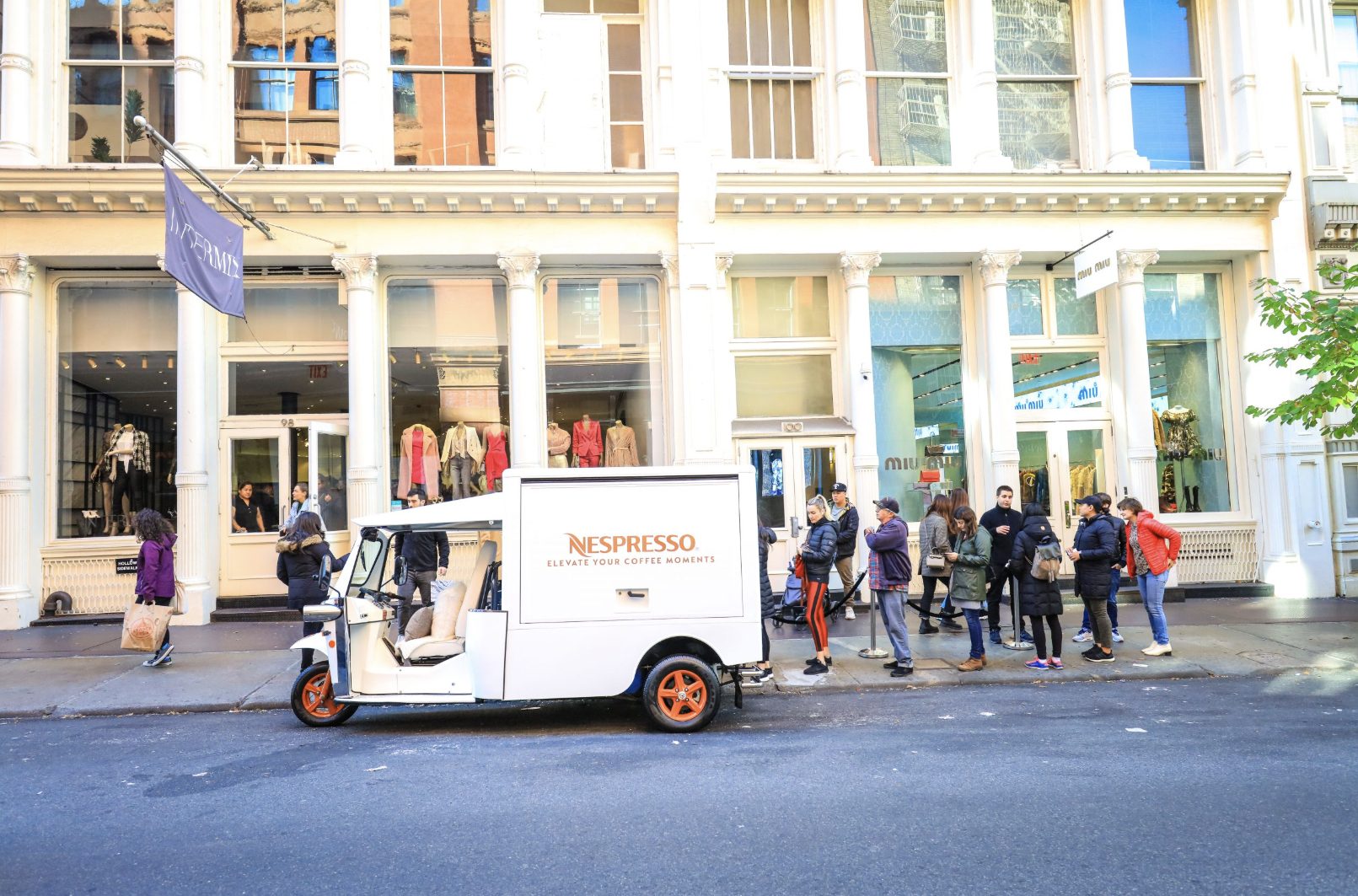
Whatever gives you a room. Airstreams and box trucks let people step inside and take their time. Glass trucks work when the product should be visible before anyone commits to approaching. Smaller builds like E-Tuks suit compact products and tight urban placements.

Somewhere your customer is already thinking about the category. Outside your own store, near a retail partner, at a trade show, or in a district where the competition sits. Foot traffic matters less than mindset: a busy street full of people in a hurry is worth very little to a showroom.

People who know the product properly. We brief ambassadors on the questions your category actually gets asked, because a showroom lives on the answers. Enthusiasm alone works for sampling. It fails the moment someone asks something specific and gets a shrug.

Not in units, since nothing sells. Track demos completed, leads captured, store visits driven, and codes redeemed afterward. Build the capture into the interaction rather than bolting it on, because the sale happens later and an unrecorded conversation is invisible in the results.

Six to eight weeks for a straightforward build, and longer when the interior needs real work. A showroom asks more of fabrication than most formats, since the inside is the product rather than the wrap, and interior build-out is the item that decides the timeline.

Yes, and it is one of the strongest uses of the format. Brands with limited retail footprint use a touring showroom to put the product in front of customers in markets where opening a store makes no sense, which turns one build into a national presence.

BRAND
TO THE
STREETS.®

Get in touch