Pride Month marketing looks very different in 2026 than it did three years ago, and any brand planning a June campaign needs to understand what changed before it commits.
June still brings Pride festivals to New York, Chicago, Los Angeles, Miami, and dozens of other cities, and those events still draw enormous crowds. What has shifted is the corporate posture around them, and with it the expectations of the people attending.
This guide covers the current landscape, how to decide whether Pride marketing is right for your brand, how to avoid rainbow washing, and the activation formats that still create genuine connection.
Key Takeaways
- The landscape shifted: many large sponsors scaled back Pride engagement starting in 2025, which changed both the competitive field and audience expectations.
- Half-measures are the biggest risk: showing up visibly and then retreating tends to draw more criticism than either committing or staying out.
- Consistency is the credibility test: what your brand does the other eleven months now carries more weight than anything you post in June.
- Presence beats posting: a physical activation that gives attendees something useful reads as participation rather than promotion.
- Less competition, more scrutiny: fewer corporate logos means a well-executed activation stands out, provided it is backed by something real.
What Is Pride Month Marketing?
Pride Month marketing is any campaign a brand runs during June, when Pride is observed in the United States, to connect with LGBTQ+ customers and communicate its position on inclusion. It ranges from product collections and social content to festival sponsorships, parade presence, and in-person brand activations.
The audience is meaningful in scale. Gallup found that 9 percent of US adults identified as LGBTQ+ in 2025, and roughly 23 percent of adults under 30 did, meaning the share rises sharply among younger consumers.
What Changed: The State of Pride Marketing in 2026
This is the most important update since this guide was first published, and it is the context every brand should have before planning.
Corporate participation contracted sharply beginning in 2025. Research from Gravity Research found that 39 percent of companies planned to scale back external Pride Month engagement that year, compared with 9 percent the year before, and no surveyed companies reported planning an increase. Several long-standing sponsors withdrew from major city Pride events, and organizers in New York, San Francisco, and other cities reported six-figure funding shortfalls.
Companies cited a range of reasons, including the broader political environment and concern about backlash. Some continued their support privately rather than as named sponsors.
For a brand deciding what to do, three practical implications follow:
- The field is less crowded: fewer corporate activations in June means a strong one is more visible than it would have been in 2022 or 2023.
- Scrutiny runs in both directions: brands now weigh reaction from multiple audiences, which is precisely why a considered position matters more than a reflexive one.
- Inconsistency is the real exposure: audiences noticed which brands stayed and which left, so a visible return after a quiet year invites questions you should be ready to answer. None of this argues for or against participating. It argues for deciding deliberately, then executing in a way you can stand behind year over year.
How To Decide Whether Pride Marketing Fits Your Brand
Work through these before you build anything:
- Do your internal policies support the message? Benefits, employee resource groups, and hiring practices are the substance behind any external campaign.
- Can you sustain it beyond June? A year-round commitment is what separates a partner from a seasonal advertiser.
- Is there a genuine connection to your audience or category? The strongest campaigns come from brands with an existing relationship to the community.
- Are you prepared for response? Any public position now attracts commentary. Decide in advance how you will handle it, and align leadership before launch.
- Are you contributing something? Funding, donations, or a tangible service at the event distinguishes participation from marketing.
What Is Rainbow Washing and How Do You Avoid It?
Rainbow washing is the practice of adding rainbow colors or imagery to products, logos, and advertising to signal support for LGBTQ+ equality with minimal underlying effort. It is a form of performative marketing, where the visual gesture is the entire contribution.
It has always been criticized, and in the current environment it is even less durable, because audiences are actively tracking which brands follow through. Five practical ways to avoid it:
- Be specific and personal: tell a real story connected to your company, your employees, or your customers rather than using generic imagery.
- Point to actual policies: name the internal commitments that back the campaign.
- Include a call to action: give people something to do beyond seeing your logo.
- Contribute materially: donate to or partner with relevant organizations, and be transparent about it.
- Show up the other eleven months: this is the single clearest signal of whether a June campaign is genuine.
Pride Festival Marketing Ideas That Still Work
Experiential formats hold up well here because they involve doing something for attendees rather than saying something about your brand. A brand activation at or near a festival puts your team face to face with people, which is harder to fake and easier to judge.
Give People Something They Actually Need
Parades are long, hot, and crowded. Cold drinks, shade, water, sunscreen, phone charging, and seating are genuinely useful, and usefulness reads as participation.
Build a Photo Moment Worth Sharing
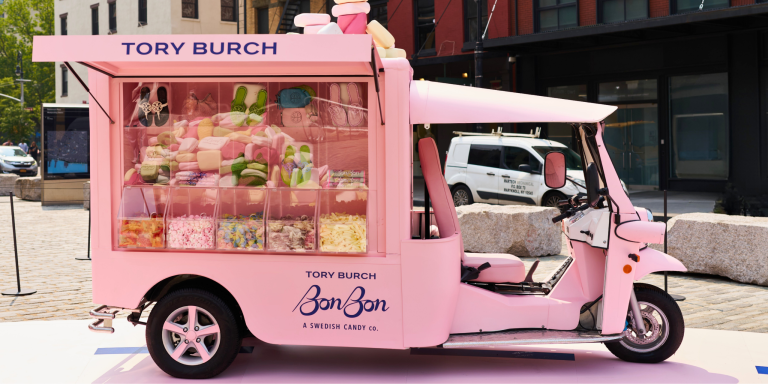
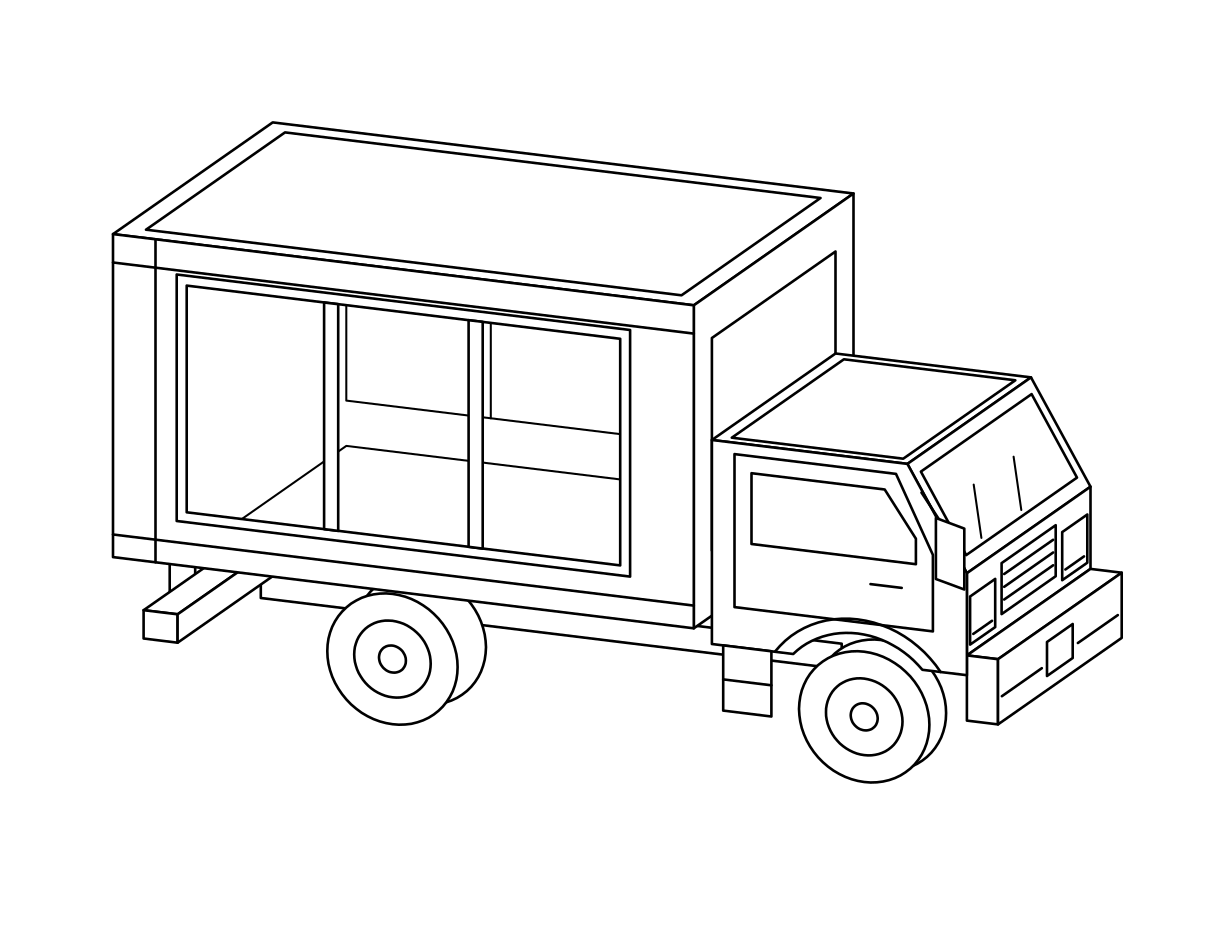
A striking, well-designed vehicle or installation gives attendees a backdrop they want to use. Our glass box trucks are frequently used this way because the display itself becomes the attraction.
Staff It With People Who Can Represent You
Brand ambassadors are the difference between a parked vehicle and a conversation. Our guide to street team marketing covers how staffing changes the outcome of an activation.
Partner Rather Than Sponsor
Working with a local organization, creator, or venue grounds the activation in the community hosting it and puts your budget somewhere with a longer tail than signage.
Plan the Follow-Through
Decide before June what happens in July. A year-round program, even a small one, is what makes the June presence credible in the first place.
For more format options, see our guides to mobile pop-up shops and creative pop-up shop ideas.
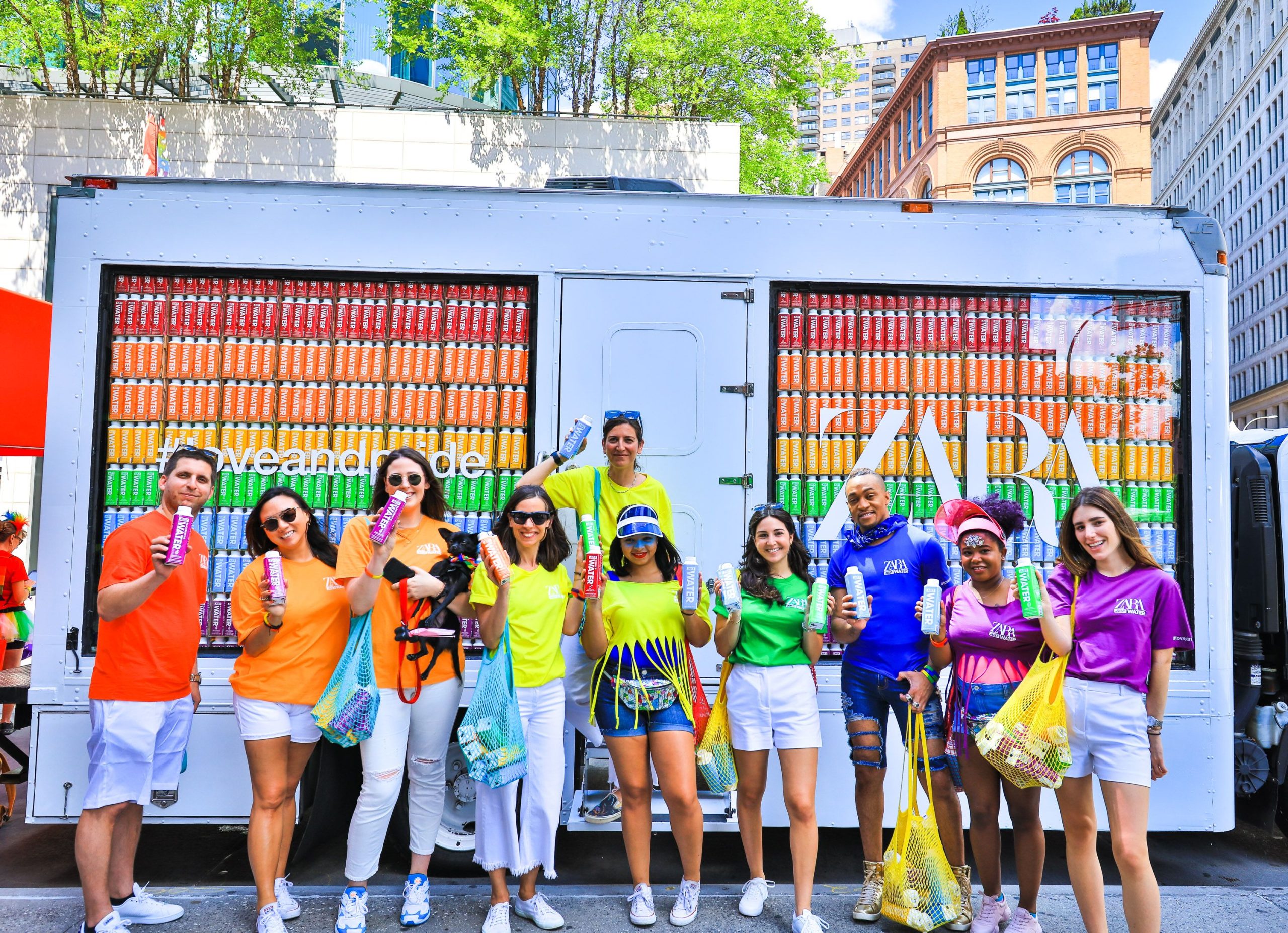
Case Study: Zara at WorldPride 2019