How the Best Brands Win at Fashion Marketing in 2026
Fashion marketing has never been more crowded, more expensive, or more dependent on getting a real person to stop and pay attention. The feed…
Read moreBy: Ashley Elarde • • 8 min read
The 2023 Barbie movie did not just win the box office, it won the summer. Its marketing became a cultural event in its own right, and the campaign is now studied as one of the most effective in modern movie marketing. The lesson for any brand is not about the budget. It is about how the film turned a product launch into a real-world experience people wanted to be part of.
Barbie made people see pink everywhere, and much of that came from experiential marketing: pop-ups, installations, and physical moments that pulled the movie off the screen and onto the street. This post breaks down what made the campaign work, what any brand can borrow from it, and how we would put Barbie herself on the road, because experiential marketing is our thing.
The Barbie campaign is a case study in doing experiential marketing at the highest level. A few principles stand out, and every one of them scales down to a brand without a Hollywood budget.
Barbie did not create hype from nothing. It attached itself to decades of nostalgia and a summer where the whole internet was primed to talk about it, even spawning the Barbenheimer phenomenon alongside Oppenheimer. The takeaway for brands is that timing a campaign to a cultural moment your audience already cares about gives you reach you could never buy outright.
Much of the buzz came from real-world activations: a life-size Malibu Dreamhouse, pink installations, and pop-ups that let fans step inside the world of the film. Those moments did what a trailer cannot. They let people touch, enter, and photograph the brand, which is the entire premise of experiential marketing and the reason it drives so much organic sharing.
Every piece of the Barbie campaign was designed to be photographed and posted. The signature pink, the playful sets, the interactive moments: all of it gave people a reason to create content. In a launch, that shareability is what turns a marketing spend into a movement, because the audience becomes the media.
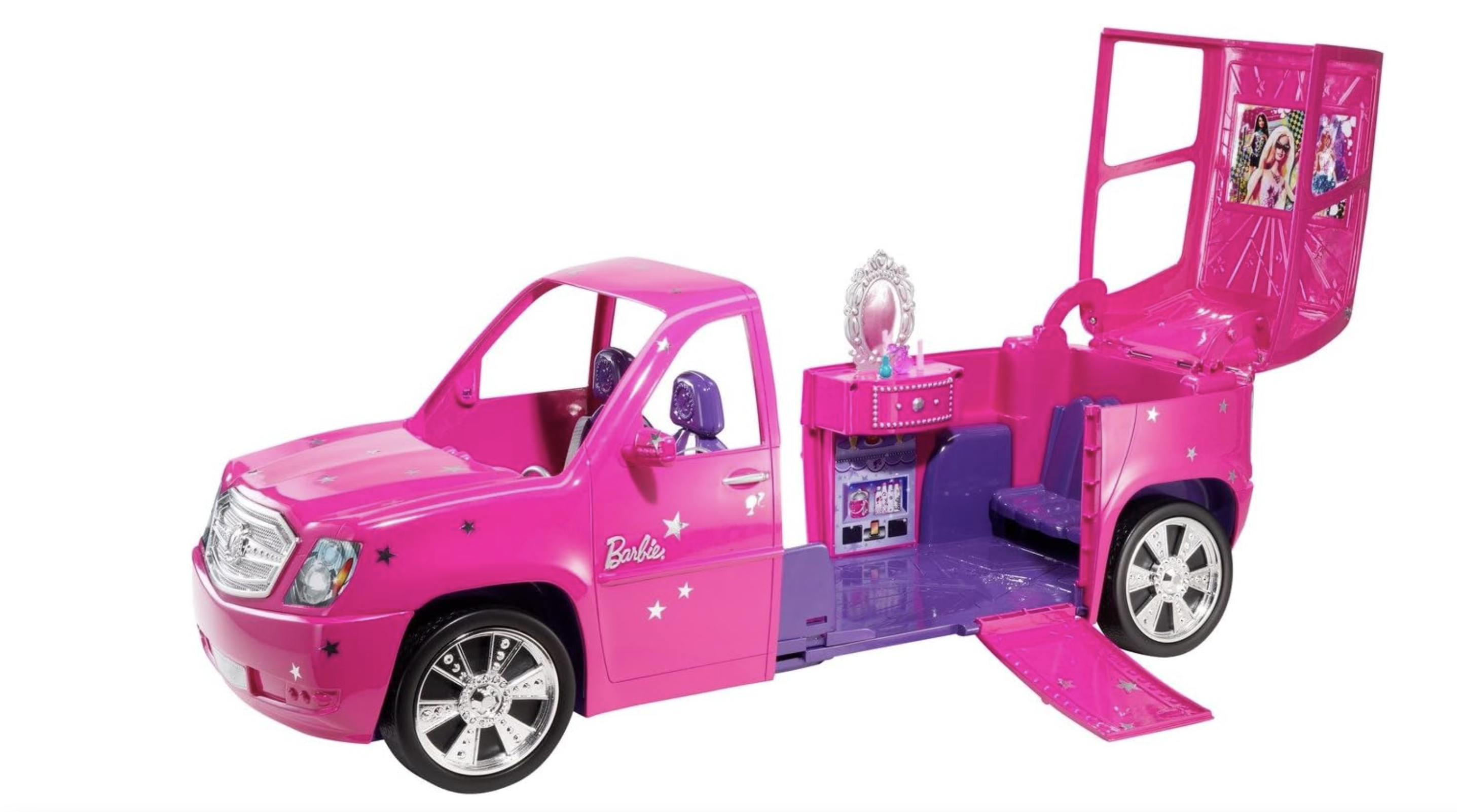
Barbie has always understood the power of a show-stopping vehicle, and so do we. Long before her Hollywood debut, she built a reputation on an iconic collection of cars, each one a little marketing statement of its own. It is a history we happen to share.
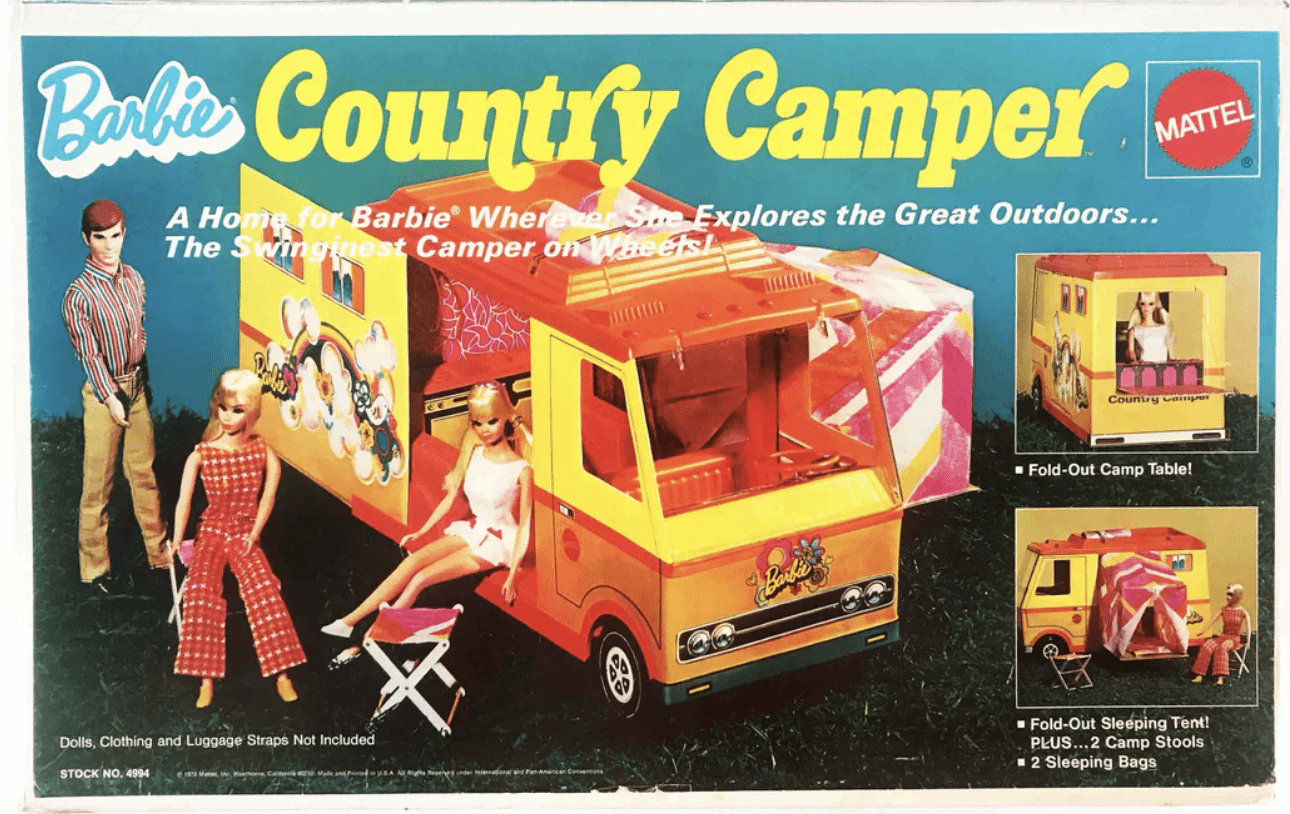
Mattel gave Barbie her first car in 1962, an Austin-Healey convertible, and never looked back. From the groovy 1971 Country Camper that showed her adventurous side to her famously pink limousines, each vehicle told a story about who Barbie was at that moment. If we were behind the wheel of that Country Camper, we would have it serving up timeless classics like hot dogs and s’mores to pull crowds across the country.
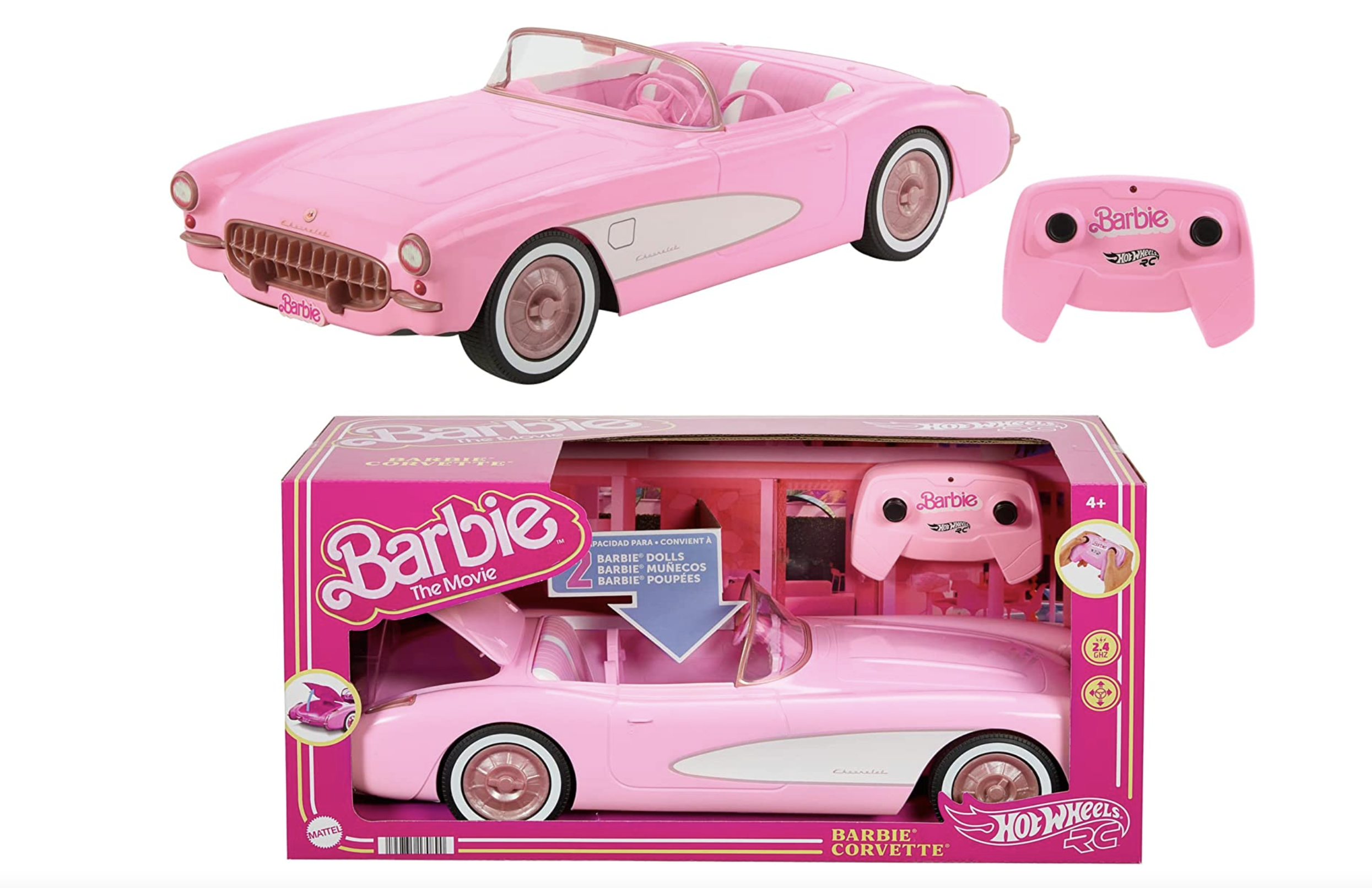
Barbie’s pink Corvette is her most recognizable dream car, and it is the one featured in the movie’s trailer. There is a reason a vehicle sits at the center of the Barbie brand: a great car is mobile, eye-catching, and impossible to ignore, which is exactly what makes experiential vehicles such a powerful marketing tool. A branded vehicle brings the experience directly to the audience, wherever they are.
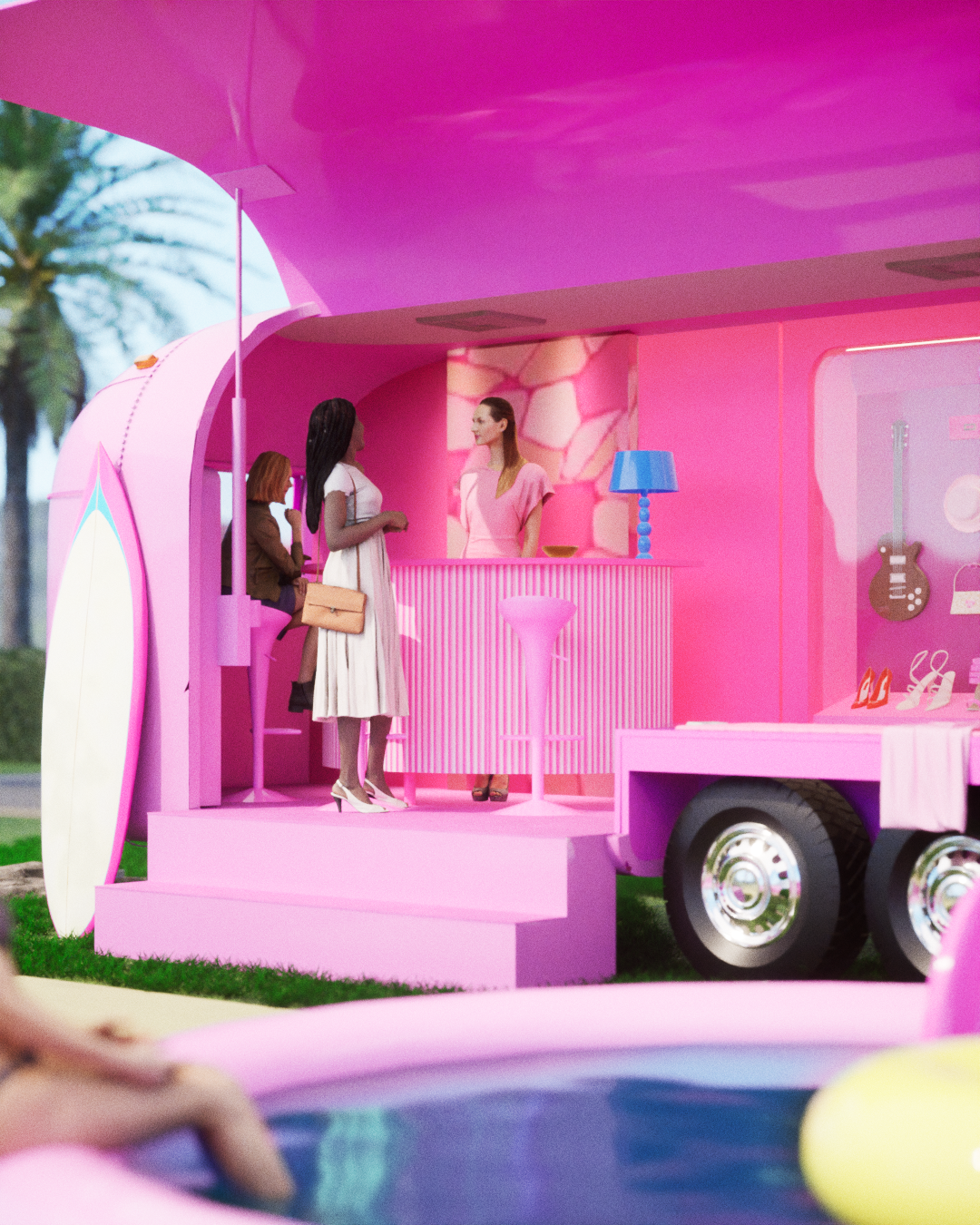
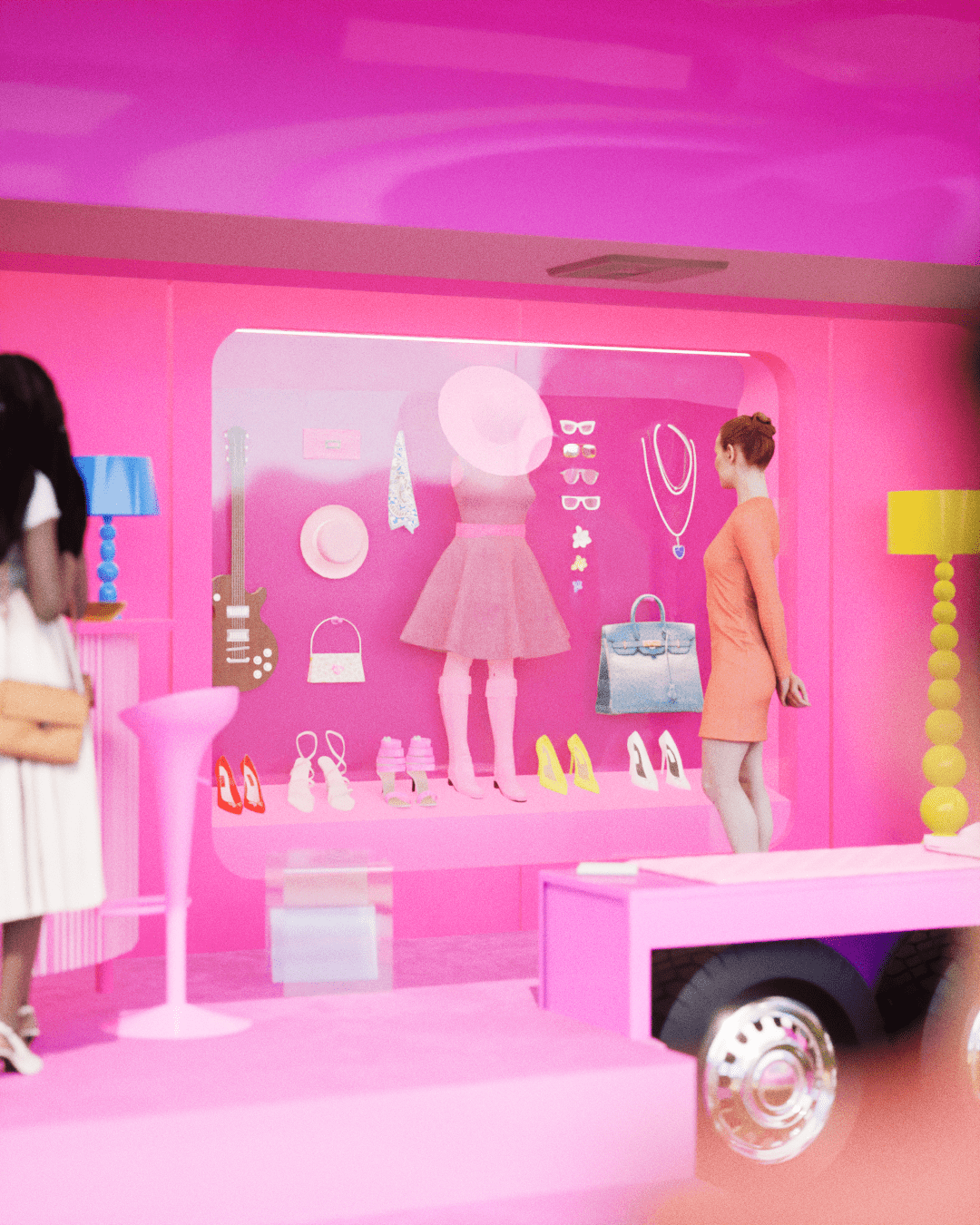
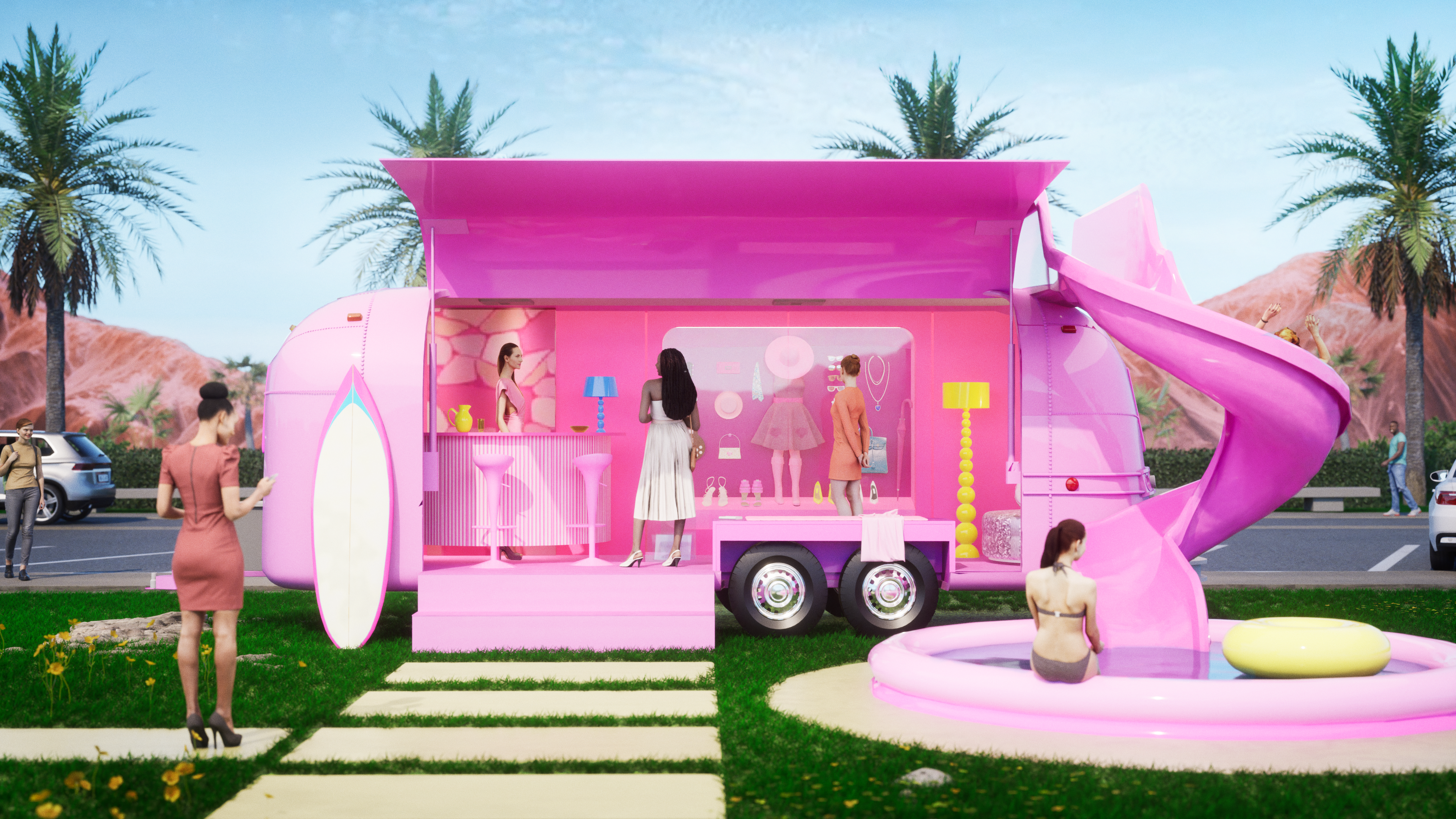
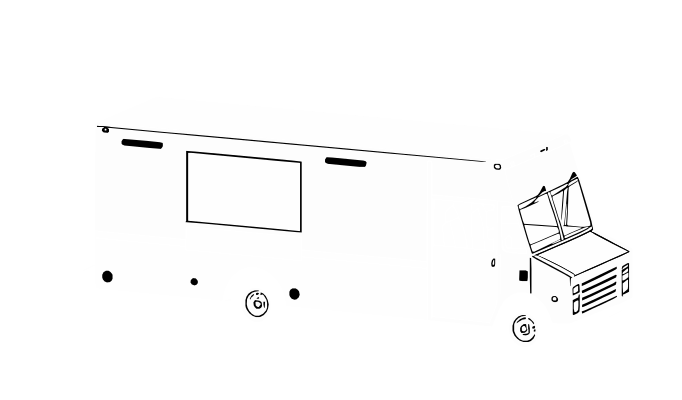
Since Barbie was a little too busy with her Hollywood debut to ask us to build her a car, we dreamed one up on our own. We were not about to miss a marketing moment this big, so we designed a Barbie Dream Airstream: a hot-pink mobile pop-up worthy of the it girl on everyone’s mind, complete with a display case of Barbie attire and accessories and space for brand ambassadors to welcome guests inside.
It is exactly the kind of activation we would build for any brand looking to ride a cultural moment: a fully branded, photo-ready environment that turns a trend into a physical experience. So, Barbie, if you are reading this, your Dream Airstream is ready. Let’s go market.
The Barbie campaign proved that the most powerful marketing does not just tell people about a product, it invites them into an experience. The $150 million budget grabbed headlines, but the real lesson is one any brand can apply: tie your campaign to a cultural moment, make it physical, and build it to be shared. Nostalgia, timing, and a photo-worthy real-world activation turned a movie launch into a global event. You do not need Barbie’s budget to use her playbook, you just need an idea worth stepping into and the right experience to bring it to life.
The Barbie campaign combined pop culture timing, nostalgia, and heavy experiential marketing. Real-world activations like a life-size Malibu Dreamhouse and pink pop-ups let fans step inside the film’s world, creating photo-worthy moments people shared widely. The reportedly $150 million marketing budget helped, but the shareable, experience-first strategy is what set it apart.
According to Variety, rival studio executives estimated Warner Bros. spent around $150 million marketing Barbie, more than the film’s reported $145 million production budget. The campaign helped drive the movie past $1.4 billion at the global box office, making it the biggest film of 2023.
Experiential marketing for a film means creating real-world, in-person moments that bring the movie off the screen, such as themed pop-ups, installations, and branded vehicles. Instead of only running trailers and ads, studios let fans physically enter the world of the film, which drives social sharing and turns a release into a cultural event.
Three things: tie your campaign to a cultural moment your audience already cares about, make the brand a physical experience people can enter and photograph, and design every element to be shareable. These principles work at any budget, because the impact comes from the strategy, not just the spend.
Nostalgia marketing taps into shared memories and positive feelings about the past to build an emotional connection with customers. Barbie is a perfect example, drawing on decades of childhood association to resonate across generations at once. Nostalgia works because emotion drives most purchasing decisions, and familiar cues trigger it instantly.
Brands attach their campaigns to trends, events, and cultural phenomena their audience is already discussing, which multiplies reach without paying for it. Timing is everything: activating around a moment like a major movie release, a holiday, or a viral trend lets a brand join a conversation that is already happening.
A branded vehicle is mobile, eye-catching, and impossible to ignore, and it brings the experience directly to the audience rather than waiting for them to come to it. From Barbie’s iconic Corvette to a custom mobile pop-up, a distinctive vehicle turns heads, creates a photo moment, and can travel to wherever the audience gathers.
A mobile pop-up is a branded experience built into a vehicle, such as an Airstream or truck, that travels to customers instead of waiting for them. It combines a custom, photo-ready environment with on-site staff and interactive moments, making it ideal for launches, film premieres, and any brand looking to ride a cultural trend in person.
It depends on the build, but riding a cultural moment rewards speed. A straightforward activation can come together in weeks, while a fully custom build needs more lead time. Working with an experiential agency that owns its fleet and handles fabrication, permits, and staffing is the fastest way to get an on-trend activation on the road.
Yes. While few brands have a Hollywood budget, the core tactics scale to any size: a well-timed, photo-worthy, in-person activation tied to a cultural moment. The impact comes from creativity and execution rather than spend, which is why experiential marketing works for brands of every scale, not just global franchises.
Author
Social Media Manager @ FTP Agency
Ashley Elarde is a social media strategist, content creator, and experiential marketing professional with experience bringing brands to life through engaging digital content. She has helped execute campaigns for brands across beauty, fashion, retail, and entertainment, developing campaigns that drive engagement and meaningful consumer connections.
Fashion marketing has never been more crowded, more expensive, or more dependent on getting a real person to stop and pay attention. The feed…
Read more →
Beauty marketing lives or dies on one thing: getting the product onto an actual face, in an actual hand, in front of an actual…
Read more →
The best fashion marketing campaigns do not just look good in a case study deck, they get people to show up, try something, and…
Read more →We use and share personal information through cookies and similar technologies on our sites to personalize your shopping experience and ads. Others may use this information for their own marketing and business purposes. . Check our Privacy Policy for more details.
Browser Opt-Out Honored
We use and share your personal information with others to personalize your shopping experience and show you targeted ads on other sites based on your interests and online activities.
Online Info includes cookies, pixel tags, and similar technologies connected to your browser or device. Offline Info includes information associated with your email address based on your other interactions with us.
We use and share your personal information with others to personalize your shopping experience and show you targeted ads on other sites based on your interests and online activities. Information includes cookies, pixel tags, and similar technologies connected to your browser or device (Online Info), as well as information associated with your email address based on your other interactions with us (Offline Info). Others may use this information for their own marketing and business purposes.
You can choose to opt out of sharing one or both types of information.