The best sampling campaigns share a structure: a product in the form people will actually consume it, a location the audience already visits, a reason to take the next step and a count of what happened. The 15 product sampling campaign examples below are grouped by the job they did, and each one lists the product, the format, the vehicle, the capture mechanic and the result where the brand reported one. Most are activations Food Truck Promotions produced. Five are campaigns from other brands that are worth studying for the mechanic alone. For the definitions behind the formats, start with product sampling marketing.
Key Takeaways
- The campaigns with reported results are all sampling in the final form: a drink served as a drink, a cream applied, a scent on a blotter.
- Eleven of the fifteen ran on a vehicle, because a truck or cart gives the brand a controlled, photographable location without a lease.
- Capture is what separates a campaign from a giveaway: Fever-Tree can report 3,400 take-home items because the count was designed in before the bar was built.
- Multi-city tours are where the biggest programs live: one build, several markets, the same photo everywhere.
- The non-FTP examples prove the mechanic travels: the same structure works for a global beverage brand and a plant-based egg startup.
Sampling Campaigns Built for Trial
1. Fever-Tree Espresso Martini Bar
Product: a new Espresso Martini mixer range.
Format: street sampling from a mobile bar.
Vehicle: a branded mobile bar built to run a fast queue.
Capture: totes, bottles and coupons handed over with every sample.
Result: more than 5,100 consumers sampled, 70 percent over the trial target, and over 3,400 totes, bottles and coupons went home to finish the conversion. The mixer was served as a hot mocha and an iced martini, so the trial was the drink, not a description of it. Read the Fever-Tree case study.
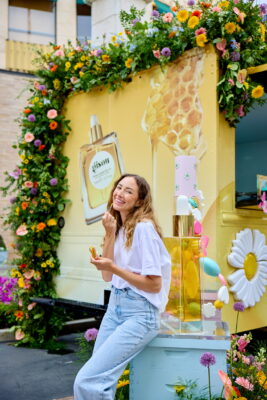
2. Gisou Honey Glow Truck
Product: Honey Infused Hair Oil.
Format: street sampling with a customization station.
Vehicle: a custom glass truck wrapped in honey yellow at The Grove in Los Angeles.
Capture: the vehicle itself; the photo was the share.
Result: more than 20 million impressions in three days from one location, and in the brand’s words, all of LA buzzing. The sample went out from the counter while the truck did the social work. Read the Gisou case study.
3. innisfree West Coast College Tour
Product: skincare.
Format: campus sampling tour.
Vehicle: a branded truck moving between California campuses during the semester reset.
Capture: sign-ups at the counter.
Result: more than 3,000 visitors and over a million brand impressions. Going where Gen Z already was, at the moment they were outdoors and between classes, did the targeting. Read the innisfree tour case study.
4. Malin + Goetz SPF Pop-Up
Product: sunscreen.
Format: street sampling where the problem happens.
Vehicle: a branded sampling truck in the sun.
Capture: product in hand with a reason to buy the full size.
Result: the shortest trial-to-purchase path in the set, because the sample solved a problem the customer had at that moment. The lesson is placement: sample where the need is, not where the foot traffic is highest.
5. Augustinus Bader Smoothie Truck
Product: premium skincare with an ingredient story.
Format: hospitality sampling.
Vehicle: a smoothie truck.
Capture: a conversation with a brand ambassador over a $5 smoothie about a $300 cream.
Result: a reason to stop for a product that cannot be sampled in a sachet. The smoothie carried the ingredient story and bought the two minutes the consultation needed.
Sampling Campaigns Built for Retail
6. Nespresso Mobile Showrooms
Product: coffee machines.
Format: demo and sampling fifty feet from the point of sale.
Vehicle: E-tuk mobile showrooms on the brand’s first national mobile tour.
Capture: every taster sent through the boutique door.
Result: a trial-to-visit funnel the brand could count by boutique and by day, in markets where awareness of the boutiques lagged awareness of the brand. The sample was the coffee; the sale was the machine inside. Read the Nespresso case study.
7. Gopuff Hot Chocolate Truck
Product: a delivery app.
Format: street sampling with an app sign-up.
Vehicle: a winter-wonderland-wrapped truck in New York.
Capture: app downloads at the hand-off.
Result: a campaign that grew from a single weekend into a months-long partnership because the sign-ups justified it. Hot chocolate in December is the easiest yes in sampling, and the app was the thing being sampled. Read the Gopuff case study.
8. Spindrift Greetings From Paradise
Product: sparkling water.
Format: street sampling with the experience behind glass.
Vehicle: a glass truck built as a tropical bar.
Capture: the product, the staff and the first customers were the signage.
Result: a sampling campaign that read as a destination rather than a table, which is what put it in the feed. Read the Spindrift case study.
Sampling Campaigns Built for Launch
9. TIRTIR World Tour
Product: K-beauty skincare entering US retail.
Format: multi-city sampling tour timed to retail launches.
Vehicle: one glass truck through four cities.
Capture: the same counter, script and sign-up at every stop.
Result: more than 47,000 visitors and $965K in earned media value from one build. The clearest case for touring one sampling campaign instead of producing four. Read the TIRTIR World Tour case study.
10. LANEIGE x innisfree Glow On The Go Tour
Product: two sister skincare brands.
Format: multi-city sampling tour.
Vehicle: one glass truck, 12 stops in nine cities.
Capture: repeatable at every stop.
Result: a national tour at a regional cost, because the build, the staff script and the photo were made once.
11. CHANEL Holiday Tuk Tuk
Product: a luxury house in December.
Format: mobile sampling route.
Vehicle: a branded tuk tuk through narrow holiday streets serving hot cocoa.
Capture: none at the counter; the photo did the work.
Result: more than 5 million impressions across in-person and social views without selling a thing on the sidewalk. Proof that a sampling campaign can be about warmth rather than a transaction.
Sampling Campaigns From Other Brands Worth Studying
12. JUST Egg’s commuter breakfast
Product: a plant-based egg.
Format: street sampling in the morning commute window.
Mechanic: the product served hot, in its final form, when a free breakfast is accepted by almost everyone. The lesson is time of day: 8 am is the highest acceptance rate of the day for anything warm.
13. Amazon Music x Bad Bunny helado truck
Product: a record-breaking album.
Format: street giveaway tied to a cultural moment.
Mechanic: a helado truck turned a streaming launch into a neighborhood event, and the cultural fit did the targeting. The sample was the invitation to the release.
14. Travel Texas BBQ on a New York corner
Product: a state as a destination.
Format: sampling as surprise.
Mechanic: the wrong food in the right place. Texas barbecue on a Manhattan street made a tourism board’s message physical and photographable.
15. Instagram Reels on Wheels
Product: a platform feature.
Format: event sampling during a cultural week.
Vehicle: an ice cream truck in Miami during Latin Week, with Billboard Latin Music Awards energy around it.
Result: a platform borrowing a week the audience already celebrated, with the treat as the reason to stop. Read the Reels on Wheels case study.
What the Best Sampling Campaigns Have in Common
Four patterns repeat across the fifteen.
The sample is in the final form. Fever-Tree served a martini, not a mixer. Gopuff served hot chocolate, not an app demo. Augustinus Bader served a smoothie to start a conversation about a cream. The closer the sample is to how the product is consumed, the shorter the path to purchase. Bazaarvoice’s research on sampling makes the same point from the review side: people who try the real thing write about the real thing.
The location was already crowded. Campuses, The Grove, a holiday street, a commuter station, Latin Week. None of these campaigns had to build an audience. They borrowed one.
The vehicle was the venue. Eleven of fifteen ran on a truck, cart, tuk tuk or glass truck. A vehicle gives a sampling campaign a controlled, lit, staffed, photographable location without a lease, and it moves to the next one.
The count was designed in. Fever-Tree’s 3,400 take-home items, innisfree’s 3,000 visitors and TIRTIR’s 47,000 are numbers because the capture was part of the plan before the build. A campaign without a capture mechanic produces a nice weekend. HubSpot’s guide to sampling marketing calls this the difference between sampling as a cost and sampling as a channel.
How to Build Your Own Sampling Campaign
Pick the job from the three groups above: trial, retail or launch. Choose the sample format that matches how the product is consumed. Pick the vehicle for the curb and the crowd from the experiential vehicle lineup. File the permit six to eight weeks out, or use private property to shorten it. Build the capture into the wrap. Report within two weeks. For 25 formats with costs and lead times, see product sampling ideas.
Case Study: Gisou Honey Glow Truck