To market your sustainable brand in 2026, you need more than a green logo and a recycled-paper hangtag, you need proof people can see, touch, and taste.
Sustainability has moved from a differentiator to an expectation, and the rules have tightened around what you are even allowed to claim. Vague messaging is now both a marketing problem and a compliance one.
This guide covers what actually changed for 2026, what consumers reward, and the activation formats that let a sustainable brand demonstrate its values instead of asserting them.
Key Takeaways
- Proof beats claims: consumers and regulators have both stopped accepting general environmental statements at face value.
- The say-do gap is real: most people say sustainability matters, far fewer change what they buy, so marketing has to make the sustainable choice easy and appealing rather than worthy.
- Generic green language is now a liability: new EU rules enforceable from September 2026 restrict unsubstantiated claims, including terms brands have used casually for years.
- Experiences demonstrate what copy cannot: a sampling activation lets people judge your product for themselves, which is the most credible proof available.
- The vehicle is part of the message: running an activation on an electric vehicle makes the sustainability point without a single word of copy.
Do Consumers Really Care About Sustainability in 2026?
Yes, but the honest answer is more complicated than it was in 2023, and understanding the nuance is what separates marketing that works from marketing that gets ignored.
Roughly 70 percent of global consumers say living sustainably is important to them, yet about 61 percent of the global population still lacks the awareness, motivation, or action to live more sustainably in practice.
That gap between intention and behavior is the single most important thing for a sustainable brand to understand. Price and convenience still decide most purchases. Your job is not to convince people that the planet matters, they already agree. Your job is to make choosing your product feel easy, desirable, and worth it.
Consumers are also better at spotting exaggeration than they used to be. Social platforms make criticism of questionable production practices spread quickly, and audiences have learned the language of greenwashing well enough to recognize it.
What Changed for 2026: The New Rules on Green Claims
This is the biggest update since this guide was first published, and it affects your copy directly.
In the EU, the Empowering Consumers for the Green Transition Directive becomes enforceable by member states from September 27, 2026. It tightens the rules on environmental claims, restricts generic green terminology, and extends scrutiny to sustainability labels and even product names that imply an environmental benefit without evidence. The European Commission has published guidance confirming there is no additional transition period for existing claims and packaging already in the distribution chain.
Separately, the broader Green Claims Directive proposal was paused in 2025, which led some brands to assume the pressure was off. It is not. The enforceable rules above still arrive on schedule, and national regulators are increasing scrutiny regardless.
What this means practically for your marketing:
- Retire the vague adjectives: broad terms such as eco-friendly or environmentally friendly, used without substantiation, are exactly what the rules target.
- Be specific and verifiable: a concrete claim you can document outperforms a sweeping one you cannot.
- Audit existing assets: packaging, signage, vehicle wraps, and event collateral all count as commercial communication.
- Do not overcorrect into silence: going quiet about real sustainability work, sometimes called greenhushing, forfeits credit you have actually earned. None of this is legal advice, and you should have counsel review your claims. The marketing takeaway is simple: demonstrable beats descriptive, and that is precisely what experiential marketing is good at.
Use Experiential Marketing To Prove It, Not Just Say It
When claims are under scrutiny and audiences are skeptical, showing becomes more persuasive than telling. A brand activation lets customers try the product, ask questions, and form their own opinion, which is a form of proof no ad can replicate.
It also sidesteps the credibility problem. Handing someone a plant-based sandwich to taste makes an argument that a billboard claim cannot, and the person makes the judgment themselves.
4 Creative Ways To Market Your Sustainable Brand
Here are the top four ways to market your sustainable brand this year.
1. Leverage Earth Day With a Statement Vehicle
Earth Day remains the highest-attention moment of the year for a sustainable brand, which is both the opportunity and the risk. Everyone posts something, so a physical presence stands out against a feed full of green graphics.
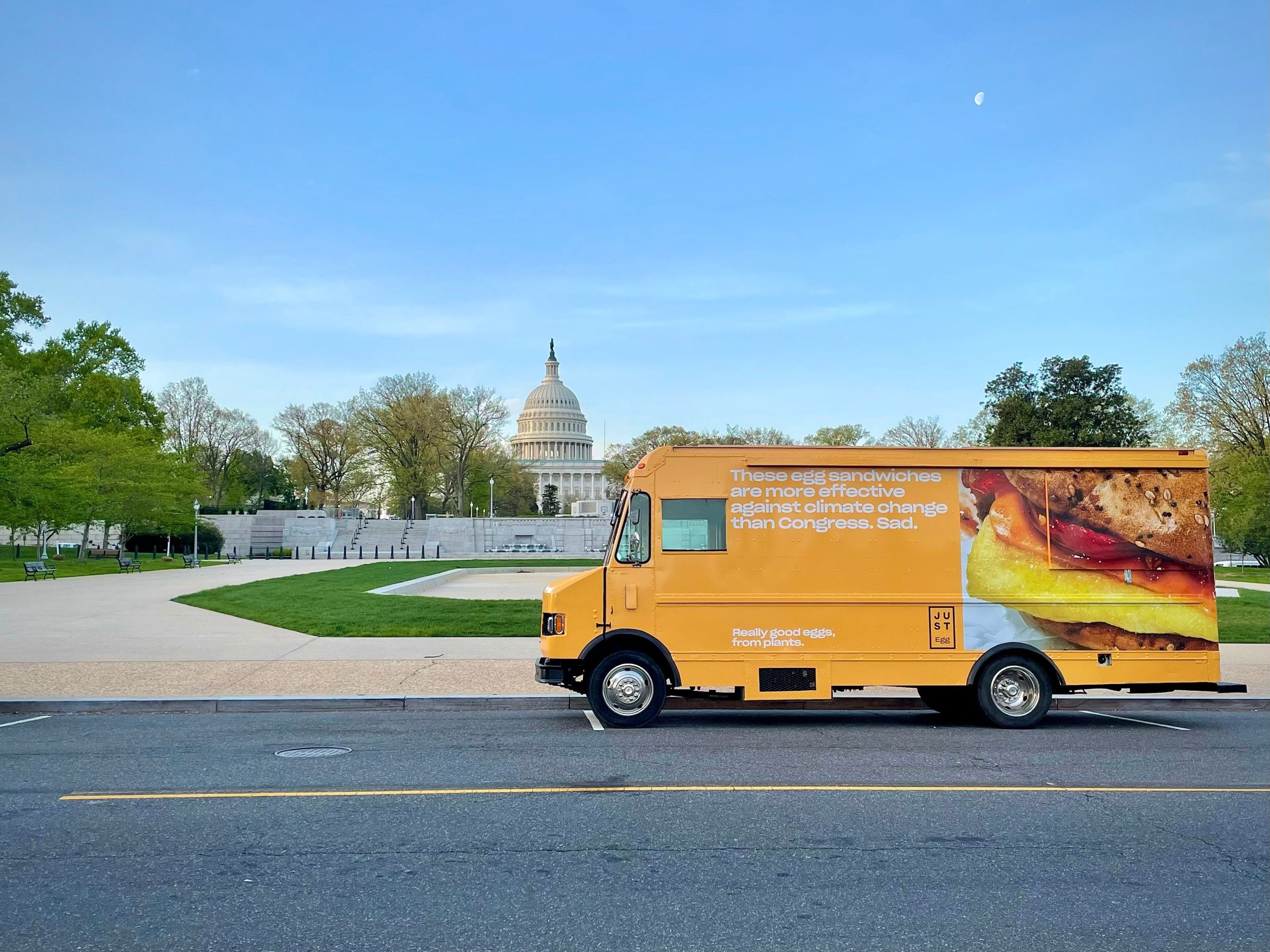
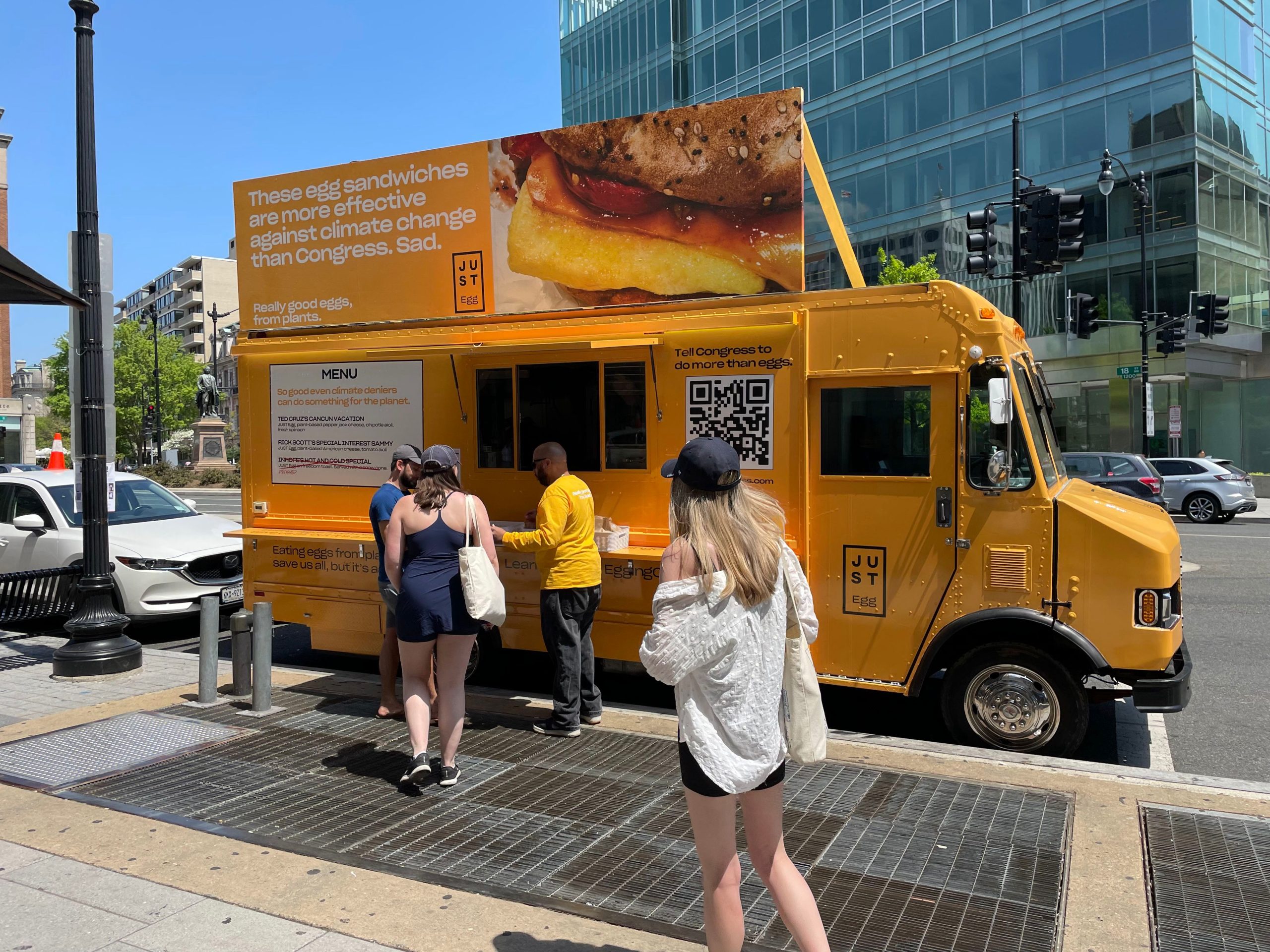
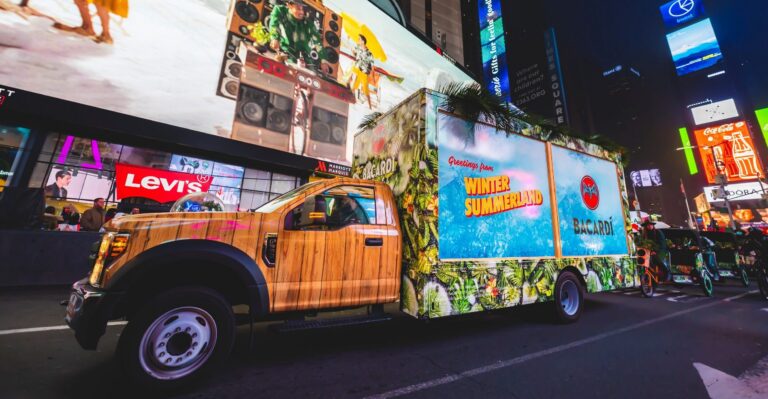
JUST Egg is the model. The plant-based brand enlisted us to turn a food truck into a mobile billboard that drove its climate message around Washington, D.C. The build featured witty menu designs poking fun at government officials, free breakfast sandwiches, and a QR code that sent people to write directly to Congress. It paired product trial with advocacy, and the tour brought in thousands of new fans.
We break down the full campaign in our guide to the best guerrilla marketing campaigns.
2. Park a Marketing Vehicle To Drive Foot Traffic to Your Pop-Up
Costa Brazil built its brand on clean, naturally sourced products. To introduce that ethos in New York, the brand ran a pop-up store in Soho where visitors could try dozens of samples while a sizzle reel showed the sourcing process behind them.
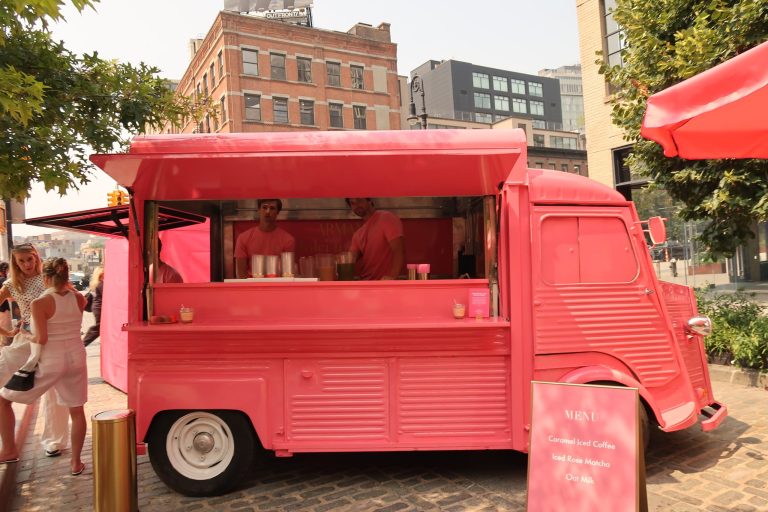
To fill the store, Costa Brazil parked a branded mobile cafe on a nearby street corner, sending people inside with a complimentary coffee and a bounce-back card. The vehicle solved the hardest part of any pop-up, which is getting people through the door.
For more on that format, see our guides to mobile pop-up shops and creative pop-up shop ideas.
3. Tour on an Electric Tuk Tuk
An electric tuk tuk makes the sustainability argument structurally. If your activation runs on an electric vehicle, the medium carries the message, and nobody has to make a claim about it.
These compact three-wheeled carts suit dense urban activations, indoor spaces, and street-level sampling where a full truck will not fit. They also photograph unusually well, which matters when the goal is earned attention rather than paid reach.
4. Build the Sustainability Story Into the Experience Itself
The details are where credibility is won. Compostable or reusable serviceware, minimal printed collateral in favor of QR codes, locally sourced ingredients at sampling stops, and route planning that reduces mileage between cities all reinforce the message without stating it.
Choosing the right build matters too. Our comparison of experiential marketing vehicles covers which format fits which goal, and the full range is on our experiential vehicles page.
Case Study: A Mobile Billboard That Carried a Cause