18 Guerrilla Marketing Examples That Worked (and the Mechanics Behind Them)

By: David Botbol 10 min read

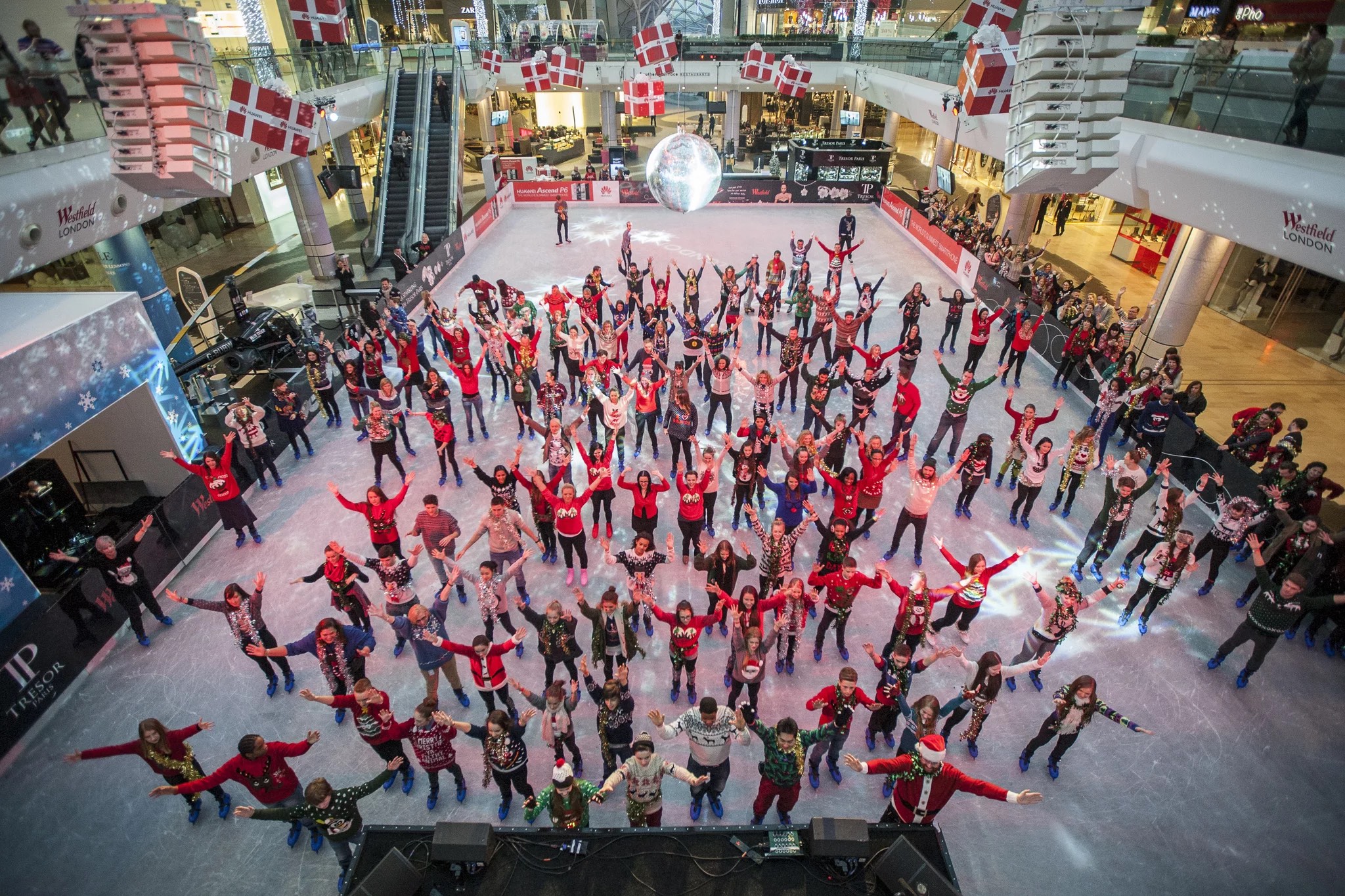
Flash Mob Guerrilla Marketing Campaigns

Key Insights

  • One mechanic: An unexpected brand moment in a public place that people photograph and share because it surprised them, not because they were asked to.
  • Cheap relative to reach, not free: The best campaigns are cheap relative to their reach, but they are not free. The modern version budgets for permits, staff and a vehicle, because the fine and the shutdown cost more than the permit.
  • Three formats in 2026: The stunt (a single object or moment), the giveaway (a free thing with a reason) and the takeover (a vehicle or crew that owns a corner for a day).
  • Legal guerrilla marketing exists: Street permits, property agreements and health sign-off turn a risky stunt into a repeatable program.
  • Measure reach first: Measure by earned media and social reach first, then by the sign-ups and redemptions you build into the moment.

What Is Guerrilla Marketing

Guerrilla marketing is an unconventional, low-cost-relative-to-reach tactic that puts a brand in front of people where they do not expect it: a sidewalk, a subway, a beach, a parking lot. The term dates to Jay Conrad Levinson’s 1984 book and is also spelled guerilla marketing. The idea is older than the name: surprise, in public, worth telling someone about.

The 1999 film The Blair Witch Project is the most cited case. Made on a reported production budget of roughly $35,000 to $60,000, it grossed nearly $250 million worldwide on the strength of a campaign that let audiences believe the footage was real. Every guerrilla marketing example since has been chasing the same ratio: small spend, outsized attention.

Why Brands Use Guerrilla Marketing

It keeps established brands fresh

A heritage brand with a national media budget still needs moments that feel unscripted. A surprise truck, a stunt on a famous corner or a giveaway in the right neighborhood gives press and creators something new to say about a brand they already know.

It puts new brands on the map

For a launch with no media budget, a single well-placed stunt can produce the first press coverage, the first thousand followers and the first retailer conversation. The constraint forces creativity: the idea has to carry the campaign because the spend cannot.

It converts when it samples

The campaigns that outperform in 2026 combine the surprise with a product in hand. The photo earns the reach; the sample earns the sale.

18 Guerrilla Marketing Examples

Stunts and objects

1. Tonka life-size truck in Flatiron. A full-scale replica of the toy truck parked in Manhattan. No sampling, no register, just an object nobody could walk past without photographing.

2. Booking.com hotel room in an ice cream truck. A working hotel room built inside an ice cream truck made an abstract promise (travel, anywhere) into a thing you could sit in on a New York street. Press covered it because it was absurd and real at once.

3. IKEA’s bus stop living rooms. Furnished bus shelters in major cities turned a wait into a showroom. Low build cost, high photo rate, and the product was the set.

4. Netflix’s Squid Game doll. A giant doll from the show placed in public squares in several cities during the launch window. Fans recognized it instantly, which is the test for any fandom stunt.

5. KitKat’s bench. Public benches shaped like the chocolate bar. The simplest kind of guerrilla marketing: a functional object that is also the product.

Giveaways with a reason

6. JUST Egg’s breakfast handout. A plant-based egg brand served its product hot during the morning commute, when a free breakfast is accepted by almost everyone and the trial happens in the product’s final form.

7. Amazon Music x Bad Bunny helado truck. A record-breaking album launch became a neighborhood ice cream giveaway. The cultural fit did the targeting and the treat did the sharing.

8. Travel Texas BBQ on a New York corner. A state tourism board brought Texas barbecue to a Manhattan street. The surprise was geographic: the wrong food in the right place.

9. CHANEL’s hot cocoa tuk tuk. A luxury house handing out hot cocoa from a branded tuk tuk in December. More than 5 million impressions across in-person and social views, and nothing for sale on the sidewalk.

10. Gisou’s Honey Glow truck. A honey yellow glass truck at The Grove sampling hair oil for three days: more than 20 million impressions from one location. Sampling plus a vehicle designed to be photographed.

11. Instagram’s Reels on Wheels. Free ice cream in Miami during Latin Week, borrowing a week the audience was already celebrating.

Takeovers and street presence

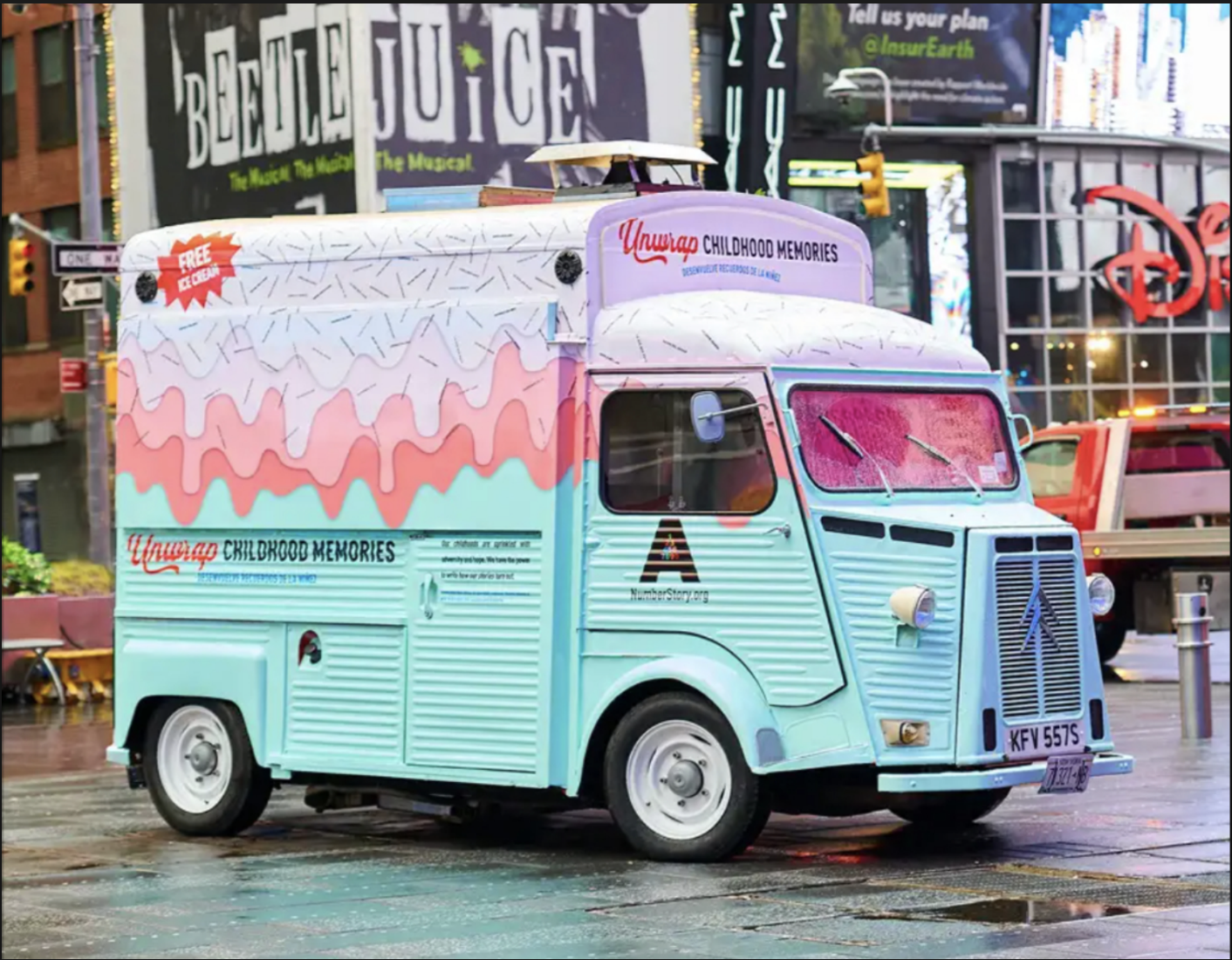
12. Ralph Lauren’s coffee truck. A series of guerrilla coffee stops from 2017 to 2019 turned a vintage Citroen into the public face of the brand’s coffee line. Repetition made a stunt into a program.

13. It Starts With Us flower shop. Simon & Schuster rebuilt the flower shop from Colleen Hoover’s novel on a Citroen at Rockefeller Center and fans lined the block. A fandom given a place to gather.

14. Spindrift’s Greetings From Paradise glass truck. A tropical bar inside a glass truck made the product, the staff and the first customers the signage.

15. Street team sampling outside a competitor’s launch. The classic ambush: a crew with product and a pitch where the other brand paid for the crowd. Legal on public sidewalks with the right permit, and effective when the product is better. See street team marketing.

16. The campus takeover. innisfree’s West Coast college tour drew more than 3,000 visitors and over a million impressions by owning the quad during a semester reset.

17. The projection and chalk stencil. Reverse graffiti (pressure-washing a logo into a dirty wall) and projections on buildings after dark remain the cheapest guerrilla marketing formats. They also carry the most legal risk; see the next section.

18. The flash giveaway with a code. A truck announces its location on social two hours ahead, hands out a product with a redemption code, and moves on. The scarcity drives the crowd and the code counts the result.

How to Run Guerrilla Marketing Legally

The difference between a guerrilla marketing example that runs for a week and one that gets shut down in an hour is paperwork.

Street and sidewalk permits. Most US cities require a permit for any commercial activity on public property, and a separate one for a vehicle. New York, Los Angeles and Chicago take six to eight weeks. Our New York page lists the specifics; see locations for other cities.

Private property agreements. A plaza, a mall approach or a retailer’s parking lot often needs only the owner’s permission, which is faster than a city permit and gives you power and security.

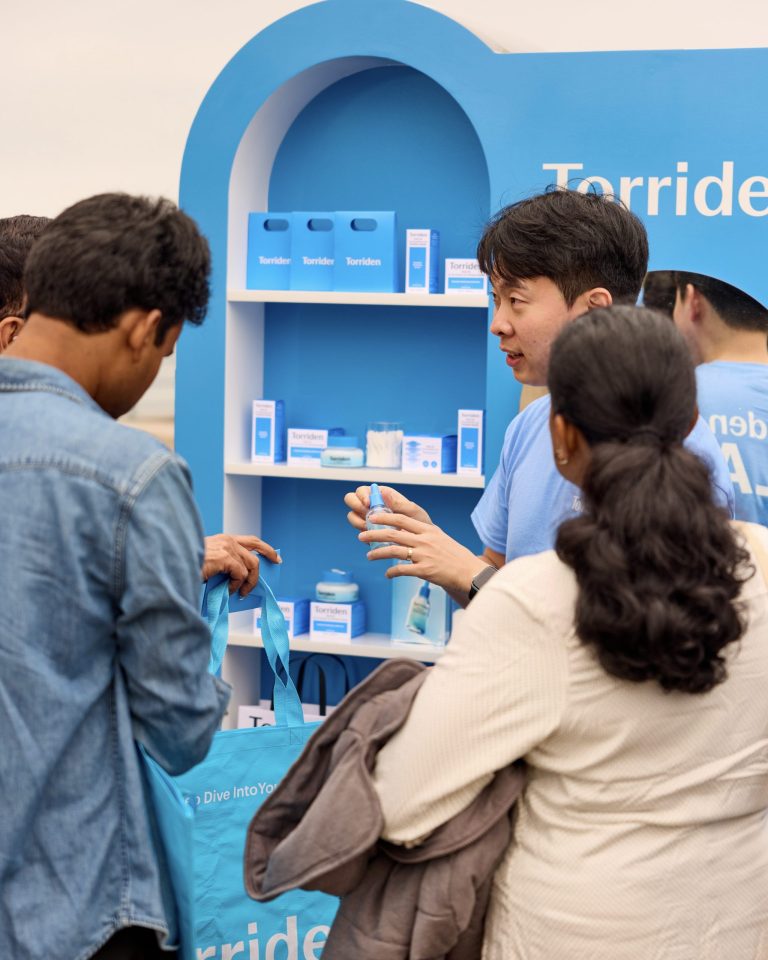
Health department sign-off. Any food or beverage sampling needs it. Beauty sampling has its own rules in several cities.

Insurance and staffing. Brand ambassadors who know the product and the permit conditions. A permitted crew with a vehicle can hold a corner all day; an unpermitted one is asked to leave.

What to skip. Unauthorized projections, stickers and stencils on property you do not control. The fine is small; the story about the brand defacing a neighborhood is not.

FTP designs, permits and staffs guerrilla marketing programs from its own fleet so the stunt is repeatable, not a one-time risk.

Five Guerrilla Marketing Ideas You Can Run This Quarter

  1. The wrong-place giveaway. Take a product strongly tied to one place and serve it somewhere it does not belong: Texas barbecue in Manhattan, a beach-brand sunscreen cart in a snowy December market.
  2. The commuter breakfast. A cart or tuk tuk at a rail station from 7 to 9 am, serving a hot version of the product with a QR to an offer. Low permit friction, high acceptance rate.
  3. The object you cannot walk past. One oversized or out-of-context version of the product on a famous corner for a weekend. No sampling needed; the photo is the campaign.
  4. The two-hour drop. Announce a truck’s location on social two hours ahead, give away a limited run with a redemption code, leave on time. Scarcity builds the line and the code counts it.
  5. The borrowed crowd. Park a permitted vehicle on the public approach to a festival, a game or a launch you did not sponsor. Same audience, a fraction of the fee.

What Guerrilla Marketing Costs

A permitted single-day giveaway from a cart or tuk tuk in one US city starts around $50,000 including the vehicle wrap, permits, product handling and staff. A glass truck or custom build runs $100,000 to $200,000. A multi-city program reuses the build and brings the cost per city down. Unpermitted stunts are cheaper until they are not.

How to Measure Guerrilla Marketing

Earned media value and social reach come first, because surprise is what the format produces. Then the numbers you build in: samples distributed, QR scans, SMS sign-ups, redemption codes used, foot traffic into a nearby store. Decide the capture mechanic before the wrap is designed. For the broader measurement framework, see experiential marketing examples.

The Bottom Line

The best guerrilla marketing examples put something unexpected in a public place, give people a reason to photograph it and, in 2026, a product to take home. Budget for the permit, pick a vehicle that is the signage, and plan to repeat the moment in more than one city. For a stunt that can run legally in your market, get in touch and tell us the corner you want.

Guerrilla Marketing Examples FAQs

Tonka’s life-size truck, Booking.com’s hotel room in an ice cream truck, IKEA’s furnished bus stops, CHANEL’s hot cocoa tuk tuk and Gisou’s Honey Glow truck are among the most cited recent examples. Each put an unexpected brand object or giveaway in a public place and let the public do the distribution.

Surprising people with a brand moment in a place they did not expect one, at a cost that is small compared to the attention it earns. It is sometimes spelled guerilla marketing.

It can be. Permitted street activations, private property agreements and health sign-off make most formats legal in US cities. Unauthorized stickers, stencils and projections on property you do not control are not, and the reputational cost usually outweighs the fine.

A permitted single-day activation from a cart or tuk tuk starts around $50,000. Custom vehicle builds run $100,000 to $200,000. The cheapest formats carry the most legal risk.

Guerrilla marketing is defined by surprise and unconventional placement. Experiential marketing is defined by participation. Most of the strongest 2026 campaigns are both: a surprise that people can step into and sample.

Yes, and it is where the format started. A single cart, one well-chosen corner, a product in hand and a photo designed on purpose can produce a launch’s first press coverage. See pop up shop ideas for small-budget formats.

A branded promotional truck on a city street

Merlin AI

See your brand on a promotional truck in 30 secs.

Pick a vehicle, drop in your website, and Merlin AI brings your brand activation to the streets instantly.

Try It Now

Bring Your Brand to the Streets.®

David Botbol

Author

David Botbol

EVP, Managing Director @ FTP Agency

David Botbol thrives on turning bold ideas into real-world brand moments. As Executive VP and Managing Director of Food Truck Promotions, and a leader within the New York and Los Angeles Food Truck Associations, he draws on a background in business development and startups to help brands connect with audiences through creative, unforgettable mobile experiences.

More posts
What Is An Experiential Marketing Agency?