The Top 4 Entertainment Marketing Trends of 2026

By: David Botbol 8 min read

entertainment marketing trends

Entertainment marketing has an unusual problem: the product is digital, the release is a single date, and the audience is a fandom that will judge you for getting the details wrong.

A book, an album, a film, or a series arrives everywhere at once and disappears from the conversation within days. That compression is why the industry has leaned so heavily into physical moments, which give a release somewhere to happen and something to photograph.

This guide covers what entertainment marketing involves, the trends shaping it in 2026, the formats that work, and a book launch we built that fans queued around Rockefeller Center to attend.

Key Takeaways

  • The release date is the whole campaign: unlike consumer products, entertainment gets one moment, which makes timing precision more important than budget.
  • Fandom rewards accuracy: audiences notice whether you understand the property, and getting a detail right earns more goodwill than production value does.
  • Physical moments give a digital release a place: a recreated location or a themed pop-up turns a launch into an event people can attend.
  • IRL fandom is the dominant trend: as feeds saturate, the in-person gathering has become the most valuable part of a release campaign.
  • Talent appearances convert: an author, artist, or cast appearance reliably turns a good turnout into a queue.

What Is Entertainment Marketing?

Entertainment marketing is the promotion of media and cultural products: films, television, music, books, games, live tours, and the venues and platforms that carry them. It also covers brands marketing themselves through entertainment properties, through partnerships, sponsorships, and tie-in campaigns.

What separates it from most marketing is the shape of the demand curve. A consumer brand builds sales steadily; an entertainment property front-loads almost everything into a release window and then defends it. Marketing exists to concentrate attention on a date.

Here the top four entertainment marketing trends that are making waves in 2026.

1. In-Person Fandom Is the Growth Area

As digital feeds have saturated, the physical gathering has become the differentiator. Premieres, listening events, launch pop-ups, and fan meetups produce the content that then performs online, which is a more credible route into a feed than a paid placement.

2. Releases Are Designed to Be Photographed

Campaigns are increasingly built around a visual moment engineered for sharing rather than for the people standing in front of it. The audience at the activation is small; the audience watching the resulting video is not. Our guide to creating experiences that drive UGC covers designing for that deliberately.

3. Fiction Is Being Made Physical

Recreating a place from inside a story is now a standard play, because it converts familiarity into attendance. Fans are not visiting a promotion, they are visiting somewhere they have already imagined, and that distinction changes turnout.

4. Brands Are Buying Into Culture, Not Just Media

Rather than advertising against entertainment, brands increasingly appear inside the cultural moment, at festivals, release events, and tour stops. Our guide to sports and entertainment marketing covers that side of the discipline.

Formats That Work for a Release

  • Location recreations: build a place from the story and let fans stand in it.
  • Themed sampling: food and drink that references the property gives people a reason to queue and something to hold in a photo.
  • Mobile tours: a single build visiting several markets extends a one-date release across weeks.
  • Talent appearances: an author, artist, or cast member converts a crowd into a queue and press into coverage.
  • Merchandise drops tied to attendance: exclusivity at the activation gives the physical visit a reward the digital release cannot match.

Case Study: Recreating Lily Bloom’s Flower Shop

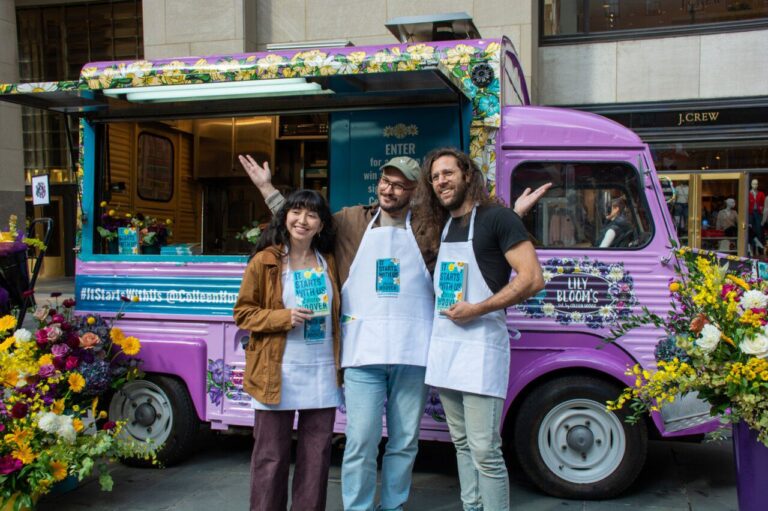
Three people in white aprons stand smiling by a purple flower-covered food truck, holding brochures.

For the release of Colleen Hoover’s It Starts With Us, Simon & Schuster needed a launch that would mean something to a fandom that had already made the prequel a phenomenon.

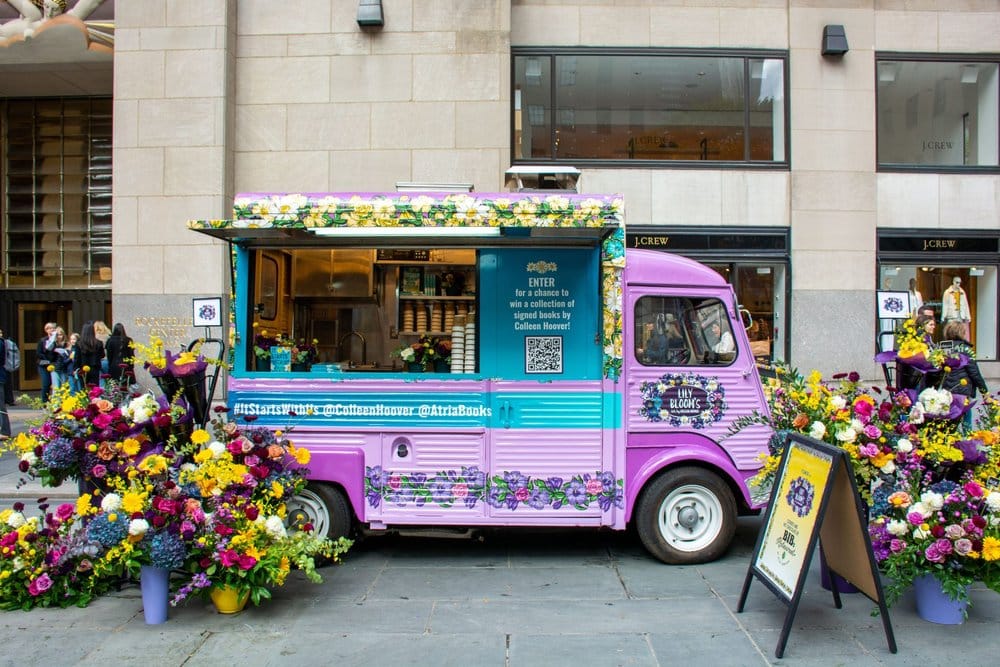
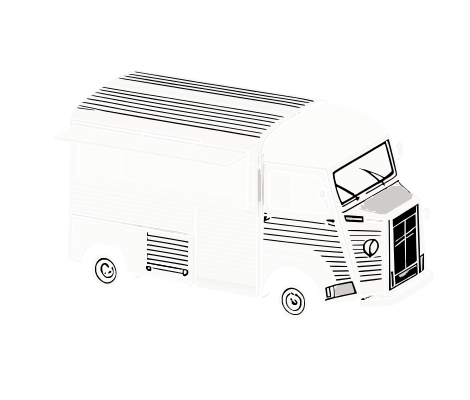
We recreated Lily Bloom’s flower shop, the fictional store from the previous book, at Rockefeller Center. We branded our vintage Citroen and installed a floral display using the purple, yellow, and teal described in the book, then served hot chocolate and Chip City cookies as a nod to a restaurant in the story. Hundreds and eventually thousands of fans queued for the chance to be among the first to hold a hard copy.

Why it worked: the activation was not branded around the book, it was a place from inside the book. Every detail, down to the color palette, was a signal to readers that the campaign understood the property. That is what fandom rewards, and it is why people waited. Read the full build in our Colleen Hoover pop-up truck case study, or see more brand activation case studies.

How To Measure an Entertainment Campaign

  • Attendance and queue length: the clearest signal that the property and the execution connected.
  • Units sold or claimed on site: books, tickets, or merchandise moved at the activation.
  • Tagged posts and press pickup: entertainment audiences document heavily, so earned reach should carry the campaign.
  • First-week performance in activation markets: compared against comparable markets without one.
  • Sentiment within the fandom: whether the community read the campaign as authentic, which is a leading indicator for the next release.

The Bottom Line

Entertainment marketing in 2026 is about giving a digital release a physical place to happen, executed with enough accuracy that the fandom recognizes itself in it. The budget matters far less than whether the details are right, because the audience is expert in the property and unforgiving of a campaign that clearly is not.

If you have a release, tour, or launch coming up, we design and build the physical side. Explore our brand activation services or contact our team to plan it.

Frequently Asked Questions​

Entertainment marketing is the promotion of media and cultural products including films, television, music, books, games, and live tours, along with the venues and platforms that carry them. It also covers brands marketing themselves through entertainment properties and partnerships.

The demand curve. A consumer brand builds sales steadily, while an entertainment property concentrates almost everything into a single release window and then defends it. Marketing exists to focus attention on a date rather than to build a habit.

A traditional pop-up occupies a leased storefront or space for a fixed period, while a mobile pop-up is built into a vehicle and can change locations daily. The mobile version carries an identical brand experience across stops and doubles as a moving billboard between them.

In-person fandom as the growth area, releases designed to be photographed, fiction made physical through location recreations, and brands appearing inside cultural moments rather than advertising against them. All four point toward live activation.

Because a digital release has nowhere to happen. A pop-up gives fans a place to go, a queue to join, and something to photograph, which generates the social content and press coverage that a release announcement alone does not.

Building a place from inside a story, such as a shop, bar, or room described in a book or shown on screen, as a physical activation. It works because fans are visiting somewhere they have already imagined rather than visiting a promotion.

Not always, but appearances reliably increase turnout and press. An author, artist, or cast member converts a strong crowd into a queue, and gives local media a reason to cover the activation rather than just the release.

Work back from the release date and allow time for fabrication, permits, and location booking. Because the date cannot move, entertainment campaigns have less schedule flexibility than consumer campaigns, so earlier scoping matters more.

Accuracy. Audiences know the property in detail and can tell whether a campaign understands it. Getting a small detail right, such as a color palette or a reference from the text, earns more goodwill than higher production value does.

Yes, and it is a common way to extend a single-date release. One build visiting several markets stretches the campaign across weeks and gives each city its own local content and press coverage.

Track attendance and queue length, units sold or claimed on site, tagged posts and press pickup, first-week performance in activation markets against comparable markets, and sentiment within the fandom community.

FTP Free download

The Mobile Pop-Up Shop Launch Checklist

7 steps, 37 checkpoints, and a one-page brief to plan and launch a mobile pop-up shop that converts.

Instant PDF · No Cost

David Botbol

Author

David Botbol

EVP, Managing Director @ FTP Agency

David Botbol thrives on turning bold ideas into real-world brand moments. As Executive VP and Managing Director of Food Truck Promotions, and a leader within the New York and Los Angeles Food Truck Associations, he draws on a background in business development and startups to help brands connect with audiences through creative, unforgettable mobile experiences.

More posts
How to Choose an Experiential Marketing Vehicle for Your Pop-Up Shop