The Top 6 Branded Ice Cream Truck Brand Activations

By: Ashley Elarde 9 min read

ice cream trucks

Branded ice cream trucks work for a reason that has nothing to do with marketing: almost nobody refuses free ice cream on a hot day.

That single fact makes the format one of the most reliable ways to start a queue, and a queue is what buys your team the thirty seconds needed to actually talk about the product.

Here are six brands that used ice cream trucks to reach their audience, what each one was trying to achieve, and why the format suited it.

Key Takeaways

  • The treat removes the barrier: people who would walk past a brand ambassador will stop for ice cream, which is the whole job of the giveaway.
  • Taste settles arguments copy cannot: for plant-based and dairy-free products especially, one sample does more than any claim on a label.
  • Attach a small ask: a newsletter sign-up or a follow in exchange for a sample turns a giveaway into a measurable list.
  • The truck can carry the concept: interiors have been built out as hotel rooms, storefronts, and themed environments, so the vehicle is not just a serving window.
  • Summer is the obvious window, not the only one: holiday shopping streets and indoor-adjacent activations work year round.

Why Ice Cream Trucks Work for Brands

A branded ice cream truck is a vehicle wrapped in a brand’s identity and used to hand out frozen treats as part of a marketing activation. The product being promoted is rarely the ice cream. The ice cream is the reason someone stops.

Three things make the format unusually effective:

  • Universal appeal. There is no demographic to target. Ice cream works on students, parents, office workers, and festival crowds alike.
  • Fast service. Throughput matters at a street activation, and scooping is quick, which keeps a queue moving rather than stalling it.
  • Built-in nostalgia. The jingle and the truck are already familiar, so people understand what is happening before anyone explains it. The mechanics of why this converts are covered in more depth in our guide to sensory marketing, where taste consistently outperforms description.

6 Best Branded Ice Cream Truck Activations

1. i-D Magazine

i-D is a British magazine published by Vice Media covering fashion, music, art, and youth culture, and it calls itself the original fashion and style bible. A claim like that comes with an expectation to do things first.

The magazine parked a branded ice cream truck at the Dover Street Market store in New York, handing out magazines, merchandise, and vegan ice cream. The line ran down the block.

Why it worked: the audience was already there. Placing the truck outside a store that attracts exactly the right reader meant the activation did not need to build a crowd, only to give the existing one a reason to stop.

2. Ralph Lauren

On December 7, 2019, Ralph Lauren took part in the annual Miracle on Madison holiday shopping event in partnership with the Society of Memorial Sloan Kettering, with 20 percent of purchases from Madison Avenue stores supporting MSK Kids, the hospital’s pediatric department.

Why it worked: a charitable mechanic gives shoppers a reason to choose one street over another during the busiest retail week of the year, and it gives the brand a story beyond the discount.

3. IMP x ACEs Aware

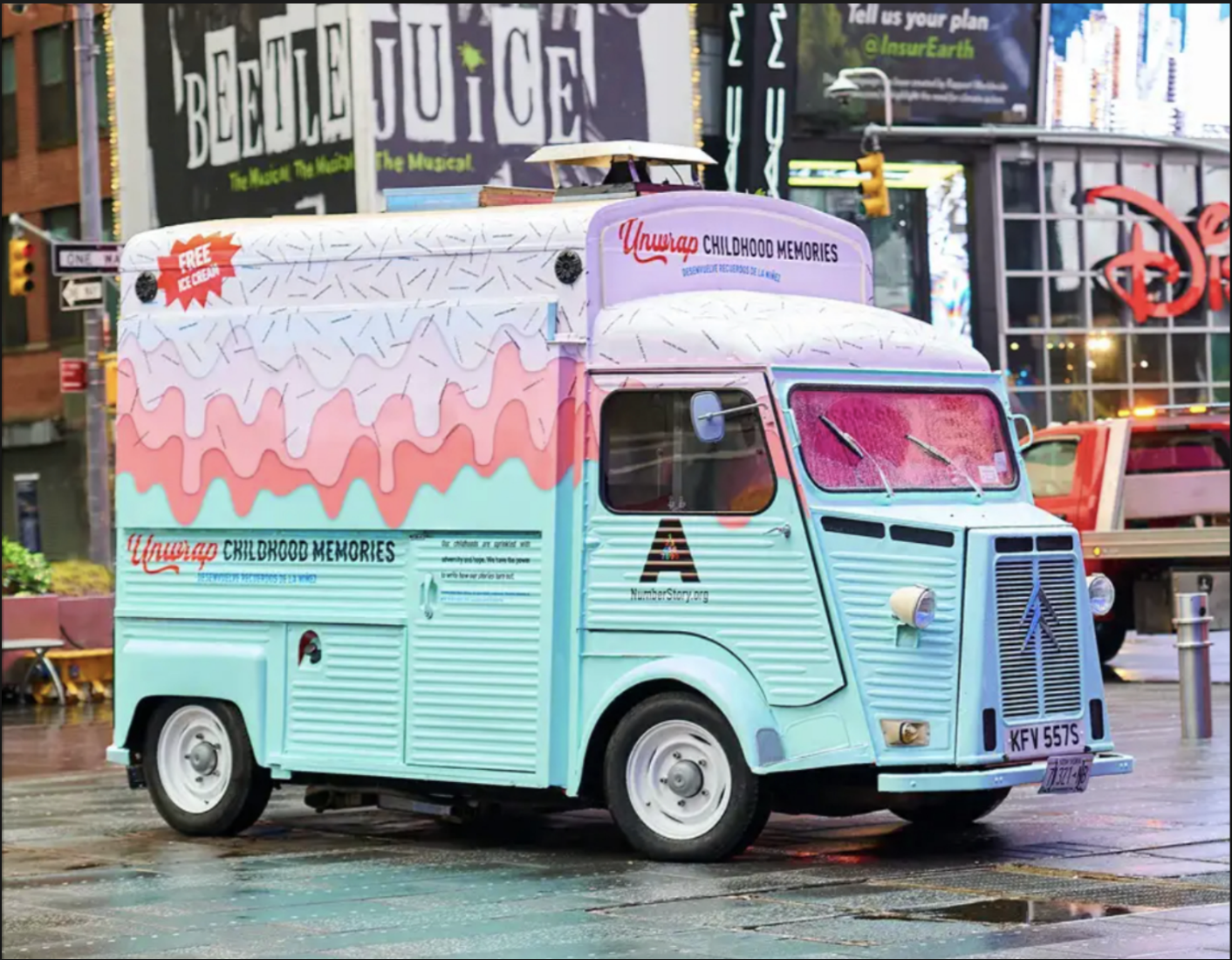
IMP partnered with the ACEs Aware initiative to raise awareness of childhood adversity and the support available for it, inviting New Yorkers to unwrap childhood memories from a co-branded truck in Times Square. Visitors were pointed toward Number Story, a resource for people learning about adverse childhood experiences.

Why it worked: a difficult subject needs a low-pressure entry point. A familiar, welcoming format gave people a way to encounter the message and take a resource with them without being confronted by it.

4. Forty Carrots

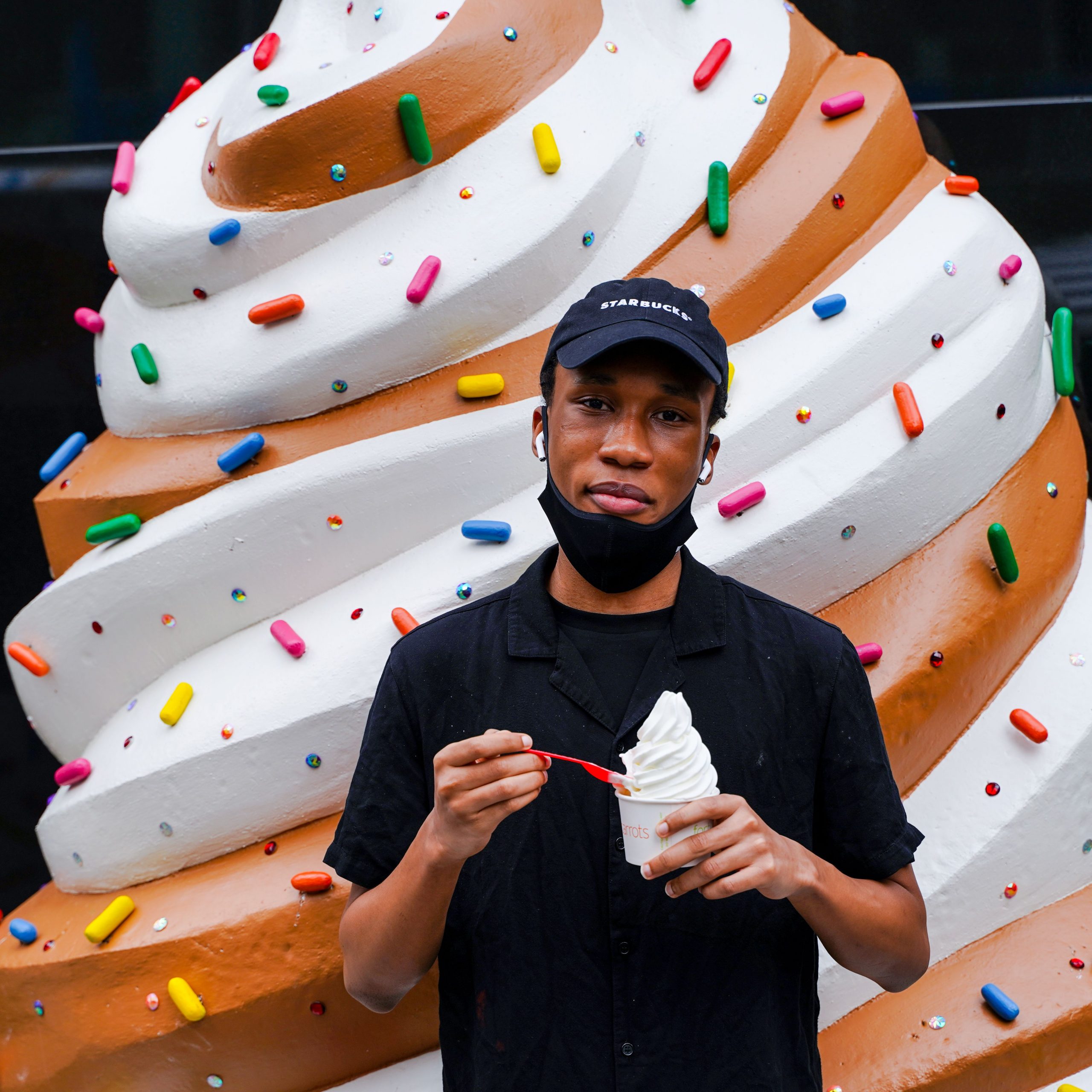
When indoor dining closed during COVID, Forty Carrots still wanted to serve its frozen yogurt through the New York summer. We custom-branded one of our ice cream trucks for a month-long activation outside Bloomingdale’s.

The sprinkled storefront truck drew thousands of New Yorkers across the month, providing refreshment in the heat and keeping the brand present while its dining room was closed.

Why it worked: the activation solved an operational problem rather than a marketing one. When a business cannot open its doors, a vehicle becomes the storefront.

5. Forager Project

A nine-location sampling tour across San Francisco built to convert dairy-free skeptics, and the strongest performer on this list. Covered in full in the case study below.

6. Booking.com

Booking.com built an ice cream truck with an exterior ice cream build-out and an interior that replicated a hotel room you might find on the platform.

Why it worked: the truck demonstrated the product rather than advertising it. Guests got ice cream and then stepped into a physical version of the thing the company actually sells, which is far more memorable than a listing on a screen.

Case Study: How Forager Project Won Over Dairy-Free Skeptics
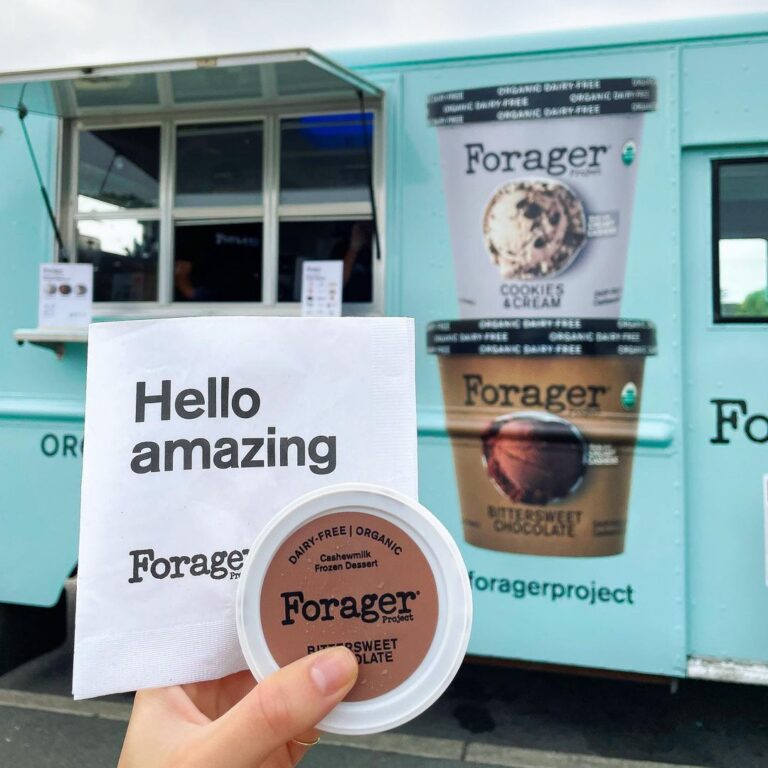
Hand holding a “Hello amazing” napkin and Forager chocolate dessert by a blue food truck.

Words like vegan and plant-based tend to split a room, which was exactly the challenge with Forager Project’s ice cream line. The goal was not awareness. It was getting the product into the hands of people who assumed they would not like it.

We ran a sampling activation across nine locations in San Francisco using a fully stocked branded food truck, offering Cookies and Cream, Chocolate, and Vanilla. The mechanic was deliberately simple: guests chose between signing up for the Forager newsletter or following the brand on Instagram, and received a sample plus a coupon code redeemable in store.

The result: as many as 500 samples a day, reaching roughly 4,500 people across the activation, alongside the social growth the campaign generated.

Why it is the strongest example here: the ask was small enough that almost nobody refused it, which turned a giveaway into a list and a coupon redemption. That is the difference between an activation people enjoyed and an activation you can report on. Read more in our Forager Project case study, or browse other brand activation case studies.

What to Plan For

Timing is the first decision. Summer delivers the heaviest demand, though our guide to seasonal marketing covers how to find the peak that actually fits your category rather than defaulting to July.

  • Cold chain and power. Frozen product needs refrigeration on board and a plan for power, which is a fabrication decision rather than an afterthought.
  • Throughput. Scooping is fast, but a queue at a busy corner still needs enough staff to keep moving. Two servers usually beat one plus a longer line.
  • Weather. Heat drives demand and also shortens the window before product suffers. Shade and storage matter more than they sound.
  • Allergens and dietary options. Dairy-free, vegan, and nut-free choices widen participation and need clear labeling at a public activation.
  • Permits. Serving food adds health department approval on top of the location permit, and requirements vary by city.
  • The ask. Decide before the build what someone gives you in exchange for the sample, whether that is a sign-up, a follow, or a scan.

How to Measure an Ice Cream Truck Activation

  • Samples served per day and per location: the base volume metric, and the one that tells you where to return.
  • Sign-ups, follows, and scans captured: the conversion that outlasts the activation.
  • Coupon redemptions: the cleanest link between a free sample and a purchase.
  • Tagged posts and content produced: ice cream photographs well, so earned reach should be strong.
  • Cost per interaction: the figure to compare against paid media for the same spend.

The Bottom Line

Branded ice cream trucks are one of the few marketing formats where the audience actively wants what you are handing out. That gets you the stop, the conversation, and the queue that draws more people in. What turns it into a campaign rather than a nice afternoon is deciding what you ask for in return.

If a summer activation or a sampling tour is in your plan, we design, build, permit, and staff them. Explore our experiential vehicles or contact our team to scope it.

Frequently Asked Questions

A branded ice cream truck is a vehicle wrapped in a brand’s identity and used to hand out frozen treats as part of a marketing activation. The ice cream is rarely the product being promoted. It is the reason someone stops long enough to hear about the actual product.

Because the giveaway has universal appeal, service is fast enough to keep a queue moving, and the format is instantly familiar. People who would walk past a brand ambassador will stop for free ice cream, which is exactly what the activation needs.

Summer is the strongest window, but not the only one. Holiday shopping streets, indoor-adjacent placements, and event activations all work in cooler months, and some brands deliberately counter-program by serving frozen treats in winter.

Something small enough that almost nobody refuses. A newsletter sign-up, a social follow, or a QR scan all work, and pairing the sample with a coupon code creates a trackable link between the giveaway and a purchase.

Particularly well. Terms like vegan and dairy-free create hesitation that no packaging claim resolves, but a taste does. Sampling puts the product in the hands of skeptics, which is the group most likely to be converted by trying it.

Refrigeration and power built into the vehicle, enough staff to keep the queue moving, a location permit plus health department approval, allergen and dietary options clearly labeled, and a plan for shade and storage in hot weather.

It varies with location and staffing, but volume can be substantial. One Forager Project activation served as many as 500 samples a day, reaching roughly 4,500 people across nine San Francisco locations.

Yes, and the strongest activations do this. Booking.com built an interior that replicated a hotel room from its platform, so the vehicle demonstrated the product rather than simply carrying branding.

Track samples served per day and location, sign-ups or follows captured, coupon redemptions, tagged posts and content produced, and cost per interaction compared against your paid channels for the same spend.

Start with the markets, the window, and what you want people to do in exchange for a sample. From there a partner can handle the wrap, fabrication, permits, product, and staffing. Share your timing with our team and we will scope it.

FTP Free download

The Mobile Pop-Up Shop Launch Checklist

7 steps, 37 checkpoints, and a one-page brief to plan and launch a mobile pop-up shop that converts.

Instant PDF · No Cost

Ashley Elarde

Author

Ashley Elarde

Social Media Manager @ FTP Agency

Ashley Elarde is a social media strategist, content creator, and experiential marketing professional with experience bringing brands to life through engaging digital content. She has helped execute campaigns for brands across beauty, fashion, retail, and entertainment, developing campaigns that drive engagement and meaningful consumer connections.

More posts
How Retail Experiential Marketing Turns Foot Traffic Into Customers