
How Experiential Event Marketing Works
Experiential events put people inside a brand rather than in front of it, which is the whole distinction from every other kind of event.…
Read moreBy: Ashley Elarde • • 17 min read
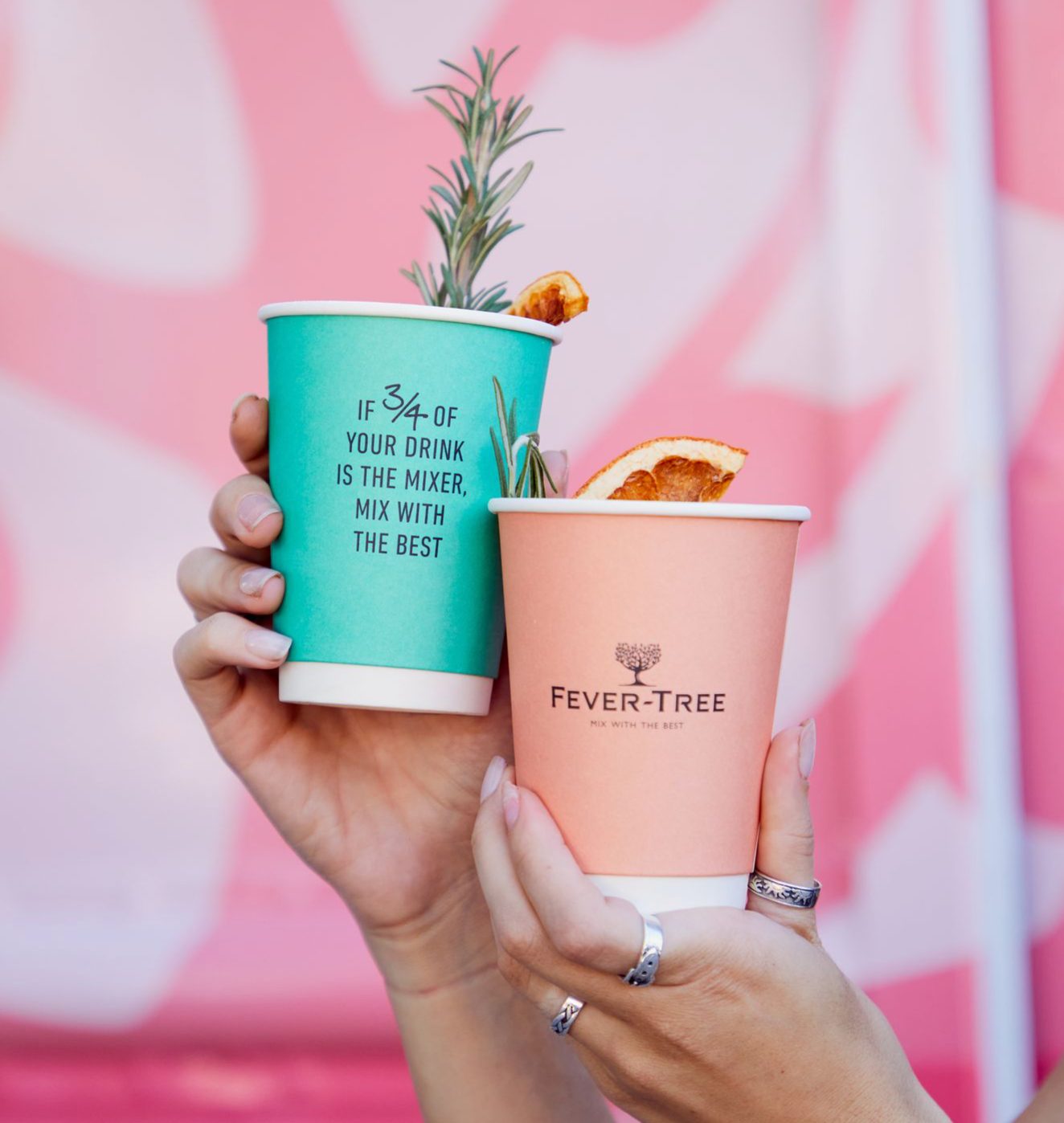
Sensory marketing is the practice of engaging a customer’s senses, sight, sound, smell, taste, and touch, to build a stronger, more emotional connection with a brand. It works because sensory experiences bypass the rational part of the brain and reach the part that actually drives most decisions. Of the five senses, taste is the most overlooked, which makes it the biggest missed opportunity in marketing today.
Think of how the smell of a specific cologne can instantly bring a store to mind, or how a jingle sticks for years. Those are sensory marketing at work. This guide breaks down what sensory marketing is, why taste is so powerful and so underused, and how brands in food, beverage, and every other industry use taste marketing to turn a passerby into a customer.
Sensory marketing is a strategy brands use to stimulate one or more of the five senses in order to leave a lasting, positive impression. It is built on a simple idea: when you engage a person’s senses, you capture their attention more easily and create an emotional bond that pure information cannot.
The classic example is scent. Many people cannot picture certain clothing retailers without recalling the specific fragrance pumped through their stores. It seems minor, but that smell creates a visceral, subconscious link between the customer and the brand. Sensory marketing applies the same principle across every sense, and the more senses an experience engages, the deeper the impression it leaves.
Appealing to sight is the oldest form of sensory marketing, running through commercials, billboards, and print ads for the better part of a century. But brands have since learned that the other senses are often more powerful, precisely because they are less expected and harder to ignore.
Sound is a common second layer. A crisp, recognizable audio cue attached to a product, or a particular style of music played in a store to signal a certain kind of experience, both work on the customer below the level of conscious attention. Touch works the same way through hands-on activities, branded merchandise, or interactive builds a customer can physically engage with.
The reason all of this works comes down to how people actually make decisions. According to Harvard Business School professor Gerald Zaltman, an estimated 95% of purchasing decisions happen in the subconscious mind, driven far more by emotion than by rational comparison. Sensory marketing is one of the few tools that speaks directly to that subconscious, emotional layer, which is why it consistently outperforms marketing that only lists features and benefits.
Taste is covered in depth below, because it is the most underused and the most persuasive. The other four each do a different job, and the strongest activations use several at once.
Sight is what makes someone stop walking, and in a street activation nothing else gets a chance until it does. Color is doing most of the work: a vehicle wrapped in a single saturated brand color reads from a block away, while a detailed design reads only from a few feet.
This is why a glass box truck performs so reliably. The product itself becomes the visual, visible from the sidewalk before anyone processes a word of copy. Built photo moments do the same job twice over, first pulling people in, then giving them something to post.
Sound is the least visible lever and one of the most effective, because people rarely notice it consciously. Music tempo changes how long visitors linger and how quickly a queue feels like it is moving. A distinctive audio cue attached to a product becomes recognizable far faster than a visual one.
At street level, sound also has a practical job: it marks the boundary of the activation. Someone walking past knows they have arrived at something before they can see what it is.
Scent attaches to memory more directly than any other sense, which is why a fragrance can return a person to a specific place years later. For a brand, that makes smell the highest-leverage sense available and the hardest to use well.
It works best when the scent is genuinely part of the product story rather than pumped in as decoration. Coffee brewing, cookies baking, and a fragrance sampled on skin all connect to something real. An unexplained ambient scent tends to read as artificial, which is the opposite of the intended effect.
Touch is where interest turns into ownership. Handling a product, feeling a fabric, or testing a texture creates a sense of possession that looking never does, which is why physical retail still converts on items customers could buy online in one click.
In an activation, touch covers more than the product. Custom fabrication, branded merchandise people take home, and interactive builds that reward being handled all engage the same sense, and all of them extend the moment past the day itself.
Adding more senses only works if they agree with each other. This is the principle that separates a designed activation from a loud one, and it has a name.
Research from the Crossmodal Research Laboratory at the University of Oxford, led by Professor Charles Spence, has shown that congruent sensory pairs, where scent, sound, and visual cues match in mood, tempo, or association, produce measurably greater positive effect and purchase intention than any of those cues presented alone.
Incongruent cues do the reverse. Fast music in a space designed to feel calm, a citrus scent alongside a warm winter product, or a premium build handing out something visibly cheap all create a mismatch the visitor feels without being able to name it. The effect is not neutral, it actively undermines the impression.
Two practical rules follow.
Pick the association first, then the cues. Decide what the activation should feel like, then choose the color, the sound, the scent, and the taste that all point at it. The Olly matcha example later in this post works on exactly this basis: a wellness brand serving a drink the audience already codes as healthy.
More is not better past a point. The Oxford research also warns about pleonacy, where each additional sense simply repeats what another has already communicated, adding cost without adding effect. Three senses working together generally outperform five competing.
For food and beverage brands, taste marketing is the most direct proof of quality there is. No ad can tell a customer whether a product is worth buying the way a single sample can. Here is how three brands put it to work.
Fever-Tree ran a mobile marketing tour that stopped in New York, Miami, Los Angeles, and Austin, putting its mixers directly into customers’ hands through free, specialty-crafted mocktails. For a mixer brand, sampling is the whole argument: no jingle or social ad can show someone whether a product tastes good, but a crafted drink handed over in person proves it instantly. The tour turned tasting into trust across four major markets.
The delivery platform company took a creative angle on taste marketing, handing out products customers could order through its app to drive sign-ups. The choices were strategic: New York staples designed to pull on locals’ heartstrings, like Serendipity ice cream, Carbone pasta sauce, and hot cocoa from the GoPuff kitchen. Giving people a taste of the brands they already love, all available through one app, was a far more persuasive pitch than any banner ad could manage.
The plant-based brand brought its vegan ice cream to nine locations across San Francisco in a fully stocked branded food truck, letting people sample Cookies and Cream, Chocolate, and Vanilla. The goal was to get the product into as many hands as possible, including the skeptics who assume dairy-free cannot taste good. Guests could sign up for the newsletter or follow along on social in exchange for a sample and a coupon, turning a taste into a lead and a first purchase.
Most activations use scent as an accent. Pura built an entire tour around it.
The home fragrance brand set out to introduce its signature scents to three markets at once, and we designed a custom truck with fragrance as the organizing idea rather than an afterthought. The Scent The Season tour ran for a week across New York, Atlanta, and Washington, D.C., letting guests sniff their way through the range and encounter each scent in a controlled environment rather than through a product description.
Why it worked: fragrance is the category most damaged by online retail, because a scent cannot be conveyed in a product photo or a paragraph of copy. That is precisely why an in-person format is not a nice addition for a fragrance brand, it is the only way the product can genuinely be evaluated before purchase.
The transferable lesson: if your product has a sensory quality that a screen cannot carry, that quality should be the centre of the activation rather than a detail inside it. See more of this work in our brand activation case studies.
Taste marketing is more straightforward for food and beverage brands, but it is far from exclusive to them. Any brand can use a well-matched taste to amplify its message. Here are two examples from outside the food world.
Olly handing out samples of a new immunity supplement was not enough to communicate the wellness brand’s holistic approach, so the mobile pop-up cafe also served specialty matcha lattes, a drink that stayed on-theme with the brand’s health and wellness identity. The complimentary cafe service warmed customers up on a cold winter day and tied a positive, on-brand taste directly to the product, building loyalty in a way a sample alone could not.
Instagram made a splash during Latin Week by serving free ice cream straight from a branded truck parked on a Miami beach. A branded ice cream truck on the sand is attention-grabbing on its own, but the activation went further with appearances from artists like Farruko and Manuel Turizo, drawing an even bigger crowd. It is a clear example of how tying a campaign to taste, in the right place with the right cultural moment, can amplify a brand far beyond the people physically present.
Sensory marketing fails most often at the planning stage, not the execution stage. This sequence keeps the senses working together.
Before choosing anything physical, decide what a visitor should feel: energised, indulged, nostalgic, cared for, curious. Every sensory decision after this is measured against that word.
One sense should lead. For food and drink brands that is taste, for fragrance it is smell, for fashion and collectibles it is usually sight or touch. The anchor determines the format and the vehicle.
Support the anchor rather than competing with it. A taste-led activation gains from a visual that matches the flavour and a soundtrack at the right tempo. It does not need an ambient scent as well.
Hold each element against the feeling from step one. If a cue does not reinforce it, cut the cue rather than the concept.
A branded cup carries the taste memory, a scented sample carries the smell, a well-made piece of merchandise carries the touch. The takeaway is the only part of the activation that continues working afterward.
A sample in exchange for a sign-up or a follow is what connects a sensory moment to a reportable result.
The same Oxford research that supports multisensory design also documents where it goes wrong, and the failure modes are consistent.
Sensory overload. Too much input at once produces measurably worse outcomes than a simpler experience. Visitors disengage, dwell time falls, and the message is lost inside the noise. Restraint is a design decision, not a budget compromise.
Repetition across senses. If the color, the scent, and the sound all communicate the identical idea, the additional cues cost money without adding effect. Each sense should contribute something the others cannot.
Cues that contradict the brand. A premium brand serving something visibly low quality, or a wellness brand playing aggressive music, creates a mismatch the visitor registers as inauthenticity even if they cannot articulate why.
Scent that feels imposed. Spence’s work notes that scent carries a particular risk, because unlike other atmospheric cues the customer is physically breathing it in, and heavy-handed use can read as invasive. Some venues now maintain deliberately scent-free areas for this reason.
Sensory decisions made after the build. Sound, scent, and lighting all have power, placement, and fabrication implications. Deciding them once the vehicle is built means compromising them.
No plan for the weather. An outdoor sensory experience is at the mercy of wind, heat, and rain, all of which affect scent dispersal, sound carry, and how long people are willing to stand still.
Any activation engaging taste or smell in public takes on responsibilities that a digital campaign never does. This belongs in the plan from the start, not in a risk register at the end.
Allergen labelling. At a public activation you have no way of knowing who is walking up. Clear, visible allergen information on every item served is standard practice and staff should be briefed to answer confidently rather than guess.
Dietary options. Vegan, gluten free, and nut free alternatives widen participation and prevent the activation excluding people who stopped in good faith.
Scent sensitivity. A meaningful number of people are sensitive to fragrance, and an intense scent in an enclosed activation space can genuinely exclude them. Ventilation, intensity control, and an open-air layout all help.
Food handling and permits. Serving food or drink means food handler certification, health department approval, and temperature control alongside the location permit. Requirements vary by city, and timelines are outside your control, so this workstream starts as soon as locations are shortlisted.
Staff training. The person handing over the sample is the one who will be asked what is in it. Ambassadors briefed on ingredients and allergens are part of the sensory experience, not separate from it.
Getting this right is not only a compliance matter. A visitor who is told confidently that a product is safe for them has a better experience than one who is met with a shrug.
Sensory marketing is a strategy that engages one or more of the five senses, sight, sound, smell, taste, and touch, to build an emotional connection between a brand and its customers. By appealing to the senses, brands capture attention more easily and create lasting impressions that purely informational marketing cannot match.
Taste marketing is sensory marketing focused on the sense of taste, usually by giving customers a product to sample or an on-brand food or drink to enjoy. It works because taste is a direct, memorable experience that builds positive brand association and, for food and beverage brands, proves product quality instantly.
Most marketing relies on sight and sound because they scale easily through screens and speakers. Taste requires an in-person experience, so brands often skip it. That neglect is precisely the opportunity: a taste-based activation stands out in a crowded market because so few competitors are using the sense at all.
Yes. Any brand can use taste to build a positive association, as long as the food or drink connects to the brand. A wellness brand serving matcha, or a fashion label handing out a seasonal drink that matches a collection, both use taste to reinforce their identity and create a memorable, on-brand moment.
Because most buying decisions are emotional and subconscious rather than rational. Harvard professor Gerald Zaltman estimates that 95% of purchasing decisions happen in the subconscious mind. Sensory marketing speaks directly to that emotional layer, which is why it tends to outperform marketing that only communicates facts and features.
A positive taste experience creates an emotional link that people remember and associate with the brand. When a customer enjoys a free, on-brand sample in a memorable setting, that good feeling attaches to the brand, making them more likely to choose it again and to share the experience with others.
Food and beverage brands use it most obviously, through sampling tours, pop-ups, and giveaways. But wellness, beauty, fashion, tech, and delivery brands all use taste marketing too, pairing an on-theme food or drink with their product to create a positive association and a reason for customers to stop and engage.
A premium mixer brand running a multi-city tour that hands out free, specialty-crafted mocktails is a clear example: it puts the product directly in customers’ hands and proves its quality in person. Non-food brands do it too, like a wellness company serving on-theme matcha lattes alongside its supplements.
Set a primary goal first, such as samples served, newsletter sign-ups, social follows, or coupon redemptions, and track it consistently. Building a capture step into the experience, like offering a sample in exchange for a follow or a code, connects the in-person taste to a result you can actually report.
Start by choosing a food or drink that genuinely connects to your brand, then decide on a format such as a pop-up, cafe, or mobile tour and the locations with the right foot traffic. An experiential marketing agency handles the vehicle, fabrication, permits, staffing, and food-service logistics end to end.
n Content
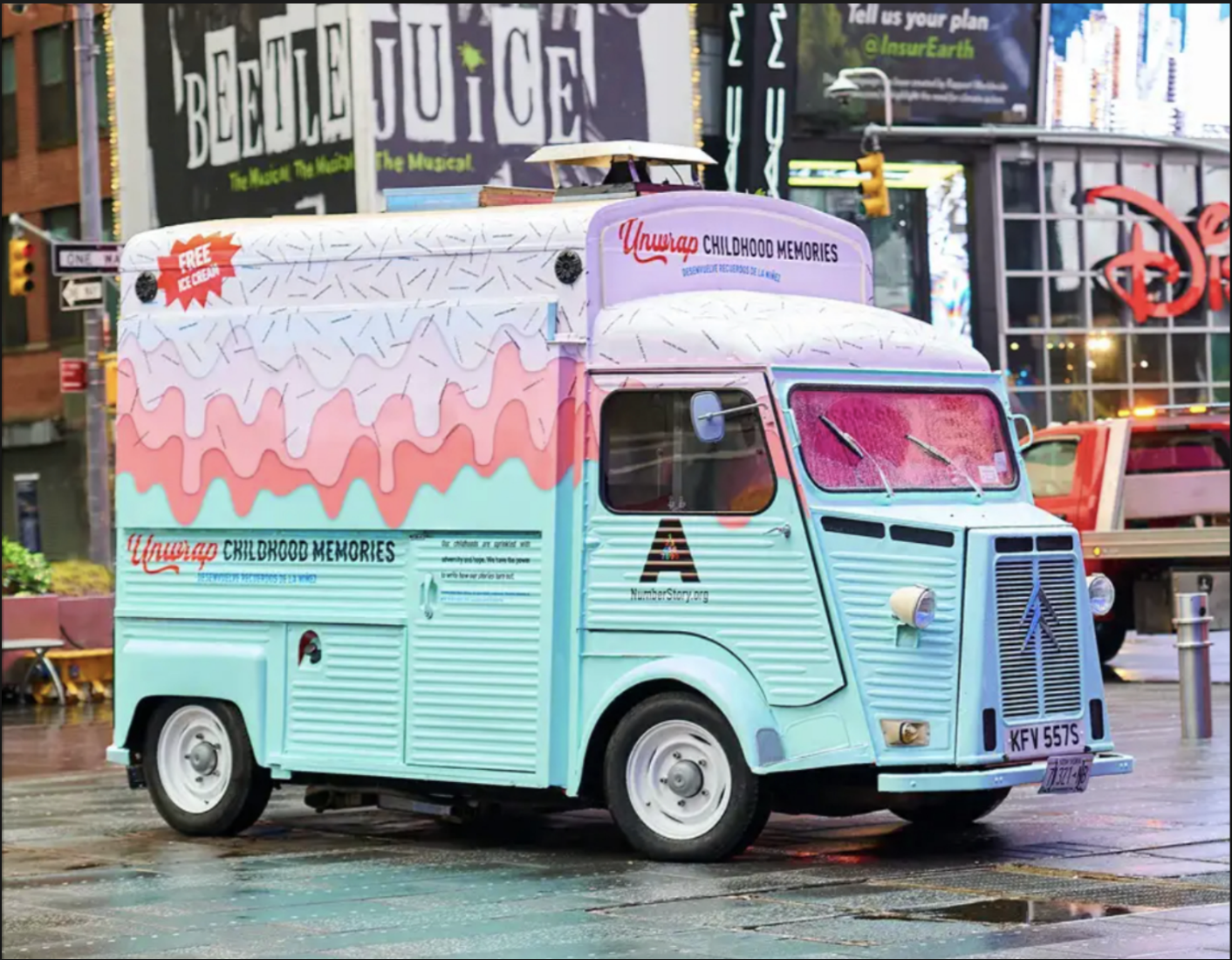
Merlin AI
Pick a vehicle, drop in your website, and Merlin AI brings your brand activation to the streets instantly.
Bring Your Brand to the Streets.®

Author
Social Media Manager @ FTP Agency
Ashley Elarde is a social media strategist, content creator, and experiential marketing professional with experience bringing brands to life through engaging digital content. She has helped execute campaigns for brands across beauty, fashion, retail, and entertainment, developing campaigns that drive engagement and meaningful consumer connections.
Experiential events put people inside a brand rather than in front of it, which is the whole distinction from every other kind of event.…
Read more →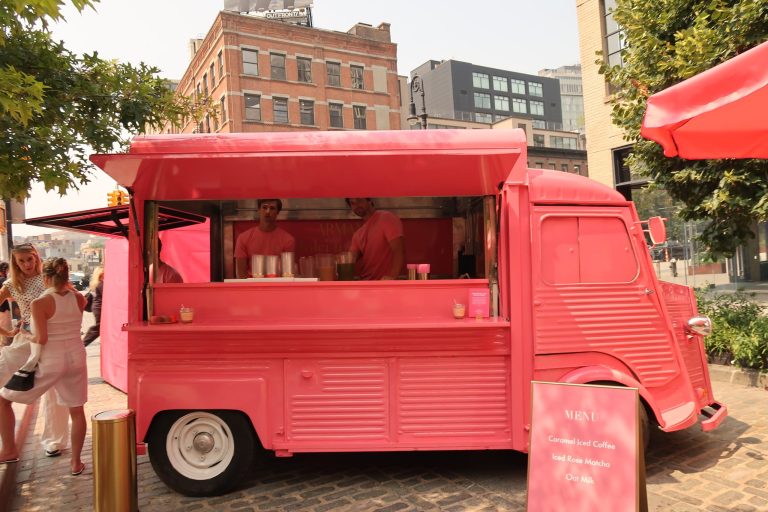
Experiential design is the practice of designing a space people move through rather than a surface people look at, and that single difference is…
Read more →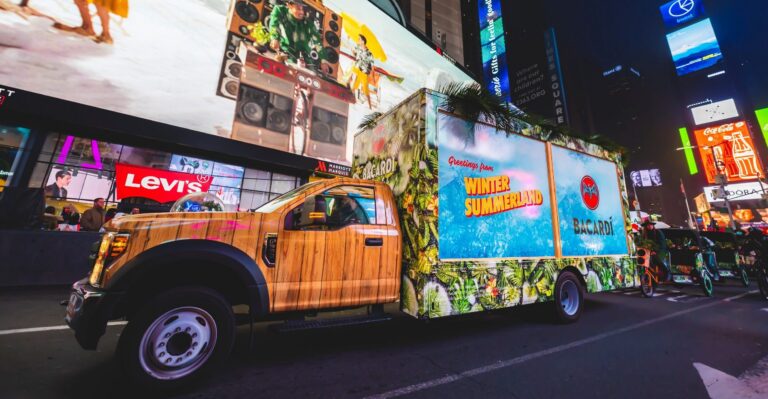
Choosing a brand activation company is difficult for a specific reason: every portfolio looks good, and none of them show you the part that…
Read more →

We use and share personal information through cookies and similar technologies on our sites to personalize your shopping experience and ads. Others may use this information for their own marketing and business purposes. . Check our Privacy Policy for more details.
Browser Opt-Out Honored
We use and share your personal information with others to personalize your shopping experience and show you targeted ads on other sites based on your interests and online activities.
Online Info includes cookies, pixel tags, and similar technologies connected to your browser or device. Offline Info includes information associated with your email address based on your other interactions with us.
We use and share your personal information with others to personalize your shopping experience and show you targeted ads on other sites based on your interests and online activities. Information includes cookies, pixel tags, and similar technologies connected to your browser or device (Online Info), as well as information associated with your email address based on your other interactions with us (Offline Info). Others may use this information for their own marketing and business purposes.
You can choose to opt out of sharing one or both types of information.