Sensory marketing works on a mechanism advertising cannot reach: the senses that build memory rather than the ones that compete for attention.
What makes you think of winter when you feel wool? What takes you back to a childhood kitchen when you smell chocolate chip cookies? Sight and sound carry most of what marketing does, and both are thoroughly contested. Smell, taste, and touch are barely used, and they are the ones most closely wired to memory.
This guide covers the science behind that, which businesses benefit most, and how brands with nothing edible to sell still use taste.
Key Takeaways
- Smell and taste are the underused senses: sight and sound are saturated, while the senses most connected to memory recall are barely contested.
- It does not read as advertising: a pleasant scent or a free coffee is received as hospitality rather than as a pitch, which is why resistance to it is low.
- Non-food brands can use taste: tire shops with popcorn and underwear brands with ice cream both work, because the treat buys the association.
- It suits businesses with a physical space or presence: retail, hospitality, showrooms, and activations all qualify. Purely digital businesses have less to work with.
- The sense should connect to the brand: an arbitrary scent or flavor is decoration, while one tied to the product does real work.
What Is Sensory Marketing?
Sensory marketing is the deliberate use of sight, sound, smell, taste, and touch to shape how customers feel about a brand and what they remember of it. Rather than delivering a message, it creates conditions: the temperature of a drink, the scent of a room, the texture of packaging.
This post covers the science and which businesses it suits. For the practical side, designing an activation around the senses and the mistakes to avoid, see our guide to how to use sensory marketing.
The Science Behind It
Sensory marketing has been studied seriously for years, and the finding that matters commercially is that unconscious preference can be moved by details previous generations of marketers would not have thought to adjust.
Smell is the clearest case. The regions of the brain handling emotion and memory sit unusually close to the olfactory system, which is why a scent can return someone not only to a moment but to how they felt in it.
The practical consequence is that sensory work is not experienced as marketing. Nobody walks into a shop that smells of chocolate and feels pitched to. They enjoy it, they linger, and the association forms without any resistance to overcome.
Scent Marketing and How to Use It
Scent marketing, sometimes called aroma marketing, means choosing a fragrance for a space that supports the mood you want customers in.
For some businesses the choice is obvious. A candle shop with apple pie in the air before autumn is working with the grain. For others it is not intuitive at all, which is where the opportunity sits.
A car dealership is the standard example. The instinct is to focus on features, warranties, and safety ratings, and to treat the showroom as a neutral container. A pleasant ambient scent lengthens the time people spend on the floor, and time on the floor correlates with purchase, so the scent is doing commercial work that has nothing to do with the product.
Three rules make scent work rather than backfire:
- Keep it connected. A fragrance that relates to the product or the brand’s associations lands. An arbitrary pleasant smell is just decoration.
- Keep it subtle. Unlike a visual, customers are physically breathing this in, and a heavy scent reads as invasive rather than welcoming.
- Account for sensitivity. A meaningful number of people react badly to fragrance, so ventilation and intensity control matter, particularly in an enclosed space.
Taste Marketing, Including for Brands With Nothing to Eat
Taste is the most underused sense in marketing and the most decisive, because it settles a question rather than suggesting an answer.
For food and beverage brands the logic is obvious. A distinctive flavor becomes the brand: a soda that recalls childhood birthdays, a particular fry that pulls people back repeatedly. Positioning a taste to carry nostalgia is a durable competitive position.
The more useful question is what happens when the product is not edible. The answer is that it works anyway, because the treat is not the product, it is the association.
Tire and auto repair shops have understood this for decades. Popcorn has nothing to do with tires, and yet the smell and the taste in a waiting room turn a dull, slightly stressful errand into a tolerable one, and customers return to the shop that fed them.
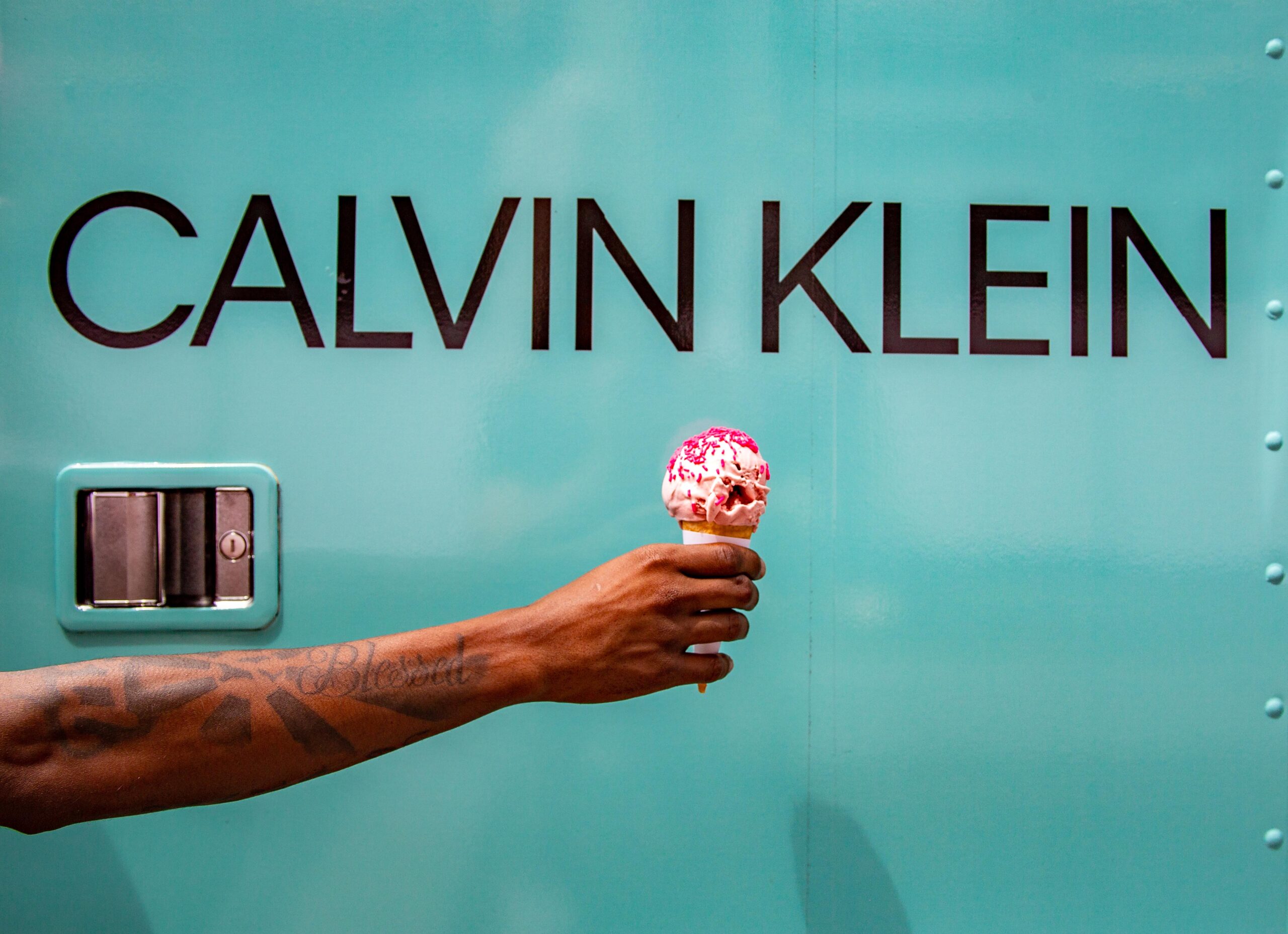
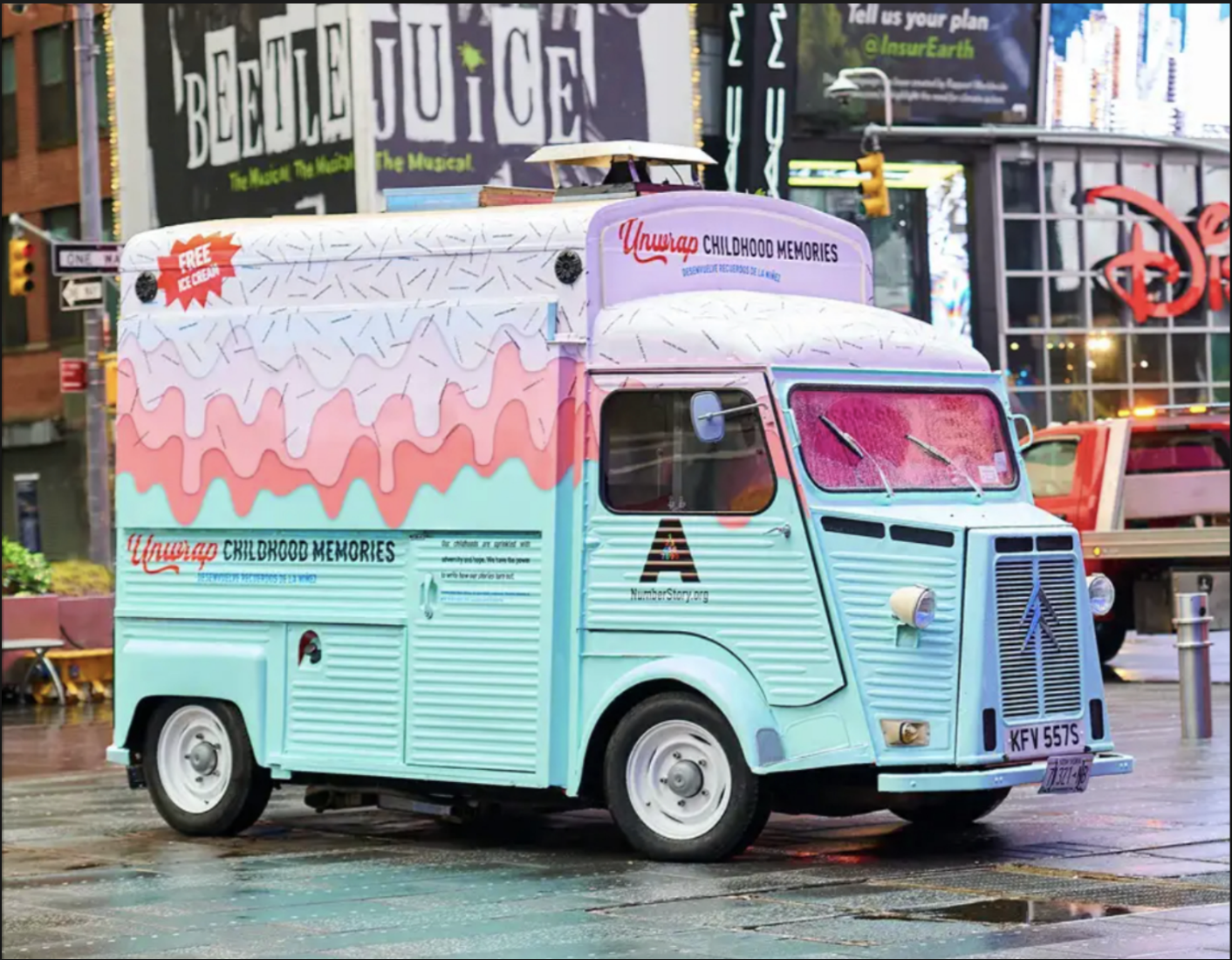
The same logic runs through most of the activations we produce. A fashion house cannot hand a passerby a handbag, so it hands over hot chocolate. A delivery app has nothing physical to sample at all, so it gives out coffee in exchange for a download. Our guide to food truck marketing tactics covers how that exchange is structured.
Case Study: How Calvin Klein Used Taste to Sell Underwear