Food truck marketing gets people to stop. Turning that stop into a sale is a separate problem, and it is the one most activations never solve.
A branded truck will draw a queue almost regardless of what you do. The difference between a busy afternoon and a campaign you can report on is whether anything happens at the window beyond handing something over.
Here are eight tactics for converting foot traffic into customers, ordered roughly by how much they affect the outcome.
Key Takeaways
- Attention is the easy part: a free giveaway draws a crowd, so the design effort belongs on what happens next.
- Every giveaway should have an exchange: a scan, a sign-up, or a follow turns a queue into a contact list you keep.
- Bounce-back offers close the loop: a code redeemable in store is the cleanest evidence that a truck produced revenue.
- Mobility multiplies everything: the same build across several markets lowers cost per interaction with each additional stop.
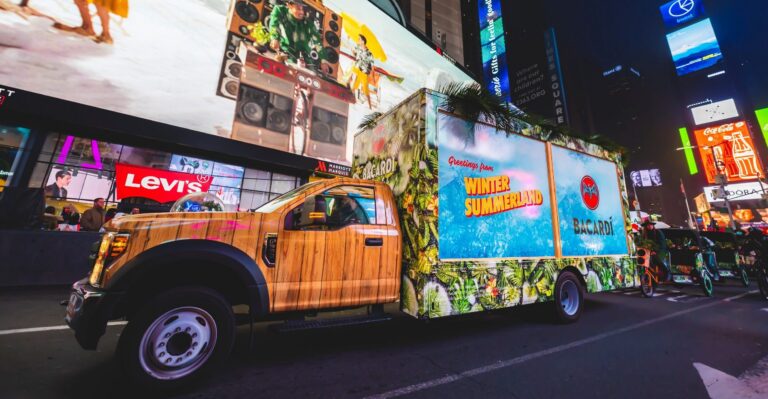
- The wrap works while you drive: a branded vehicle earns impressions in transit as well as when parked, so route selection is media planning.
What Is Food Truck Marketing?
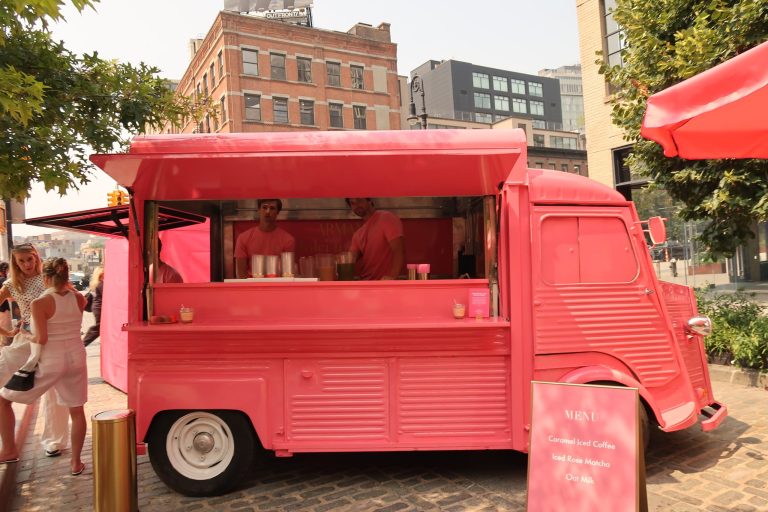
Food truck marketing is the use of a branded food truck as a marketing channel rather than a restaurant. The vehicle is wrapped in a company’s identity, staffed by brand ambassadors, and used to hand out food or drink as a way of creating direct contact with customers.
The food is the invitation. Whatever you actually sell is the point, which is why the mechanics below matter more than the menu. For the full production side, see our complete guide to branded food trucks.
1. Put a Capture Mechanic on Every Giveaway
This is the tactic that separates a measurable campaign from a pleasant afternoon, and it belongs first because everything else depends on it.
Ask for something small in exchange for the free item: a QR scan, an email sign-up, a social follow, or an app download. The ask has to be small enough that almost nobody refuses, and specific enough that you can count it afterwards.
Put the code in more than one place. On the truck, on signage, on the cup, and on the card people take away. A single QR code on a menu board gets missed.
2. Attach a Bounce-Back Offer
A bounce-back is a coupon or code redeemable later, in store or online. It is the closest thing to proof that an activation produced revenue, because redemptions are directly attributable to the truck.
Print it on the cup sleeve or hand it over with the giveaway, set an expiry that creates urgency, and use a unique code per activation so you can compare cities and days against each other.
3. Activate Where Crowds Already Are
Food, art, and music festivals attract dense, receptive foot traffic, which means you are not paying to build an audience, only to reach one. The same applies to sporting events, campus areas, and busy retail districts
Festivals have a second benefit worth using. You get to see what every other brand is doing in the same space, which is free competitive research you cannot get any other way. Our event marketing service covers securing those placements, and HubSpot’s marketing statistics library is a useful reference when benchmarking what capture rates to expect from an in-person channel.
4. Use Mobility Rather Than Sitting Still
The thing that separates a truck from a pop-up store is that it moves. A fixed activation reaches one neighborhood; the same build on a route reaches several, and the fabrication cost is already paid.
Two practical points. Cost per interaction falls with each additional stop, which is why longer routes usually improve the economics rather than worsening them. And the wrap is earning impressions during transit, so the route between stops is itself a media placement.
Our roundup of mobile marketing tour examples covers how brands sequence those stops.
5. Offer Samples, Discounts, and a Reason to Return
Free is effective and always has been. What changes the outcome is what sits behind the free item.
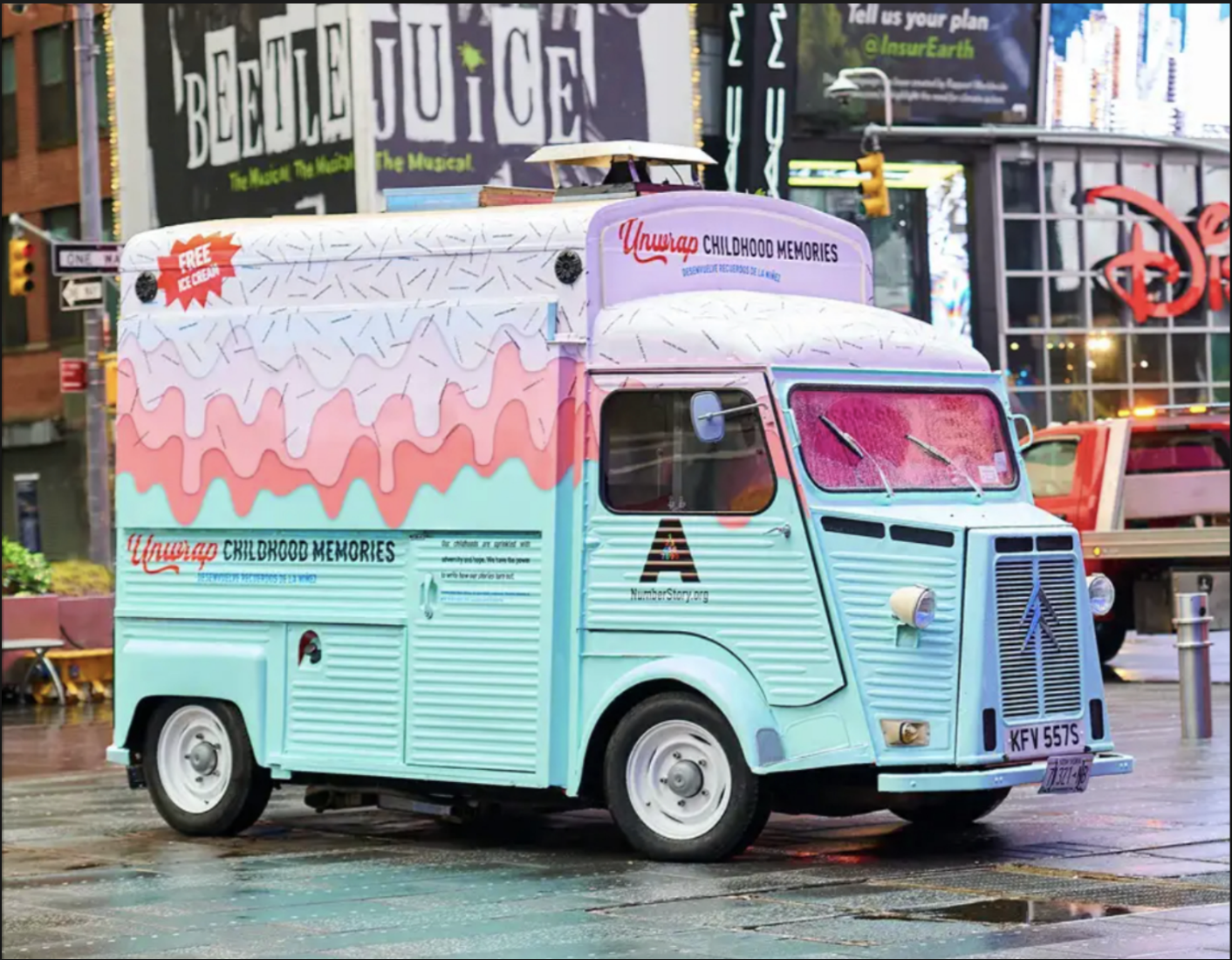
Sampling works hardest where trial resolves a doubt, which is why it suits food, beverage, beauty, and anything plant-based or unfamiliar. Pair the sample with a discount for the first purchase, and where it fits the business, a loyalty enrollment that gives people a reason to come back rather than a one-off transaction.
6. Design the Wrap to Work at Distance
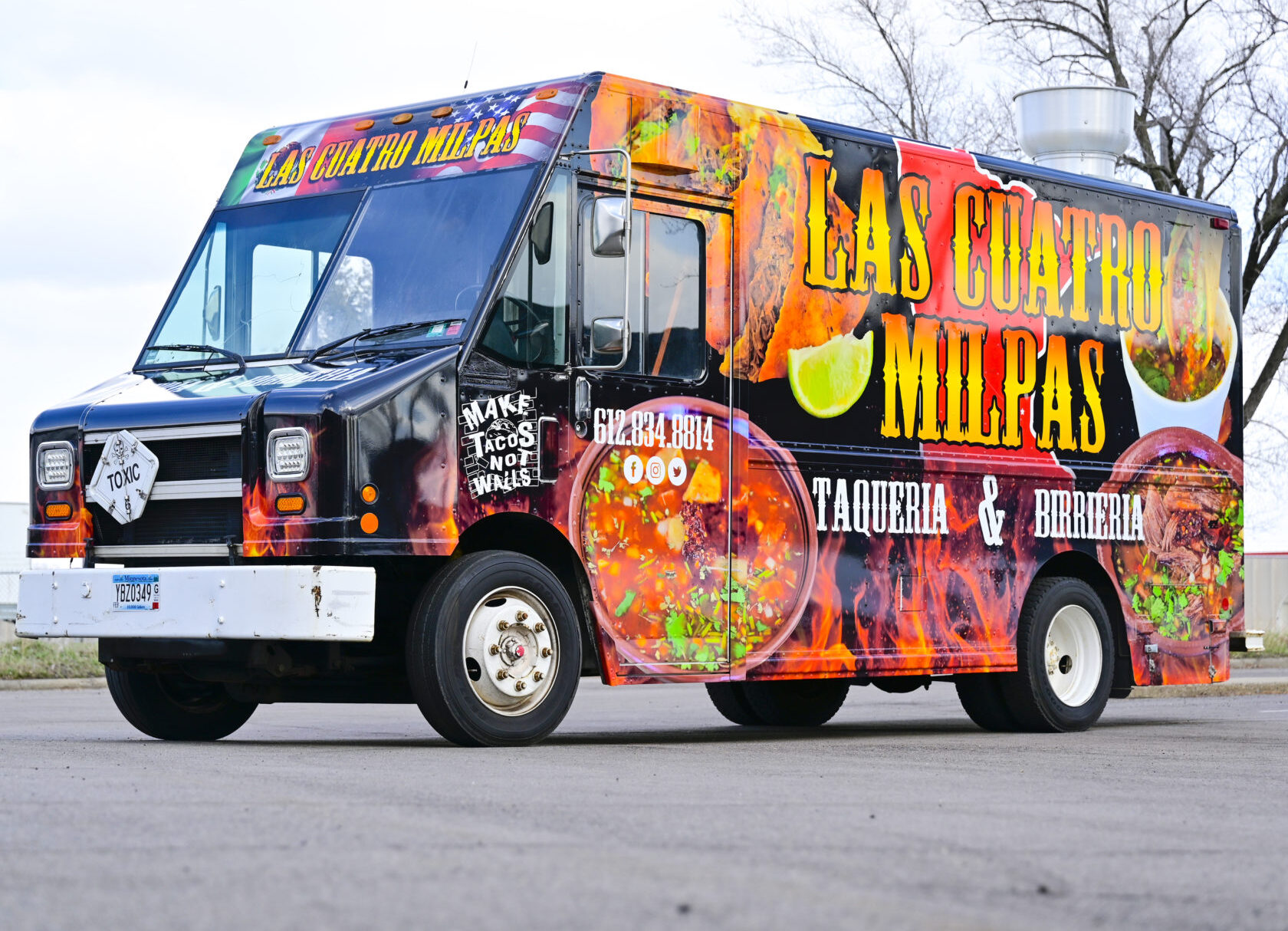
The custom wrap is the largest piece of advertising you will buy, and it is working in two situations at once: from across a street, where someone gets a second and a glance, and at the window, where someone has a minute.
Design for the first and reward the second. One saturated brand color and a single clear message reads from a block away; intricate detail only works up close. Then let the menu board, signage, and packaging carry the finer information.
7. Add Entertainment or a Reason to Linger
Live music, a performer, a prize wheel, a photo moment, or a game all extend dwell time, and dwell time is when conversations happen.
This matters more than it sounds. A queue that moves too fast produces servings without conversations, which means volume without any of the value a staffed activation is supposed to deliver.
8. Plan the Social Extension Before the Day
The people who see the activation online will always outnumber the people who walk past it, so treat the day as a content shoot as well as an activation.
Announce the route in advance so people can plan to attend, keep handles and a short hashtag visible on the truck itself, assign someone to capture footage, and be ready to respond to posts and messages while the activation is live rather than the following week. Our guide to creating experiences that drive UGC covers designing for that deliberately.
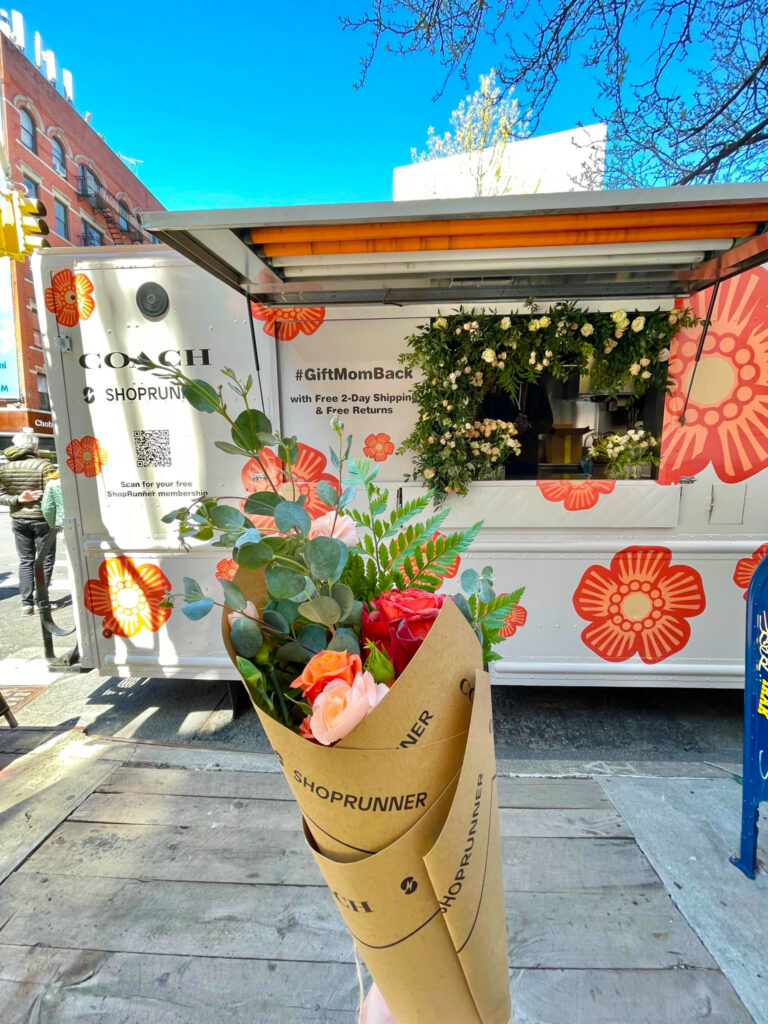
How ShopRunner Turned Free Flowers Into 2,500 Sign-Ups