Mobile Bars for Events: How to Turn Drinks Into a Brand Activation
A mobile bar event does something a static bar never will: it puts your brand, not just a drink, in someone’s hand. Anyone can…
Read moreBy: Ashley Elarde • • 11 min read
Summer is the one stretch of the year when your customers are already outside, already in a good mood, and already looking for something to do. A summer brand activation meets them there, turning a warm afternoon, a festival crowd, or a beach boardwalk into a face-to-face moment with your brand. From June through September, the streets do half the work for you.
The catch is that every other brand knows it too. Summer is the most competitive activation season of the year, which means the difference between a campaign people remember and one they walk past comes down to the idea, the format, and how early you locked the location. This guide covers the summer brand activation examples worth stealing, the formats that actually hold up in the heat, and the planning that separates a great summer from a missed one.
One of the most effective ways to capitalize on the lively, upbeat summer vibe and stand out from competitors during this hectic marketing period is by creating immersive brand experiences via experiential marketing.
Experiential marketing creates unique, fun experience that leave meaningful connections with buyers during warmer, happier months of the year.
That said, here are ideas and tips that will help you put on a summer activation that strengthens your existing connections with your consumers while forging new ones!
Of all four seasons, summer is the one most suited to live, in-person marketing. Three things make it the strongest window on the calendar for a brand activation.
Nobody stops for a pop-up in freezing rain. Summer removes the single biggest obstacle to any outdoor activation, which is getting people to be outside at all. Warm, dry weather means foot traffic on the streets, crowds at the parks, and customers who are relaxed rather than rushing from one indoor space to the next. The easiest activation is the one where your audience is already standing in front of you.
Summer is a nonstop run of outdoor concerts, music festivals, food tastings, parades, and street fairs. Every one of them is a crowd your brand can activate around instead of building from scratch. Rather than convincing people to show up, you place your activation where they already are, in the mood the event put them in. That borrowed energy is the whole point, and summer supplies more of it than any other season.
Brands spend fortunes manufacturing an emotional connection with customers. In summer, that work is largely done for you. People feel more outgoing and sociable in good weather, so an activation that lands in that moment ties those positive feelings directly to your brand. You are not creating the mood, you are meeting it, and the association sticks long after the ice cream melts.
We work with brands across fashion, beauty, tech, food and beverage, and more to produce summer activations that stop people in their tracks. Here are five formats that consistently deliver, each one a proven way to own a piece of the season.
A summer sampling tour puts your product in hundreds of hands a day, in market after market, on a single build. It is the format of choice for launches and national campaigns, because one branded vehicle can work a beach town in the morning and a festival the same weekend, then move to the next city. The season’s long daylight and packed event calendar make summer the ideal time to route a multi-city sampling tour, and the read you get on how different markets respond is worth as much as the sampling itself.
June is Pride Month, and Pride festivals are among the most energetic, well-attended, and community-driven events of the entire summer. For brands with a genuine, year-round commitment to the community, a Pride activation is a chance to show up in person where it matters. The audience is assembled, celebratory, and paying attention, which makes it one of the strongest event marketing windows on the summer calendar, provided the presence is authentic rather than opportunistic.
A branded vehicle parked on a busy summer street is a billboard that also sells. Position a mobile pop-up shop near your retail location, a partner’s front door, or a high-traffic shopping district, and it pulls the summer crowd toward the purchase. The vehicle catches attention from a block away, and because there is no lease, you choose exactly which corner and which weekend gives you the most foot traffic.
Few things stop a summer crowd faster than free ice cream on a hot day. A branded food truck handing out cold treats turns your logo into the most welcome sight on the block, and the line it creates becomes its own attraction. It is the simplest, most reliable way to convert a warm afternoon into brand engagement, because the offer is something people genuinely want in that exact moment.
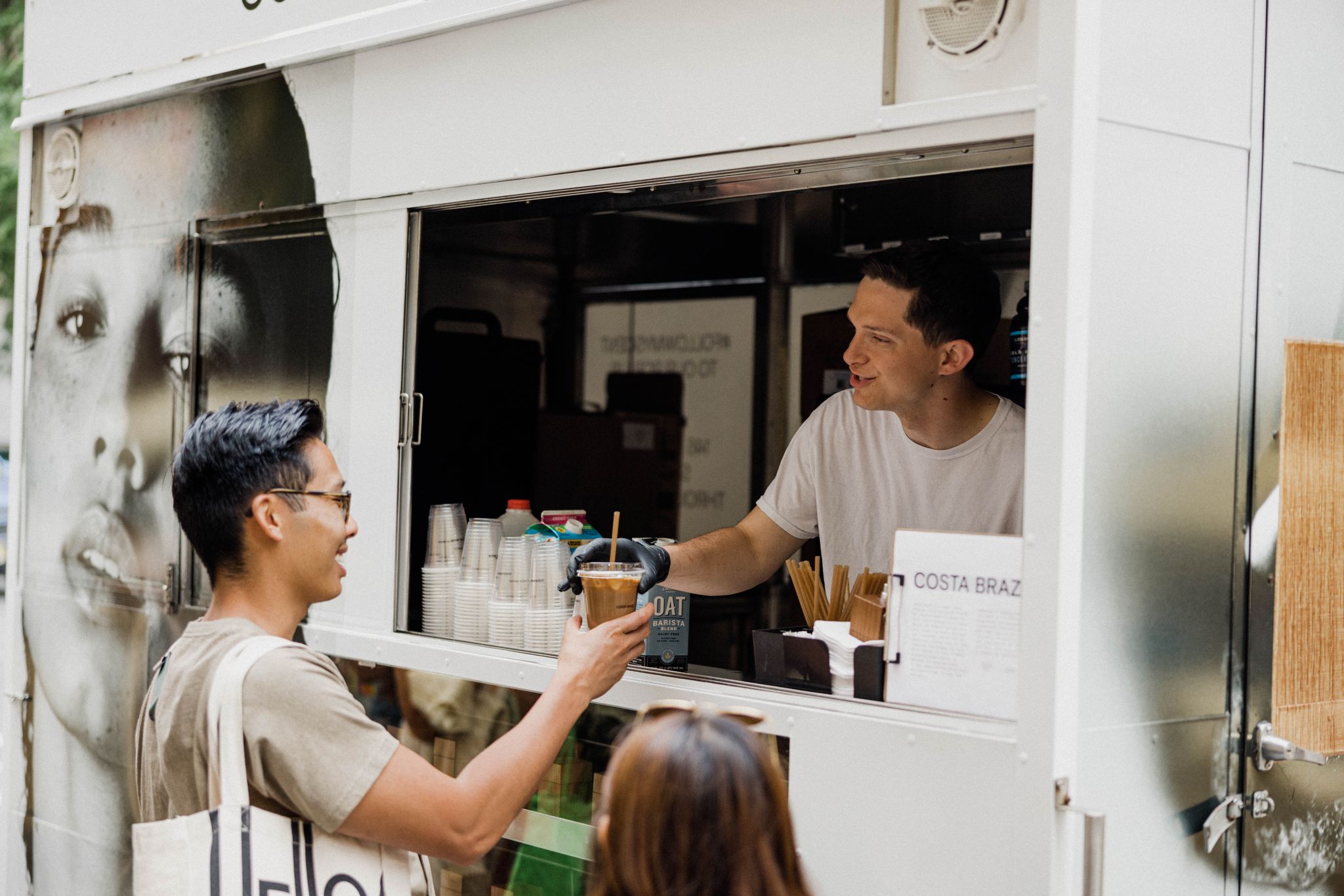
Summer is wedding, festival, and corporate-event season, and a branded mobile bar meets that demand while putting your brand in every guest’s hand. Whether it is a frozen cocktail, a spiked seltzer, or a nonalcoholic refresher, a mobile bar gives people a reason to gather, linger, and photograph the moment. The drink buys you time with the customer that a quick sample never could.
A great summer idea still needs a plan behind it. These are the factors that decide whether a summer activation lands or gets lost in the crowd.
Start with where your audience actually is. Is there a specific festival or event worth activating around? Which neighborhoods reach your target customer? How does one city compare to another for foot traffic, and do permit and licensing requirements differ between them? These questions decide the campaign before a single vehicle is wrapped, and the answers are different in every market.
Summer is warm, but it is not uniform. Take Miami: it is hot year-round, and summer afternoons bring humidity and sudden storms that can shut down an unprepared activation. Every summer build needs shade, airflow, cold product, and a wet-weather plan. Designing for the actual conditions of the market, rather than an idea of summer, is what keeps the activation running all day.
Tie your brand to the season visually. Bright colors, beach and poolside cues, tropical motifs, and warm-weather styling all signal summer instantly and make your activation feel like part of the season rather than an interruption to it. The build should look like it belongs on that sunny street corner, because the ones that blend into the summer aesthetic are the ones people stop for and share.
Brand ambassadors turn a parked vehicle into an experience. Trained, on-brand staff who can talk to people, answer questions, and hand over product are the difference between foot traffic that glances and foot traffic that engages. In a busy summer setting, the person at the window is often the only conversation your brand gets, so it is worth staffing it with people who can actually have one.
Summer rewards smart partnerships. A local ice cream maker, a florist, a roaster, or a beverage brand that already draws a summer crowd can amplify your reach and lend your activation instant local credibility. The right vendor partnership turns two audiences into one and makes the activation feel rooted in the market rather than dropped into it.
A summer brand activation is a live, in-person marketing experience run during the warm-weather months, usually June through September. It uses the season’s foot traffic, events, and good mood to connect a brand with customers directly, through formats like mobile pop-ups, sampling tours, branded food trucks, and event activations.
Summer combines three advantages no other season offers at once: reliable outdoor weather that puts people on the street, a packed calendar of festivals and events, and customers who are naturally more social. Together they mean the audience is already outside and receptive, so the activation does not have to work as hard.
The strongest summer formats are multi-city sampling tours, Pride festival activations, mobile storefronts that drive retail traffic, branded food trucks handing out cold treats, and mobile bars for events. Each one uses the season’s crowds and warm weather, and the best choice depends on your product, your goal, and your markets.
Earlier than most brands expect. Prime summer locations, permits, and staff get claimed months in advance, so planning should begin in late winter or early spring. A brand that waits until May or June is choosing from whatever is left rather than securing the corner, the event, and the dates it actually wants.
Anything refreshing has a natural advantage: ice cream, cold drinks, frozen treats, seltzers, skincare, sunscreen, and summer apparel all fit the season instinctively. That said, any product can work with the right creative angle. The key is connecting the brand to what people want in warm weather, whether that is the product itself or the experience around it.
You plan for it at the fabrication stage, not on the day. That means covered service areas, airflow and shade for staff and customers, weather-appropriate product that survives the heat, and a clear plan for the afternoon storms that hit markets like Miami. An activation designed for the real conditions keeps running when an unprepared one shuts down.
Wherever your audience gathers in warm weather: beaches and boardwalks, parks, outdoor shopping districts, festival grounds, and high-foot-traffic streets. The best location depends on your market and your customer, which is why location strategy, including how one city compares to another (see our locations), is one of the first decisions to make.
Yes, and requirements vary by city and by venue. Permitting and licensing genuinely differ from one market to the next, and prime summer spots get claimed early, so this is one of the biggest reasons brands work with an experiential agency rather than assembling an activation themselves.
Ambassadors turn a static display into a real interaction. Trained, on-brand staff engage passersby, explain the product, and create the human connection that foot traffic alone does not. In a crowded summer setting, the person representing your brand at the vehicle is often the deciding factor in whether someone stops and remembers you.
Set one primary goal before launch, whether that is samples distributed, email sign-ups, social impressions, or units sold, and track it consistently. Build capture into the experience, like a QR code or a promo tied to the activation, so the crowd on the street connects to a result you can actually report.
Author
Social Media Manager @ FTP Agency
Ashley Elarde is a social media strategist, content creator, and experiential marketing professional with experience bringing brands to life through engaging digital content. She has helped execute campaigns for brands across beauty, fashion, retail, and entertainment, developing campaigns that drive engagement and meaningful consumer connections.
A mobile bar event does something a static bar never will: it puts your brand, not just a drink, in someone’s hand. Anyone can…
Read more →
A mobile retail store gives brands something a lease never will: the ability to sell, sample, and showcase wherever their customers already are. But…
Read more →
The experiential marketing vehicle you choose is the single biggest design decision in a mobile pop-up shop. It sets your footprint, your sightlines, what…
Read more →We use and share personal information through cookies and similar technologies on our sites to personalize your shopping experience and ads. Others may use this information for their own marketing and business purposes. . Check our Privacy Policy for more details.
Browser Opt-Out Honored
We use and share your personal information with others to personalize your shopping experience and show you targeted ads on other sites based on your interests and online activities.
Online Info includes cookies, pixel tags, and similar technologies connected to your browser or device. Offline Info includes information associated with your email address based on your other interactions with us.
We use and share your personal information with others to personalize your shopping experience and show you targeted ads on other sites based on your interests and online activities. Information includes cookies, pixel tags, and similar technologies connected to your browser or device (Online Info), as well as information associated with your email address based on your other interactions with us (Offline Info). Others may use this information for their own marketing and business purposes.
You can choose to opt out of sharing one or both types of information.