How the Best Brands Win at Fashion Marketing in 2026
Fashion marketing has never been more crowded, more expensive, or more dependent on getting a real person to stop and pay attention. The feed…
Read moreBy: Ashley Elarde • • 7 min read
The best fashion marketing campaigns do not just look good in a case study deck, they get people to show up, try something, and buy.
Plenty of roundups list campaigns without explaining the mechanics. This one breaks down what the brand actually did, why the format worked, and the takeaway you can apply to your own launch.
A fashion marketing campaign is a coordinated push built around a specific moment, such as a product launch, a store opening, a collaboration, or a season. The strongest campaigns share four traits: a single clear idea, a physical or visual centerpiece, a location where the target audience already gathers, and a content plan that keeps the moment alive after the day itself.
Context matters too. With the industry forecast for another year of low single-digit growth and consumers actively hunting for value, campaigns that earn organic attention are worth more than campaigns that only rent it. (Source: The Business of Fashion State of Fashion report.)
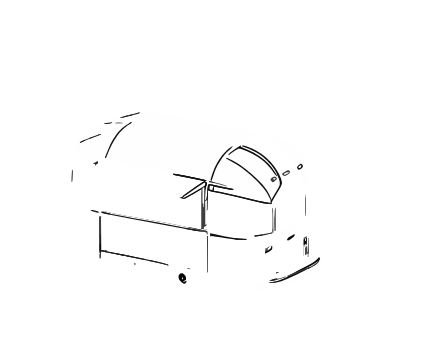
Fragrance is the hardest category to sell online because the product cannot be experienced through a screen. Coach solved that by bringing the Coach Cherry launch to customers in a branded mobile setting where they could actually smell it. The takeaway: when the product needs to be experienced, put it in the street, not just in the feed.
See the build in our Coach fragrance activation case study.
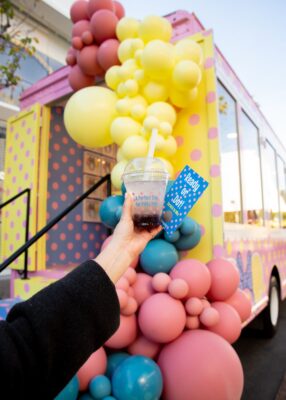
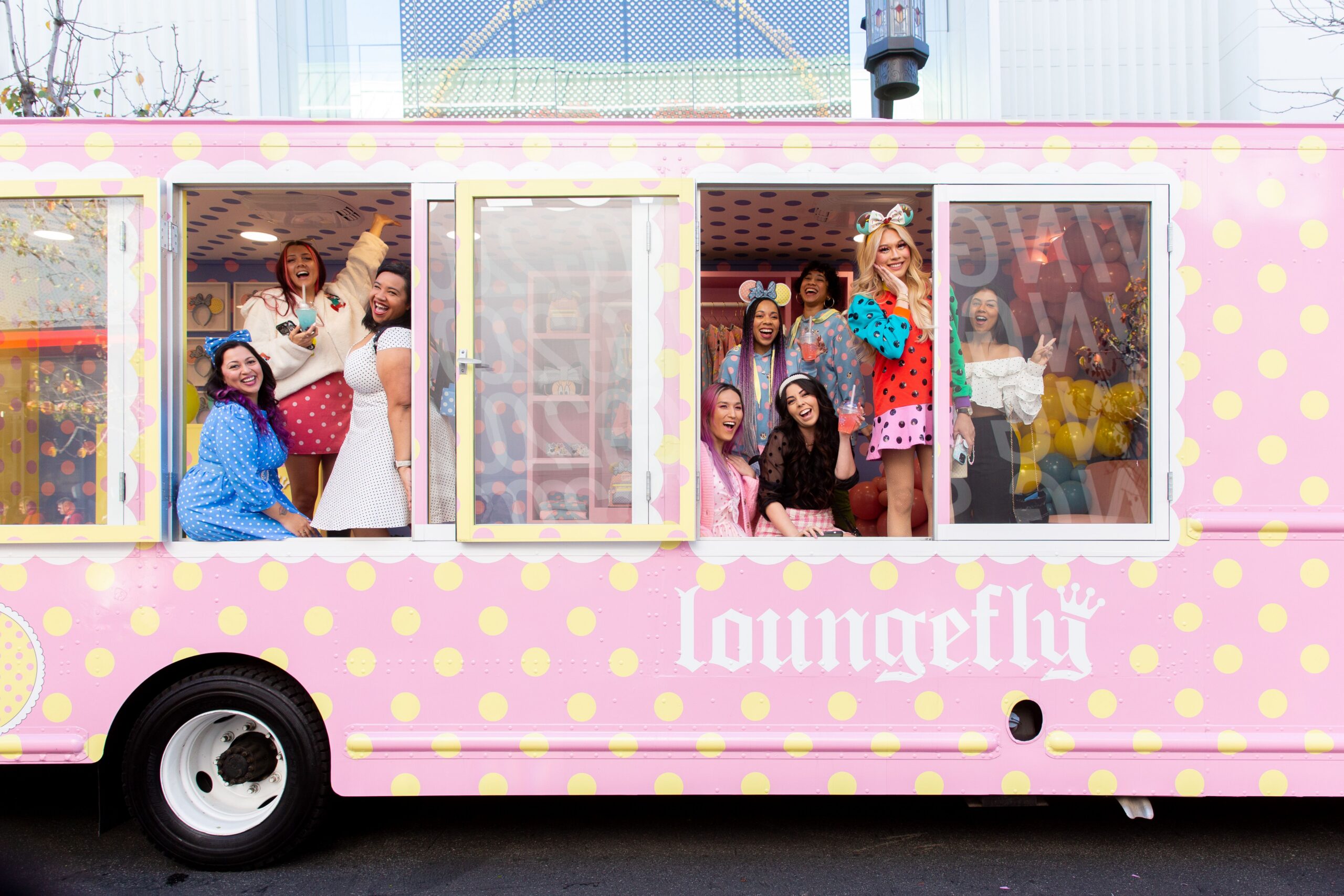
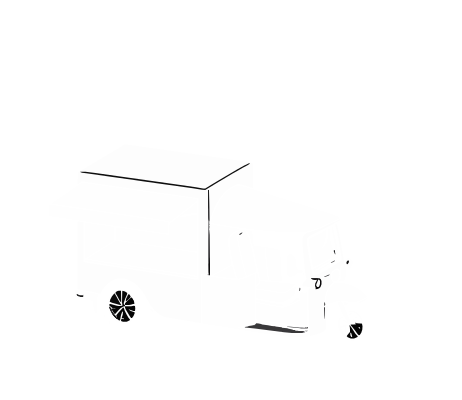
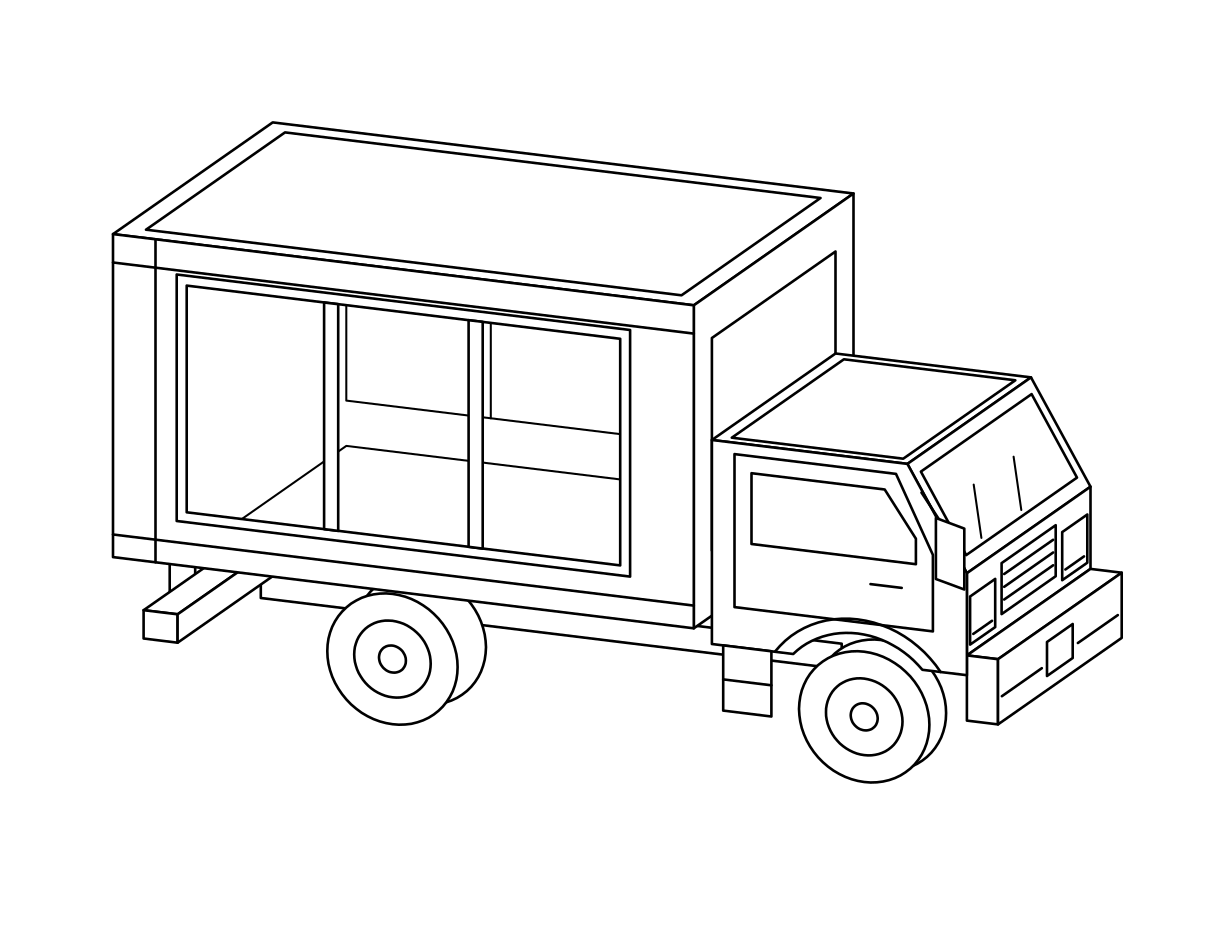
Loungefly leaned on visibility. A glass truck makes the merchandise itself the advertisement, visible from the sidewalk before anyone reads a word of copy. The takeaway: for highly visual, collectible products, transparency beats messaging.
Full details are in our Loungefly glass truck pop-up case study.
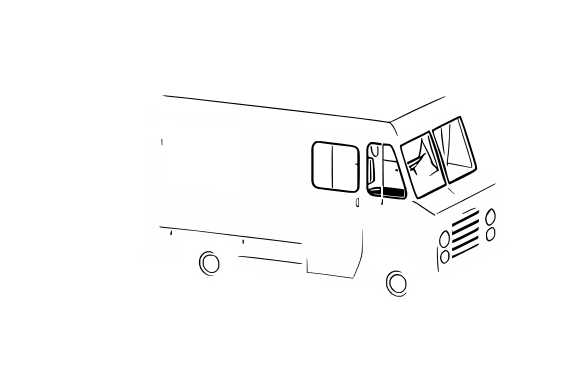
A branded vehicle parked outside a store opening converts a private event into a public one. Passersby who were never on the invite list become part of the campaign. The takeaway: put the activation where a crowd already exists rather than building one from zero.
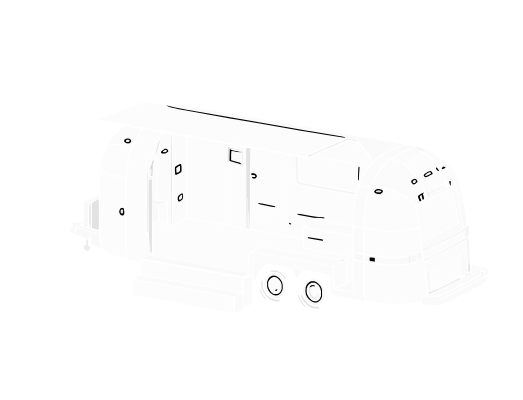
One custom build that travels across several cities produces far more impressions than a single-market event, and each stop generates its own local content and press. The takeaway: if the build is good, make it work more than once.
Festival crowds are already in a social, photo-taking mindset, which raises the share rate on anything worth photographing. The takeaway: audience mindset is as important as audience size.
Collaborations work because each brand brings a distinct customer base to the same moment. The takeaway: a collab activation should feel like neither brand alone, or you lose the reason people paid attention.
Holiday shopping periods hand you built-in intent and foot traffic. The takeaway: the calendar is free demand, and campaigns timed to it start ahead. Our roundup of holiday pop-up shop ideas covers formats that work in that window.
Handing someone the product converts at a rate impressions never will, especially for beauty-adjacent fashion items and accessories. The takeaway: measure samples and try-ons, not just reach.
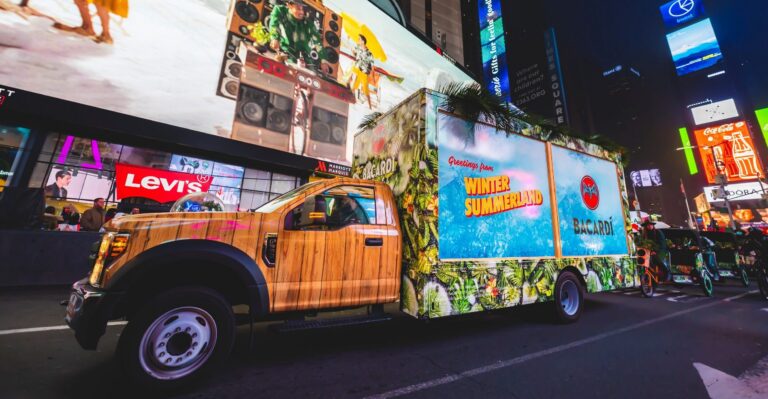
Start with the moment, then choose the format that fits the product and the city. A collection that needs to be seen up close calls for a mobile showroom; a collectible or highly visual product calls for a glass truck; a dense urban district may call for something smaller.
Our guide to experiential marketing vehicles compares the formats side by side, and you can see the full range of experiential vehicles we build and operate.
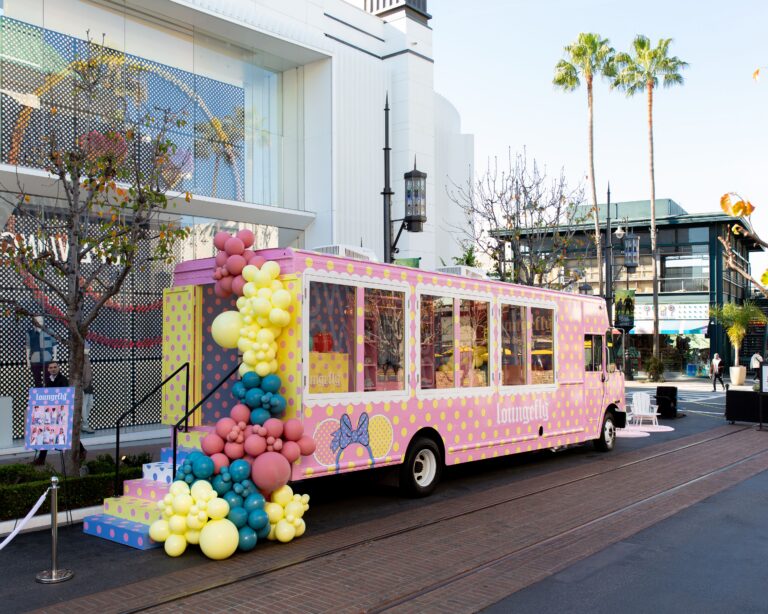
The Loungefly polka dot glass truck is the clearest example on this list of format doing the heavy lifting. Rather than describing the collection, the activation displayed it behind glass in a branded vehicle that drew attention from the street and photographed well from every angle.
It is a repeatable model for any brand whose product sells on sight. Browse more examples in our brand activation case studies.
The fashion marketing campaigns that work share a pattern: one clear moment, a format matched to the product, a location with an existing audience, and a plan to keep the content working long after the truck drives away.
If you have a launch, opening, or collaboration coming up, we build the physical side of campaigns like these. Explore our brand activation services or contact our team with your timing.
A fashion marketing campaign is a coordinated marketing push built around a specific moment such as a product launch, store opening, collaboration, or season. It typically combines social, email, influencer, and paid media with a physical activation that anchors the campaign.
Success usually comes from one clear idea, a format matched to the product, a location where the target audience already gathers, and a content plan that extends the moment. Campaigns without a defined moment tend to blur into ongoing content and are harder to measure.
A traditional pop-up occupies a leased storefront or space for a fixed period, while a mobile pop-up is built into a vehicle and can change locations daily. The mobile version carries an identical brand experience across stops and doubles as a moving billboard between them.
Strong examples include fragrance launches brought to the street for sampling, glass truck displays for collectible products, boutique opening takeovers, festival activations, collaboration drops, and seasonal pop-ups. Each solves a different problem with a different format.
Pop-ups give a campaign a physical location customers can visit, try product at, and photograph. Brands use them for launches, openings, and tours, often parking a branded vehicle at a high-traffic location for a few days to concentrate attention.
Most run from a single day to about two weeks, while multi-city tours extend longer as the build travels. Short windows create urgency, which is part of why pop-up formats generate turnout and social sharing.
Track foot traffic, product try-ons or samples, sign-ups captured on site, content and press generated, and sales lift in the activation market. Deciding these metrics before launch is what allows you to compare campaigns fairly.
A campaign is the full marketing push across channels over time. An activation is the live, in-person component of that campaign. The activation usually creates the assets and attention that the rest of the campaign distributes.
Not always, but a custom build gives you mobility and a branded environment you fully control, which is difficult to replicate with a rented space. It also lets one investment serve several cities across a tour.
Give yourself lead time for design, fabrication, permits, and location booking, especially around fashion weeks and holiday periods when demand peaks. Earlier planning means more choice over dates, cities, and format.
Define the moment, the audience, and the cities, then choose a format that fits the product. A partner can handle concept, build, logistics, permits, and staffing from there. Send our team your launch window and we will map the campaign around it.
Author
Social Media Manager @ FTP Agency
Ashley Elarde is a social media strategist, content creator, and experiential marketing professional with experience bringing brands to life through engaging digital content. She has helped execute campaigns for brands across beauty, fashion, retail, and entertainment, developing campaigns that drive engagement and meaningful consumer connections.
Fashion marketing has never been more crowded, more expensive, or more dependent on getting a real person to stop and pay attention. The feed…
Read more →
Beauty marketing lives or dies on one thing: getting the product onto an actual face, in an actual hand, in front of an actual…
Read more →
Nonprofit marketing asks a small team to compete for attention against organizations with a hundred times the budget, and still bring in donors, volunteers,…
Read more →We use and share personal information through cookies and similar technologies on our sites to personalize your shopping experience and ads. Others may use this information for their own marketing and business purposes. . Check our Privacy Policy for more details.
Browser Opt-Out Honored
We use and share your personal information with others to personalize your shopping experience and show you targeted ads on other sites based on your interests and online activities.
Online Info includes cookies, pixel tags, and similar technologies connected to your browser or device. Offline Info includes information associated with your email address based on your other interactions with us.
We use and share your personal information with others to personalize your shopping experience and show you targeted ads on other sites based on your interests and online activities. Information includes cookies, pixel tags, and similar technologies connected to your browser or device (Online Info), as well as information associated with your email address based on your other interactions with us (Offline Info). Others may use this information for their own marketing and business purposes.
You can choose to opt out of sharing one or both types of information.