SoHo
Spring, Prince, and Broadway hold the flagships and the direct-to-consumer stores. Park beside the store you want to fill and the walk is a minute.
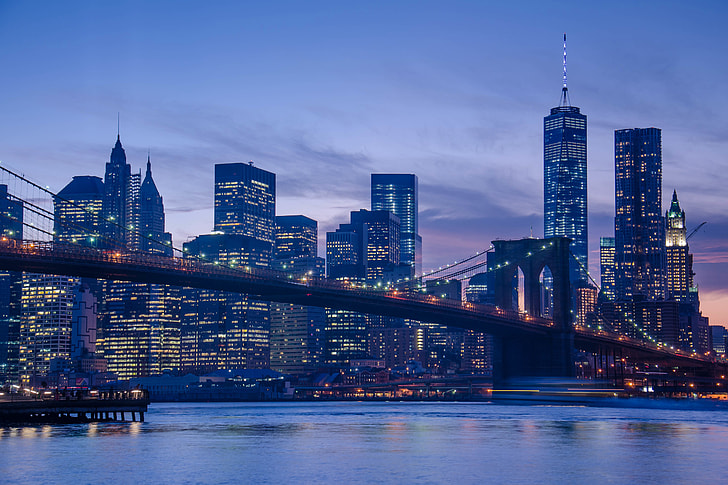
New York rewards specificity. The corner matters, the hour matters, and the difference between a good block and a great one is measured in footsteps. This is the city we know corner by corner, because it is the one we are headquartered in.
Food Truck Promotions is an experiential marketing agency based in New York, running mobile pop-up brand activations across all five boroughs. We have parked a rebranded coffee cart at Broadway and West 57th to pull street traffic into Nordstrom’s flagship for Rag & Bone, taken over 118 Spring Street in SoHo with a branded ice cream truck for Stuart Weitzman, served Baohaus out of a mobile kitchen in Times Square for Adidas, and built Lily Bloom’s flower shop onto a vintage Citroen at Rockefeller Center.
The calendar is dense and the best locations get claimed early, from Fashion Week in February and September to Pride in June. We own the fleet, fabricate in house, pull the permits, and staff the day, so one team is accountable from the rendering to the sidewalk.
Spring, Prince, and Broadway hold the flagships and the direct-to-consumer stores. Park beside the store you want to fill and the walk is a minute.
Rockefeller Center, Fifth and Madison, and the plazas around Bryant Park move enough people that a crowd forms in minutes. The right hour matters more here than anywhere.
Pure volume. One shot at the right hour, which is exactly how we ran the Adidas P.O.D. launch with Eddie Huang serving Baohaus.
Students, downtown office workers, and the greenmarket crowd. Reliable foot traffic seven days a week.
The newer flagships and the High Line crowd. Private plazas make permitting faster than the street.
The youngest customers and the independents. The natural afternoon stop after a SoHo morning.
Madison Avenue luxury and a holiday audience. Ralph Lauren parked a Christmas Airstream outside its flagship here serving hot dogs and caramel corn.

The format New York’s vending rules were built around. Broadway and West 57th for Rag & Bone, coffee sleeve QR codes and all.

Compact enough for SoHo and Midtown, with a side that reads as a storefront. Lily Bloom’s flower shop at Rockefeller Center ran on one.

For the blocks where nothing larger can park. Quick to place, quick to move between boroughs.
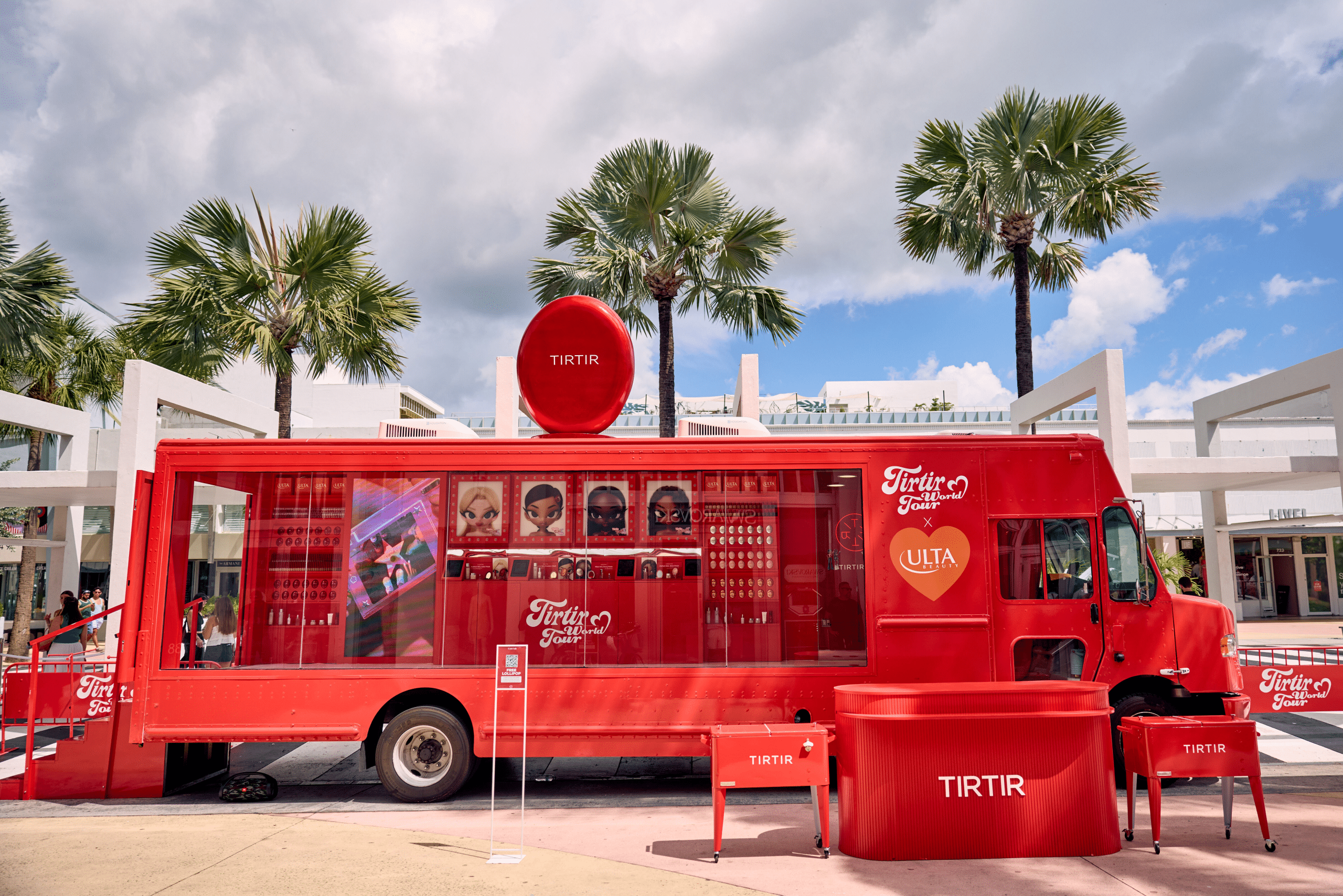
For plazas, parade routes, and private property, where the product should be seen through the walls. Zara’s Stonewall 50 Pride truck carried a flag of 9,000 bottles.
Street width, loading windows, and a vending permit system capped since the 1980s decide the format here. See the full fleet on the experiential vehicles page.
We put your brand inside the events New Yorkers already turn out for, so the crowd is there before you are. We secure the placement, pull the permits, build the vehicle, and staff it, whether the moment is Fashion Week in February and September, Pride in June, Governors Ball at Flushing Meadows, or the US Open. For Zara we built a glass truck into the Stonewall 50 Pride parade, carrying a 3D flag assembled from 9,000 bottles of JustWater.
We own the fleet and pick from it based on what New York will physically allow. Street width, loading windows, and a vending permit system capped since the 1980s rule out formats that work fine elsewhere, which is why activations here typically run on private property or event permits. We reach for carts, tuk tuks, and vintage Citroens in Soho and Midtown, and save the glass trucks and double-deckers for plazas and parade routes. For Mastercard we worked three subway stations.
We design and produce the kind of activation people stop for, then put it where New York’s density does the rest. Times Square, Union Square, Washington Square Park, Herald Square, and the plazas around Rockefeller Center all move enough people that a crowd forms in minutes. We put the Adidas P.O.D. System launch in the middle of Times Square with Eddie Huang serving Baohaus. The catch is that same density: you get one shot at the right hour.
We build and run seasonal activations through a New York Q4 that starts earlier and lasts longer than most markets. Bryant Park’s Winter Village opens in late October, Union Square and Columbus Circle follow, and Fifth Avenue’s windows pull crowds through Midtown from Thanksgiving on. Here the cold is an asset, because a warm drink from a branded vehicle draws a line. Ralph Lauren parked a Christmas Airstream outside its Upper East Side flagship serving hot dogs and caramel corn.
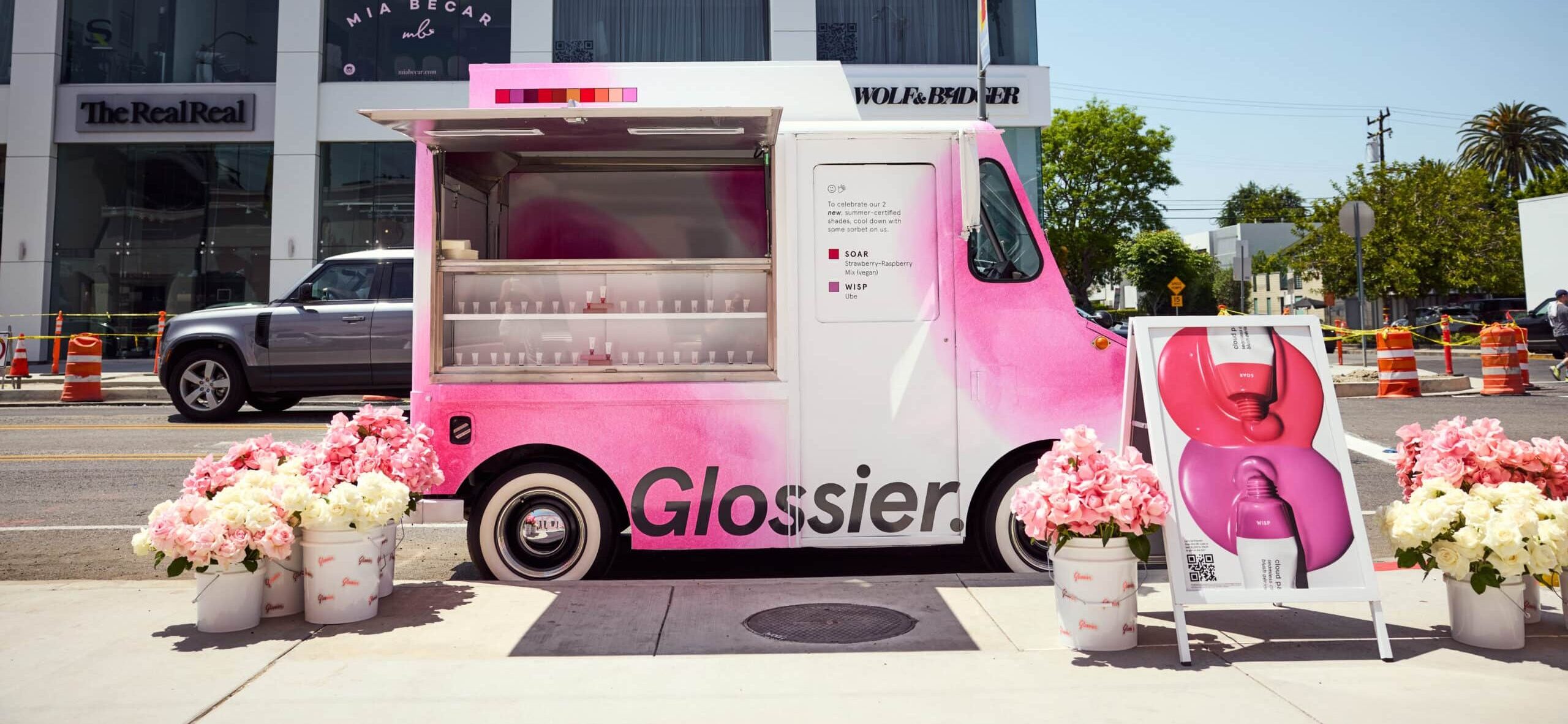
We plan and run multi-stop tours, and in New York that means using the boroughs rather than one corner. A single build can work Soho in the morning and Williamsburg in the afternoon, which is exactly how Glossier launched two Cloud Paint shades from matching trucks outside its own stores, capturing more than two thousand SMS leads in a day. New York also anchors national routes, and we handle routing, permits, and staffing at every stop.
We turn a vehicle into your storefront and park it where the purchase can happen minutes later. That is the entire play in New York, where retail concentrates in Soho, on Fifth and Madison Avenues, in the Meatpacking District, at Hudson Yards, and along Bedford Avenue. Our Rag & Bone cart sat at Broadway and West 57th directly outside Nordstrom, with a QR code on every coffee sleeve tying street traffic to the store.
New York’s street vending permits have been capped since the 1980s, which rules out formats that work fine elsewhere. Most activations here run on private property, on event permits, or on a plaza agreement with the owner. We decide which route fits the block before the creative is finished, because the route sets the timeline.
The subway, the plazas, and the parade routes are their own permit worlds. For Mastercard we worked three subway stations. For Zara we built into the Pride parade. Each had a different authority, a different lead time, and a different set of rules for what a vehicle could do, and all of it was settled before the build started.
Lead time in New York runs six to eight weeks for a single activation with a wrap on an existing vehicle, longer for a custom interior or anything in November and December, when Bryant Park’s Winter Village opens in late October and the season runs through New Year’s. Fashion Week and Pride book out earliest. The permit is the long pole, not the creative, so the earliest step is the brief.
ACTIVATION TIMELINE PLANNER
Permits are the long pole. Count back from your launch date and see if it still works.
Six to eight weeks for a single activation with a wrap on an existing vehicle. Add roughly three weeks for a custom interior build and two weeks for November and December dates. Fashion Week in February and September and Pride in June book out earliest, so for those windows the brief should land three months ahead.
Yes. Because street vending permits are capped, most New York activations run on private property, event permits, or plaza agreements, and we arrange all three. We have also worked subway stations and parade routes, each with its own authority and lead time, and we settle the route before any build begins.
SoHo for flagship adjacency, Midtown and Fifth Avenue for volume and the holiday crowd, Union Square and Washington Square for students and downtown workers, Meatpacking and Hudson Yards for the newer flagships, and Williamsburg for the youngest customers. The right block depends on the product and the hour.
Yes. A single build can work SoHo in the morning and Williamsburg in the afternoon, which is how Glossier launched two Cloud Paint shades from matching trucks outside its own stores and captured more than two thousand SMS leads in one day. We plan the route around the audience, not the traffic.
It helps. The cold is an asset here because a warm drink from a branded vehicle draws a line. The season starts early, with Bryant Park’s Winter Village in late October, and Fifth Avenue’s windows pull crowds through Midtown from Thanksgiving on, so a holiday pop-up has a longer window than in most cities.
Our campaigns start at $50,000. The vehicle format, whether the build is a wrap or a custom interior, the number of days and locations, and staffing move the figure from there. A single-location cart or Citroen activation sits at the lower end, a multi-week custom build at the upper end.