The Top 5 Reasons Food Truck Advertising Helps Brands Stand Out

By: Ashley Elarde 8 min read

The Top 5 Reasons Food Truck Advertising Helps Brands Stand Out

Food truck advertising works on a simple principle: almost nobody walks past free food, and once someone is holding something you gave them, you have their attention.

Food captures attention in a way advertising cannot buy. It is one of the few things people will stop for, queue for, photograph, and remember, which is why brands from Fortune 500 companies to first-year startups keep putting their name on the side of a truck.

Here are five reasons the format stands out, each with a campaign that demonstrates it.

Key Takeaways

  • Mobility is the core advantage: one build reaches several audiences rather than waiting for one to walk past.
  • Versatility beats specialization: the same vehicle can sample, sell, demonstrate, or simply display, depending on the campaign.
  • Customization is where the brand lives: wrap, interior, packaging, and menu are all surfaces most formats do not offer.
  • Food engages more senses than any other format: taste and smell are barely contested and closely tied to memory.
  • Cost scales with scope, not with a fixed price: the build, the days, the markets, and the staffing all move the number.

Top Reasons Food Truck Advertising Helps Brands

Here’s why brands are continuing to use food truck advertising in their activations. 

1. Food Trucks Are Mobile

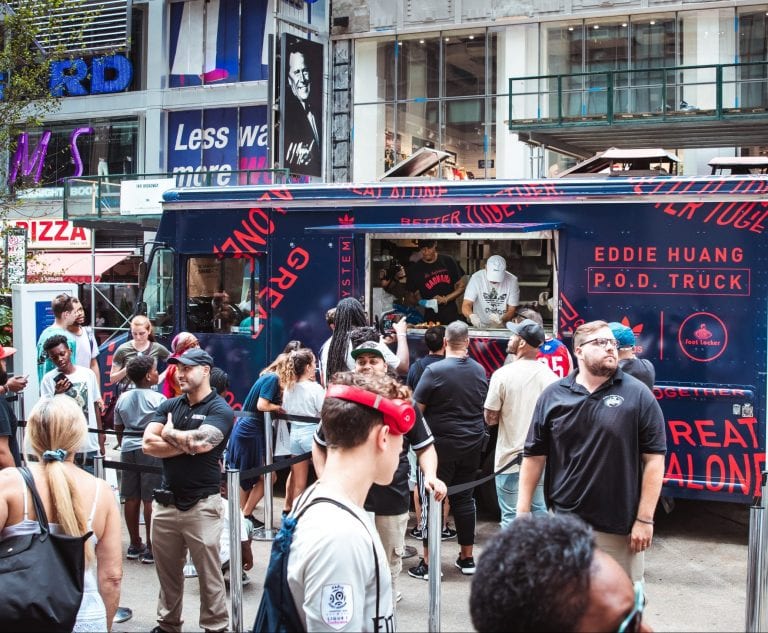
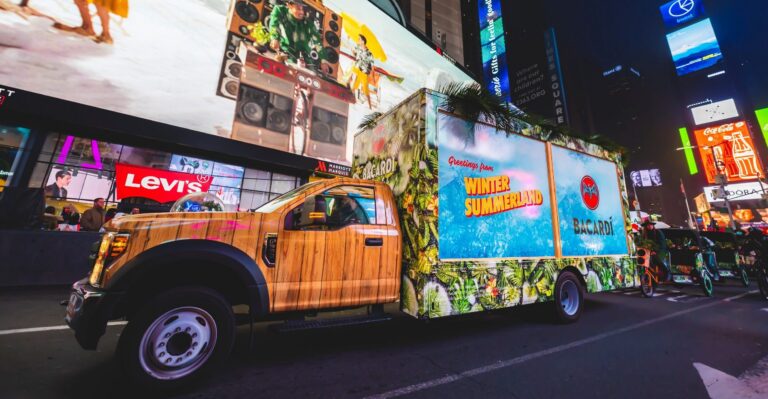
A branded food truck is not an ordinary billboard. It broadcasts a message wherever the audience happens to be, along a single city block or across a multi-stop national tour.

Unlike static or shared advertising space, a truck cuts through a competitive marketplace by going to people rather than waiting for them. It also earns impressions in transit, so the route between stops is part of the campaign rather than dead time.

Trained brand ambassadors amplify that further, because a vehicle that draws attention and a person who can answer a question are a considerably stronger combination than either alone.

2. Food Trucks Are Versatile

From Fortune 500 companies to small businesses, a branded truck reaches customers, expands the audience, and does it through a personal approach rather than an impression.

The versatility is practical as well as creative. A truck can access sites that a traditional marketing event cannot: multiple locations in a day, high foot traffic corners, populated city centers, campuses, and event perimeters. It reaches people where they work, live, and spend time, which is a wider footprint than any fixed activation.

3. Food Trucks Are Customizable

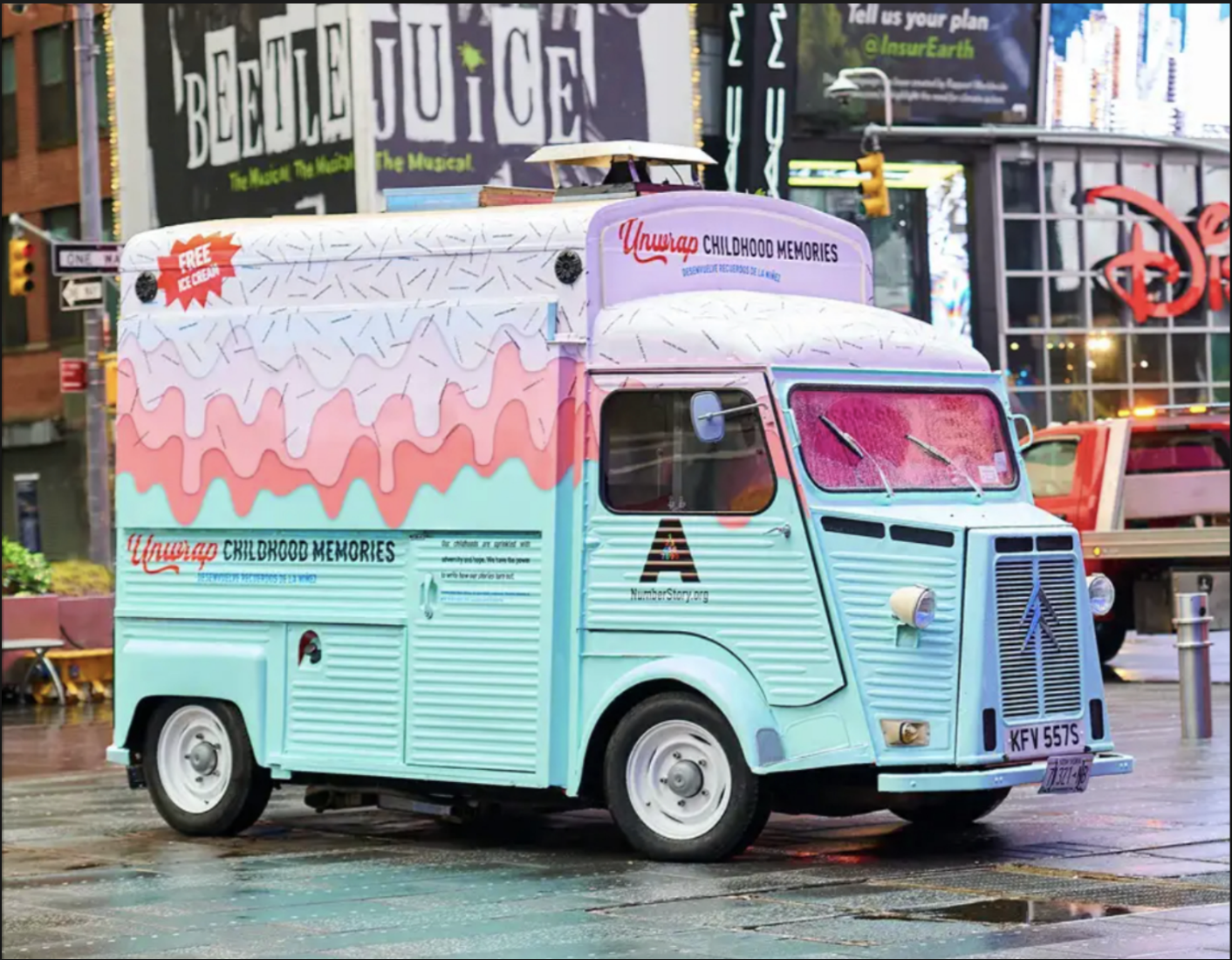
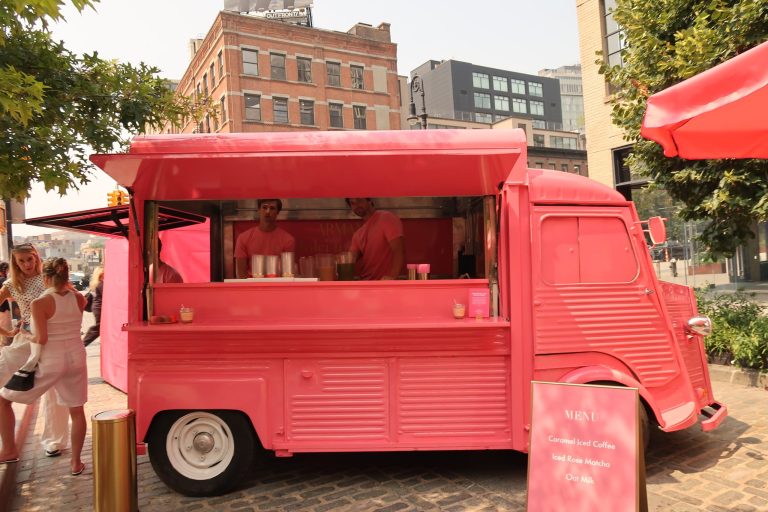
Think of the vehicle as a blank canvas. The options that make it yours:

  • Custom vinyl wrapping, from logo decals to partial or full wraps.
  • Interior and exterior fabrication, including commercial-grade kitchens, counters, shelving, and exterior signage.
  • Branded goods and packaging, so customers take a piece of the brand home.
  • Custom menus, developed by an in-house culinary team and tied to the campaign rather than bolted on. With the average food truck running 18 to 24 feet long and 8 feet wide, the constraint is the footprint rather than the imagination. Our branded food trucks page covers the specifications, and you can build a version of your own in Merlin AI.

4. Food Trucks Engage Every Sense

We photograph food, queue for food, and organize our days around it. That cultural weight is doing work no other giveaway can.

A branded truck engages sight, smell, taste, sound, and touch at once, which is why the memory it creates outlasts an impression. Smell and taste in particular are barely contested by other advertisers and are the senses most closely tied to recall, which our guide to sensory marketing covers in more detail.

5. Food Trucks Give People a Reason to Stop

This is the one that matters most and it is easy to skip past. Every other advantage on this list assumes someone has stopped walking, and a free coffee or a warm snack is the most reliable way to make that happen.

A flyer is refused. A drink is accepted. That difference decides whether the conversation happens at all, which is why the giveaway is a strategic decision rather than a catering one.

What It Actually Costs

There is no single figure, and any agency quoting one before understanding the campaign is guessing. Cost is driven by:

  • The vehicle and the build, from a wrapped existing truck to a fully fabricated custom interior.
  • The number of days and markets, which is the largest multiplier after the build.
  • Product and packaging volume, forecast per location.
  • Staffing, per day, plus supervision on multi-market runs.
  • Permits and location fees, which vary considerably by city and by season. One structural point worth knowing: the build is a fixed cost, so cost per interaction generally improves as a campaign lengthens rather than worsening. Our guide to choosing a brand activation company covers how to scope this properly.

Case Study: How Adidas Put a Sneaker Launch on the Street
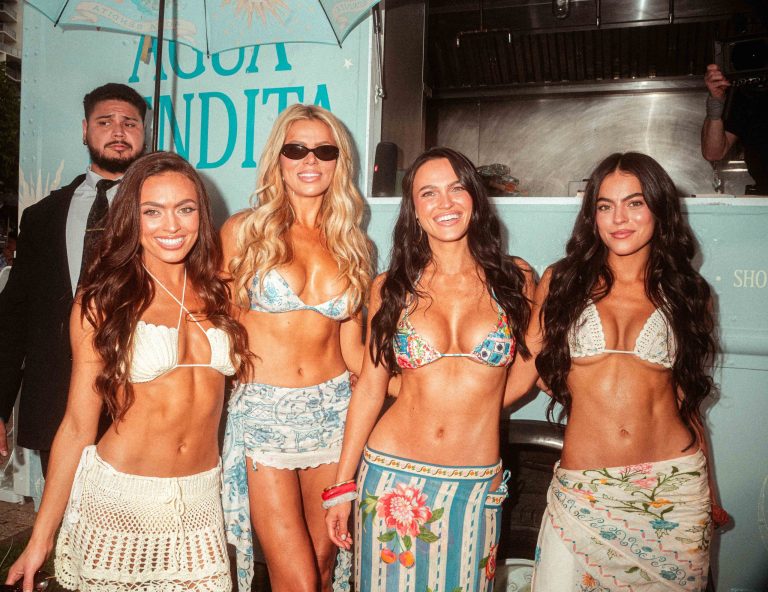
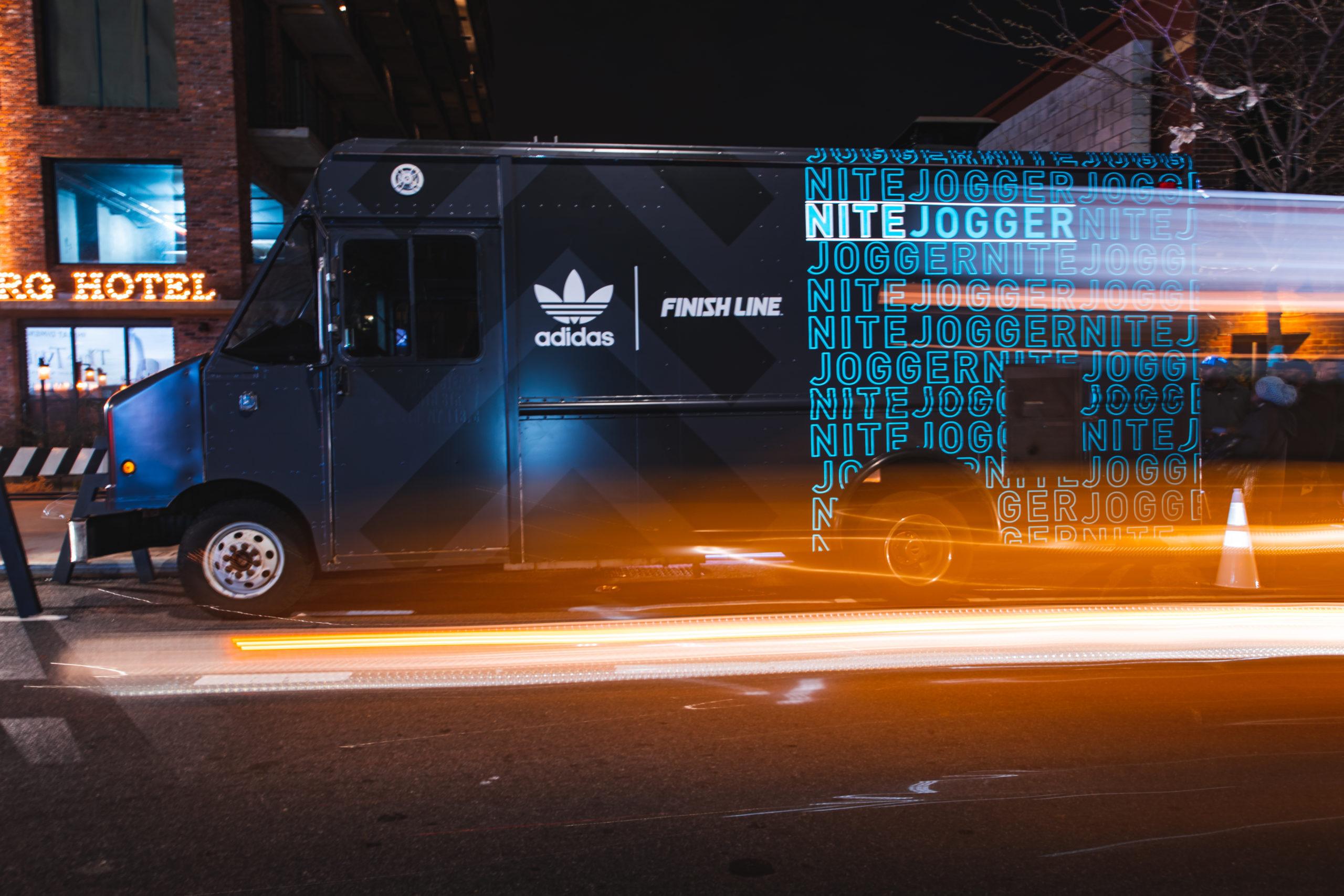
Adidas Food Truck Street Marketing Sneaker Launch

Adidas needed to launch the Nite Jogger, a sneaker built around a night-running theme, to an audience that would never queue for a conventional product launch.

We built a branded food truck around the campaign and put it on the street, where the shoe’s target customers actually were rather than where a launch event would have placed them.

Why it demonstrates all five reasons at once: the truck was mobile enough to reach several neighborhoods, versatile enough to serve as both display and giveaway point, fully customized to the product’s visual identity, sensory in a way a product page is not, and it gave people a reason to stop that had nothing to do with footwear.

We have run the same format for other brands whose product has nothing to do with food, including a month-long activation for Forty Carrots outside Bloomingdale’s in New York when indoor dining was closed.

Browse more of this work in our brand activation case studies.

How to Measure a Food Truck Campaign

  • Servings distributed per day and location, which identifies the locations worth repeating.
  • Interactions and conversations logged, the reason the truck is staffed rather than automated.
  • Sign-ups, scans, and redemptions, the trackable conversion from a queue to a contact list.
  • Impressions in transit and at rest, since the wrap works between stops as well as during them.
  • Cost per interaction, the figure to compare against paid media for the same spend.

The Bottom Line

Food truck advertising stands out because it combines mobility, versatility, and customization with the one thing almost nobody refuses. The vehicle earns the look, the food earns the stop, and the staff earn the conversation.

What turns that into a campaign rather than a pleasant afternoon is deciding what you ask for in return, which is covered in our complete guide to branded food trucks.

If a truck is in your plan, we design, build, permit, staff, and route them. Explore our brand activation services or contact our team to scope a campaign.

Frequently Asked Questions

Food truck advertising uses a branded food truck as a marketing channel rather than a restaurant. The vehicle is wrapped in a company’s identity, staffed by brand ambassadors, and hands out food or drink to create direct, in-person contact with potential customers.

Because they combine mobility, versatility, and full customization with a giveaway almost nobody refuses. The vehicle earns attention at distance, the food earns the stop, and trained staff turn that stop into a conversation.

There is no fixed figure. Cost depends on the vehicle and build, the number of days and markets, product and packaging volume, staffing, and permits. The build is the largest fixed cost, so longer campaigns usually improve cost per interaction.

The average food truck runs roughly 18 to 24 feet long and 8 feet wide. That footprint determines what can be fabricated inside, how many staff can work comfortably, and which streets and venues the vehicle can actually access.

Vinyl wrapping from decals to full wraps, interior and exterior fabrication including kitchens, counters, shelving, and signage, branded goods and packaging, and a custom menu developed around the campaign rather than added to it.

No. Fashion, technology, media, and retail brands all use them, with the food acting as the reason to stop rather than the product being sold. The giveaway earns the interaction and the brand does the rest.

Because it engages several senses at once and because people rarely refuse it. Taste and smell are barely contested by other advertisers and are closely tied to memory, so the impression lasts longer than a visual one.

Yes, and that is the core advantage. A single build can work several neighborhoods in a day or several cities across a campaign, and the wrap generates impressions while travelling between them.

Track servings distributed per day and location, interactions logged by staff, sign-ups and scans captured, impressions in transit and at rest, and cost per interaction compared against your paid channels for the same spend.

Define the single action you want people to take, the markets, and the window. From there a partner can handle the wrap, fabrication, menu, permits, staffing, and routing. Share your timing with our team to scope it.

FTP Free download

The Mobile Pop-Up Shop Launch Checklist

7 steps, 37 checkpoints, and a one-page brief to plan and launch a mobile pop-up shop that converts.

Instant PDF · No Cost

Ashley Elarde

Author

Ashley Elarde

Social Media Manager @ FTP Agency

Ashley Elarde is a social media strategist, content creator, and experiential marketing professional with experience bringing brands to life through engaging digital content. She has helped execute campaigns for brands across beauty, fashion, retail, and entertainment, developing campaigns that drive engagement and meaningful consumer connections.

More posts
Blended Experiences: 2021’s Best Experiential Marketing Trend