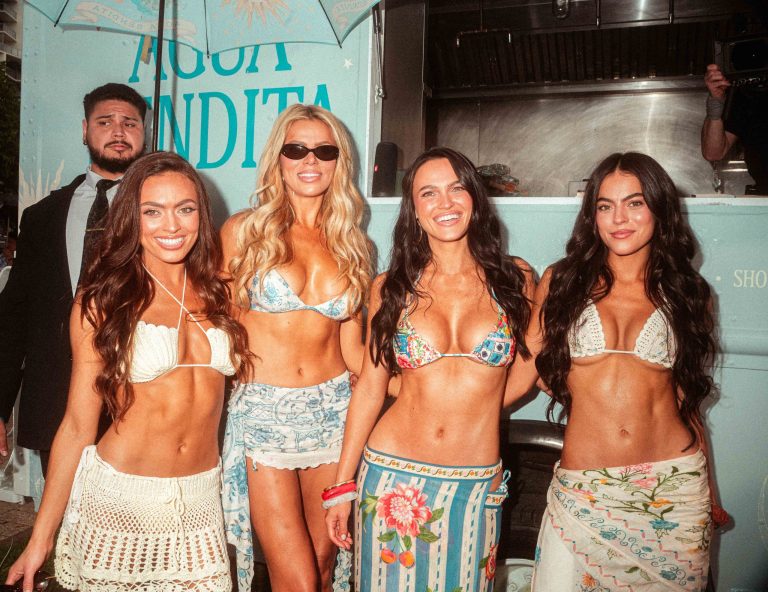
How Experiential Event Marketing Works
Experiential events put people inside a brand rather than in front of it, which is the whole distinction from every other kind of event.…
Read moreBy: Benjamin Goldberg • • 12 min read
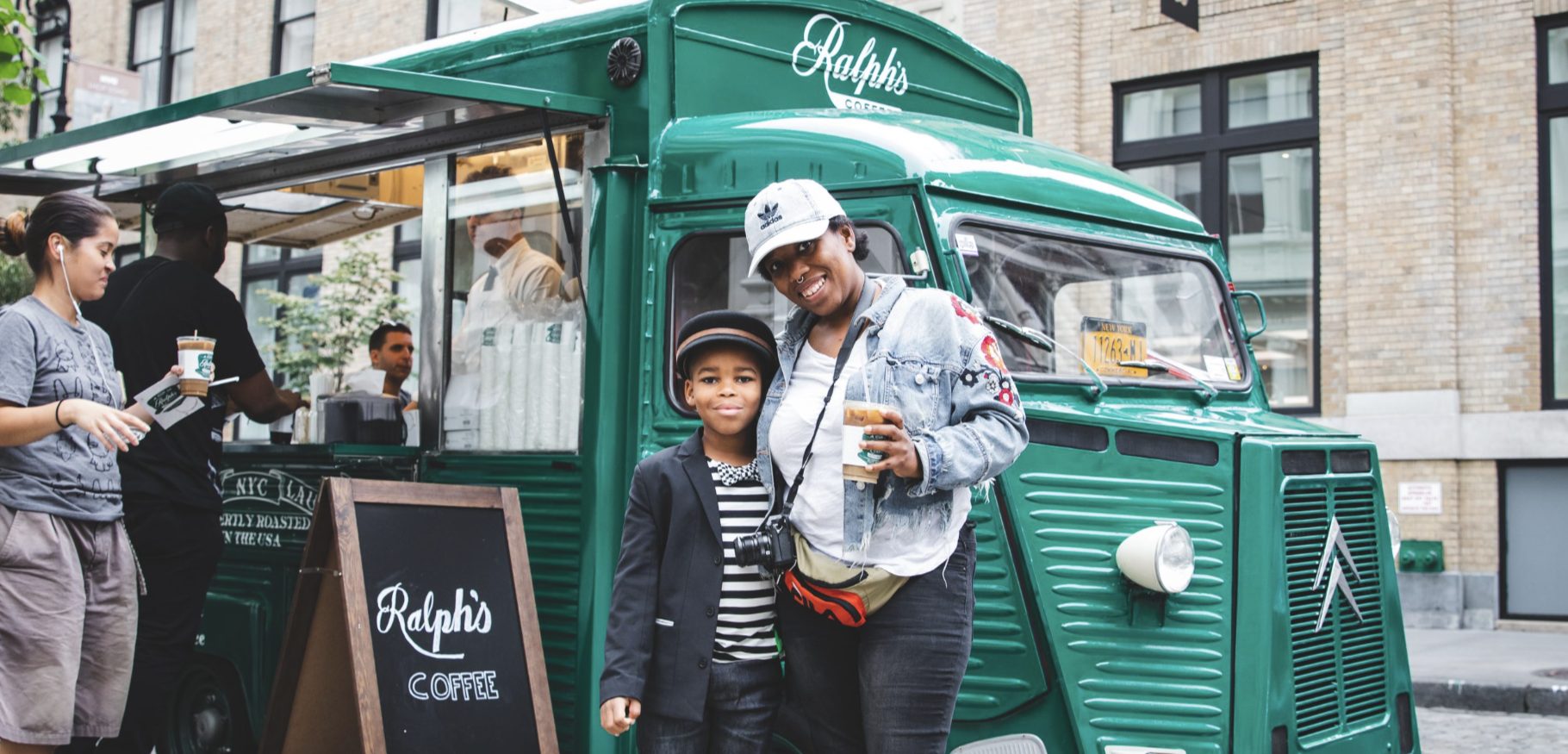
A pop up shop idea is a concept that pairs a business goal with an experience people want to step into and photograph. The goal decides the format. A trial goal wants a sampling counter and a short dwell time. A store traffic goal wants the pop up parked within sight of the door. An awareness goal wants a build that reads from across the street and travels well on Instagram.
The ideas below come from activations Food Truck Promotions has produced or studied closely. Each one lists the goal it serves best, the vehicle or format, a cost range and the lead time to get it on the street. Costs are for a single market and include the build, permits, staffing and one day of operation; multi-day and multi-city programs scale from there. For the mechanics of running one, see mobile pop up shops.
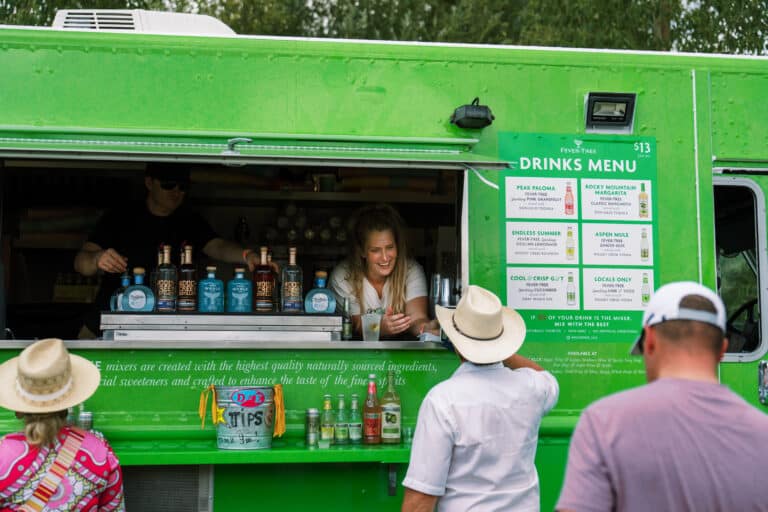
Serve the new product in the form people will actually consume it. When Fever-Tree launched its Espresso Martini mixer range, the mobile bar served it hot and iced, more than 5,100 people sampled, the trial target was beaten by 70 percent, and over 3,400 totes, bottles and coupons went home to finish the sale. Goal: trial. Format: mobile bar or Airstream. Cost: $75,000 to $150,000. Lead time: eight weeks. See the Fever-Tree activation.
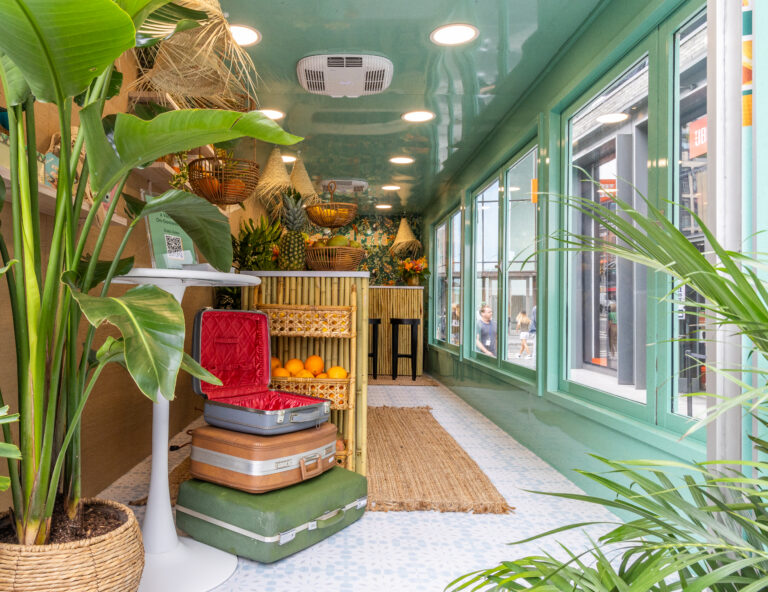
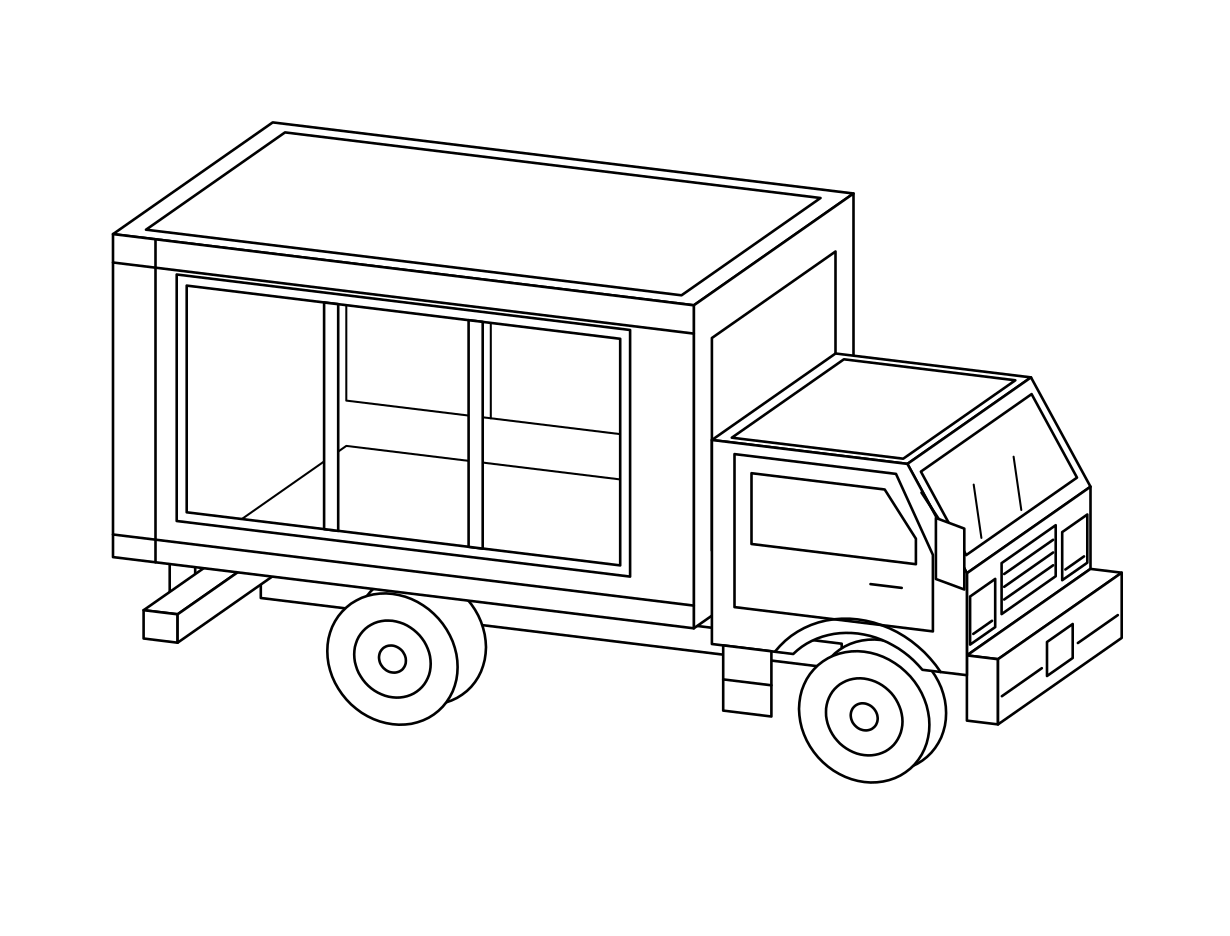
A glass truck makes the experience visible before anyone commits to the line. Spindrift’s Greetings From Paradise built a tropical bar inside a glass truck so the product, the staff and the first customers were the signage. Goal: awareness plus trial. Format: glass box truck. Cost: $100,000 to $200,000. Lead time: eight to ten weeks. See the Spindrift glass truck.
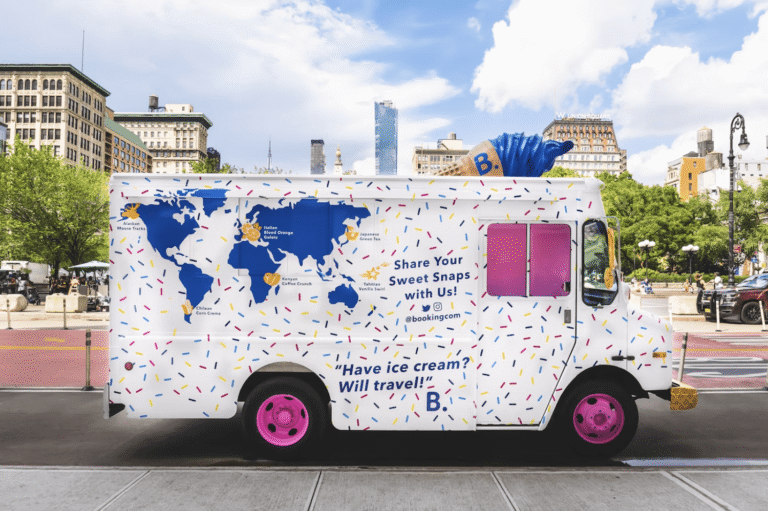
When the product is an idea rather than an object, build the idea. Booking.com put a working hotel room inside an ice cream truck so the promise of travel became a thing you could sit in. Goal: awareness and press. Format: custom fabrication on a food truck or box truck. Cost: $150,000 and up. Lead time: ten to twelve weeks because of the custom interior. See the Booking.com truck.
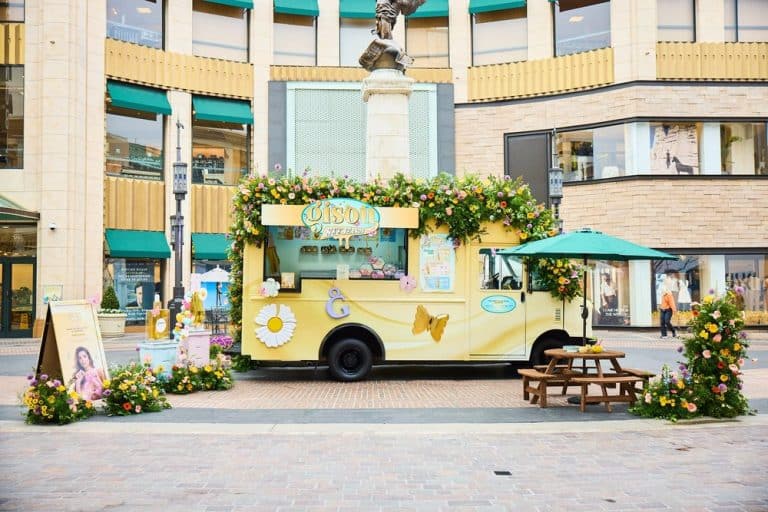
Let visitors make their own version. Gisou’s Honey Glow truck at The Grove paired hair oil sampling with a personalization station and generated more than 20 million impressions in three days. Goal: trial and social reach. Format: glass truck or Chevy P10. Cost: $100,000 to $175,000. Lead time: eight weeks. See the Gisou Honey Glow truck.
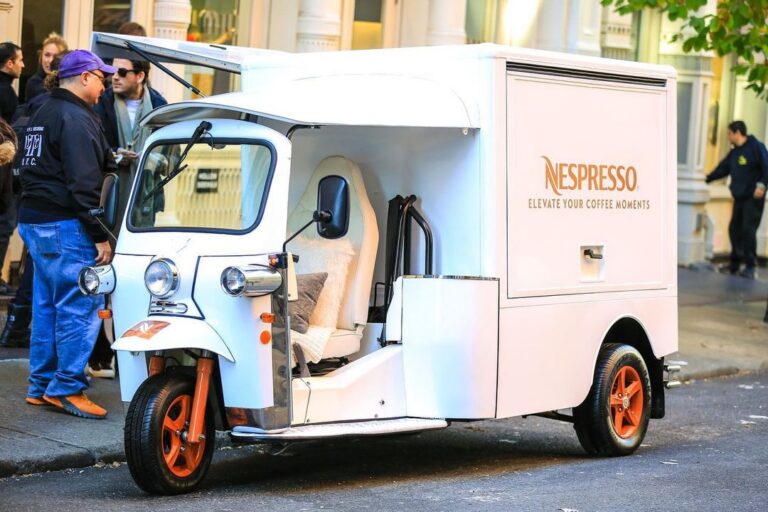
Park a branded truck outside your own store or your retailer’s store for launch week and hand out a reason to walk in. Nespresso’s first national mobile showroom tour sampled outside its boutiques so the trial and the purchase were fifty feet apart. Goal: store traffic. Format: mobile showroom or E-tuk. Cost: $60,000 to $120,000 per market. Lead time: six to eight weeks. See the Nespresso mobile showrooms.
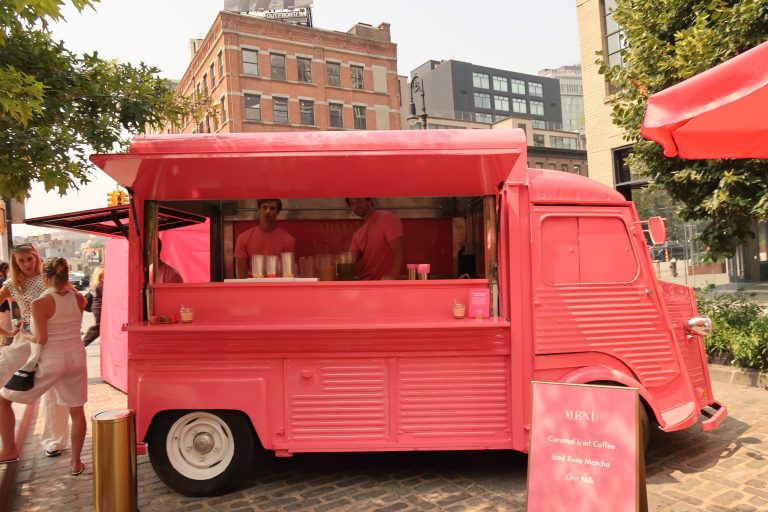
Serve coffee or a breakfast item in the morning commute window and attach the sample to it. A hot drink at 8 am is accepted by almost everyone, and your product rides along. Goal: trial volume. Format: Citroen or food cart. Cost: $50,000 to $90,000. Lead time: six weeks.
Sunscreen at the beach, hydration at a marathon, hand cream outside a cold-weather market. Malin + Goetz ran its SPF pop up where people were already in the sun. Goal: trial with relevance. Format: food cart or Metro Mite. Cost: $50,000 to $85,000. Lead time: six weeks plus event permits.
Beauty brands get better conversion from deluxe minis than sachets. Build a counter that hands out a mini with a QR code to a retailer offer and track redemptions. Goal: trial that converts at retail. Format: glass truck or Airstream Bambi. Cost: $80,000 to $140,000. Lead time: eight weeks. More on sampling formats on our product sampling page.
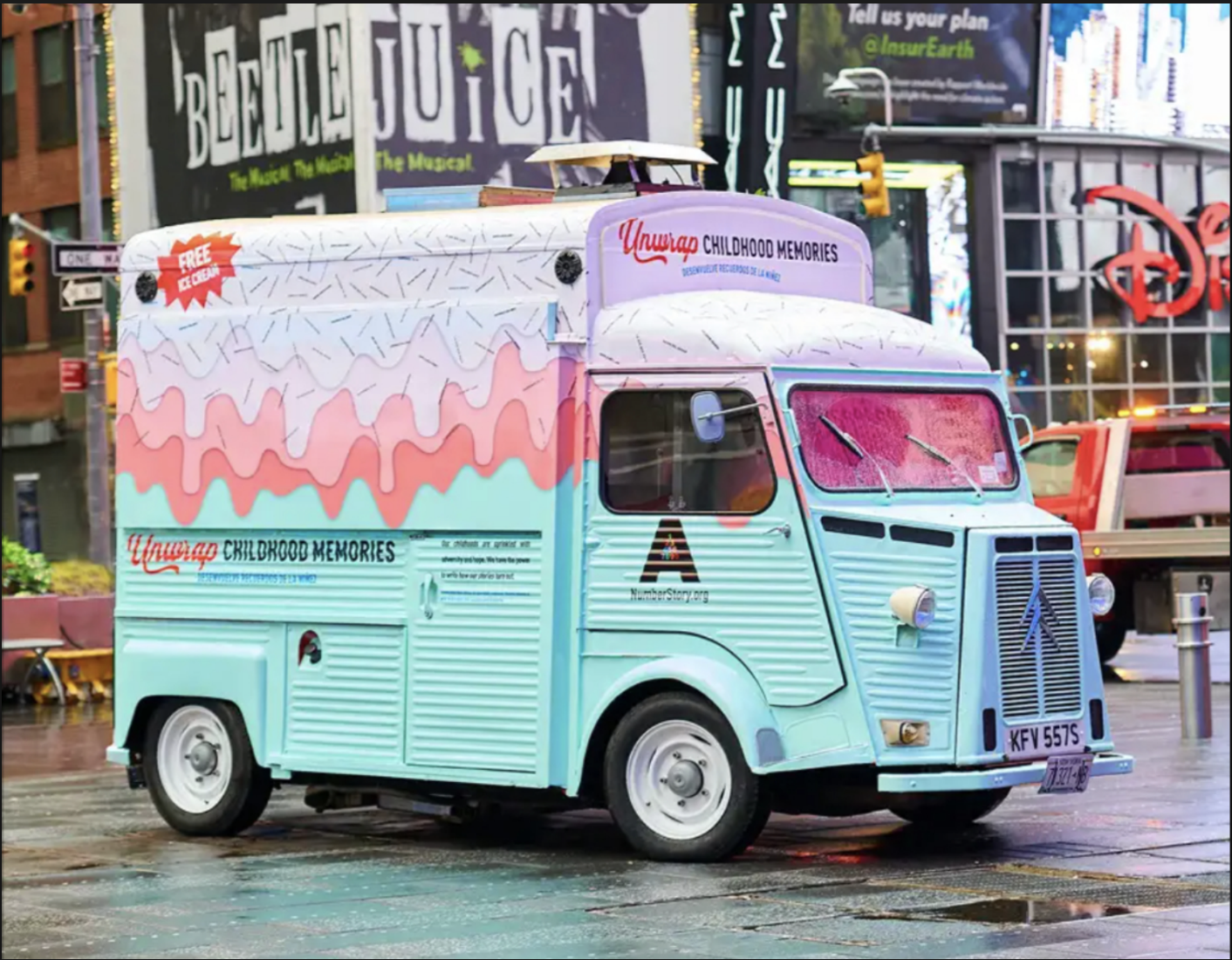
Ice cream and popsicles pull a line in any season above 60 degrees. Brand the treat, the cup and the truck. Beis’s Revolve Festival ice cream truck and Amazon Music’s helado truck for Bad Bunny both used the same mechanic. Goal: awareness and dwell time. Format: branded ice cream truck. Cost: $60,000 to $110,000. Lead time: six weeks.
Wellness and skincare brands pair well with a fresh smoothie that carries an ingredient story. Augustinus Bader ran a smoothie truck for exactly this reason. Goal: trial for a premium product. Format: food truck. Cost: $70,000 to $120,000. Lead time: six to eight weeks.
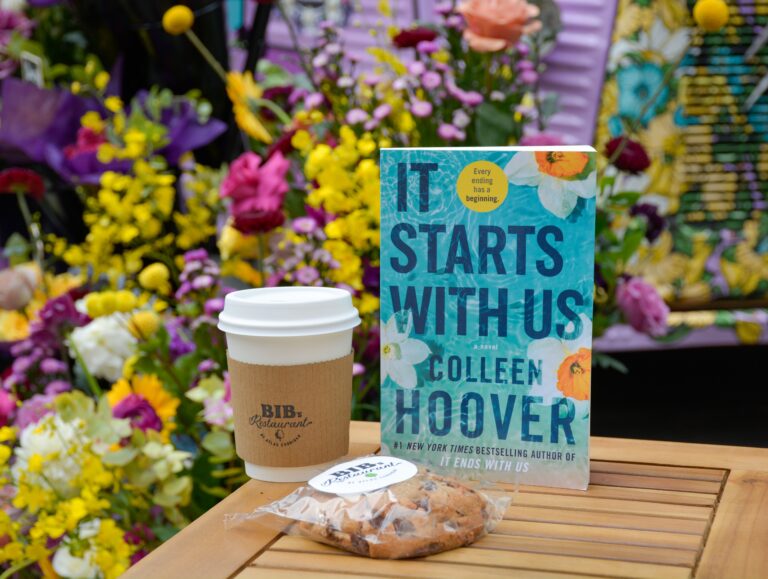
Rebuild a setting from a book, show or game. For Colleen Hoover’s It Starts With Us, a vintage Citroen became the flower shop from the novel and the line wrapped Rockefeller Center. Goal: fandom engagement and press. Format: Citroen or Airstream. Cost: $90,000 to $160,000. Lead time: eight weeks. See the It Starts With Us pop up.
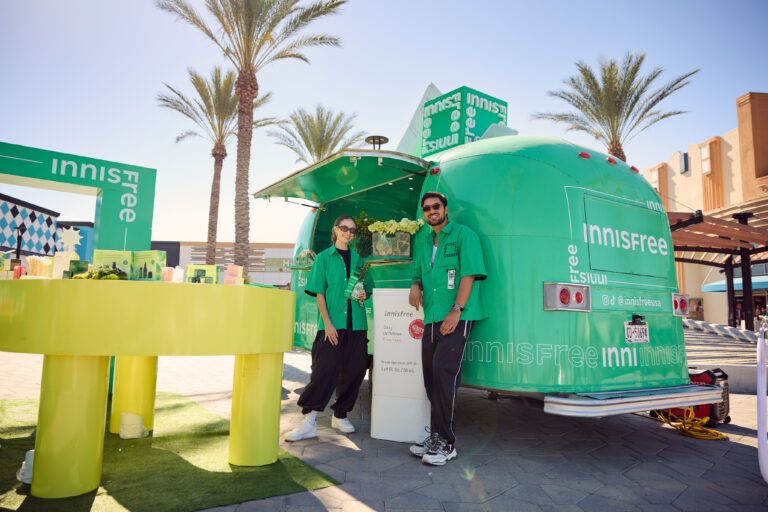
Campus tours hit students during back to school, midterms and finals when they are outdoors and bored. innisfree’s West Coast college tour drew more than 3,000 visitors and over a million impressions. Goal: first-purchase acquisition. Format: tuk tuk or food truck, multi-stop. Cost: $120,000 to $250,000 for a five-campus run. Lead time: ten weeks for campus approvals. See the innisfree tour.
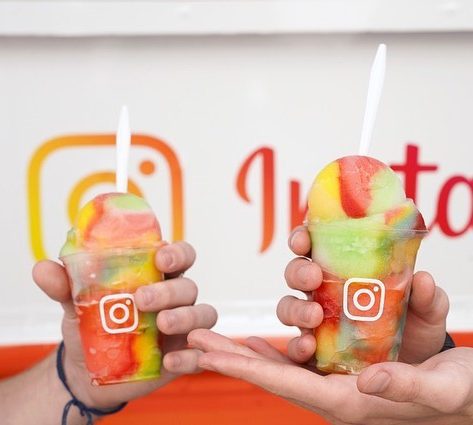
Attach the pop up to a week the audience already celebrates. Instagram’s Reels on Wheels gave away ice cream during Latin Week in Miami with Billboard Latin Music Awards energy around it. Goal: awareness in a defined community. Format: ice cream truck or tuk tuk. Cost: $75,000 to $130,000. Lead time: eight weeks. See Reels on Wheels.
Ulla Johnson x Erewhon put a fashion label’s E-tuk outside a grocery store its customers already visited weekly. The retailer supplies the foot traffic, the brand supplies the moment. Goal: reach a new but aligned audience. Format: E-tuk or food cart. Cost: $50,000 to $90,000. Lead time: six weeks plus retailer agreement.
Festival sponsorships are expensive. A branded truck on the public approach to the gate catches the same crowd for a fraction of the cost, with permits instead of a sponsorship fee. Goal: awareness among a festival audience. Format: food truck or glass truck. Cost: $80,000 to $150,000. Lead time: ten weeks for city permits in festival season.
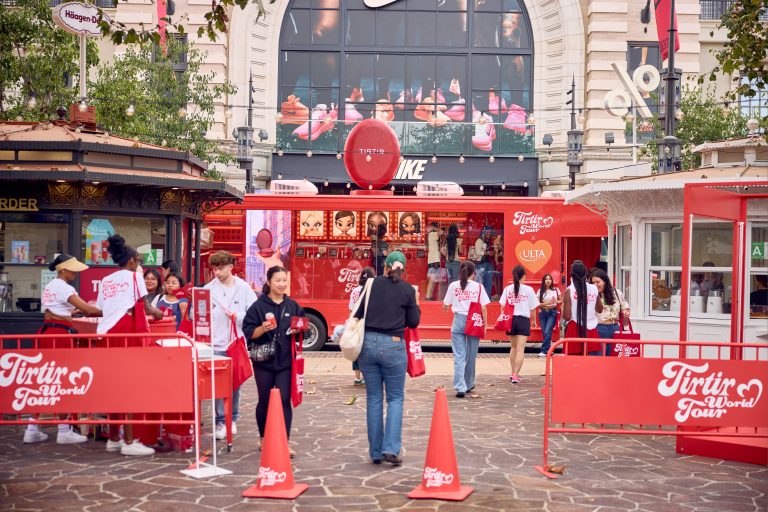
A single mobile build repeats the same experience in four cities with no re-fabrication. TIRTIR’s World Tour ran one pop up through four cities timed to retail launches. Goal: national launch on a regional budget. Format: glass truck or double decker. Cost: $250,000 to $500,000 for four cities. Lead time: twelve weeks. See the TIRTIR World Tour.
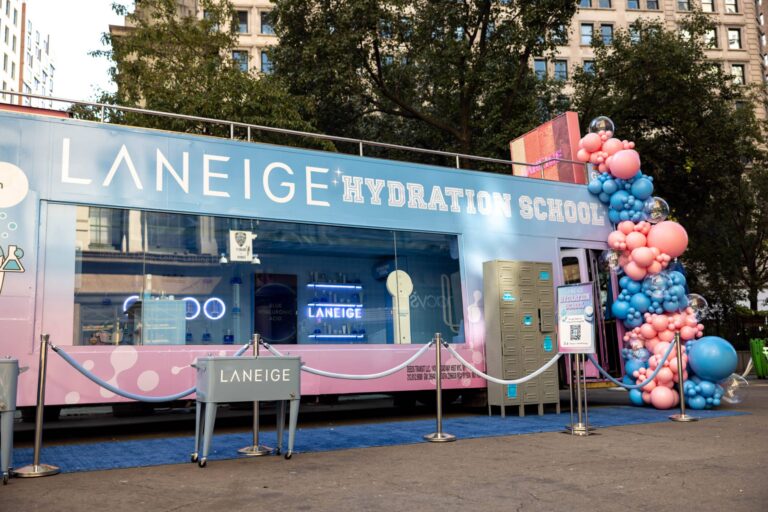
A double decker bus gives each product line its own floor. LANEIGE’s Hydration School used the lower deck for sampling and the upper deck for the photo moment. Goal: immersion and content. Format: double decker bus. Cost: $200,000 to $350,000. Lead time: twelve weeks. See the LANEIGE Water Bank bus.
LANEIGE x innisfree’s Glow On The Go tour made 12 stops in nine cities on one vehicle. The repeatable format is the point: same staff script, same capture, same photos, different skyline. Goal: reach plus retailer support. Format: glass truck. Cost: $300,000 and up. Lead time: twelve weeks.
Pura’s Scent The Season tour matched a fragrance product to holiday markets across several cities. Seasonal tours work because the audience is already in a buying mood. Goal: Q4 sales. Format: Airstream or food truck. Cost: $150,000 to $300,000. Lead time: ten weeks, booked by early September.
Hit three suburban rail stations in one week with the same truck in the evening rush. Cheaper permits than downtown, and the same person sees you twice. Goal: regional awareness. Format: Metro Mite or Chevy P10. Cost: $60,000 to $100,000. Lead time: six weeks.
A warm drink in December is the easiest yes in experiential. CHANEL’s holiday tuk tuk served hot cocoa and generated more than 5 million impressions without selling anything on the sidewalk. Goal: brand warmth and content. Format: tuk tuk. Cost: $50,000 to $90,000. Lead time: six weeks, booked by mid-October. More in holiday pop up shop ideas.
Offer free wrapping for anything, with your product displayed and sampled while people wait. Dwell time is built in. Goal: holiday trial and goodwill. Format: Airstream Bambi or glass truck. Cost: $70,000 to $120,000. Lead time: six to eight weeks.
A flower-filled Citroen handing out single stems with a sample pulls a line and photographs itself. Goal: gifting season trial. Format: Citroen. Cost: $60,000 to $100,000. Lead time: six weeks, booked by March.
Hand out branded supplies outside campuses or in college towns the week before classes. Pair with a dorm-essentials product. Goal: Gen Z acquisition. Format: tuk tuk or food cart. Cost: $50,000 to $90,000. Lead time: eight weeks for campus approval.
A Pride Month truck works when the brand is already supporting an organization and the activation gives it a street presence. Sample, donate per interaction, photograph. Goal: community visibility. Format: food truck or glass truck. Cost: $75,000 to $130,000. Lead time: eight weeks, booked by April.
Start with the one number you need to move. If it is trial, pick from ideas 6 to 10. If it is store or retailer traffic, pick 5, 14 or 16. If it is awareness and press, pick 2, 3, 11 or 17. If it is leads, add a capture mechanic (SMS, QR to offer, email for a second sample) to any of them.
Then pick the vehicle. A food cart or tuk tuk fits narrow streets and tight budgets. A glass truck shows the experience from across the street. An Airstream reads as a cafe or fitting room. A double decker is a destination. Browse the experiential vehicle lineup to match the format to the idea.
Finally, set the date backward from permits. Most US cities take six to eight weeks (New York routes street activations through the city’s Citywide Event Coordination and Management office). New York, Los Angeles and Chicago in holiday season take longer.
A food cart or tuk tuk sampling activation in one city, run for one or two days, is the entry point at around $50,000. Keep the build to a wrap and a counter, borrow an audience (a campus, a market, a retailer’s lot) and spend on staff rather than fabrication.
One clear goal, a location where the audience already is, a reason to stop (a sample, a free item, a photo moment) and a capture mechanic so the visit becomes a contact or a redemption. Reported results are what get the next one funded.
Mobile pop ups start around $50,000 for a single city and a simple build, run $75,000 to $150,000 for a glass truck or Airstream with custom interior, and $250,000 and up for multi-city tours. Leased retail pop ups in major cities often cost more once rent, buildout and staffing are added; Capital One Shopping’s pop up retail research tracks the wider market figures.
Six to eight weeks for a single US market on an owned vehicle, driven by permits. Custom interiors add about three weeks. Multi-city tours need ten to twelve weeks.
Mobile if you need more than one location, a short run, or visibility from the street. Leased if you need a full retail assortment and a multi-week run in one spot. Many brands do both: a truck for launch week, a space for the season. See mobile pop up shops for the comparison.
Count what matches the goal: samples distributed, sign-ups, redemptions, foot traffic into the nearby store, social reach and earned media value. We cover the full list in how to measure pop up shop success.
Experiential agencies and specialist mobile activation companies. Food Truck Promotions designs, builds, permits and staffs mobile pop ups from its own fleet in 30+ cities. Get in touch with a date and a goal and we will map the idea to a vehicle.
Merlin AI
Pick a vehicle, drop in your website, and Merlin AI brings your brand activation to the streets instantly.
Bring Your Brand to the Streets.®
Author
CEO @ FTP Agency
Benjamin H. Goldberg is passionate about bringing brands to life on the streets. As CEO of Food Truck Promotions and co-founder of the New York and Los Angeles Food Truck Associations, he helps create unforgettable mobile experiences that blend great food, creative branding, and meaningful connections with audiences everywhere.
Experiential events put people inside a brand rather than in front of it, which is the whole distinction from every other kind of event.…
Read more →
Experiential design is the practice of designing a space people move through rather than a surface people look at, and that single difference is…
Read more →
Choosing a brand activation company is difficult for a specific reason: every portfolio looks good, and none of them show you the part that…
Read more →We use and share personal information through cookies and similar technologies on our sites to personalize your shopping experience and ads. Others may use this information for their own marketing and business purposes. . Check our Privacy Policy for more details.
Browser Opt-Out Honored
We use and share your personal information with others to personalize your shopping experience and show you targeted ads on other sites based on your interests and online activities.
Online Info includes cookies, pixel tags, and similar technologies connected to your browser or device. Offline Info includes information associated with your email address based on your other interactions with us.
We use and share your personal information with others to personalize your shopping experience and show you targeted ads on other sites based on your interests and online activities. Information includes cookies, pixel tags, and similar technologies connected to your browser or device (Online Info), as well as information associated with your email address based on your other interactions with us (Offline Info). Others may use this information for their own marketing and business purposes.
You can choose to opt out of sharing one or both types of information.