Top 6 Types of Pop-Up Shops: Which Format Fits Your Brand?
There is no single kind of pop-up shop, and the different types of pop-up shops each do a different job. A sampling truck built…
Read moreBy: David Botbol • • 9 min read
Mobile experiential trucks are the fastest-growing way for brands to turn a passive impression into a real, high-touch experience, and they do it wherever the audience already is. In a crowded marketplace, static booths and traditional advertising no longer capture attention, so brands are trading them for branded environments on wheels that travel to customers, engage them in person, and leave a memory that outlasts any banner ad.
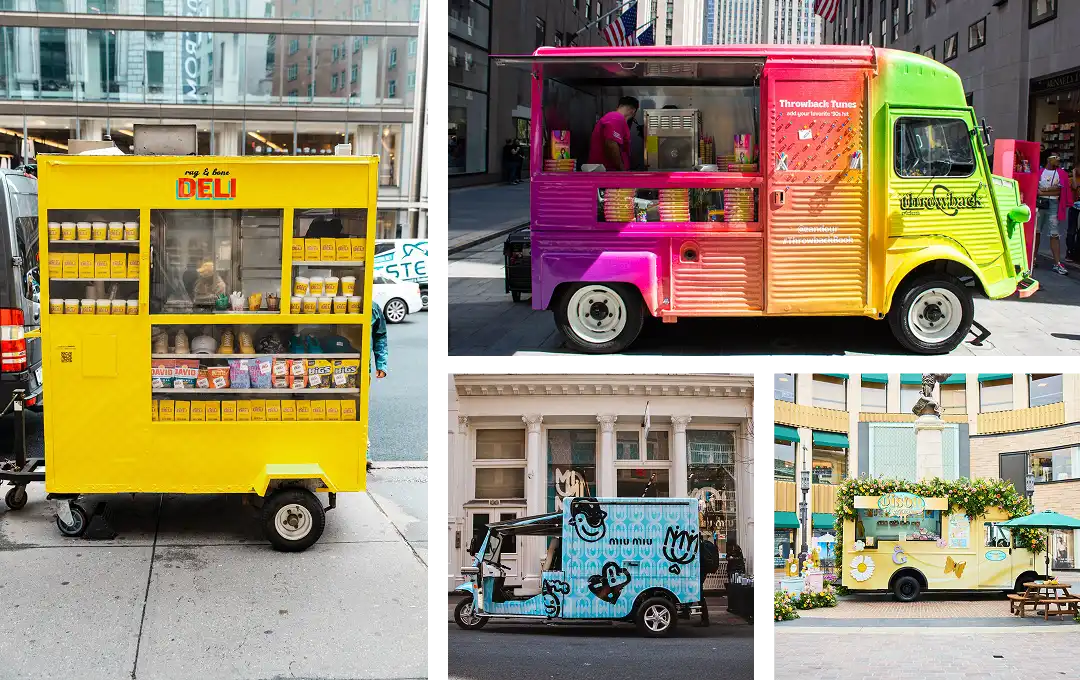
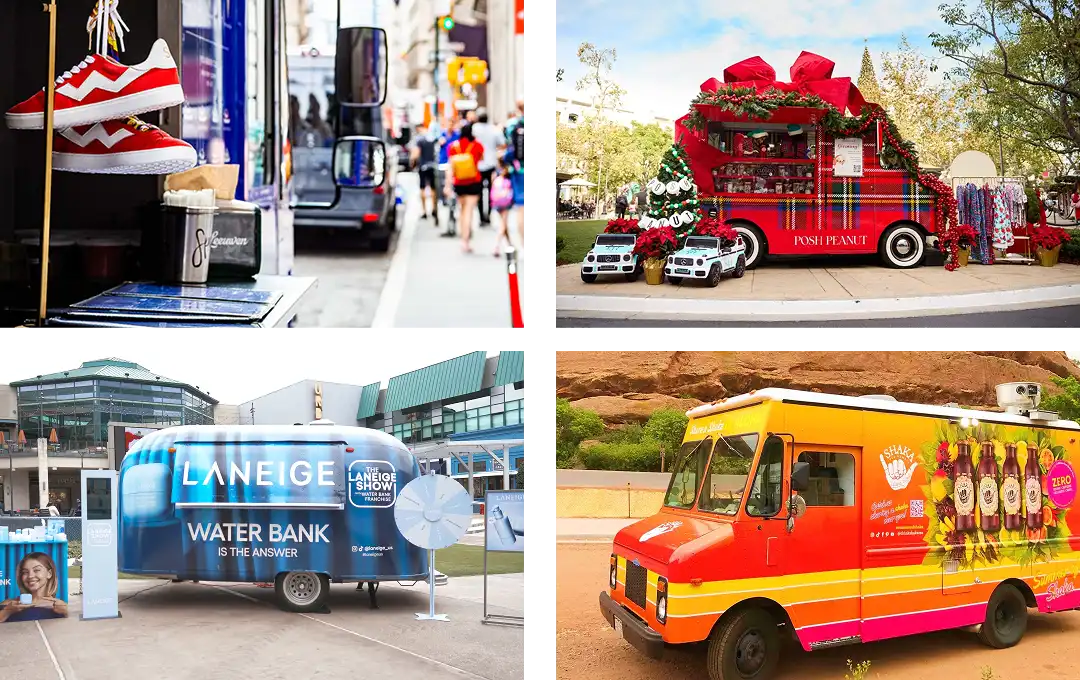
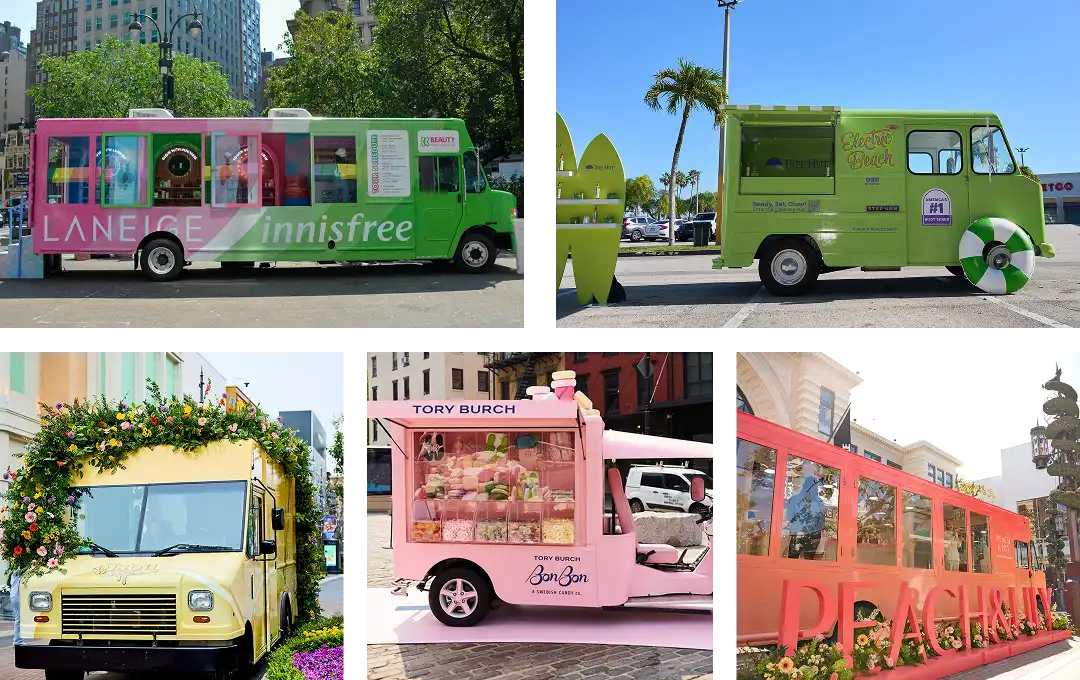
These vehicles come in many forms, from food trucks and glass box trucks to vintage vehicles and mobile showrooms, and each one can be customized into a rolling brand world. Below are six ways mobile experiential trucks elevate an event and drive real results, plus a real activation that shows the format at work and answers to the questions brands ask most.
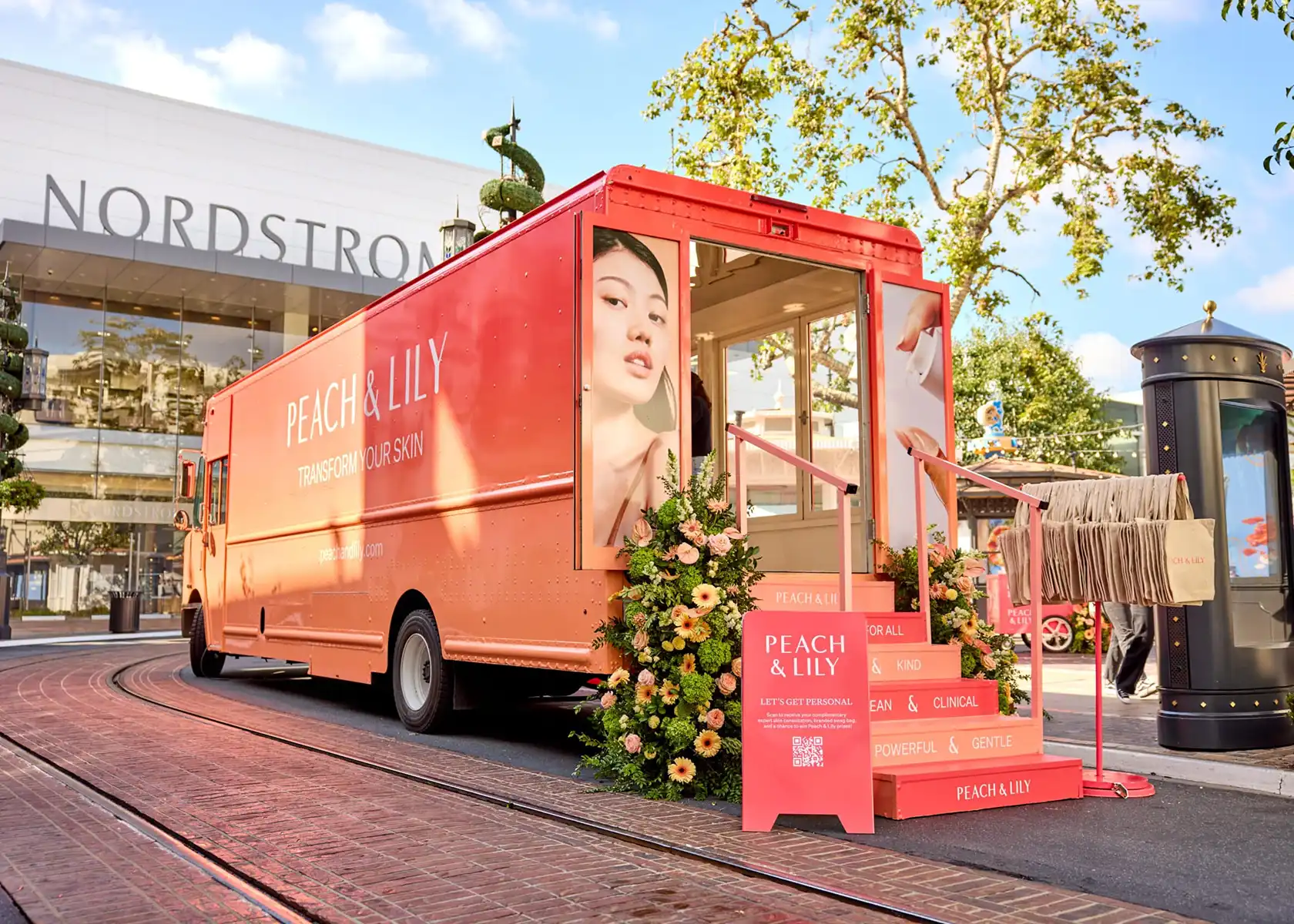
A mobile experiential truck is a vehicle custom-built and wrapped for a brand and used to deliver a live, hands-on marketing experience rather than to sell food or freight. It works as a branded environment on wheels, outfitted with interactive displays, sampling stations, lighting, and product showcases, that travels directly to an audience and brings the brand to life in person.
The appeal is not just anecdotal. Live experiences consistently outperform passive ads on the metric that matters most: according to Event Marketer’s EventTrack research, most consumers are more inclined to purchase after attending an event. A mobile truck is simply the most flexible way to create that in-person moment, because it can go to the audience instead of waiting for the audience to come to it.
Mobile experiential trucks are designed to deliver immersive experiences wherever your audience is.
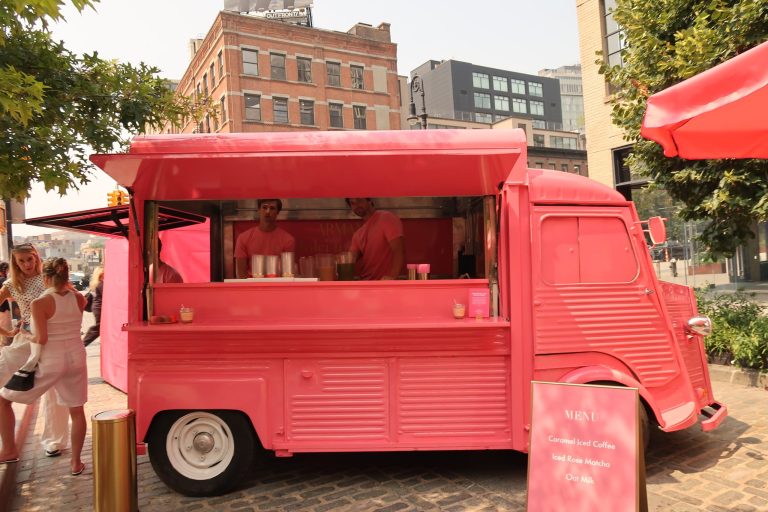
Each vehicle transforms into a branded environment that reflects your vision, complete with interactive displays, sound, lighting, and product showcases. Picture a glass box truck built out as a futuristic tech lab, or a vintage vehicle turned into a cozy coffee shop with sampling stations.
Because the whole environment travels, a brand can recreate the same memorable moment in market after market, leaving an impression that lasts long after the event ends.
Customization is the key to engagement, and a mobile truck offers endless ways to tailor the experience to a campaign.
From showcasing a new skincare line to launching a gaming console, these vehicles can be outfitted with custom lighting, branded wraps, product displays, and even augmented reality.
Adapting the style, layout, and messaging keeps every stop feeling fresh and relevant, and with options from push carts to trailers to compact vans, the activation scales cleanly from an intimate moment to a large-scale event.
One of the most effective ways to drive sales is hands-on interaction, and mobile experiential trucks are built for product sampling, live demonstrations, and trial experiences that build trust and excitement.
Whether you are handing out treats from a food truck or running tech demos in a mobile showroom, letting people experience a product firsthand attracts a crowd and encourages immediate purchases and social sharing.
It is especially powerful in beauty, food and beverage, and consumer electronics, where touch, taste, and feel drive the decision.
Unlike a static pop-up or booth, a mobile tour takes the brand directly to the target audience, so you do not wait for people to come to you, you meet them where they live, work, and play.
That makes trucks ideal for expanding into new markets or testing products across regions. With a well-planned mobile marketing tour, a brand can gather data, refine its messaging, and build local buzz while keeping a consistent presence from city to city.
In a crowded space, standing out is everything, and experiential trucks are built to be attention magnets. A neon-lit bus, a retro van, or a sleek trailer turns heads and sparks curiosity on sight.
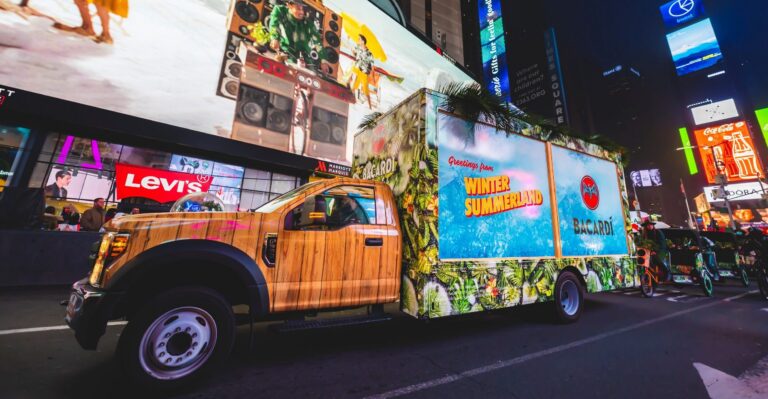
Design elements like LED screens, custom wraps, and themed decor reinforce brand identity and create a strong visual impact, which not only draws a crowd but also increases the odds of media coverage, influencer engagement, and viral social content.
From trade shows and festivals to corporate gatherings and retail pop-ups, mobile experiential vehicles adapt to virtually any setting.
Their compact, self-contained nature makes them easy to deploy, even in tight urban spaces or unconventional venues, so an activation can run as a one-day branded pop-up or a multi-city tour.
That flexibility reduces logistical headaches and simplifies setup, freeing your team to focus on delivering high-impact engagement.
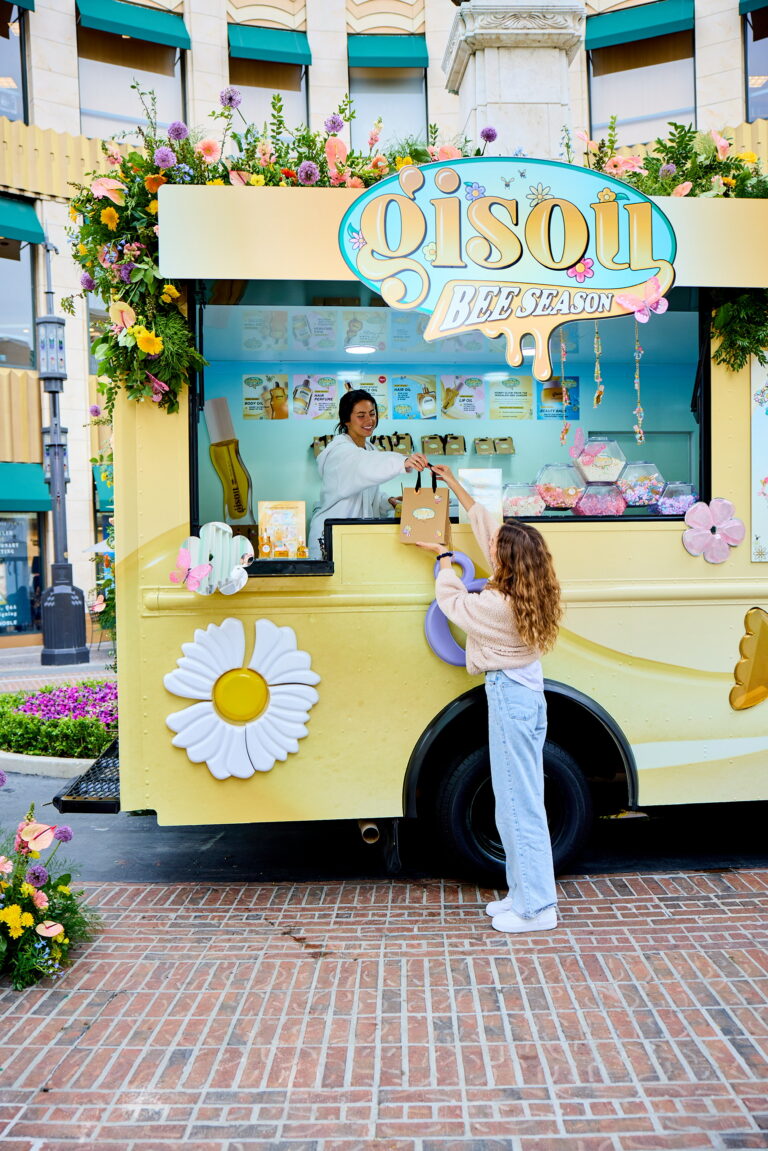
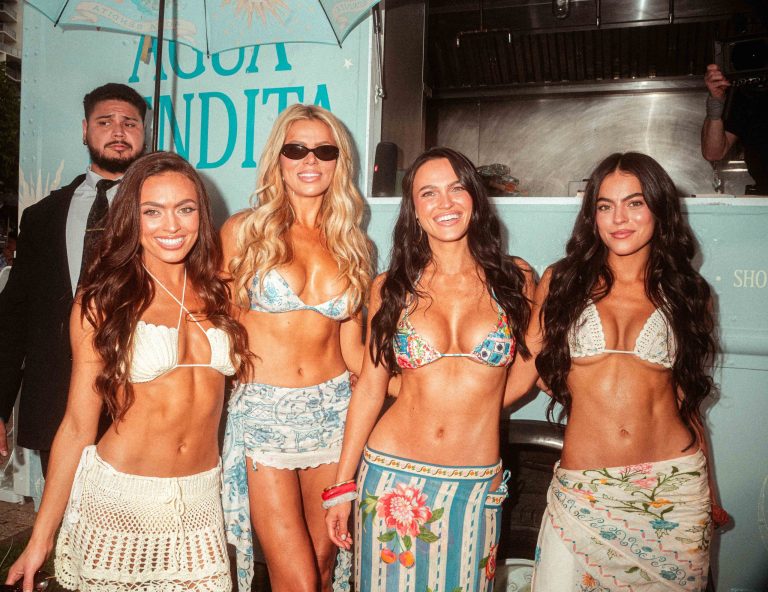
Gisou’s Honey Glow Truck is a clean example of a mobile experiential truck doing all six of these things at once. To promote its new honey-infused lip oil ahead of a Sephora launch, the beauty brand worked with FTP Agency to turn a truck into a fully branded world: a buttery-yellow build filled with florals, branded beehives, and sweet treats, parked at The Grove in Los Angeles.
The truck was the experience. It carried the brand’s bee-centered story, gave visitors a hands-on moment worth photographing, and met a high-traffic audience right where they already were, then moved on. The design turned heads, the sampling drove trial ahead of the retail launch, and the whole thing was built to travel and to be shared.
The result shows why the format works. Over just three days, the Honey Glow Truck generated more than 20 million impressions, reach far beyond the crowd on the ground, and had, in the brand’s words, all of LA buzzing. That is a mobile experiential truck turning a product launch into a moment people remember and repost.
In today’s marketing landscape, engagement is no longer about being seen, it is about being experienced. Mobile experiential trucks are the most flexible, high-impact way to create that in-person moment: they build an immersive branded world, travel it directly to the audience, drive trial through sampling, stand out on sight, and flex to fit any event or market. Whether the goal is a product launch, a new-market push, or simply a moment people cannot stop sharing, a truck that moves with purpose moves the needle in a way a static booth never will. Start with the goal, match the vehicle to it, and build the experience to be both memorable and measurable.
A mobile experiential truck is a vehicle custom-built and wrapped for a brand to deliver a live, hands-on marketing experience rather than to sell food. It works as a branded environment on wheels, with displays, sampling, and interactive elements, that travels directly to an audience and brings the brand to life in person.
They turn a passive impression into an active experience. The truck travels to a high-traffic spot, draws a crowd with its design, and engages people through sampling, demos, and interactive moments. Guests take part, share it online, and remember the brand, which builds trust and drives trial far better than a static ad.
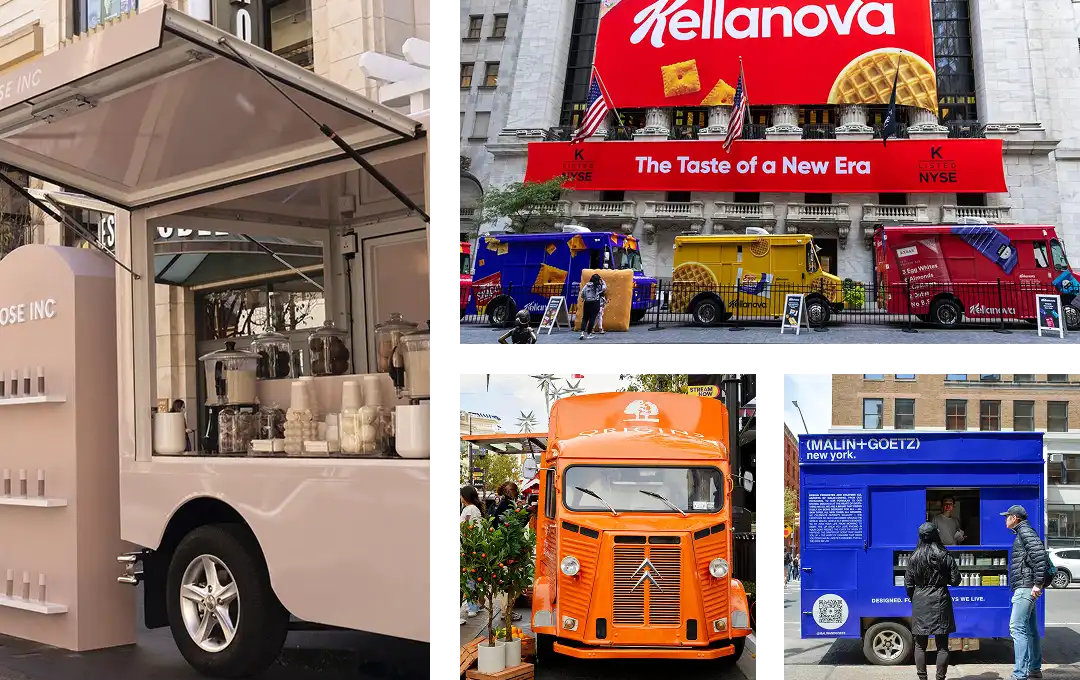
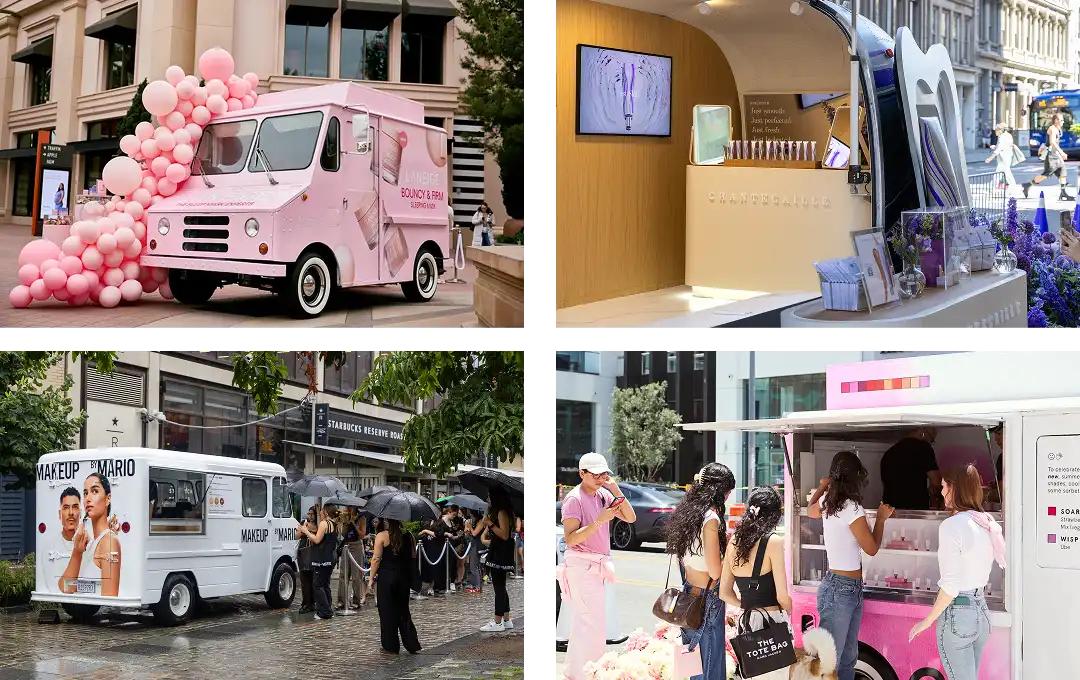
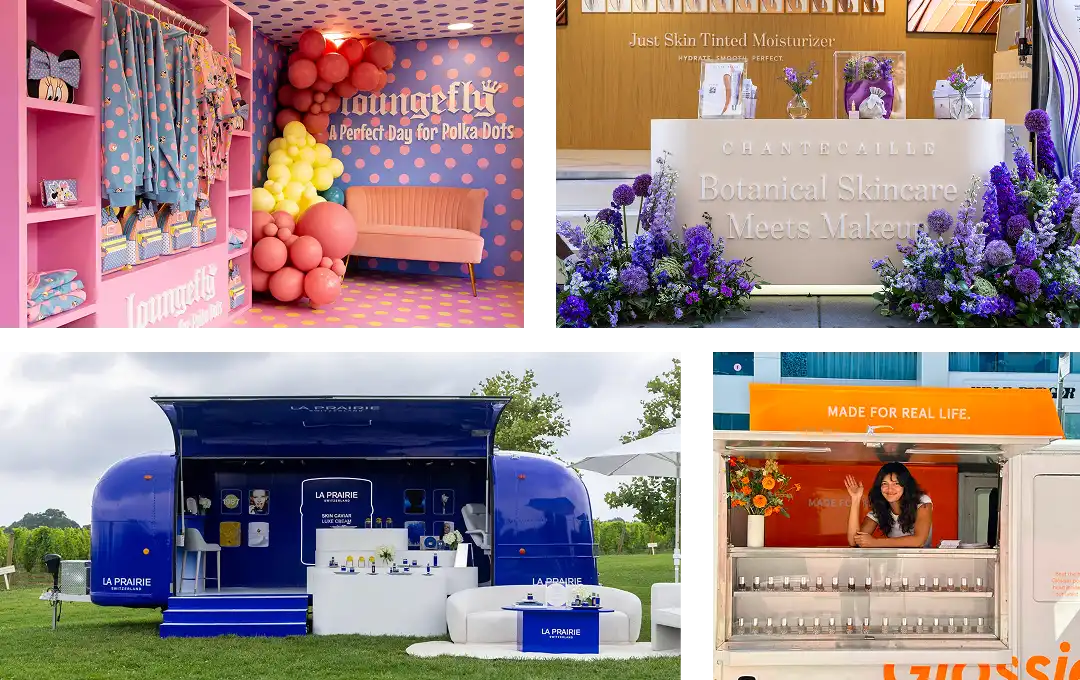
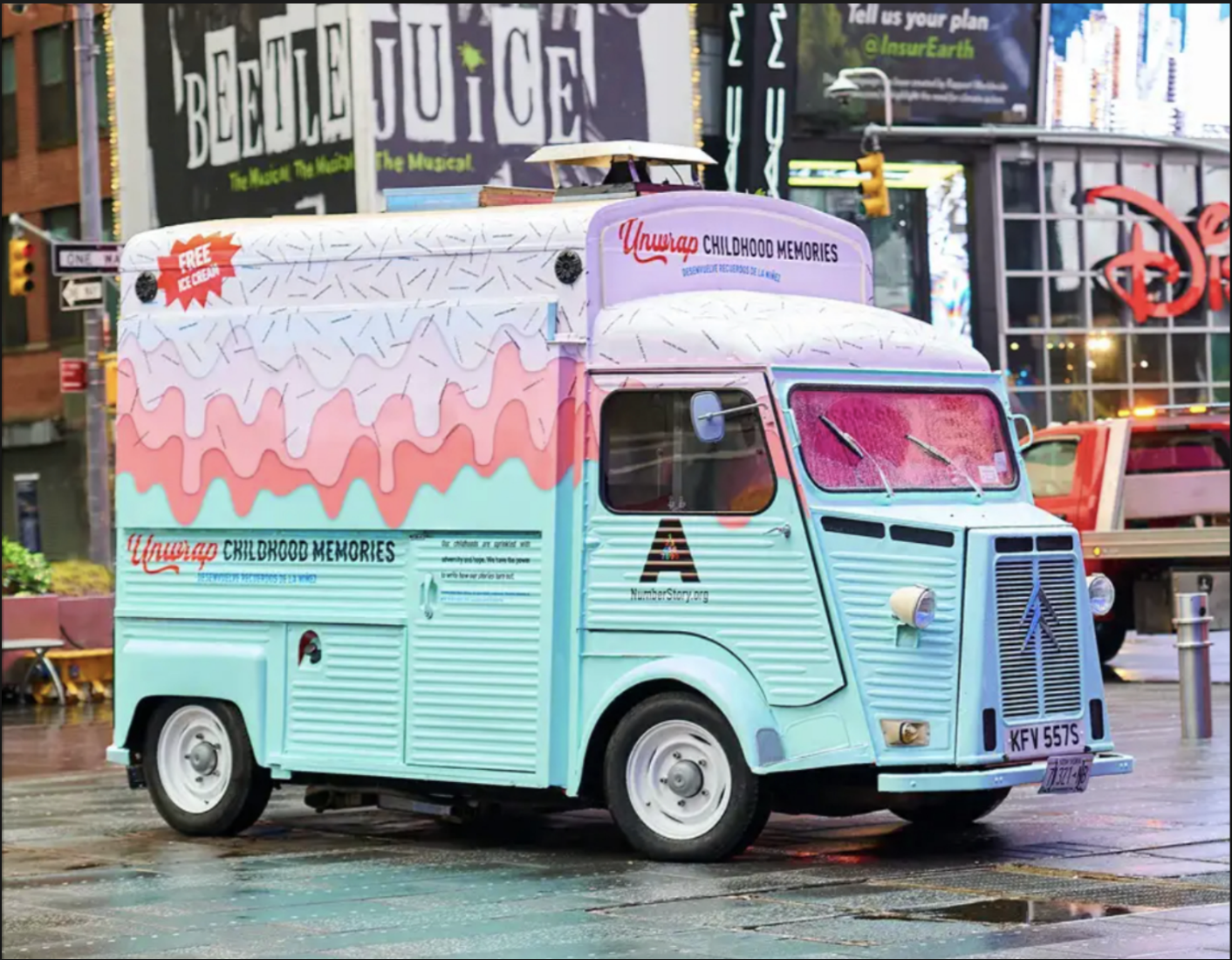
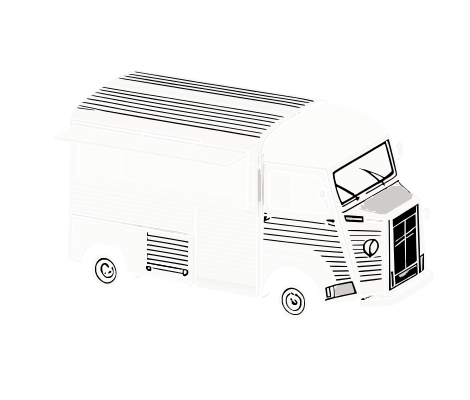
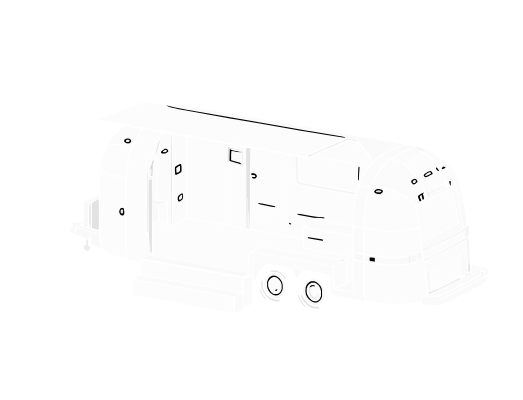
The category includes food trucks, glass box trucks, vintage vehicles like Citroens, compact carts and vans, Airstreams, and mobile showrooms. Each shapes a different kind of moment, from high-volume sampling to premium walk-in showrooms, so the vehicle is matched to the brand, the product, and the goal of the activation.
A food truck is one kind of mobile experiential truck, the one built around food service. The broader term covers any branded vehicle used for marketing, including glass trucks, showrooms, and vintage builds that may serve no food at all. The shared idea is a branded experience on wheels.
Almost anything a campaign calls for: product sampling and demos, interactive displays and touchscreens, augmented reality, a mini showroom or retail moment, a coffee or treat bar, or a photo-ready branded set. The interior is custom-built around the brand, so the experience inside matches the story on the outside.
Cost depends on the vehicle, the build and wrap, the length of the activation, staffing, and the number of markets. A single-day, single-market activation costs far less than a multi-city tour. Because the truck is reused across the campaign, the build cost spreads across many activation days rather than one event.
Yes, and touring is one of its biggest strengths. A mobile truck can run a multi-city route and bring the same branded experience to each market in one campaign, which is ideal for launches and new-market expansion. The route is planned as a sequence, with logistics handled between stops.
Beauty, food and beverage, fashion, tech, entertainment, and lifestyle brands use them most, though nearly any brand can. The best fit is any product that becomes more compelling when customers see, touch, taste, or try it in person rather than only seeing it advertised.
Earlier is safer, since fabrication, permits, and prime dates compete for the same calendar. Peak summer dates often book two to three months ahead, and themed or holiday builds need more lead time. Starting early is the surest way to get the build, the route, and the locations you want.
Set one primary metric before launch, then track it: foot traffic, samples served, QR scans, sign-ups, or social reach and impressions. Building a capture step into the experience, like a code on the packaging or a branded hashtag, connects the in-person moment to a result you can report and repeat.
Author
EVP, Managing Director @ FTP Agency
David Botbol thrives on turning bold ideas into real-world brand moments. As Executive VP and Managing Director of Food Truck Promotions, and a leader within the New York and Los Angeles Food Truck Associations, he draws on a background in business development and startups to help brands connect with audiences through creative, unforgettable mobile experiences.
There is no single kind of pop-up shop, and the different types of pop-up shops each do a different job. A sampling truck built…
Read more →
The best pop-up shop ideas don’t start with a vehicle or a venue; they start with a concept strong enough that people line up,…
Read more →
Mobile pop-up shops have become the way ambitious brands go offline: a store, a sampling bar, or a showroom built into a vehicle,…
Read more →We use and share personal information through cookies and similar technologies on our sites to personalize your shopping experience and ads. Others may use this information for their own marketing and business purposes. . Check our Privacy Policy for more details.
Browser Opt-Out Honored
We use and share your personal information with others to personalize your shopping experience and show you targeted ads on other sites based on your interests and online activities.
Online Info includes cookies, pixel tags, and similar technologies connected to your browser or device. Offline Info includes information associated with your email address based on your other interactions with us.
We use and share your personal information with others to personalize your shopping experience and show you targeted ads on other sites based on your interests and online activities. Information includes cookies, pixel tags, and similar technologies connected to your browser or device (Online Info), as well as information associated with your email address based on your other interactions with us (Offline Info). Others may use this information for their own marketing and business purposes.
You can choose to opt out of sharing one or both types of information.