Hybrid Events: How to Pair an In-Person Activation With a Global Digital Audience

By: Ashley Elarde 11 min read

hybrid events

A hybrid event pairs a real-world brand activation with a digital layer, so a single in-person moment can reach an audience far beyond the people physically present. For a brand running an experiential campaign, it is the best of both worlds: the emotional pull of a face-to-face experience, extended to the scale of the internet.

The events industry has settled a debate it spent a few years having. Virtual did not replace in-person, it joined it. Most meetings today still keep an in-person core, and the brands getting the most reach are the ones layering a digital component on top of a physical activation rather than choosing one over the other. This guide covers what a hybrid event is, why the format works, and how to design one around an in-person activation.

Key Takeaways

  • A hybrid event blends in-person and digital: It keeps the emotional impact of a live activation while adding a virtual layer that extends the reach to a global audience.
  • In-person is still the core, not the casualty: Around 83% of meetings still include an in-person component, because face-to-face connection is what people actually value.
  • Hybrid multiplies your reach: Adding a virtual component can roughly multiply total event attendance, turning one physical activation into content that travels.
  • The physical experience is the anchor: The activation, the vehicle, the pop-up, the moment, is what makes the content worth watching and sharing in the first place.
  • Hybrid is inherently measurable: A digital layer captures data in near real time, so a brand can track reach, engagement, and conversion across both audiences.

What Is a Hybrid Event?

A hybrid event combines a physical, in-person experience with a virtual component, so people can take part whether they are on site or watching from anywhere in the world. It is distinct from a fully virtual event, where everyone attends remotely, and from a traditional in-person event, where the experience ends at the edge of the venue. A hybrid event has a real-world center and a digital reach.

For an experiential brand, the physical center is usually an activation: a branded vehicle, a pop-up, a launch, or an experience people can walk up to and take part in. The digital layer, a livestream, a social campaign, a QR-driven microsite, or interactive online content, carries that moment to everyone who could not be there in person. The activation creates the story, and the digital layer distributes it.

Why Hybrid Events Work

The events world spent a few years testing whether digital would replace in-person. It did not. The answer turned out to be both, and the data explains why hybrid has become the default for brands that want reach without losing impact.

In-Person Never Went Away

Despite years of growth in virtual formats, the large majority of events still keep a physical component, because face-to-face connection is the thing people actually value and the thing a screen cannot fully replicate. Roughly 83% of meetings in recent years still included an in-person element. For an experiential brand, that is the whole point: the real-world activation is the emotional core, and no livestream replaces standing in front of the thing.

The Digital Layer Multiplies Your Reach

The reason to add a virtual component is scale. Adding a digital layer to an event can multiply total attendance well beyond the on-site crowd, because it removes the two biggest barriers to showing up: travel and location. A large share of virtual attendees say they simply would not have traveled to attend in person, so the digital audience is mostly additional reach, not the same people watching from home.

Hybrid Is Easier to Measure

A purely in-person activation can be hard to quantify beyond foot traffic and photos. A hybrid event is measurable in near real time. The digital layer captures views, engagement, sign-ups, scans, and conversions, so a brand can see which parts of the experience resonated and tie the activation to a reportable result across both the physical and online audiences.

The Format Fits How People Already Behave

People at a great activation are already filming it, posting it, and sharing it. A hybrid design simply builds for that behavior on purpose, giving the online audience something made to be watched rather than leaving the reach to chance. The physical experience is inherently shareable; hybrid turns that sharing into a planned distribution channel instead of a happy accident.

How to Design a Hybrid Event Around an Activation

A hybrid event is more than plugging in a camera. The strongest ones are designed so the physical activation and the digital layer each do what they do best. A few principles keep both audiences engaged.

Start With the In-Person Activation

The physical experience is the anchor, so design it first. A branded experiential vehicle, a pop-up, or a launch gives the event a real-world center worth watching. The digital layer should extend that moment, not stand in for it. If the in-person activation is not compelling on its own, no livestream will save it, so the vehicle, the build, and the on-site experience come first.

Design the Digital Layer Deliberately

Decide how the online audience takes part before the event, not after. That might be a livestream of the activation, a social campaign built around a branded hashtag, a QR code that sends on-site guests to exclusive online content, or interactive elements like polls and Q&A. The goal is to give remote viewers a reason to engage rather than passively watch a feed of a party they are not at.

Plan for Time Zones and On-Demand

A digital audience is a global audience, so a hybrid event is not bound to one clock. Consider the time zones your online viewers live in, and make the content available on demand after the live moment for everyone who could not tune in. A single-day activation can keep generating reach for weeks if the digital layer is built to live on past the event itself.

Build In Measurement From the Start

Decide what success looks like before the event and wire the capture in from the beginning: livestream views, hashtag reach, QR scans, sign-ups, and conversions across both audiences. Because the digital layer produces data in near real time, a well-planned hybrid event tells you not just how many people showed up, but which parts of the experience actually moved them.

Case Study: Instagram Brings a Digital Brand to a Miami Beach

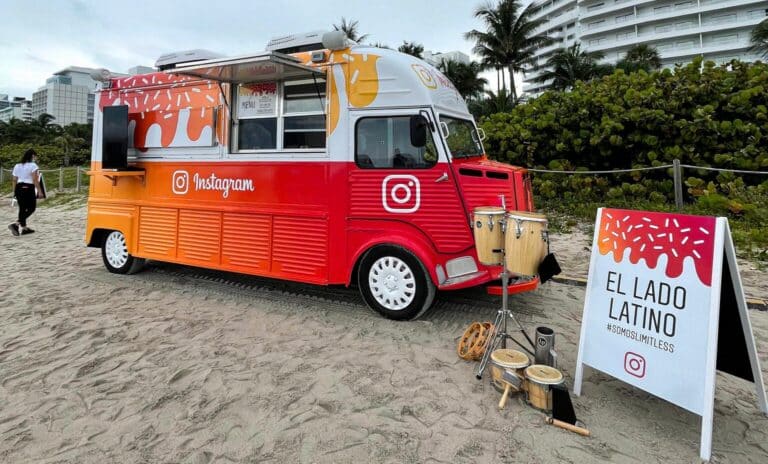
Orange and red Citroens food truck on a beach with palm trees, drums, and El Lado Latino sign.

Instagram’s Latin Week activation is a natural illustration of hybrid thinking: a digital-first brand creating a physical moment designed to travel back online. The platform lives entirely on screens, yet it chose to show up in the real world to deepen the connection.

Food Truck Promotions helped Instagram serve free ice cream from a branded truck parked on a Miami beach during Latin Week. The activation went beyond the truck itself, with appearances from artists drawing an even bigger crowd, and the whole moment was built to be photographed, posted, and shared. For Instagram, whose entire business is people sharing images, a beautiful, beachfront, celebrity-adjacent activation was content engineered to spread across the exact network it was promoting.

That is the hybrid logic in one example: a physical activation at the center, a cultural moment for energy, and a digital ripple designed in from the start. The people on the beach were the audience for the experience, and the far larger online audience was the audience for the content it produced.

The Bottom Line

The debate about virtual versus in-person is over, and the answer is both. A hybrid event keeps the emotional core that only a real-world activation delivers, the vehicle, the pop-up, the moment people can walk up to, and pairs it with a digital layer that carries that moment to a global audience. In-person is still what people value, which is why the physical experience has to come first and has to be worth watching. But designed deliberately, the digital layer turns a single activation into content that travels far beyond the crowd on the ground, and makes the whole thing measurable in a way a purely in-person moment never is. For a brand that wants both genuine connection and real scale, hybrid is not a compromise between the two. It is how you get both at once.

Frequently Asked Questions

A hybrid event combines a physical, in-person experience with a virtual component, so people can take part whether they are on site or watching from anywhere. It differs from a fully virtual event, where everyone is remote, and a traditional event, where the experience ends at the venue. A hybrid event has a real-world center and a digital reach.

A virtual event happens entirely online, with every attendee remote. A hybrid event has a real, in-person activation at its center, plus a digital layer that lets a remote audience take part. For experiential brands, hybrid keeps the emotional impact of a physical experience while adding the reach of a virtual one, rather than replacing one with the other.

Because the physical activation creates an emotional connection a screen cannot fully replicate, and it produces the compelling moment worth sharing online. A fully virtual event has reach but little sensory impact. A hybrid event keeps the real-world experience as the anchor and uses the digital layer to extend it, capturing both connection and scale.

Yes, it is the anchor. Around 83% of meetings still include an in-person component, because face-to-face connection is what people value most. In a hybrid event, the physical activation is the emotional core and the reason the digital content is worth watching. The virtual layer extends that moment; it does not replace it.

Through livestreams, social campaigns, QR codes linking to exclusive online content, and interactive elements like polls and Q&A. These let people who could not attend in person take part, and they turn the on-site crowd’s natural sharing into a planned distribution channel. Adding a virtual component can significantly multiply an event’s total reach.

Generally, yes. A purely in-person activation is often limited to foot traffic and photos, while a hybrid event’s digital layer captures views, engagement, scans, sign-ups, and conversions in near real time. That data lets a brand see which parts of the experience resonated and tie the activation to a reportable result across both audiences.

Almost any brand running an in-person activation, from beauty and fashion to food, tech, and entertainment. Any brand that invests in a physical experience, a launch, a pop-up, or a branded vehicle, can add a digital layer to extend that moment’s reach. It is especially valuable for launches and campaigns tied to a cultural moment worth amplifying.

Start with the in-person activation, since it is the anchor, then design the digital layer deliberately: decide how remote viewers take part, plan for time zones and on-demand access, and build measurement in from the start. The goal is to let the physical experience and the digital component each do what they do best.

Absolutely, and it is one of the strongest anchors for one. A branded vehicle or pop-up is inherently photogenic and shareable, which makes it ideal content for a digital audience. Pairing a mobile activation with a livestream, a social campaign, or a QR-driven online experience turns a single street-level moment into reach that spans far beyond the location.

Set your goals before the event, then track across both audiences: on-site foot traffic and interactions, plus digital metrics like livestream views, hashtag reach, QR scans, sign-ups, and conversions. Because the digital layer produces data in near real time, you can see which moments drove the most engagement and use that to shape the next event.

Remove Barriers and Reach More People with Virtual Events 

If your brand has never hosted a virtual event, the challenge may seem daunting. But, when done right, your brand has the ability to cast a wide net and reach more people on a global scale. And, all while following social distancing guidelines and government regulations.   As long as you have a detailed plan with measurable goals and your attendees wants/needs in mind, coupled with the resources to ensure your event goes off without a hitch, and innovative activities to keep your audience thoroughly engaged, hosting a virtual event can provide your brand with exceptional results.
FOLLOW US ON INSTAGRAM
Ashley Elarde

Author

Ashley Elarde

Social Media Manager @ FTP Agency

Ashley Elarde is a social media strategist, content creator, and experiential marketing professional with experience bringing brands to life through engaging digital content. She has helped execute campaigns for brands across beauty, fashion, retail, and entertainment, developing campaigns that drive engagement and meaningful consumer connections.

More posts
New Year, New Opportunities: How Promotional Trucks Can Transform Your Marketing in 2026