How to Run an Experiential Marketing Truck Campaign

By: Benjamin Goldberg 9 min read

How to Run an Experiential Marketing Truck Campaign

An experiential marketing truck is only as good as the campaign built around it, which is why two brands can run the same vehicle on the same street and get completely different results.

The build gets the attention. The decisions that actually determine the outcome are quieter: who you are trying to reach, where you park, what you hand over, and what you ask for in return.

This guide covers those decisions in order, and a three-day activation that reached roughly 20 million people.
Key Takeaways

  • The campaign decides the result, not the vehicle: the same truck performs very differently depending on audience, placement, and staffing.
  • Choose the format from the goal: sampling, product display, and demonstration each point to a different build.
  • Design for distance: a wrap has to read from across a street, which rules out detail that only works up close.
  • Build the shareable moment in: most of the audience sees the campaign online, so the photo opportunity belongs in the design rather than added later.
  • Staff it properly: ambassadors who know the product convert, and the ones who do not are an expensive way to distribute samples.

What Is an Experiential Marketing Truck?

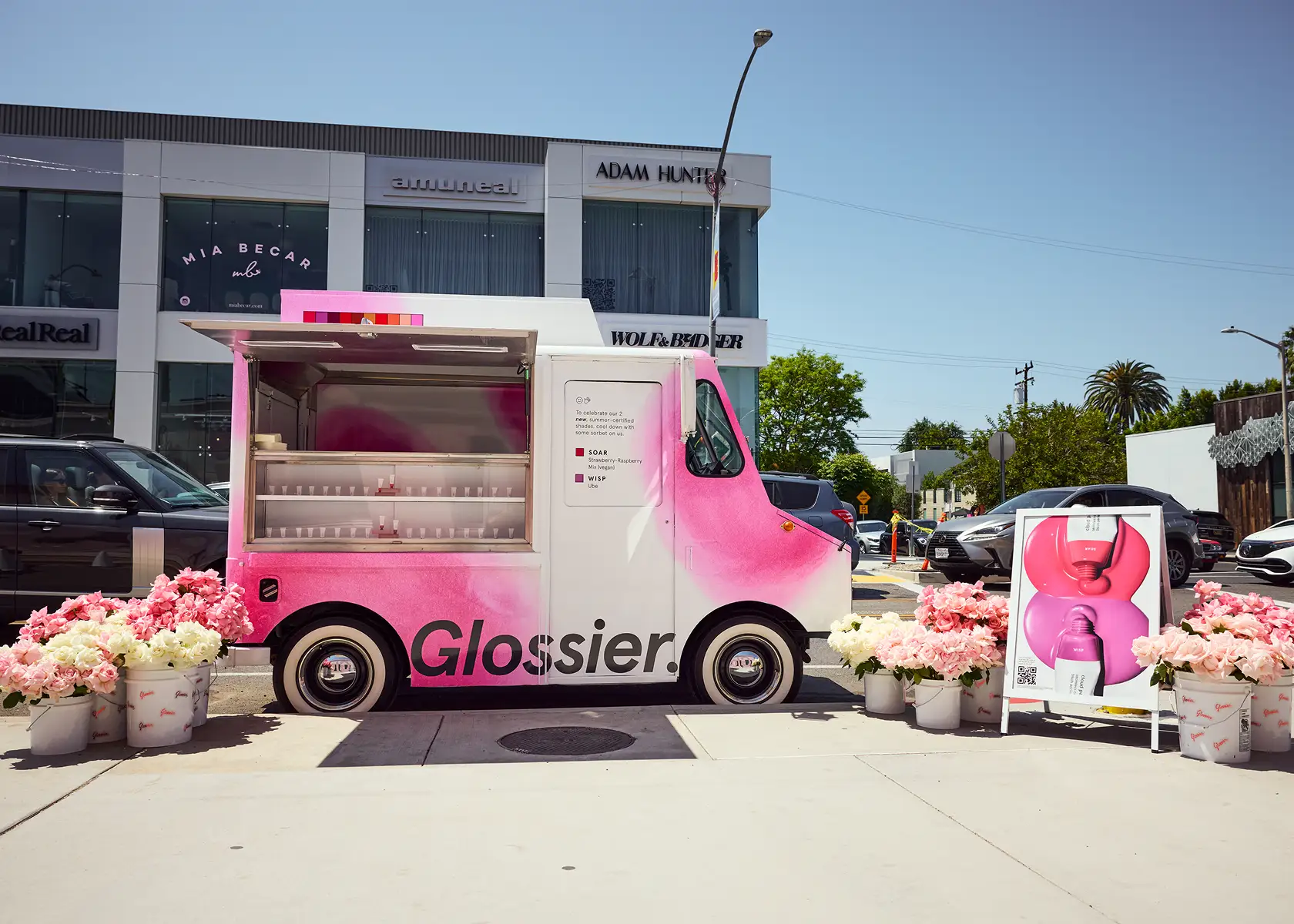
An experiential marketing truck is a mobile unit designed to deliver a brand experience rather than an advertisement. It is customized to reflect a brand’s identity and can include sampling stations, product displays, demonstrations, and interactive elements.

Unlike a billboard or a digital placement, the vehicle brings the brand to the audience and lets people interact with it. Our guide to experiential marketing trucks compares the vehicle formats in detail, while this post covers running the campaign.

Why the Format Works

Experiential marketing engages the emotional side of a purchase decision. It is not about presenting a product, it is about creating a moment someone remembers and repeats to other people.

  • Personalization. The experience can be tailored to a city, an event, or an audience segment, which a national media buy cannot.
  • Mobility. You go where the audience already is: festivals, campuses, retail districts, or a specific block.
  • Engagement. Sampling, games, and demonstrations produce participation rather than exposure.
  • Social sharing. A well-designed vehicle is photographed and posted, extending reach past the people present.
  • Data capture. Sign-ups, scans, and feedback are collected in real time, which most brand advertising cannot do.

6 Steps to an Experiential Marketing Truck Campaign That Works

1. Define the Audience Before the Vehicle

Decide who you are trying to reach before designing anything. Young professionals, families, students, and technology shoppers all behave differently, and the answer shapes the route, the giveaway, and the staffing more than it shapes the wrap.

2. Choose the Right Format

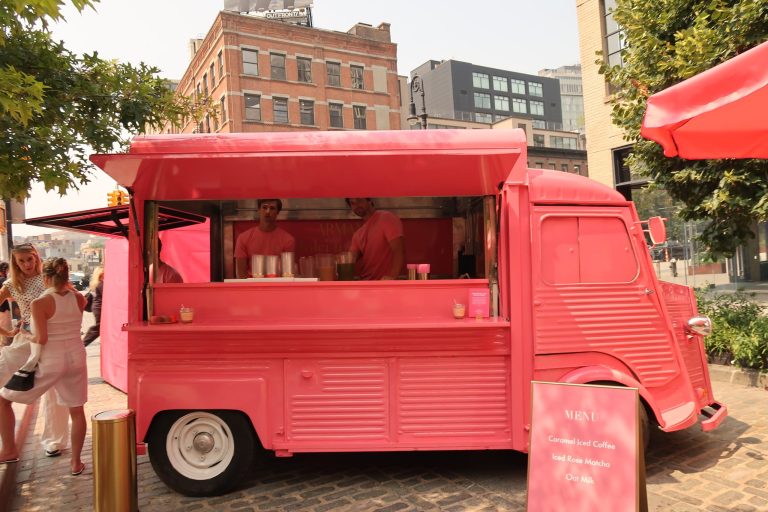
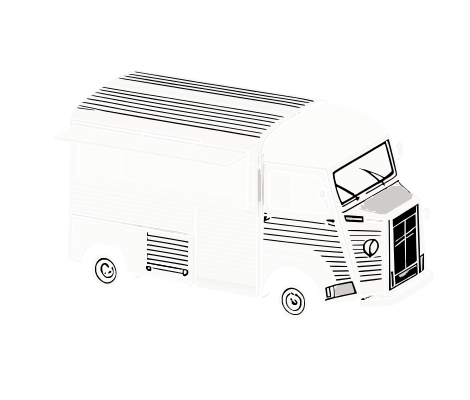
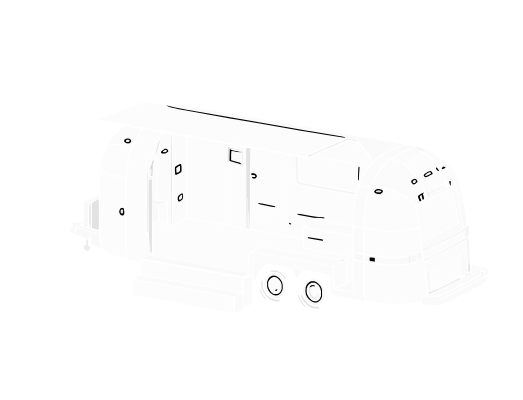
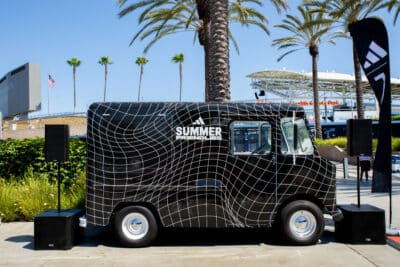
Match the vehicle to the goal rather than to what looks impressive. A food truck suits sampling at volume, a glass truck suits product display where visibility is the point, an Airstream suits a premium lounge or showroom, and a cart or tuk tuk reaches dense blocks a full-size vehicle cannot park on. Our full comparison of experiential marketing trucks breaks down what each format does best, and you can build a version of your own in Merlin AI.

3. Design for Distance First

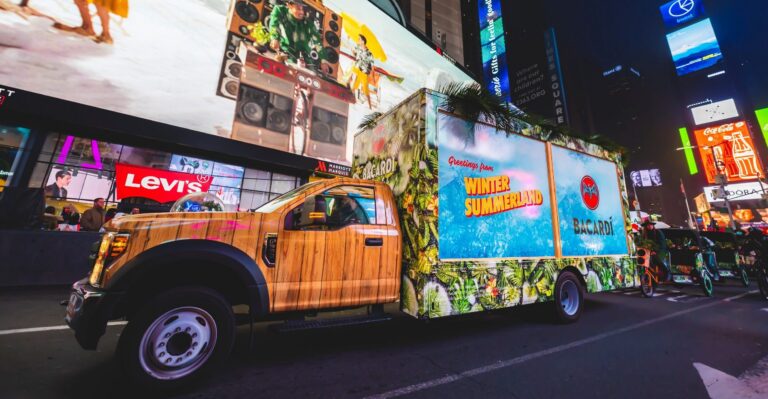
A wrap works on two audiences at once: someone across the street with a second, and someone at the window with a minute. One saturated brand color and a single clear message reads from a block away, while intricate detail only works up close. Let signage and packaging carry the finer information.
4. Build the Shareable Moment In

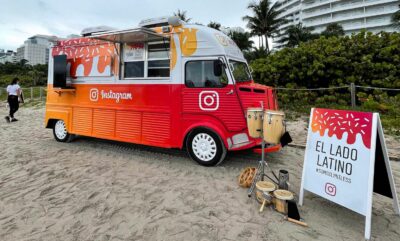
Most of the people who see this campaign will see it in a feed. Design the photo opportunity rather than hoping for one: a backdrop worth standing in front of, visible handles and a short hashtag, and a reason to post such as a prize entry.

5. Add Technology Where It Earns Its Place

Tablets, touchscreens, and QR codes are useful when they do a job: capturing a sign-up, issuing a digital coupon, or letting someone customize a product. Technology added for its own sake slows a queue down and rarely improves anything.

6. Staff It Properly

The team is the brand for the length of the interaction. Ambassadors who know the product can answer a real question and convert; ambassadors handed a script distribute samples. Brief them on the product, the single action you want, and what to record. Our guide to food truck marketing tactics covers the capture mechanics that make the day measurable.

What These Campaigns Look Like in Practice

The range is wider than most brands expect. We have built a bodega-style cart for MALIN+GOETZ, a scent-led tour for Pura, an electric tuk tuk for EcoFabulous, a beauty truck for Peach & Lily, and a hot chocolate activation for Beekman 1802 on World Kindness Day.

What those campaigns share is not the vehicle. It is that each one gave people a specific reason to stop that connected to what the brand actually sells. The MALIN+GOETZ cart is a good example: a New York brand expressing itself through the most New York format available, in a city that found it novel.
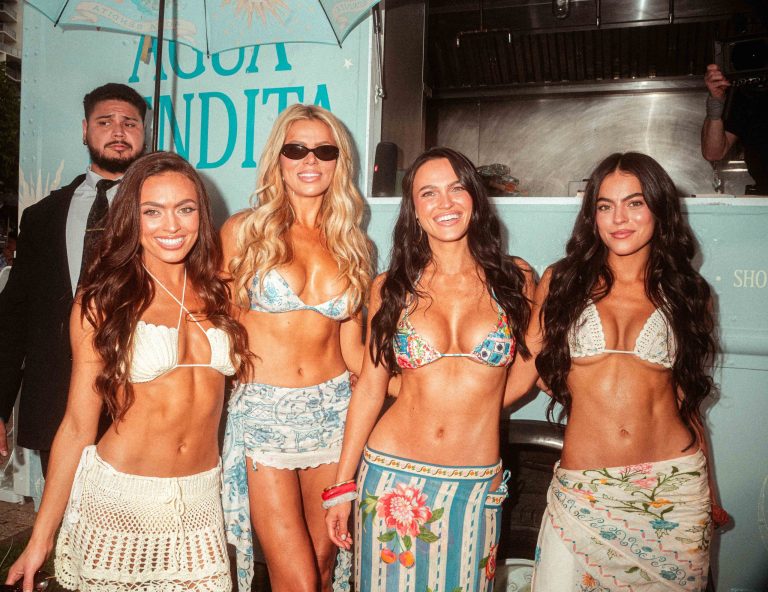
Case Study: How Gisou Reached 20 Million People in Three Days

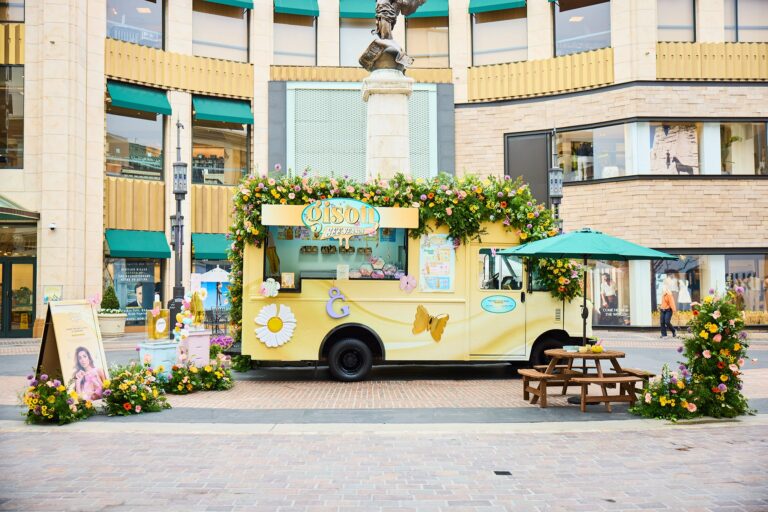
Yellow food truck with flower and butterfly decor parked in plaza near table, umbrella, and shops.

Gisou’s hair oil had already gone viral online, and the brand wanted Los Angeles talking about its new lip oil. That is a clear goal, which made every following decision straightforward.

The concept came from the product rather than from a mood board. Gisou is built on honey, so the entire activation was built on honey: a truck in buttery yellow, florals, branded beehives, and honey-themed treats throughout. Nothing needed explaining, because the theme and the product were the same idea.

The activation ran for three days and generated roughly 20 million impressions.

Why it worked: the audience was defined before the build, the concept was extracted from the brand rather than invented for it, and the design was distinctive enough to photograph from any angle. That is steps one through four executed properly. Read the full build in our Gisou Honey Glow Truck case study, or browse more brand activation case studies.

How to Measure an Experiential Marketing Truck Campaign

  • Interactions and samples per day and location, which tells you where to return next time.
  • Sign-ups, scans, and downloads captured, the conversion that outlasts the activation.
  • Impressions in transit and at rest, since a wrapped vehicle earns attention between stops as well as during them.
  • Tagged posts and content produced, the earned reach that usually exceeds the in-person audience.
  • Cost per interaction, the figure to compare against paid media for the same spend.

The Bottom Line

An experiential marketing truck gives a brand something rare: a physical presence people choose to walk up to. Whether it produces results depends on decisions made long before the vehicle arrives, starting with who you are reaching and ending with who is standing beside it.

Define the audience, match the format to the goal, design for distance, build the shareable moment in, and brief the staff properly. The vehicle is the easy part.

If you are still deciding which vehicle fits, start with our guide to the types of experiential marketing trucks and come back to this once the format is settled.

If you are planning a campaign, we handle concept, fabrication, permits, staffing, and routing in house. Explore our experiential vehicles or contact our team to scope one.

Frequently Asked Questions

An experiential marketing truck is a mobile unit designed to deliver a brand experience rather than an advertisement. It is customized to reflect a brand’s identity and can include sampling stations, product displays, demonstrations, and interactive elements that bring the brand to the audience.

A billboard waits to be seen and delivers a message. A truck travels to where the audience already is and lets people interact with the brand, which produces participation, data capture, and content rather than impressions alone.

Match the format to the goal. Food trucks suit sampling at volume, glass trucks suit product display where visibility is the point, Airstreams suit premium lounges and showrooms, and carts or tuk tuks reach dense urban blocks. Our experiential marketing trucks guide compares each format in detail.

For distance first. One saturated brand color and a single clear message reads from across a street, while intricate detail only works up close. Signage, menu boards, and packaging carry the finer information for people who reach the window.

Only where it does a job. QR codes, tablets, and touchscreens are useful for capturing sign-ups, issuing digital coupons, or customizing a product. Technology added for its own sake slows the queue and rarely improves the outcome.

It is the largest variable after location. Ambassadors who know the product can answer a real question and convert, while a team handed a script simply distributes samples. Brief them on the product, the action you want, and what to record.

Design the moment rather than hoping for one. A backdrop worth standing in front of, visible social handles and a short hashtag, and a reason to post such as a prize entry all raise the share rate considerably.

It varies with scale and market, though the range is wide. A three-day Gisou activation in Los Angeles generated roughly 20 million impressions, driven by a distinctive build and a concept taken directly from the product.

Track interactions and samples per day and location, sign-ups and scans captured, impressions in transit and at rest, tagged posts and content produced, and cost per interaction compared against your paid channels.

Define the audience and the single action you want people to take, then choose the format that fits. A partner can handle concept, fabrication, permits, staffing, and routing. Share your campaign window with our team to scope it.

FTP Free download

The Mobile Pop-Up Shop Launch Checklist

7 steps, 37 checkpoints, and a one-page brief to plan and launch a mobile pop-up shop that converts.

Instant PDF · No Cost

Benjamin Goldberg

Author

Benjamin Goldberg

CEO @ FTP Agency

Benjamin H. Goldberg is passionate about bringing brands to life on the streets. As CEO of Food Truck Promotions and co-founder of the New York and Los Angeles Food Truck Associations, he helps create unforgettable mobile experiences that blend great food, creative branding, and meaningful connections with audiences everywhere.

More posts
How Event Marketing Vehicles Gives You the ‘Wow Factor’ That Gets Your Brand Noticed