How to Choose a Brand Activation Company
Choosing a brand activation company is difficult for a specific reason: every portfolio looks good, and none of them show you the part that…
Read moreBy: Benjamin Goldberg • • 10 min read
Experiential marketing for wellness brands solves a problem the category has more acutely than any other: a customer has to believe the product will work before they will pay for it.
Supplements, skincare, and functional food all make claims that a customer cannot verify from a product page. The category is also crowded, with new entrants launching constantly and most of them saying similar things. A trial settles both problems at once.
This guide covers why in-person activation suits wellness specifically, the strategies that work, three real activations we produced, and how to measure them.
Experiential marketing is an experience-based approach in which a company connects with customers by creating an immersive brand environment they can physically visit, such as a mobile pop-up, a branded cafe, or a showroom. Instead of describing a product, the brand lets people try it.
For wellness brands the distinction matters more than usual. A supplement or a serum is bought on belief, and belief is built far more effectively through a conversation and a sample than through a claim in an advertisement.
The category is growing quickly and getting more crowded as a result. The global wellness economy reached a record $6.8 trillion in 2024, having grown 7.9 percent in a single year and doubled since 2013, with growth forecast at 7.6 percent annually to reach nearly $9.8 trillion by 2029.
The United States alone accounts for $2.1 trillion of that, with per capita wellness spending passing $6,000 and the sector representing over 7 percent of national GDP.
Growth on that scale attracts entrants, and entrants make claims. When a shopper is comparing six supplements that all promise better sleep or stronger immunity, the deciding factor is rarely the copy. It is whether they have any reason to trust one brand over the others, which is exactly what a face-to-face moment provides.
Here are the best experiential marketing strategies that every wellness brand should deploy.
The instinct in wellness marketing is to educate, because the science is usually the differentiator. In person, the order should reverse. Give the product first, explain second, and let the conversation happen while someone is already holding it.
A supplement alone is a hard thing to hand a stranger. Pairing it with a drink that carries the same associations, matcha, hot cocoa in winter, cold-pressed juice in summer, gives people a reason to stop and reinforces the wellness positioning before anyone says a word about the product. Our guide to beauty marketing strategies covers the same trial mechanics in the adjacent prestige category.
If sustainability is central to the brand, running the activation from an electric vehicle makes that argument structurally. A claim you demonstrate is worth more than a claim you print, and it carries less risk under current rules on environmental marketing.
Parks, running routes, studios, farmers markets, and campus areas put you in front of people already thinking about their health. Proximity to intent matters as much as raw foot traffic in this category.
A founder, a practitioner, or a genuinely aligned public figure adds credibility. In a category built on trust, a mismatched celebrity does more damage than no celebrity at all.
A sample in exchange for a sign-up, a QR code on the cup, or a discount code on the takeaway is what turns a good afternoon into a list. Our guide to sensory marketing covers how taste and scent make that exchange feel natural rather than transactional.
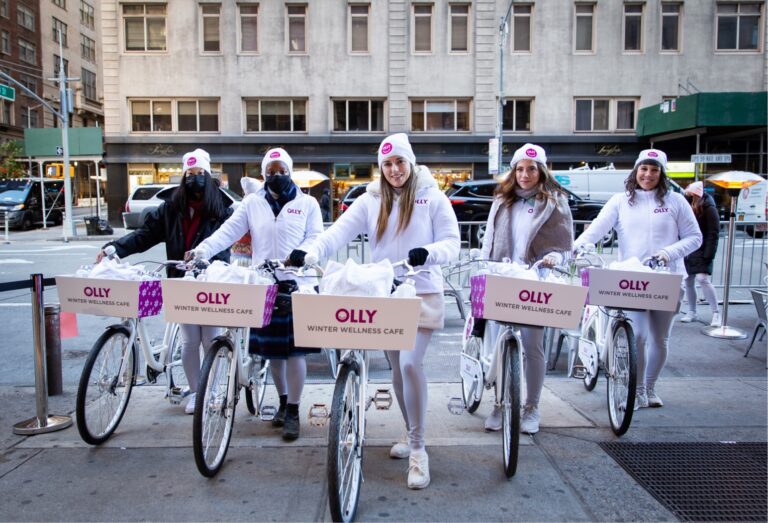
To launch its new immunity supplements, Olly needed more than a sampling table, because a supplement is difficult to communicate through a product handout alone.
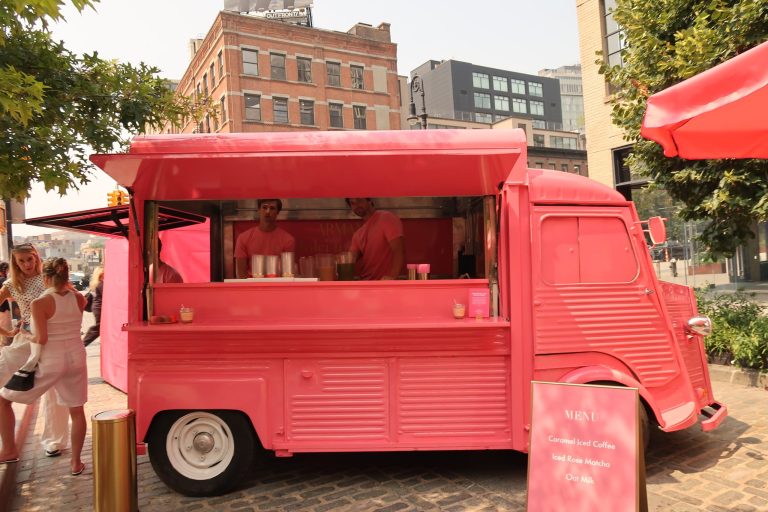
We turned a branded vehicle into a Winter Wellness Cafe in Central Park, serving hot cocoa and matcha beverages alongside samples of the Olly range. The cafe warmed people up on a cold day, the drinks matched the brand’s holistic positioning, and the supplement arrived as part of a moment rather than as a leaflet. Thousands of New Yorkers encountered the brand in person, and visitors were encouraged to share the experience on social, which extended the activation well past the people physically present.
Why it worked: the cafe format gave a supplement brand something it could not otherwise offer, which is a genuine reason for a stranger to stop on a cold morning. Read the full activation in our Olly wellness pop-up case study.
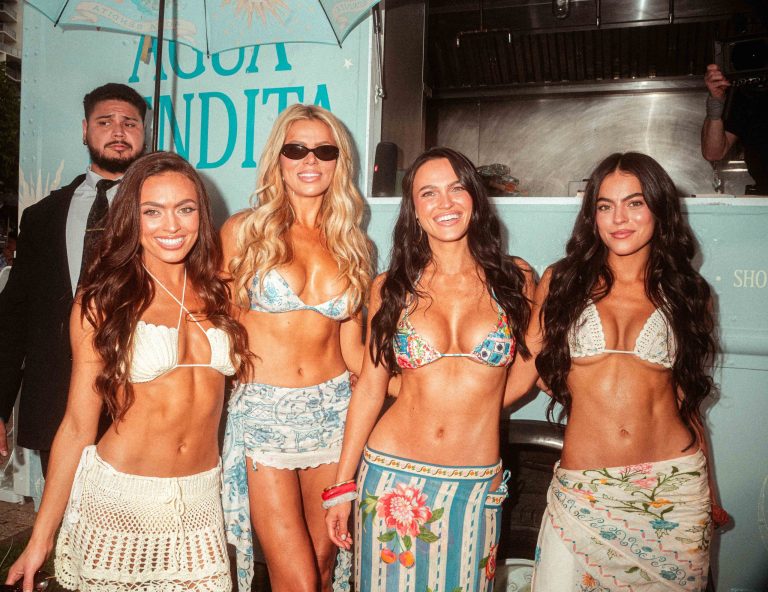
We introduced Being Frenshe, the beauty and personal care line from Ashley Tisdale, with a matcha-led pop-up. The first 50 guests received complimentary swag bags stocked with candles, perfumes, body mists, and lotion. From guest 51 onward, visitors received a tote bag, a hand treatment, and a choice of five matcha lattes named for the brand’s moods: Sooth and Comfort, Unwind and Rest, Balance and Harmony, Joy and Bliss, and Awaken and Uplift.
Ashley Tisdale appeared in person, which turned a strong launch into a queue.
Why it worked: the five named lattes mapped directly onto the product range, so choosing a drink was itself an introduction to the line. That is a neat example of the giveaway doing the explaining.
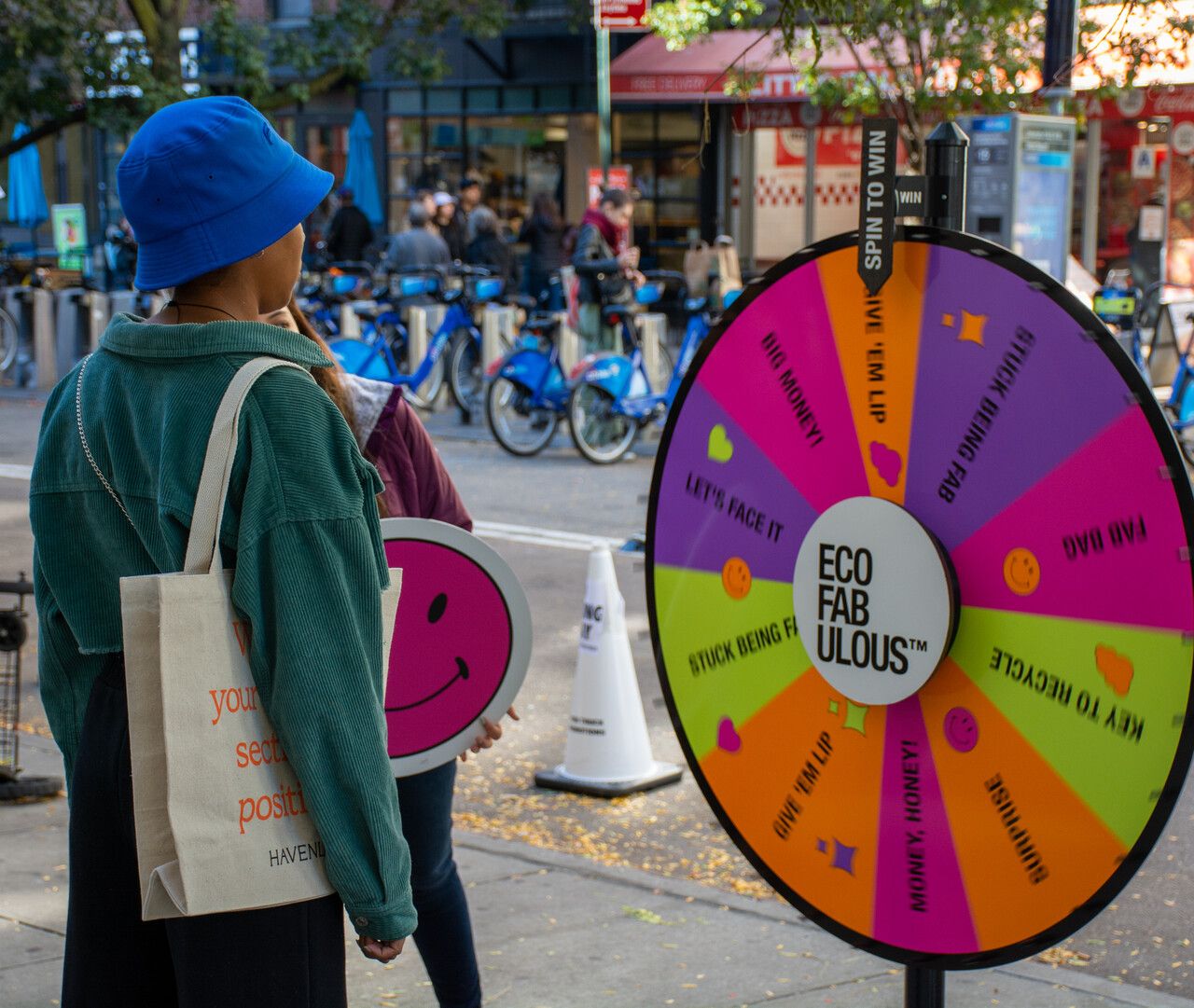
For the launch of this colorful, environmentally conscious skincare line, we ran the activation from an electric tuk tuk across three New York neighborhoods: Noho, Union Square, and Williamsburg. Guests watched a promotional video, received a tote of product samples and a jar of rainbow cake from JARS by Dani, and spun a prize wheel for reusable straws, reusable bags, squeeze keys, gift cards, product samples, or a full set of face oils. Disney Channel star Skai Jackson appeared to talk through the products.
Why it worked: the electric vehicle made the sustainability claim without asserting it, and the prize wheel gave people a reason to stay long enough to actually hear about the range. Browse more work in our brand activation case studies.
Wellness is a category where customers are asked to believe something they cannot check, in a market crowded with brands making similar promises. Experiential marketing answers that directly: it puts the product in someone’s hand, pairs it with something they actually want, and gives them a person to ask.
If you are planning a launch or a sampling campaign, we design, build, permit, and staff them. Explore our pop-up cafe services or contact our team to talk it through.
It is an experience-based approach where a wellness brand creates a physical environment customers can visit, such as a mobile pop-up or branded cafe, and lets them try the product in person. It replaces claims with trial, which suits a category built on trust.
Because wellness products make claims customers cannot verify from a label. Handing someone a sample, pairing it with something they want, and giving them a person to question builds belief far faster than advertising, particularly in a market crowded with similar promises.
The global wellness economy reached a record $6.8 trillion in 2024, having doubled since 2013, and is forecast to approach $9.8 trillion by 2029. The United States accounts for $2.1 trillion of that, with per capita spending above $6,000 a year.
Formats that give people a reason to stop beyond the supplement itself. A branded cafe serving matcha or hot cocoa, paired with sampling, works because it offers something immediately welcome while introducing a product that is harder to hand over cold.
It usually helps. An on-theme drink reinforces the positioning before anyone speaks, and it gives ambassadors the thirty seconds they need to start a conversation. It also draws a queue, which attracts more attention than signage does.
Demonstrate it rather than state it. Running the activation from an electric vehicle, using compostable serviceware, and minimizing printed collateral all make the argument structurally, which is more persuasive and lower risk than broad environmental wording.
Where the audience is already thinking about health: parks, running routes, near studios and gyms, farmers markets, and campus areas. Proximity to intent matters as much as raw foot traffic, since a smaller, better-matched crowd converts better.
Yes. A location permit is required for street activations, private property needs an agreement with the manager, and anything consumable adds health department approval and food handler certification. Requirements and timelines vary by city.
Track samples distributed, sign-ups and QR scans, discount code redemptions, tagged posts, and the questions people ask on site. Redemptions are the clearest link between a sample and a first purchase, so build a code into every takeaway.
Start with the product, the audience, and the markets that matter, then choose a format that gives strangers a reason to stop. A partner can handle concept, build, permits, staffing, and food service. Share your launch window with our team to scope it.
7 steps, 37 checkpoints, and a one-page brief to plan and launch a mobile pop-up shop that converts.
Instant PDF · No Cost
Author
CEO @ FTP Agency
Benjamin H. Goldberg is passionate about bringing brands to life on the streets. As CEO of Food Truck Promotions and co-founder of the New York and Los Angeles Food Truck Associations, he helps create unforgettable mobile experiences that blend great food, creative branding, and meaningful connections with audiences everywhere.
Choosing a brand activation company is difficult for a specific reason: every portfolio looks good, and none of them show you the part that…
Read more →
The best brand activation ideas are not the most elaborate ones. They are the ones that give a stranger a reason to stop walking.…
Read more →
Brand activation displays are the part of a build that does the selling, and they are usually designed last. The wrap gets rounds of…
Read more →We use and share personal information through cookies and similar technologies on our sites to personalize your shopping experience and ads. Others may use this information for their own marketing and business purposes. . Check our Privacy Policy for more details.
Browser Opt-Out Honored
We use and share your personal information with others to personalize your shopping experience and show you targeted ads on other sites based on your interests and online activities.
Online Info includes cookies, pixel tags, and similar technologies connected to your browser or device. Offline Info includes information associated with your email address based on your other interactions with us.
We use and share your personal information with others to personalize your shopping experience and show you targeted ads on other sites based on your interests and online activities. Information includes cookies, pixel tags, and similar technologies connected to your browser or device (Online Info), as well as information associated with your email address based on your other interactions with us (Offline Info). Others may use this information for their own marketing and business purposes.
You can choose to opt out of sharing one or both types of information.