How to Integrate Experiential Marketing Into Your Omnichannel Marketing Strategy

By: David Botbol 10 min read

How to Integrate Experiential Marketing Into Your Omnichannel Marketing Strategy

Most omnichannel marketing plans treat experiential as a separate line item, run it, report the footfall, and move on.

That is a waste of the most content-rich, data-rich thing a brand does all year. An activation puts you face to face with customers, produces photography and video, and hands you contact details, all of which the rest of your channels need and rarely get.

This guide covers how to plug a live activation into paid, social, email, and retail so the campaign works before, during, and after the day itself.

Key Takeaways

  • Treat the activation as a content shoot: the footage and photography it produces should feed paid and organic for months, not sit in a folder.
  • Capture is the connective tissue: a QR code turning a sample into a contact is what links the physical channel to every digital one.
  • Sequence it across three phases: promote before, capture during, and repurpose after. Most brands only do the middle one.
  • Retail is the destination: a bounce-back code connects the activation to a purchase and gives you attribution you would otherwise lack.
  • Plan tracking before the build: UTMs, codes, and CRM fields have to exist before the day, because they cannot be added retrospectively.

What Omnichannel Marketing Actually Requires

Omnichannel marketing means a customer moves between your channels without the experience breaking. Not multichannel, where a brand simply appears in several places, but connected, where what happens in one place informs the next.

That is straightforward to say and difficult to do, because most channels do not naturally hand anything to each other. Paid social does not tell email what someone cared about. A store visit does not tell your CRM anything unless someone scans a card.

An experiential activation is unusual in that it produces something every other channel can use. Understanding what those outputs are is the whole of this article.

What an Activation Produces for Other Channels

  • Contact data. Sign-ups, scans, and app downloads captured at the point of interaction, which feed email, CRM, and paid audience building.
  • Content. Photography, video, and customer reactions that outperform studio assets in a feed and cost a fraction of a shoot.
  • Proof. Queues, crowds, and real people using the product, which is the most persuasive material available for paid and organic.
  • Direct feedback. The questions people ask unprompted, which tell you what to fix in your messaging everywhere else.
  • Local relevance. A campaign that happened in a specific city gives you a reason to talk to that city differently. None of that appears automatically. Each output needs a decision made before the build, which is what the next section covers.

How to Sequence the Campaign

Before: Build the Turnout

An activation nobody knows about is a smaller activation. Announce the location and dates far enough ahead that people can plan to attend, run geo-targeted paid social in the surrounding area in the days before, and email any list you already have in that city.

This is also where influencer or creator involvement belongs. A relevant creator promoting attendance in advance does more for turnout than the same creator posting after the fact, and it gives you content on the day.

During: Capture Everything

Two jobs run simultaneously. The first is the capture mechanic: a QR code that turns a giveaway into a sign-up, download, or entry. The second is content, which needs someone assigned to it rather than left to whoever has a free hand.

Live posting matters too. People nearby who see a story or post can still attend, which is the only channel that converts inside the activation window itself.

After: Repurpose and Retarget

This is the phase most brands skip entirely. The content becomes paid creative, organic posts, and website assets. The captured contacts enter a welcome email sequence that references the activation while it is still recent. Anyone who scanned but did not convert becomes a retargeting audience.

Our guide to creating experiences that drive UGC covers the customer-generated side of that content stream.

Connecting the Activation to Each Channel

Paid Media

Use activation footage as creative, since real people and real reactions consistently outperform produced assets. Build custom audiences from captured contacts, and run geo-targeted campaigns around each stop before and during.

Organic Social

Announce ahead, post live from the activation, and run recap content afterward. Amplify customer posts rather than only publishing your own, since attendee content carries credibility yours cannot.

Email and CRM

Tag every contact captured with the activation, the city, and the date. That tag is what makes the data useful later, allowing a follow-up sequence referencing what they attended and giving you a clean segment to measure against.

Retail and Ecommerce

Give people a reason to complete the journey. A bounce-back card or unique promo code issued at the activation is the cleanest link between a street sample and a purchase, and it produces attribution you would otherwise have to infer.

Search and Website

A landing page for the activation, linked from the QR code, gives you somewhere to send traffic and something to measure. Local coverage of the campaign also earns links and mentions that support search performance in that market.

Set the Tracking Up Before the Build

This is the part that cannot be fixed afterwards, and it is where integration usually fails.

  • UTM parameters on every QR destination, consistent across cities so results are comparable.
  • Unique promo codes per activation, ideally per city, so redemptions can be traced back to a specific stop.
  • A CRM field identifying the activation as the source, applied at import rather than reconstructed later.
  • A defined conversion event so the sign-up registers in analytics rather than only in a spreadsheet.
  • Agreement on the source of truth, since your platform numbers and your activation counts will not match exactly.

How Forager Project Connected a Street Sample to a Store Shelf

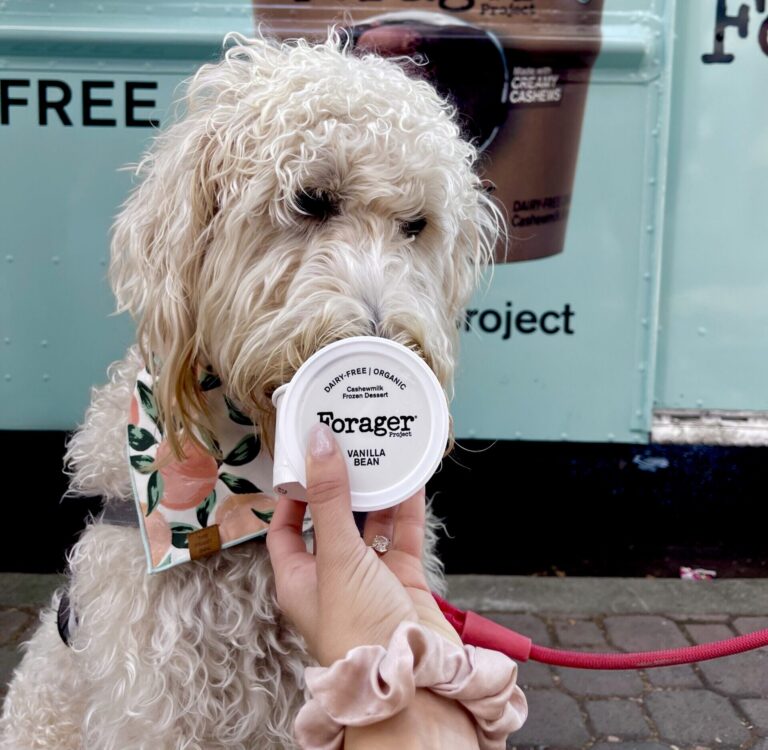
A white dog in a bandana sniffs Forager vanilla bean yogurt by a blue food truck.

Forager Project needed people to try its dairy-free ice cream, since the category invites doubt before anyone tastes it. The mechanic they used is a compact example of omnichannel done properly.

We ran a sampling activation across nine locations in San Francisco from a fully stocked branded truck. Guests chose between signing up for the Forager newsletter or following the brand on Instagram, and received a sample plus a coupon code redeemable in store. The truck gave out as many as 500 samples a day, reaching roughly 4,500 people.

Why it is an omnichannel campaign rather than a sampling campaign: each guest passed through three channels in about ninety seconds. The physical activation delivered the trial, the sign-up or follow moved them into email or social where the brand could reach them again, and the coupon sent them to retail with a code that made the purchase traceable.

That is the whole model in one interaction: sample, capture, redeem. Read more in our Forager Project case study, or browse other brand activation case studies.

ShopRunner ran a similar structure for app growth, using QR codes on the pop-up, on ambassadors, and on bounce-back cards to drive more than 2,500 subscriptions in three days.

How to Measure an Integrated Campaign

  • Contacts captured per activation and per city, which is the figure that justifies the channel to the rest of the marketing team.
  • Redemption rate on activation codes, the cleanest attribution available.
  • Performance of activation content in paid, compared against your standard creative.
  • Email engagement from activation-sourced contacts, versus contacts acquired through other channels.
  • Sales lift in activation markets, measured against comparable cities you did not visit. Our guide to food truck marketing tactics covers the capture side in more depth.

The Bottom Line

Experiential belongs inside an omnichannel marketing strategy rather than beside it. Run properly, an activation is the only channel that hands every other channel something it needs: contacts for email and paid, content for social, codes for retail, and feedback for messaging.

What makes that happen is unglamorous. Decide the capture mechanic before the build, tag the data at the point of entry, assign the content capture, and agree what you are measuring before anyone shows up.

If you want an activation designed to feed the rest of your marketing rather than sit alongside it, that is what we build. Explore our brand activation services or contact our team to scope it.

Frequently Asked Questions

Omnichannel marketing means a customer can move between a brand’s channels without the experience breaking, with each channel informed by the others. It differs from multichannel marketing, where a brand simply appears in several places without those places connecting.

An activation produces things other channels need: contact data for email and paid audiences, content for social, promo codes for retail attribution, and direct customer feedback for messaging. It is one of the few channels that feeds every other one.

Announce the location and dates early so people can plan to attend, run geo-targeted paid social around the area in the preceding days, email any existing contacts in that city, and involve a relevant creator to promote attendance rather than only to post afterwards.

Two things at once: contact data through a QR code that turns a giveaway into a sign-up or download, and content, which needs someone specifically assigned to it. Live posting also matters, since nearby people who see it can still attend.

The repurposing phase. Content becomes paid creative, organic posts, and website assets, captured contacts enter a follow-up email sequence while the activation is recent, and anyone who scanned without converting becomes a retargeting audience.

Issue a bounce-back card or a unique promo code at the activation, ideally a different code per city. Redemptions are traceable, which gives you a direct link between a street interaction and a purchase rather than an inferred one.

UTM parameters on every QR destination, unique promo codes per activation, a CRM field identifying the activation as the source, a defined conversion event in analytics, and agreement on which number is the source of truth. None can be added retrospectively.

Yes, and it usually outperforms produced creative. Real people, real reactions, and a branded environment read as authentic in a feed, and the footage costs a fraction of a studio shoot because it is captured while the activation is running anyway.

Track contacts captured per activation and city, redemption rate on activation codes, performance of activation content in paid versus standard creative, email engagement from activation-sourced contacts, and sales lift in activation markets against control cities.

Decide the single action you want people to take at the activation, then work backwards through the tracking that action requires. A partner can handle build, permits, staffing, and capture setup. Share your campaign plan with our team to scope it.

FTP Free download

The Mobile Pop-Up Shop Launch Checklist

7 steps, 37 checkpoints, and a one-page brief to plan and launch a mobile pop-up shop that converts.

Instant PDF · No Cost

David Botbol

Author

David Botbol

EVP, Managing Director @ FTP Agency

David Botbol thrives on turning bold ideas into real-world brand moments. As Executive VP and Managing Director of Food Truck Promotions, and a leader within the New York and Los Angeles Food Truck Associations, he draws on a background in business development and startups to help brands connect with audiences through creative, unforgettable mobile experiences.

More posts
How to Hire a Mobile Tour Brand Ambassador