How to Win Over Customers with Street Marketing

By: David Botbol 9 min read

How to Win Over Customers with Street Marketing

Street marketing is the practice of reaching customers in person, on the pavement, where they cannot scroll past you.

Digital and social media marketing are genuinely useful and also thoroughly saturated. People have learned to tune out ads down the side of a feed, which is why brands keep returning to a channel where the interaction is unavoidable and the response is immediate.

This guide covers what street marketing actually includes, why the direct feedback is worth as much as the reach, and how to run it properly.

Key Takeaways

  • It spans far more than flyers: street teams, sampling, branded vehicles, and mobile pop-ups are all street marketing, and they perform very differently.
  • Feedback is the underrated benefit: you learn what people think about price, packaging, and the product itself in real time, which no survey delivers as honestly.
  • The staff are the campaign: the same handout performs completely differently depending on who is giving it out and what they know.
  • Give something people want: a flyer gets refused, a free coffee gets accepted, and the difference decides whether a conversation happens at all.
  • Capture something: a scan, a sign-up, or a code redemption turns a street conversation into a customer you can identify later.

What Is Street Marketing?

Street marketing is any marketing activity that reaches people directly in public space rather than through a screen or a broadcast. It sits within guerrilla marketing, and in practice it covers a spectrum:

  • Street teams and brand ambassadors handing out samples, flyers, or coupons and talking to people.
  • Product sampling where customers try the item on the spot.
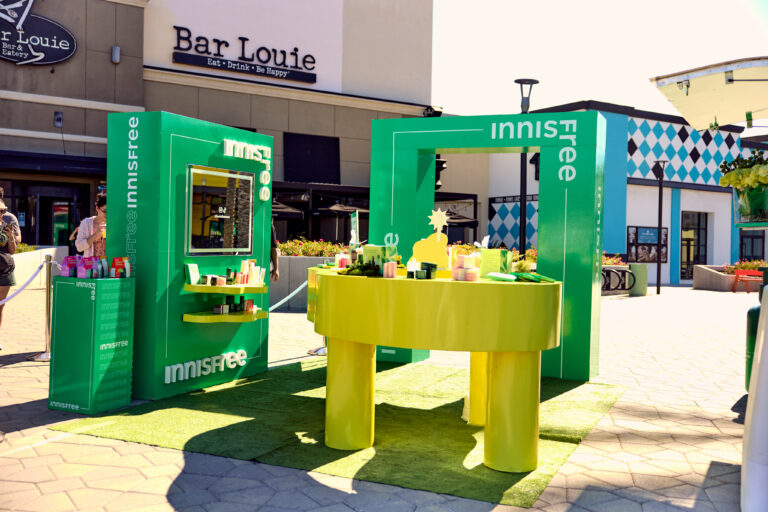
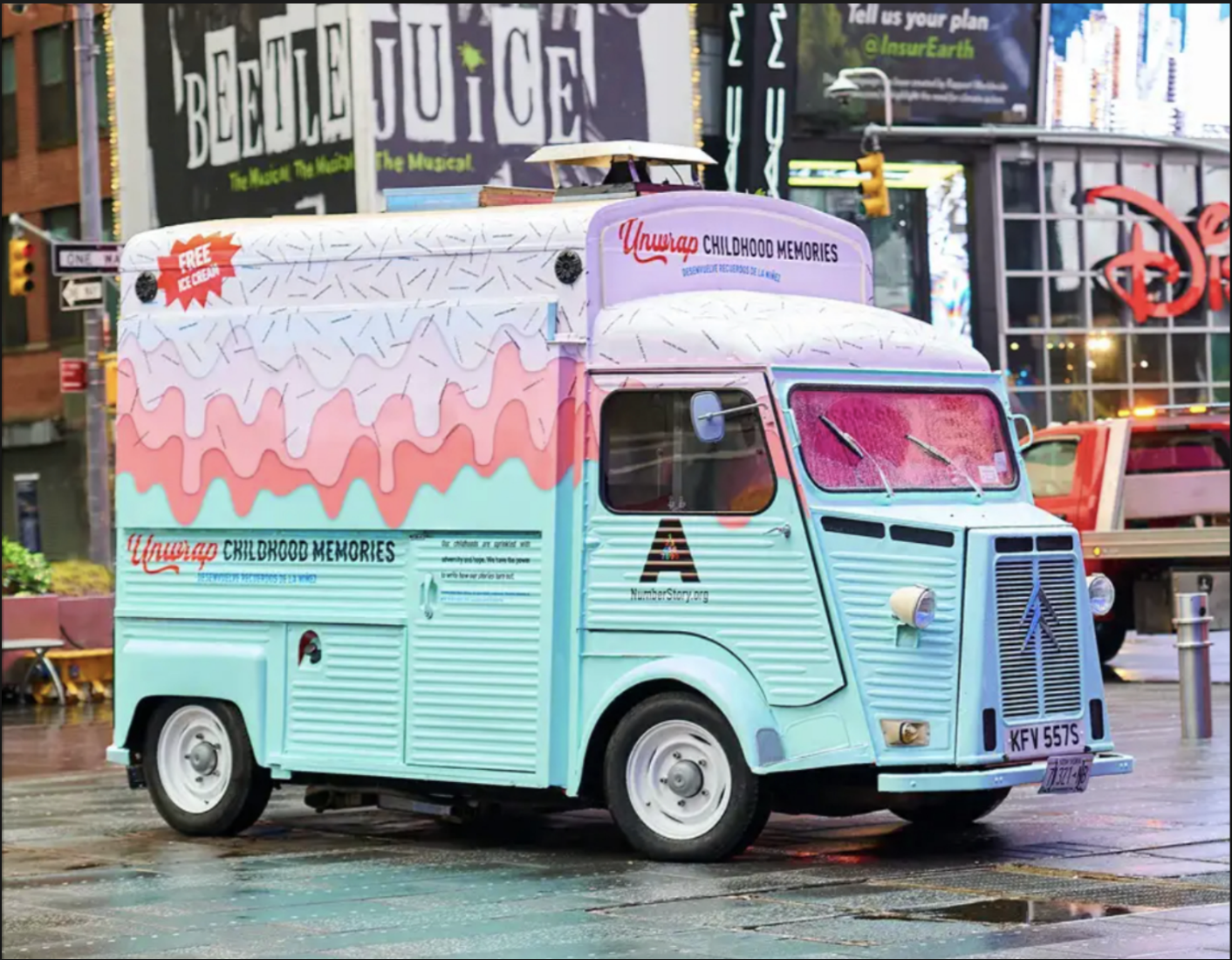
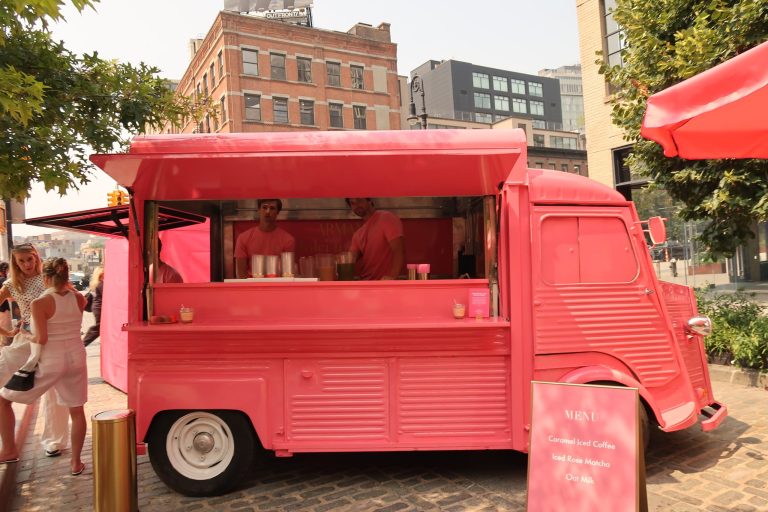
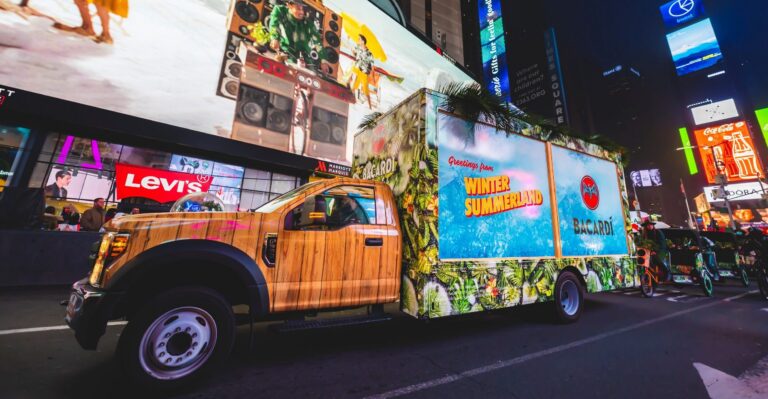
  • Branded vehicles and mobile pop-ups that bring a full brand environment to a corner for a day.
  • Installations and stunts designed to interrupt a routine journey. The low end of that range is leafleting. The high end is a fully built brand activation with product, staff, and a designed environment. Both are street marketing, and they produce very different results, which is worth being clear about before budgeting.

Our guide to what a brand activation is covers the higher end of that range in detail.

Why Street Marketing Still Works

The Interaction Is Unavoidable

An advertisement can be skipped, blocked, or ignored. A person offering you something on a pavement cannot be scrolled past. That does not guarantee a positive reaction, which is precisely why what you offer matters so much.

It Reaches People Digital Misses

Street marketing reaches whoever is physically present rather than whoever your targeting parameters selected. In a dense retail district or outside an office building, that is often a more valuable cross-section than a lookalike audience.

It Is Fast to Learn From

Most channels take weeks to produce usable data. A street campaign produces it within an hour, in the form of who stops, who declines, and what they say.

The Hidden Benefit Is Instant Feedback

This is the part most brands overlook, and it is the strongest argument for the channel beyond reach.

When someone is standing in front of you holding your product, you get an unfiltered reaction. Two areas in particular produce useful information.

Price

If your handout or display carries a price, watch the reaction closely. Does the number make them hesitate? Do they seem surprised it is so low, which can signal doubt about quality? Pricing is difficult to test in the abstract, and overpricing leaves stock on shelves while underpricing damages the margin permanently. A few hours of live reactions is a cheap sanity check.

Appearance

Watch what people do with the packaging and the printed material. Do they look at it with interest or confusion? Then ask a couple of questions if they have a moment: what do you think of how it looks, is this something you would buy, what would you change? Those answers feed directly into design decisions.

The Questions Nobody Asked You

Log what people ask unprompted. Repeated questions are the clearest possible signal that your messaging is unclear somewhere, and they usually surface a gap you did not know existed.

Who You Put on the Street Decides the Outcome

Do not hire anyone simply to hand out a flyer. Use people who can engage a stranger at their level and answer a real question about the product, because that ability is the entire advantage of the channel.

Three things separate a good street team from an expensive one:

  • Product knowledge. Someone who can answer a question converts. Someone who cannot is a very slow way to distribute paper.
  • A brief on what to observe. Ambassadors should be logging reactions, questions, and objections, not only counting handouts.
  • Something worth giving. A flyer is refused far more often than a coffee. What is in the hand determines whether the conversation starts. Our guide to food truck marketing tactics covers the giveaway and capture side in more detail.

How Bondi Sands Turned Free Coffee Into Loyalty Sign-Ups

A woman in a winter coat gets coffee from a barista at an outdoor stand; others wait nearby.

Bondi Sands, the Australian self-tanning brand, wanted new users for its 1 Hour Self-Tanning Foam among a younger audience. Rather than a street team with flyers, we built the activation around something people actually wanted on the way to class.

We parked a branded truck at West Fourth Street and Broadway beside New York University, with a sign reading free self tan and coffee. The coffee came from Bluestone Lane, which gave the offer instant credibility with that audience.

Students were greeted by a brand ambassador, scanned a QR code, joined the loyalty program, and left with a sample bottle and an application mitt. The activation attracted thousands of potential new customers, and the sign-up turned each one into a contact the brand still owns.

Why it is the right example here: the mechanics are identical to a street team with flyers, but every element is upgraded. The giveaway is something people want rather than something they take out of politeness, the staff can explain the product, and the QR code converts a pavement conversation into a tracked customer. That is street marketing done at the level worth paying for. Read the full activation in our Bondi Sands case study, or browse more brand activation case studies.

How to Run a Street Marketing Campaign

  • Decide the single action you want. A scan, a sign-up, a sample taken, or a store visit. Everything else follows from it.
  • Choose the giveaway before the creative. What goes in someone’s hand determines the stop rate more than any design decision.
  • Pick locations by audience, not volume. The busiest street is not always the right one. Proximity to the right customer matters more.
  • Check the permits. Distributing material or sampling in public space is regulated in most cities, and private property needs an agreement with the manager.
  • Brief the team properly. On the product, the message, the capture mechanic, and what to log.
  • Build in the capture. Without a QR code, code, or sign-up, you finish the day with an anecdote instead of a result.

How to Measure Street Marketing

  • Stop rate: how many people who passed actually engaged, which tells you whether the offer has pull.
  • Items distributed: counted per hour, which identifies the right window to activate in.
  • Scans and sign-ups: the conversion from a conversation into a contact.
  • Redemptions: any code used later, the cleanest link to revenue.
  • Feedback log: the questions and objections recorded by staff, which is the insight the channel produces for free.

The Bottom Line

Street marketing works because the interaction cannot be skipped and the response is immediate. What separates a campaign that produces customers from one that produces litter is what you put in people’s hands, who is holding it, and whether anything is captured when the conversation ends.

If you want a street presence built around a giveaway people actually want, that is what we produce. Explore our brand activation services or contact our team to scope a campaign.

Frequently Asked Questions

Street marketing is any marketing activity that reaches people directly in public space rather than through a screen or broadcast. It includes street teams handing out samples or flyers, product sampling, branded vehicles and mobile pop-ups, and installations designed to interrupt a routine journey.

Street marketing sits within guerrilla marketing, which is the broader category of unconventional, low-cost tactics. Street marketing specifically refers to activity carried out in public space with direct, face-to-face contact between a brand representative and a passerby.

Yes, and partly because digital is saturated. People have learned to ignore ads in a feed, while an interaction on a pavement cannot be scrolled past. The channel also produces immediate feedback that most other channels take weeks to generate.

Instant, unfiltered feedback. When someone stands in front of you holding your product, their reaction to the price, the packaging, and the item itself is honest in a way survey responses rarely are, and the questions they ask reveal where your messaging is unclear.

Something people genuinely want. A flyer is refused far more often than a free coffee or a product sample. What goes into someone’s hand determines whether a conversation happens at all, which makes the giveaway a more important decision than the design.

People who can engage a stranger and answer a real question about the product. Product knowledge is what converts an interaction, and staff should also be briefed to log reactions, questions, and objections rather than only counting handouts.

Usually. Distributing materials or sampling in public space is regulated in most cities, and activating on private property such as a forecourt or plaza requires an agreement with the owner or manager. Requirements vary by city and sometimes by block.

Track stop rate, items distributed per hour, scans and sign-ups captured, redemptions of any code issued, and the feedback log kept by staff. Without a capture mechanic you finish the day with an anecdote rather than a result.

Accordion

Leafleting is inexpensive and performs accordingly. A staffed activation with product, a vehicle, and permits costs considerably more and produces trial, data, and content. The right comparison is cost per acquired customer rather than cost per handout.

Define the single action you want people to take, choose a giveaway worth accepting, pick locations by audience rather than volume, confirm permits, and brief the team on the product and what to log. A partner can handle build, permits, and staffing.

FTP Free download

The Mobile Pop-Up Shop Launch Checklist

7 steps, 37 checkpoints, and a one-page brief to plan and launch a mobile pop-up shop that converts.

Instant PDF · No Cost

David Botbol

Author

David Botbol

EVP, Managing Director @ FTP Agency

David Botbol thrives on turning bold ideas into real-world brand moments. As Executive VP and Managing Director of Food Truck Promotions, and a leader within the New York and Los Angeles Food Truck Associations, he draws on a background in business development and startups to help brands connect with audiences through creative, unforgettable mobile experiences.

More posts
How to Integrate Experiential Marketing Into Your Omnichannel Marketing Strategy