Why Trucks Work for Mobile Brand Activations

By: Benjamin Goldberg 8 min read

Why Trucks Work for Mobile Brand Activations

Mobile brand activations solve a problem fixed pop-ups cannot: a rented storefront reaches whoever walks past one address, and a vehicle reaches whoever walks past several.

That difference sounds small and changes the economics completely. The build is a fixed cost, so every additional location it visits lowers what each interaction costs you.

This guide covers why the format works, when a fixed pop-up is still the better answer, and what the mobility actually costs in logistics.

Key Takeaways

  • One build, many audiences: fabrication is paid once, so cost per interaction falls with each stop rather than rising.
  • Mobility creates urgency: a vehicle leaving tomorrow removes the option to come back later, which converts interest on the spot.
  • The wrap works in transit: a branded truck earns impressions between locations, so routing is a media decision.
  • Underperforming locations are recoverable: a fixed pop-up is stuck with a bad street, a truck is not.
  • The trade-off is space and permits: a vehicle offers less square footage and needs approval in every market it visits.

What Is a Mobile Brand Activation?

A mobile brand activation is a live brand experience delivered from a vehicle rather than a fixed site. The vehicle is wrapped and fitted out as a branded environment, and it travels between locations within a city or across several.

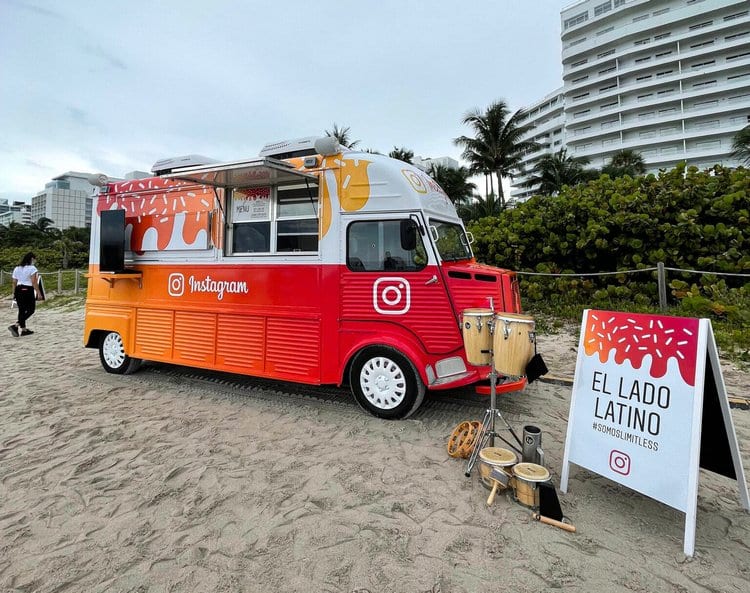
Formats include branded food trucks, glass box trucks, Airstreams, vintage vehicles, and carts or tuk tuks for dense streets. What they share is that the activation arrives rather than waits.

This post covers why the format works. For the vehicle comparison itself, see our guide to experiential marketing trucks.

Why a Brand Activation Truck Outperforms a Fixed Pop-Up Shop

Here are the key advantages of a mobile truck over a fixed location pop-up. 

The Economics Improve With Scale

Design, fabrication, and wrap are paid once. A fixed pop-up spreads its build cost across one location’s foot traffic, while a truck spreads the same cost across every stop on the route. Cost per interaction therefore falls as a campaign lengthens, which is the opposite of how most channels behave.

Scarcity Converts

A permanent storefront gives people permission to postpone. Someone notices it, intends to return, and does not. A vehicle that will be in another neighborhood tomorrow removes that option, and the interest converts while the person is standing there.

It Advertises Between Stops

A wrapped vehicle generates impressions during transit, not only during activation hours. Routing through dense corridors turns travel time into reach, which means the drive between locations is itself a placement rather than dead cost.

A Bad Location Is Recoverable

This is underrated. If a pop-up brand activation is placed on a street that turns out to be quiet, a fixed lease means living with it for the duration. A vehicle relocates the next day, which materially reduces the risk of the location decision.

When a Fixed Pop-Up Shop Is the Better Choice

Being honest about this matters, because the format is not universally superior.

  • You need square footage. A vehicle interior is small. A retail concept requiring browsing space, fitting rooms, or seating for twenty needs a unit.
  • You want a permanent address for weeks. A destination customers can be directed to repeatedly suits a longer campaign better than a moving target.
  • The activation is indoors by nature. Some experiences do not translate to a street, particularly in weather-exposed months.
  • Permits in your market are prohibitive. In a few cities, private property is genuinely easier than street approval.

Case Study: How a Truck Carried a Brand Across One City

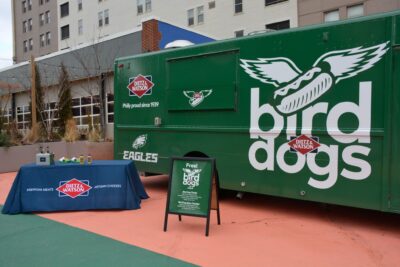
Green bird dog truck by Dietz & Watson table, sign offers free bird dogs, buildings behind.

Dietz & Watson wanted to attach itself to its hometown team’s playoff run in Philadelphia. A single pop-up would have reached one neighborhood during a moment that belonged to the whole city.

We built the Bird Dog Truck, an Eagles-green branded food truck serving Bird Dogs, and routed it across Philadelphia. It debuted at Drexel University, then rolled to the Comcast Center campus, Big Nick’s Deli, an Acme grocery store, and Rittenhouse Square, where Eagles alumni Brent Celek and Seth Joyner appeared, before finishing near Lincoln Financial Field.

More than 10 locations across 8 activation days.

Why mobility was the point: each stop reached a different crowd, students, office workers, grocery shoppers, park visitors, and fans heading to the stadium. One build, one wrap, one menu, eight days, and an audience that a fixed location could not have assembled. Read the campaign in our Dietz & Watson case study, or browse more brand activation case studies.

What Mobility Costs You

The advantages are real and so are the constraints.

  • A permit per market. Each city runs its own process on its own timeline, which is what sets the launch date on a multi-city route.
  • Transport days. Drive time between markets produces no activity and still costs money, which is why tight regional clusters beat scattered national routes.
  • Stock forecast per stop. Under-forecast and a later city gets a worse experience than the first.
  • Consistency management. Whether staff travel or are hired locally, one brief has to apply everywhere or the campaign fragments.
  • Daily setup and teardown. A build that takes half a day to open loses hours you needed at stop five. Out of home advertising has grown for nineteen consecutive quarters, with transit the fastest-growing segment, which is the wider context for why mobile formats keep gaining share

Our guide to brand activation management covers how those are handled.

How to Measure a Mobile Activation

  • Interactions per stop, which identifies the locations worth repeating.
  • Cost per interaction by location, the fairest comparison since it accounts for turnout and local cost together.
  • Sign-ups and scans captured, the conversion that outlasts the route.
  • Impressions in transit, estimated from route and dwell locations.
  • Total cost per interaction across the campaign, compared against what a single fixed activation would have delivered.

The Bottom Line

Mobile brand activations work because the expensive part of an activation is the build, and a vehicle lets one build serve many audiences. Add the urgency that comes from leaving tomorrow, the impressions earned in transit, and the ability to abandon a quiet street, and the format beats a fixed pop-up for most campaigns.

It is not the answer when you need floor space or a permanent address. Everywhere else, mobility is the advantage.

If a mobile campaign is in your plan, we design, build, permit, staff, and route them. Explore our experiential vehicles or contact our team.

Frequently Asked Questions​

A mobile brand activation is a live brand experience delivered from a vehicle rather than a fixed site. The vehicle is wrapped and fitted out as a branded environment and travels between locations within a city or across several markets.

Because the build is a fixed cost that can serve many locations. A vehicle also creates urgency by leaving, earns impressions in transit, and can relocate if a street underperforms, which a fixed lease cannot.

A temporary branded experience staged for a short window, either from a vehicle or a fixed short-term site. The mobile version travels between locations, while the fixed version occupies one address for the duration of the campaign.

Usually, because it visits several audiences rather than waiting for one. A Philadelphia campaign covered more than 10 locations across 8 activation days, reaching students, office workers, shoppers, and fans that a single site could not have assembled.

When you need square footage for browsing, fitting, or seating, when you want a permanent address customers can be directed to for weeks, when the experience is indoors by nature, or when street permits in your market are prohibitively difficult.

By leaving. A permanent store lets someone plan to return, and many never do. A vehicle that will be in another neighborhood tomorrow removes the option to postpone, so interest converts while the person is standing in front of it.

Yes, and it is worth routing for. A branded truck generates impressions in transit as well as when parked, so a route through dense traffic corridors turns travel time between stops into additional reach rather than dead cost.

A permit in every market on its own timeline, transport days that produce no activity, stock forecast per stop, consistency management across locations, and daily setup and teardown time that eats into activation hours.

It depends on budget and timeline, though the economics favor more stops since the build is already paid for. The practical limits are drive time between markets and the permitting lead time each city requires.

Track interactions per stop, cost per interaction by location, sign-ups and scans captured, impressions estimated in transit, and total cost per interaction across the campaign compared with what one fixed activation would have delivered.

FTP Free download

The Mobile Pop-Up Shop Launch Checklist

7 steps, 37 checkpoints, and a one-page brief to plan and launch a mobile pop-up shop that converts.

Instant PDF · No Cost

Benjamin Goldberg

Author

Benjamin Goldberg

CEO @ FTP Agency

Benjamin H. Goldberg is passionate about bringing brands to life on the streets. As CEO of Food Truck Promotions and co-founder of the New York and Los Angeles Food Truck Associations, he helps create unforgettable mobile experiences that blend great food, creative branding, and meaningful connections with audiences everywhere.

More posts
The Pop-Up Shop Metrics to Use for Measuring Success