How Brands Use Sports and Entertainment Marketing to Win Over Fans

By: corey 8 min read

sports and entertainment marketing

Sports and entertainment marketing is built on the one thing the rest of advertising cannot buy: an audience that chose to be there.

Nobody is forced to watch a game, attend a festival, or line up for a release. That voluntary attention is why fandom converts, and why brands that show up physically in those moments outperform brands that only buy the broadcast around them.

This guide covers what the discipline actually involves, why in-person activation beats sponsorship signage, and a hometown campaign that turned a playoff run into a citywide brand moment.

Key Takeaways

  • Fans show up in person at scale: the 2026 World Cup drew a record 6.8 million attendees, and its fan festivals drew more than nine million on top of that.
  • Most of the audience has no ticket: fan zones, watch parties, and streets around a venue are where the majority of the crowd actually is, and where activation is affordable.
  • Two sides to the discipline: marketing sports and entertainment properties themselves, and marketing other brands through them.
  • Local beats league: aligning with a city rather than a governing body avoids licensing complications and carries more emotional weight.
  • Food and drink is the native format: game day and festival culture is already built around it, which makes a sampling activation feel like part of the day.

What Is Sports and Entertainment Marketing?

Sports and entertainment marketing covers two related practices. The first is marketing the properties themselves: teams, leagues, athletes, artists, films, festivals, and venues selling tickets, subscriptions, and merchandise. The second is marketing other brands through those properties, using sponsorship, athlete and celebrity partnerships, and live activations to reach an audience already gathered.

The shared asset is passion. A fan’s relationship with a team or an artist is emotional and long-running, which is why a brand that contributes to that experience is received differently from one that interrupts it.

The Audience Is Bigger Than the Stadium

The 2026 World Cup, hosted across the United States, Mexico, and Canada, is the clearest recent illustration. The tournament set an attendance record of 6,810,966 fans across 104 matches in 16 host cities, nearly double the 1994 mark, and generated an estimated $40.9 billion in global economic activity

The more instructive number is what happened outside the stadiums. More than nine million people attended FIFA Fan Festivals across 13 host cities over 39 days, the best-attended edition since the programme began in 2006, with a single peak day of 543,020 visitors. 

That gap is the whole opportunity. Most fans do not have a ticket. They gather in fan zones, bars, parks, and the streets around a venue, and those are places a brand can reach without paying for official rights.

Why an In-Person Activation Beats Signage

Sponsorship signage buys visibility. An activation buys an interaction, and the difference shows up in what people remember. A logo on a boundary board is seen; a free cold drink handed over on a hot walk to the stadium is experienced.

Three reasons the physical format performs here:

  • The crowd is already assembled, so you are not paying to build an audience, only to reach one.
  • The mood is social and documented, which means content is produced without a creator budget.
  • Utility is genuinely welcome, because game days and festivals involve queueing, heat, and walking. This is also the argument for activating around a marquee broadcast rather than inside it. Our guide to Super Bowl marketing stunts covers how brands reach the same moment without an eight-figure media buy.

Where Brands Activate

  • Fan zones and festivals: the largest concentration of ticketless fans, and usually the most permissive on placement.
  • Tailgates and stadium approaches: high dwell time, food-led culture, and a captive walking route.
  • Watch parties and bars: the most scalable option for a regional brand, since every market has them.
  • Campus and college game days: enormous crowds with their own calendar, covered in our guide to college brand activations.
  • Playoff runs and title moments: the highest-energy window of any season, and one that arrives on short notice.

Case Study: The Dietz & Watson Bird Dog Truck

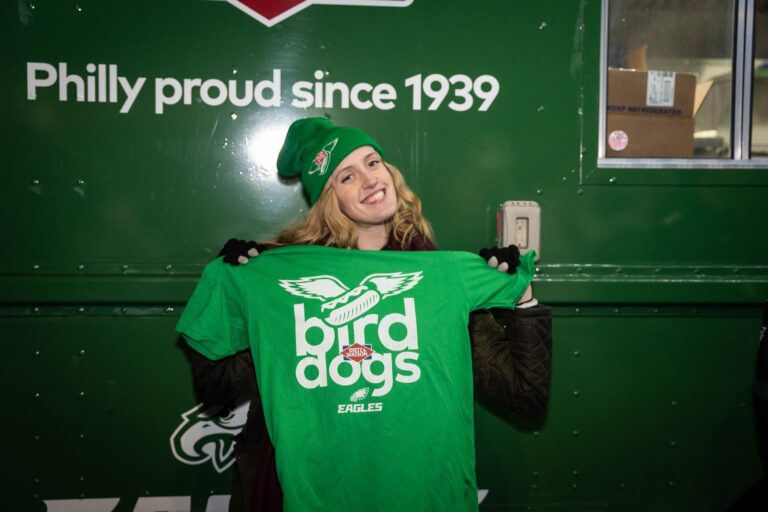
Woman in Eagles beanie holds green "bird dogs" T-shirt by wall saying Philly proud since 1939.

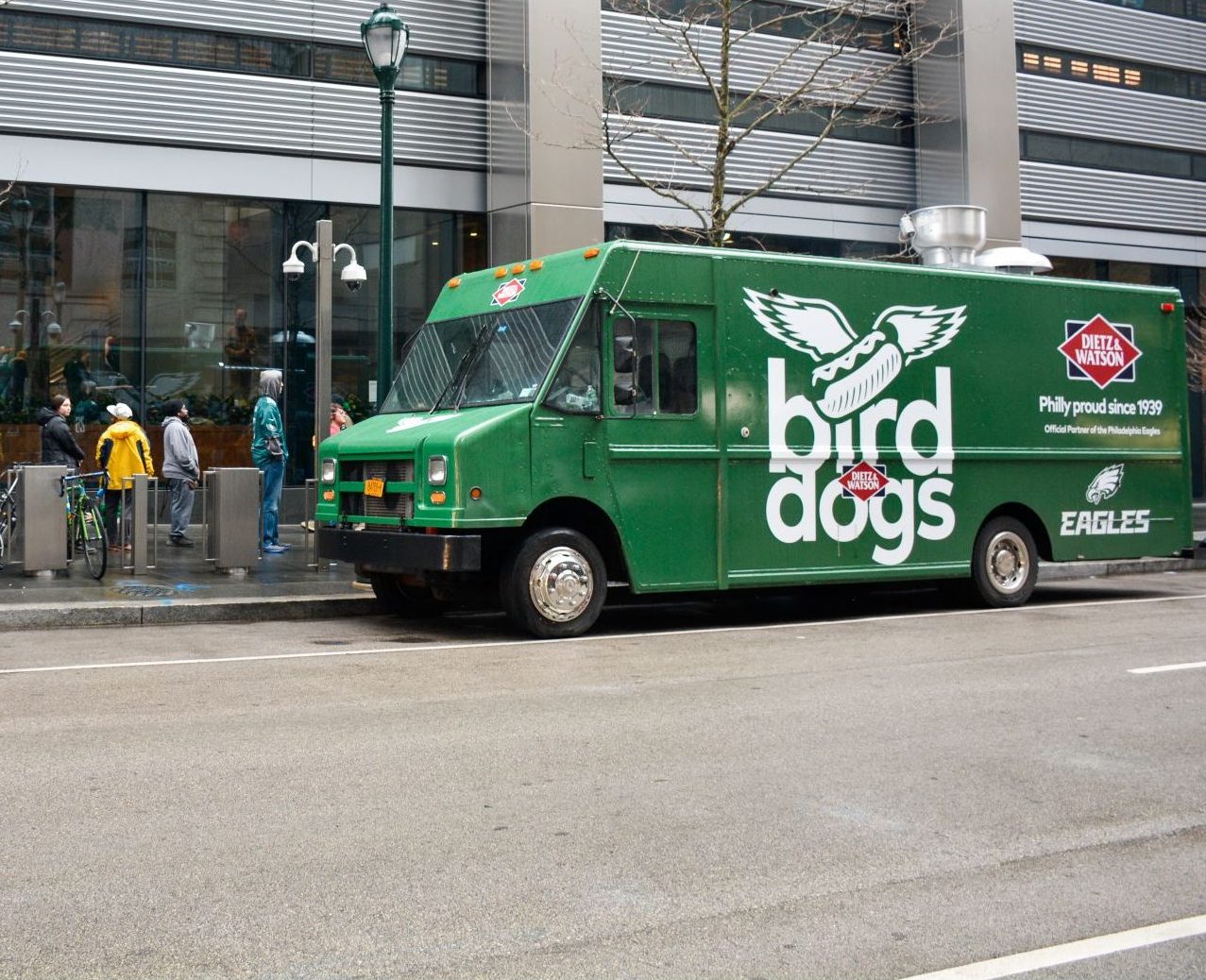
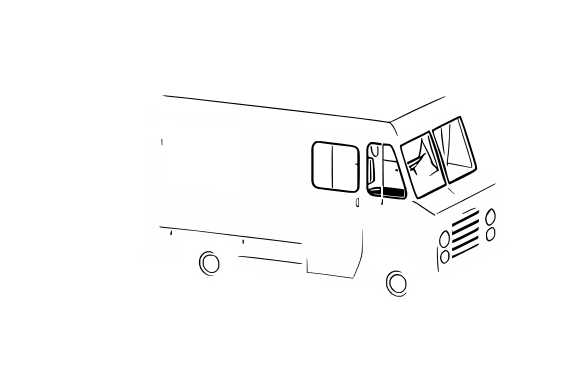
When Dietz & Watson wanted to ride its hometown team’s playoff run, the brand came to us rather than to a broadcaster. We built the Bird Dog Truck, an Eagles-green branded food truck, and put it on a mobile tour across Philadelphia serving Bird Dogs: beef franks topped with chopped long hots, provolone, and fried onions in a green bun.

It debuted at Drexel University, then rolled to the Comcast Center campus, Big Nick’s Deli, an Acme grocery store, and Rittenhouse Square, where Eagles alumni Brent Celek and Seth Joyner made appearances. It finished near Lincoln Financial Field, covering more than 10 locations across 8 activation days.

Why it worked: the brand attached itself to a city at its most excited, in a category it already owned, without needing league marks or a media buy. Civic identity did the emotional work that a sponsorship logo cannot. Read the full campaign in our Dietz & Watson mobile tour case study, or browse more brand activation case studies.

How To Measure a Sports Activation

  • Samples served and interactions per session: counted by location and by hour, since crowds move in waves around a fixture.
  • Sign-ups or scans captured: the trackable conversion from a crowd to a contact list.
  • Tagged posts and content produced: fandom is documented behavior, so earned content should be high here.
  • Local press pickup: sports coverage is dense and hungry for color around a big fixture.
  • Sales lift in the market: measured against a comparable city without an activation.

The Bottom Line

Sports and entertainment marketing works because fans opt in. The mistake is assuming access requires official rights, when the majority of any crowd is outside the venue, in fan zones and on the streets around it. A well-placed activation reaches them at a fraction of sponsorship cost and gives them something the broadcast cannot.

If a season, a tournament, or a tour is on your calendar, we design, build, permit, and staff the physical side. Explore our event marketing services or contact our team to scope a campaign.

Frequently Asked Questions​

It covers two practices: marketing sports and entertainment properties themselves, such as teams, artists, films, and festivals, and marketing other brands through those properties using sponsorship, talent partnerships, and live activations to reach an audience already gathered.

Because the audience chose to be there. Fandom is emotional and long-running, so a brand that contributes to the experience is received differently from one that interrupts it. Crowds are also concentrated, social, and actively documenting the day.

A traditional pop-up occupies a leased storefront or space for a fixed period, while a mobile pop-up is built into a vehicle and can change locations daily. The mobile version carries an identical brand experience across stops and doubles as a moving billboard between them.

No. Official rights give you access inside the venue and use of protected marks, but most of any crowd is outside it. Fan zones, tailgates, watch parties, and the streets around a stadium are all reachable without a rights deal.

Often more than attend the games. At the 2026 World Cup, official attendance was 6.8 million while FIFA Fan Festivals drew more than nine million visitors across 13 host cities, which shows the scale of the audience outside the stadiums.

Food and drink formats, because game day culture is already built around them. Sampling trucks, branded carts, and giveaways at tailgates or on stadium approaches all perform well, especially when they solve heat, thirst, or queueing.

Not without rights. Team names, logos, and league marks are protected and enforced. Brands typically align with the city and its general enthusiasm instead, which is legal, cheaper, and often carries more emotional weight locally.

Quickly. Playoff windows arrive on short notice, so the strongest campaigns are designed to work regardless of which team advances, with the build and permits scoped in advance and the creative finalized once the picture is clear.

Largely yes. Festivals, tours, premieres, and release moments all assemble a self-selected audience in a social mood. The main difference is that entertainment moments are often single-date, so timing precision matters more.

Track samples and interactions per session, sign-ups or QR scans captured, tagged posts and content produced, local press pickup, and sales lift in the activation market against a comparable city. Set the metrics before the fixture.

Start with the team, tournament, or market you want to reach and the window you can commit to. A partner can handle build, permits, routing, and staffing. Share your timing with our team and we will map the campaign around the fixture list.

FTP Free download

The Mobile Pop-Up Shop Launch Checklist

7 steps, 37 checkpoints, and a one-page brief to plan and launch a mobile pop-up shop that converts.

Instant PDF · No Cost

corey

Author

corey

More posts
Pop-Up Store vs Mobile Showroom: What’s Best for Retail Brands?