Top 6 Types of Pop-Up Shops: Which Format Fits Your Brand?
There is no single kind of pop-up shop, and the different types of pop-up shops each do a different job. A sampling truck built…
Read moreBy: David Botbol • • 11 min read
A mobile pop-up shop is a temporary retail or brand experience built into a vehicle, such as a truck, bus, trailer, cart, or vintage van, that travels to wherever a brand’s customers already are. Unlike a traditional pop-up in a leased storefront, a mobile pop-up shop can change locations by the day, carrying the same branded build-out, staff, and experience from a downtown sidewalk to a festival to a new city entirely. Brands use them to launch products, sample at scale, drive traffic to retail, and create the kind of in-person moments people photograph and share.
We’ve produced hundreds of these activations for brands from Ralph Lauren to Nespresso, so in this guide we’ll define the format properly: the types, the benefits, where the concept came from, what one looks like in practice, and how a brand launches one.
The simplest way to understand a mobile pop-up shop is as the meeting point of two ideas: the pop-up shop, a temporary retail concept that creates urgency and novelty, and the marketing vehicle, a branded truck or van that brings the brand to the street. Put them together and the vehicle becomes the store.
That one change, putting the shop on wheels, changes almost everything about how the format performs. Location stops being a constraint and becomes a strategy: the same build can work a flagship-adjacent sidewalk on Monday and a festival on Saturday. The vehicle itself becomes a moving billboard between stops. And because the entire environment travels together, the brand experience stays identical at every location, which is something a series of leased spaces can never guarantee. The trade-off is space: a vehicle imposes a footprint, which is why the design and build-out matter so much in this format.
Since “pop-up shop” usually calls a leased storefront to mind, it’s worth being precise about what changes when the shop is mobile, because we produce both and the differences drive real strategy decisions.
A static pop-up wins on square footage and dwell time: a leased space can hold a full assortment, fitting rooms, and an experience guests spend an hour inside. It suits month-long retail concepts in one proven market. A mobile pop-up wins on reach, attention, and risk: one build serves unlimited locations, the vehicle earns photography a storefront can’t, there’s no lease to commit to before the market is proven, and the experience arrives wherever the audience already is. In practice the formats also work together; some of the strongest campaigns we’ve produced used a mobile unit as the street-level engine driving traffic into a static space, the way Rag & Bone’s coffee cart fed Nordstrom’s in-store deli pop-up.
A store on wheels: merchandised inventory, browsing space, and on-site sales. DTC brands launch pop-up brand activations to test physical retail without a lease, and established retailers use them to test new markets.
Built to put a new product in as many hands as possible, fast, with a serving window, quick interactions, and takeaways that convert trial into purchase. This is the workhorse format for beauty, food, and beverage launches.
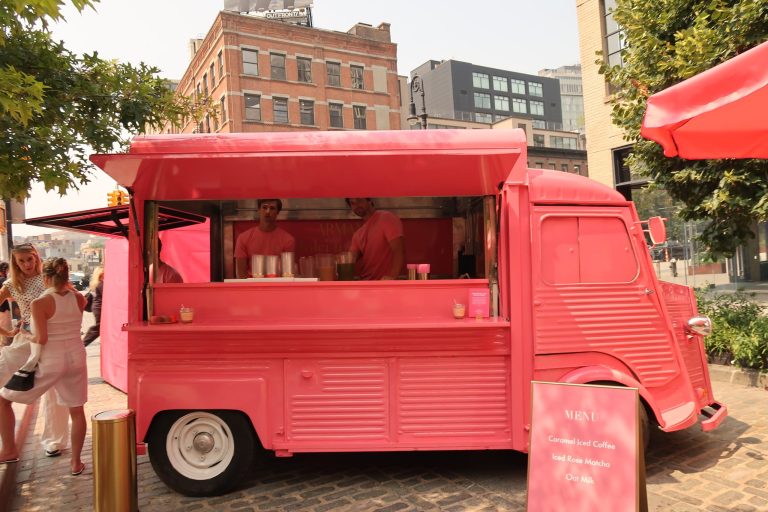
Coffee carts, cocktail trucks, and branded beverage pop-ups that wrap the brand in a drink ritual. Ralph Lauren used exactly this format when it launched Ralph’s Coffee, serving its signature blends from a custom 1943 vintage Citroen outside the Fifth Avenue flagship.
Display-and-demo environments, often in glass trucks or Airstreams, where the goal is education and store traffic rather than on-site sales. Luxury and considered-purchase brands favor this format.
The format has grown because it solves several problems at once, and the numbers back the enthusiasm. According to Capital One Shopping’s pop-up retail research (updated June 2026), 66% of retailers open pop-ups to raise brand awareness, 44% of pop-up shops cost less than $5,000 to open, and 80% of retailers who have run one considered it a success, with 58% planning another. IBISWorld’s industry analysis sized the U.S. pop-up shop industry at roughly $16 billion in 2025 across more than 42,000 businesses.
In our experience producing these campaigns, the benefits cluster into four: reach, because one build serves many locations and even multi-city tours; attention, because a designed vehicle earns photography and press that a storefront doesn’t; flexibility, because brands can test products, markets, and messages with limited commitment; and connection, because face-to-face sampling and conversation build the kind of brand affinity digital ads can’t. The mobile version amplifies all four, since the location itself becomes a lever you can pull stop by stop.
Temporary, mobile brand experiences aren’t new; they’re one of marketing’s oldest plays modernized. Brands like Wrigley’s and Pabst introduced themselves to America through immersive exhibits at the 1893 World’s Fair in Chicago, an event that drew over 27 million visitors, and marketing vehicles have been a tactic since the era of the Model T. We traced this lineage in our look at the history of experiential marketing, and the through-line is constant: brands win attention by showing up, in person, with an experience.
What’s changed is the machinery around the moment. Social media turned a good pop-up into shareable media, custom fabrication turned vehicles into fully realized brand worlds, and measurement tools made the results reportable. The mobile pop-up shop is that old instinct, rebuilt for how audiences behave now.
Because the venue is outdoors and mobile, timing is part of the strategy, and this is where production experience earns its keep. Summer is peak season, when beaches, festivals, and high-traffic streets do the promotion for you, and our calendar fills two to three months ahead for prime dates. But the off-peak windows are underrated: winter activations face far less competition for premium locations, and warm-format builds thrive in them; Revlon’s Live Boldly activation served hot cocoa in the cold and generated over 6 million impressions. Holiday pop-ups need eight to twelve weeks of lead time for themed fabrication and Q4 locations, while spring and fall offer Fashion Week, back-to-school, and shoulder-season flexibility that most brands overlook.
The practical takeaway for a first-timer: pick the season for your product’s natural moment, then book earlier than feels necessary.
Part of knowing a format is knowing its limits. A mobile pop-up is the wrong choice when the campaign needs a full product assortment and long browsing sessions, which a leased space serves better; when the goal is pure reach with no in-person component, where media buys are more efficient; or when there’s no plan to capture or measure anything, because an uncounted activation is a party, not a campaign. The format rewards brands that come with one clear goal and an audience worth meeting in person. If that’s the brief, nothing else we produce works harder.
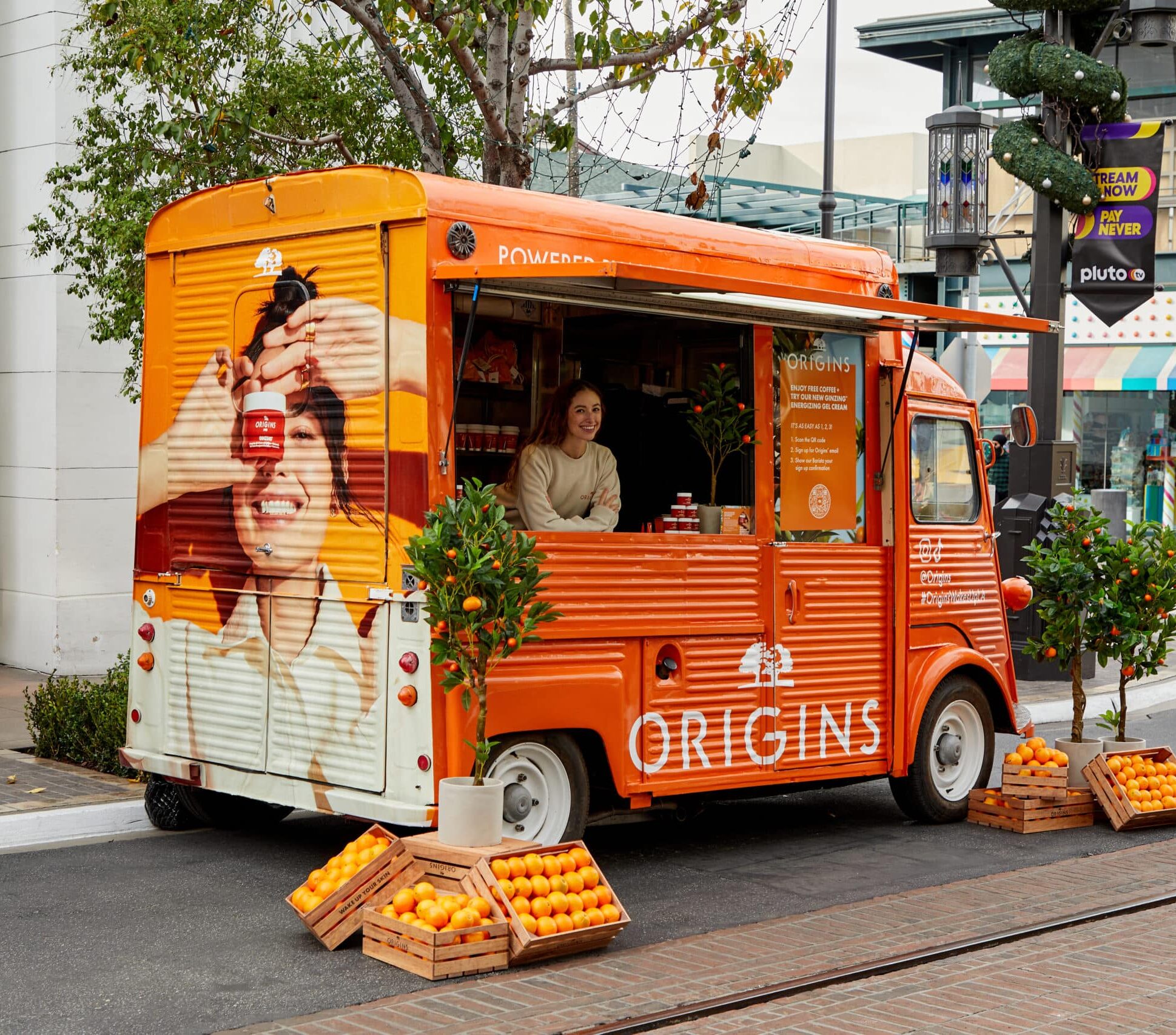
The fastest way to understand the format is to watch it work. When Origins launched its GinZing Energizing Gel Cream, a moisturizer built on ginseng, caffeine, and Vitamin C, the brand needed Los Angeles to feel the product’s energy, not just hear about it.
The Origins pop-up we produced translated the product into an experience: a vintage vehicle wrapped in vibrant Origins orange, decorated with an orange tree and branded crates of oranges to bring the Vitamin C story to life, serving complimentary coffee as a nod to the formula’s caffeine. The pop-up worked two locations, The Grove and Melrose Trading Post, with free product samples throughout, full-size products and tote bags for the first 25 guests, and surprise appearances from influencers including Sweats and the City, Amy Zhang, and Aysha Harun. The activation drew 4,000 visitors and handed out every last sample.
Notice how every element of the definition shows up: a temporary retail experience, built into a vehicle, taken to where the audience already was, designed to be photographed, and measured in visitors and samples.
Launching one follows a repeatable sequence: set a goal and one primary metric, choose the format and vehicle that fit it, design the build-out and a photo-worthy moment, handle permits and staffing, market the event before doors open, and measure everything against the goal. FTP Agency specializes in fabricating your pop-up idea and we supply the experiential vehicles.
A mobile pop-up shop is a temporary retail or brand experience built into a vehicle such as a truck, bus, trailer, or cart, allowing a brand to sell, sample, or showcase products wherever its customers are. Because the venue travels, locations become a strategy rather than a constraint.
A traditional pop-up occupies a leased storefront or space for a fixed period, while a mobile pop-up is built into a vehicle and can change locations daily. The mobile version carries an identical brand experience across stops and doubles as a moving billboard between them.
The main formats are mobile retail pop-ups that sell on site, sampling and product launch pop-ups built for trial at volume, mobile cafes and bars that wrap the brand in a beverage ritual, and mobile showrooms designed for demos, education, and driving retail traffic.
For reach, attention, flexibility, and connection. Capital One Shopping’s research (updated June 2026) found 66% of retailers open pop-ups to raise awareness, 44% cost under $5,000 to open, and 80% of retailers who ran one considered it a success, with 58% planning another.
IBISWorld sized the U.S. pop-up shop industry at roughly $16 billion in 2025, spread across more than 42,000 businesses, and temporary retail broadly generates tens of billions annually. The format has moved from experiment to mainstream retail and marketing strategy.
Anywhere from a single day to a multi-week tour. Industry research puts the typical pop-up at roughly 3 to 14 days, and mobile builds often extend that by touring: the same vehicle can work one city for a weekend, then carry the identical experience to the next market.
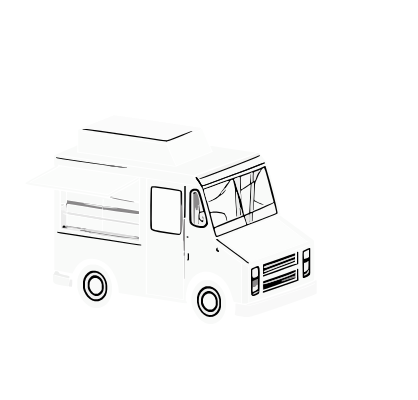
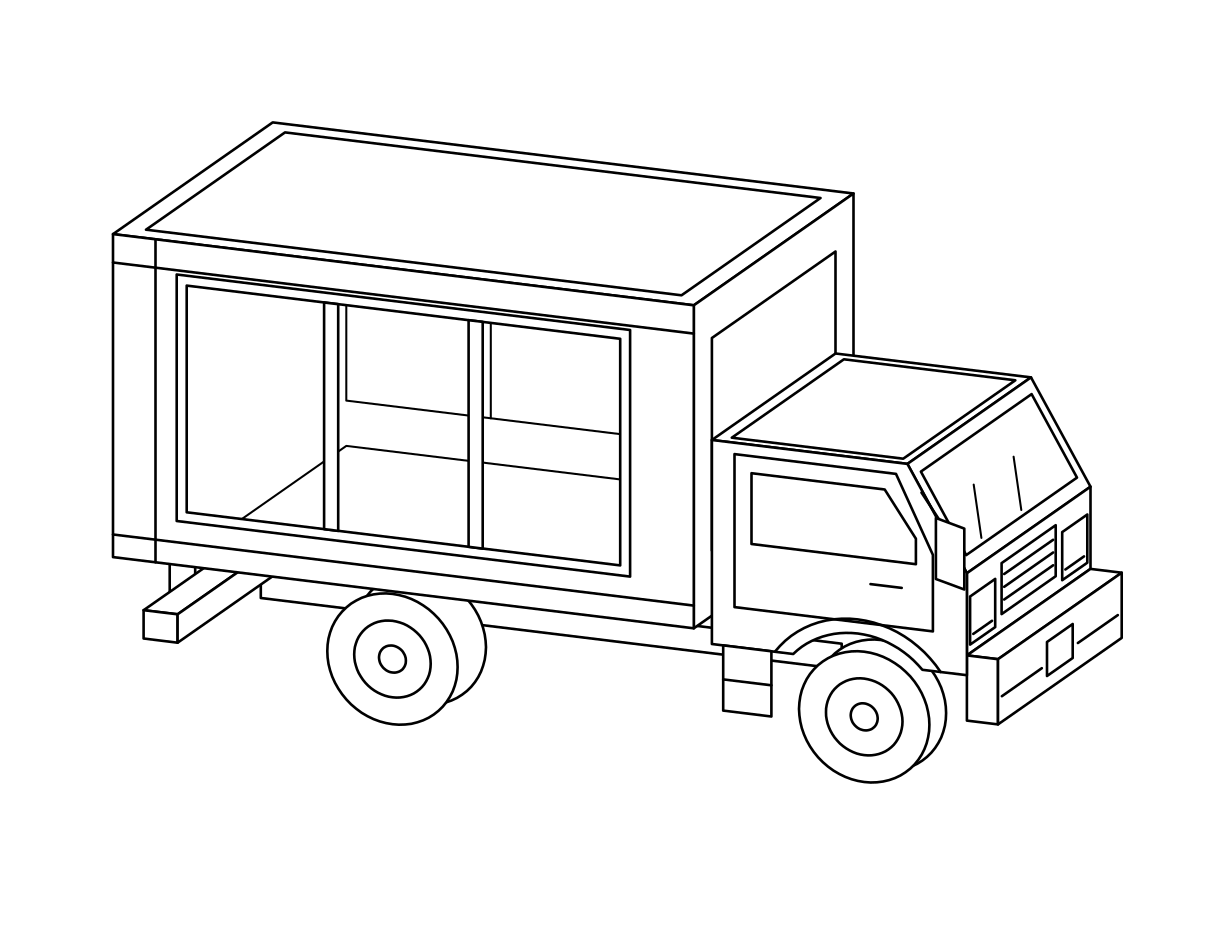
Food trucks, glass box trucks, buses and double-deckers, Airstreams, trailers, vintage Citroens, tuk tuks, and carts. The right choice depends on the goal, the product, and the route: sampling favors serving windows, showrooms favor walk-in space, and charm-led campaigns favor vintage silhouettes.
No. Global names like Nespresso and Ralph Lauren use them, but the format’s low commitment makes it just as practical for DTC and emerging brands testing physical retail. Nearly half of pop-ups cost under $5,000 to open, per Capital One Shopping’s research.
Yes, when they’re designed around a goal and measured. The Origins GinZing pop-up drew 4,000 visitors and distributed every sample across two Los Angeles locations, and 80% of retailers who have opened a pop-up considered it successful in Capital One Shopping’s research.
Set a goal and one primary metric, pick the format and vehicle that fit, design the build-out and photo moment, arrange permits and staffing, promote before opening, and measure against the goal. An experiential agency can produce the entire sequence, from fleet to reporting, as one engagement.
Author
EVP, Managing Director @ FTP Agency
David Botbol thrives on turning bold ideas into real-world brand moments. As Executive VP and Managing Director of Food Truck Promotions, and a leader within the New York and Los Angeles Food Truck Associations, he draws on a background in business development and startups to help brands connect with audiences through creative, unforgettable mobile experiences.
There is no single kind of pop-up shop, and the different types of pop-up shops each do a different job. A sampling truck built…
Read more →
The best pop-up shop ideas don’t start with a vehicle or a venue; they start with a concept strong enough that people line up,…
Read more →
Mobile pop-up shops have become the way ambitious brands go offline: a store, a sampling bar, or a showroom built into a vehicle,…
Read more →We use and share personal information through cookies and similar technologies on our sites to personalize your shopping experience and ads. Others may use this information for their own marketing and business purposes. . Check our Privacy Policy for more details.
Browser Opt-Out Honored
We use and share your personal information with others to personalize your shopping experience and show you targeted ads on other sites based on your interests and online activities.
Online Info includes cookies, pixel tags, and similar technologies connected to your browser or device. Offline Info includes information associated with your email address based on your other interactions with us.
We use and share your personal information with others to personalize your shopping experience and show you targeted ads on other sites based on your interests and online activities. Information includes cookies, pixel tags, and similar technologies connected to your browser or device (Online Info), as well as information associated with your email address based on your other interactions with us (Offline Info). Others may use this information for their own marketing and business purposes.
You can choose to opt out of sharing one or both types of information.