The 5 Experiential Marketing Trends That Actually Matter in 2026

By: David Botbol 9 min read

experiential marketing trends

Most experiential marketing trends pieces describe what looks new. The ones worth reading describe where the money is actually going, because that is what changes what your competitors will be doing next year.

Five shifts are visible in the current data, and none of them are speculative. Each is drawn from published figures rather than from a prediction, and each has a practical consequence for how a campaign should be planned.

Here is what has changed, what the evidence says, and what to do about it.

Key Takeaways

  • Budgets are moving toward physical media: out of home revenue has grown for nineteen consecutive quarters, reaching a record $9.46 billion in 2025.
  • Creator money is following: influencer budgets are shifting into non-social channels including digital out of home, per eMarketer.
  • Measurement expectations have hardened: clients now expect attribution from activations, not impression estimates.
  • The spending audience has shifted younger: millennials and adult Gen Z now command 32 percent of consumer spend, up eight points since 2020.
  • Trial is the strategy for doubted categories: where the barrier is disbelief rather than awareness, sampling outperforms advertising.

Here are the top experiential marketing trends shaping how brands approach activations. 

1. Budgets Are Moving From Screens Back to Streets

The most consequential trend is also the least discussed, because it contradicts the assumption that everything moves online eventually.

Out of home advertising revenue reached a record $9.46 billion in 2025, growing 3.6 percent year over year and extending the industry to 19 consecutive quarters of growth. Transit was the fastest-growing segment for the second year running, up 9.2 percent. 

What it means for you: physical placement is a growth channel rather than a legacy one, and the transit figure specifically indicates that mobile and street-level formats are where the growth sits. Planning as though digital is the default and physical the experiment has the situation backwards.

2. Creator Budgets Are Going Physical

This one surprises people, because influencer marketing is assumed to be a purely digital line item.

Growth in sponsored social spending has largely leveled off, and brands are redirecting creator budgets into paid social and non-social channels including television, digital out of home, and podcasts. US influencer spending is forecast to reach $13.7 billion by 2027, up from $10.5 billion in 2025. 

What it means for you: the creator budget and the activation budget are converging. A campaign with a creator appearing in person, promoting attendance beforehand and producing content on the day, now sits in a category both budgets can fund.

3. Measurement Expectations Have Hardened

The biggest change in how activations are commissioned is not creative, it is accountability.

Research from the OAAA and Kochava found out of home campaigns delivered a median lift of 20 percent for in-person outcomes and 14 percent for digital outcomes, roughly twice the performance lift of broadcast and streaming television. Once that kind of measurement exists, clients start expecting it.

What it means for you: an activation reported in impressions and footfall now looks evasive rather than normal. The capture mechanic, the promo code, the UTM structure, and the CRM field all have to be decided before the build, because none can be added afterwards.

4. The Spending Audience Has Shifted Younger

Millennials and adult Gen Z now command 32 percent of consumer spend, an eight-point increase since 2020, while older cohorts have seen a nearly ten-point drop over the same period.  

What it means for you: two things. The audience most responsive to in-person experiences is also the audience gaining spending power fastest, which is a favorable combination. And the eight-point move in five years suggests planning against last year’s audience mix is already out of date.

5. Trial Has Become the Strategy for Doubted Categories

Plant-based food, dairy alternatives, refillable packaging, and unfamiliar formats all share a problem advertising cannot solve: people do not disbelieve the message, they disbelieve the product.

Where the barrier is doubt rather than awareness, no amount of media spend resolves it, and one sample does. That has quietly made sampling the primary launch channel for categories that would once have led with a television campaign.

What it means for you: if your objection is I do not think it will be as good, budget for trial rather than reach. Our guide to test marketing a new product covers how to structure that.

Case Study: How ShopRunner Proved an Activation With 2,500 Sign-Ups
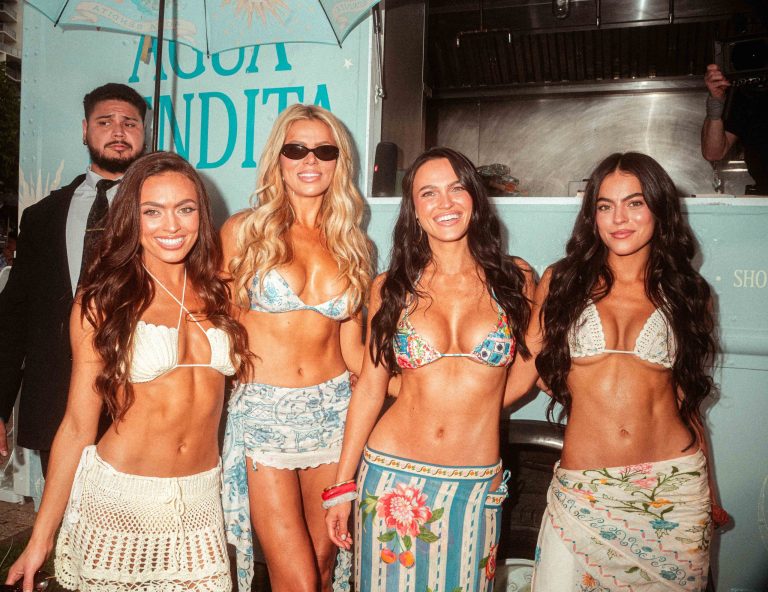
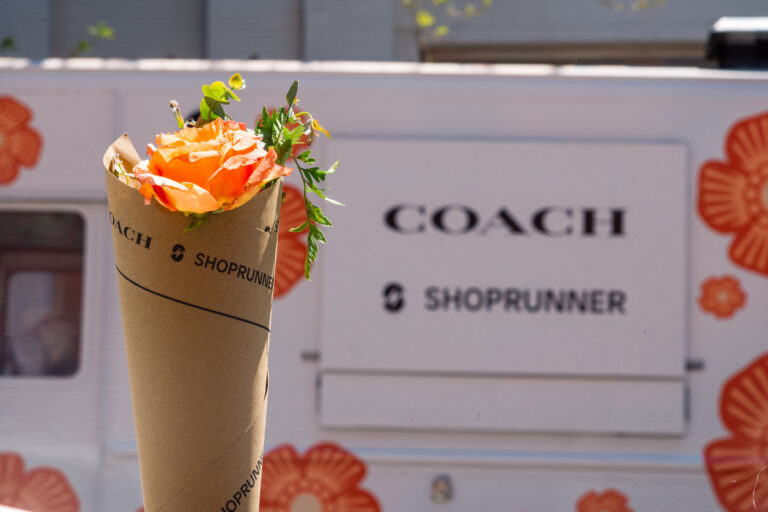
Bouquet of orange flowers with SHOPRUNNER branding in front of van with COACH and SHOPRUNNER logos.

Trend three is the one most likely to change how your next campaign is judged, so it is worth seeing what a fully measured activation looks like.

ShopRunner wanted app subscribers, which is a conversion goal rather than an awareness goal. We wrapped a food truck in festive floral vinyl, used the pull of Coach to draw attention, and gave away branded flower bouquets from a limited-time pop-up on the corner of Prince and Broadway in SoHo. The queue ran around the corner for three days.

The mechanic is the part that matters. QR codes were built into the pop-up itself, onto the brand ambassadors’ necklaces, and onto bounce-back cards. Guests scanned, signed up, and received their bouquet in return, so every interaction produced a record.

The result: more than 2,500 app subscriptions across three days. Not an impression estimate, a countable number of new subscribers. That is what the measurement shift looks like in practice, and it was possible because the capture mechanic was designed in before the truck was built. Read the campaign in our ShopRunner and Coach case study, or browse more brand activation case studies.

What to Do Differently This Year

  • Set the measurement before the creative. Decide the single action, the capture mechanic, and the tracking structure at the brief stage rather than after approval.
  • Look at the creator budget as well as the events budget. If both can fund the same campaign, the available scope is larger than either line suggests.
  • Treat physical placement as a growth channel. Nineteen consecutive quarters is a trend, not a rebound.
  • Check your audience assumptions. An eight-point shift in spending share in five years means a plan built on older data is planning for a market that has moved.
  • Ask what the actual barrier is. Awareness problems want reach. Doubt problems want trial. They are different budgets.

One useful discipline is knowing which trends do not warrant a budget line.

  • Anything defined by a single technology. Formats built around a specific piece of hardware date faster than the campaigns they appear in.
  • Trends without a mechanism. If nobody can explain why it makes someone stop, buy, or return, it is an aesthetic rather than a strategy.
  • Trends that only work at enormous scale. A tactic that requires a stratospheric budget is a case study, not a plan.
  • Anything that cannot be measured. Given the measurement shift above, an unmeasurable activation is now actively harder to get approved. Our roundup of brand activation ideas covers formats with a mechanism behind them rather than an aesthetic.

The Bottom Line

The experiential marketing trends worth acting on are the ones with numbers attached. Physical media is growing, creator budgets are moving toward it, measurement expectations have risen sharply, the spending audience is younger than it was, and trial has become the answer for categories where people are doubtful rather than unaware.

The practical version of all five is the same: design the measurement in first, then build something worth measuring.

If you are planning against these shifts, we design, build, permit, and staff activations with the tracking built in. Explore our brand activation services or contact our team.

Frequently Asked Questions

Budgets moving from screens toward physical media, creator spending shifting into non-social channels, measurement expectations hardening around attribution, the spending audience skewing younger, and trial becoming the primary strategy for categories where people are doubtful.

Yes, substantially. Revenue reached a record $9.46 billion in 2025, up 3.6 percent, extending the industry to nineteen consecutive quarters of growth. Transit was the fastest-growing segment for the second consecutive year at 9.2 percent.

Increasingly. Growth in sponsored social spending has largely leveled off, and eMarketer reports brands redirecting creator budgets into non-social channels including television, digital out of home, and podcasts, with US spend forecast at $13.7 billion by 2027.

Clients now expect attribution rather than impression estimates. Research from the OAAA and Kochava found out of home delivered roughly twice the performance lift of broadcast and streaming television, and once that measurement exists it becomes the expectation.

Samples distributed, sign-ups and QR scans, promo code redemptions, cost per acquired customer, and sales lift against a control market. All of it depends on the capture mechanic being designed in before the build rather than added later.

Millennials and adult Gen Z command 32 percent of consumer spend, an eight-point increase since 2020, while older cohorts dropped nearly ten points. That is the audience most responsive to in-person experiences, which is a useful alignment.

When the barrier is doubt rather than awareness. If people have heard of the product and simply do not believe it will be good, no amount of media resolves that, while one direct trial can. This is common in plant-based and unfamiliar formats.

Anything defined by a single technology, anything without a mechanism explaining why it makes someone stop or buy, anything that only works at enormous budget, and anything that cannot be measured, which is now harder to get approved.

They increasingly fund the same campaigns. Creator budgets moving into physical channels means an activation with a creator appearing in person can draw from both lines, which usually produces more scope than either would fund alone.

Set the measurement before the creative, check whether the creator budget can contribute, treat physical placement as a growth channel rather than an experiment, refresh your audience assumptions, and identify whether your real barrier is awareness or doubt.

FTP Free download

The Mobile Pop-Up Shop Launch Checklist

7 steps, 37 checkpoints, and a one-page brief to plan and launch a mobile pop-up shop that converts.

Instant PDF · No Cost

David Botbol

Author

David Botbol

EVP, Managing Director @ FTP Agency

David Botbol thrives on turning bold ideas into real-world brand moments. As Executive VP and Managing Director of Food Truck Promotions, and a leader within the New York and Los Angeles Food Truck Associations, he draws on a background in business development and startups to help brands connect with audiences through creative, unforgettable mobile experiences.

More posts
How to Choose an Experiential Marketing Vehicle for Your Pop-Up Shop