The 4 Types of Guerrilla Marketing Explained

By: David Botbol 9 min read

types of guerrilla marketing explained

The four types of guerrilla marketing are indoor, ambush, experiential, and street, and they are not interchangeable.

They differ in where they happen, what permission they need, how much risk they carry, and what they cost. Choosing the wrong one is how brands end up with a campaign that cannot be permitted, cannot be repeated, or lands them in a dispute with an event organizer.

This guide covers what each type is, where it works, the risk attached to it, and how to decide between them.

Key Takeaways

  • The four types carry very different risk: experiential and street are straightforward to permit, while ambush is deliberately unsanctioned.
  • Experiential is the most usable: it works in almost any public environment and carries more reward than risk.
  • Ambush is the one to be careful with: activating at an event without permission means security, trademark exposure, and no second chance.
  • Surprise is the common mechanic: every type works by appearing where an advertisement would not.
  • Guerrilla does not mean cheap: the tactic is unconventional rather than inexpensive, and a thin execution reads as a stunt that failed.

What Is Guerrilla Marketing?

Guerrilla marketing means creating an element of surprise for customers through unconventional campaigns that reach people in an unexpected and memorable way. Despite the name, it is not meant to be aggressive or combative. It is meant to raise brand awareness imaginatively.

The term was coined by the business writer Jay Conrad Levinson in his 1984 book of the same name, written for small businesses that could not outspend larger competitors. The core principle, generating buzz that translates into sales rather than buying attention outright, is why the approach still works four decades later.

The Types of Guerrilla Marketing Explained

For campaigns that demonstrate it, see our roundup of the best guerrilla marketing campaigns. 

1. Indoor Guerrilla Marketing

Activations executed inside public buildings: college campuses, brick-and-mortar retail, transit stations, hotel lobbies, and museums.

Examples range from flash mob performances to unexpected signage placement. The defining feature is a controlled environment with a captive audience, since people indoors are usually waiting, queueing, or browsing rather than passing through at speed.

Permission required: an agreement with the venue or property manager. There is no such thing as an indoor activation without one, and attempting it is trespass rather than marketing.

Best for: brands with a retail partner, campus audiences, and any activation that needs shelter or power.

2. Ambush Guerrilla Marketing

Activations implemented at large-scale events such as sporting fixtures, festivals, and trade shows without permission. This is the highest-risk category and the one most often described inaccurately.

It is challenging to execute because major events run heightened security, both to protect attendees and to defend the exclusivity that official sponsors have paid for. Sponsors hold category exclusivity, event names and marks are trademarked, and organizers enforce both.

The practical version most brands should run instead is activating on public streets and lots around a venue with proper city permits, reaching substantially the same crowd without the exposure. Our guide to brand activation events covers that distinction.

Permission required: none by definition, which is the risk. This is not legal advice, and anything approaching an event’s marks or grounds should be reviewed by counsel first.

3. Experiential Guerrilla Marketing

The most common form, and the one that brings more reward than risk. It can be held in almost any public environment, from pop-up shops to citywide scavenger hunts.

What separates it from the others is participation. The most successful experiential guerrilla campaigns invite people to interact with a brand rather than simply to notice it, which is why the format converts as well as it does.

Permission required: a city permit for public space, or a property agreement for private land. Food service adds health department approval.

Best for: most brands, most of the time. If you are choosing without a specific reason to do otherwise, this is the category.

4. Street Guerrilla Marketing

Activations that take advantage of existing public areas or environments to create a brand presence. Often temporary, and typically built around signage, installations, or staff rather than a structure.

GoldToe’s New York Fashion Week campaign is the standard illustration. GoldToe sent brand ambassadors through the city wearing the product to drive people toward a main event in Herald Square, where Manhattan statues including the Wall Street Bull were dressed in the new range. Gift baskets went to Wall Street firms, anyone donating used menswear received a free pair, and the brand donated to a nonprofit providing interview clothing.

Why it worked: the stunt earned the attention, the street team converted it, and the charitable element gave press a reason to cover it beyond the novelty.

Permission required: city permits for anything placed, distributed, or served in public space. Our guide to street marketing covers the staffing-led version in more detail.

How to Choose Between Them

  • Start from the audience location. Indoors with a retail partner, at an event, on a street, or somewhere you can bring a crowd to.
  • Then check what permission that requires. Venue agreement, city permit, property agreement, or nothing at all, which is the warning sign rather than the shortcut.
  • Match the risk to the brand. An established brand has more to lose from an ambush campaign going wrong than a challenger does.
  • Decide whether you need participation or attention. Street and indoor generate notice, experiential generates interaction and data.
  • Be realistic about repeatability. A stunt works once. An experiential format can run for weeks or travel between cities.

Case Study: How Chanel Took a Store Experience Onto the Street
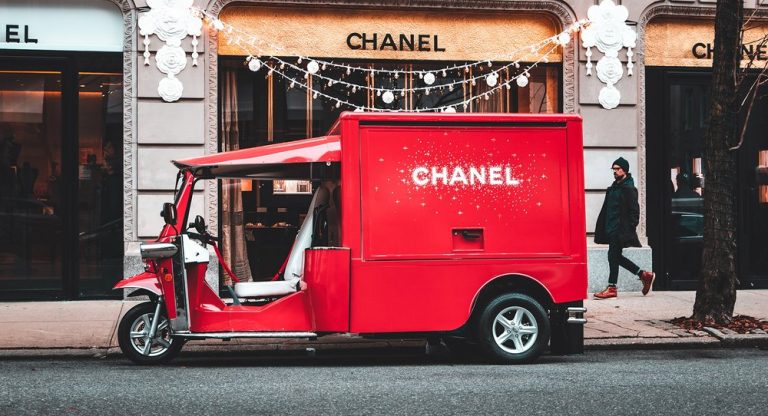
Red Chanel tuk-tuk parked outside a Chanel store with festive lights; person walking by.

Experiential vehicles and guerrilla marketing suit each other, because a vehicle takes a surprise activation mobile and puts a brand directly where its customers already are.

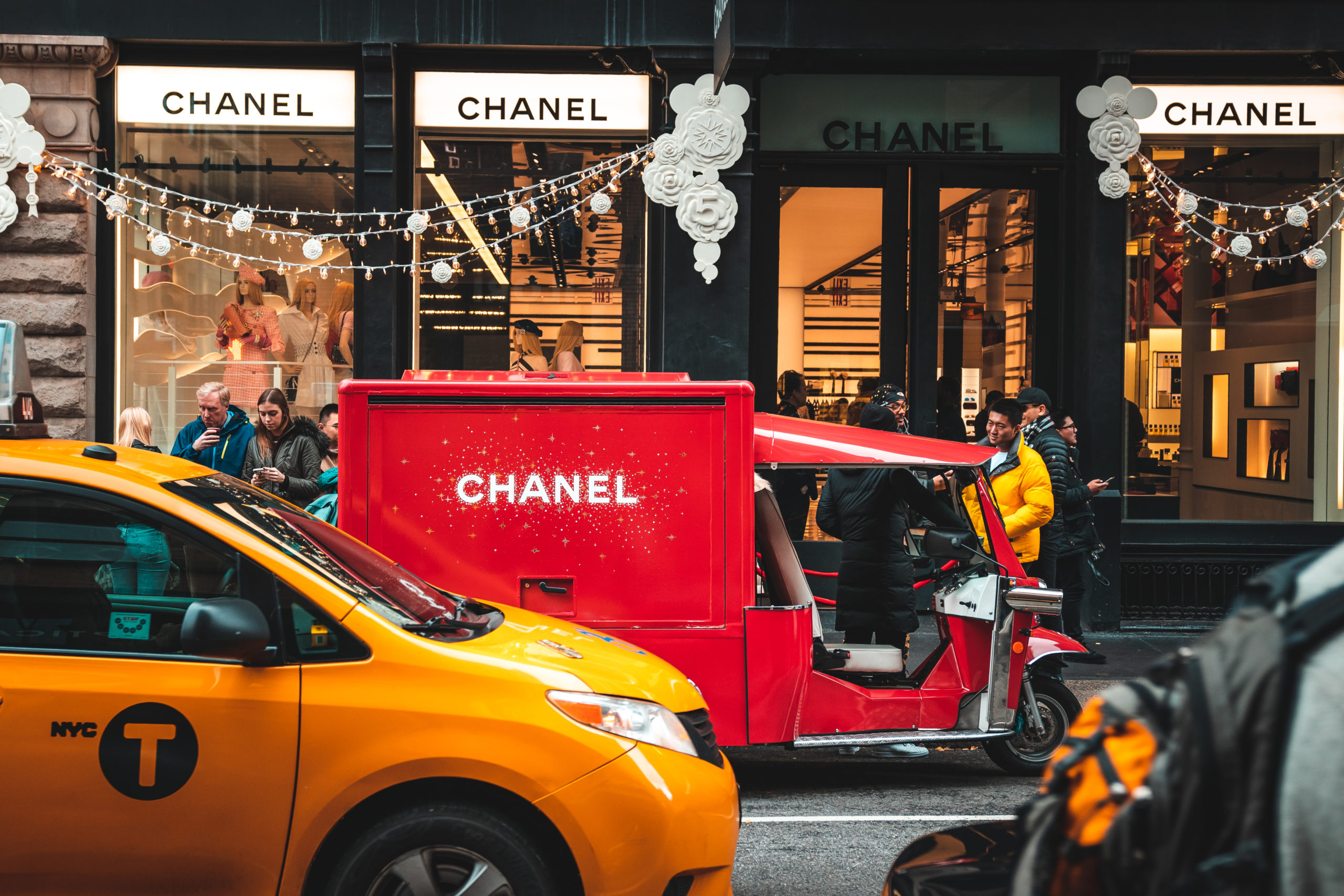
As part of the month-long Le Rouge Chanel pop-up, Chanel worked with us to extend a luxury in-store experience onto the streets of Manhattan. We created a winter wonderland across vintage vehicles clad in red with holiday lights, candy canes, and marshmallows, stationed outside the brand’s most popular storefronts in New York City.

Shoppers were greeted with a complimentary cup of Chanel’s own hot chocolate, developed alongside our in-house culinary team, on cold December days. The campaign served over 10,000 cups and drove more than 5 million impressions, reaching the brand’s target audience directly rather than through media.

Why it is experiential rather than street guerrilla: people did not simply notice it, they queued, took something, and stayed. That participation is the whole distinction between the two categories, and it is why experiential is the type most brands should start with. Browse more work in our brand activation case studies.

What Guerrilla Marketing Is Not

  • It is not automatically cheap. Levinson wrote for small businesses, but a modern guerrilla campaign carries fabrication, permits, and staffing costs like any other activation.
  • It is not a licence to ignore rules. Ambush is the only unsanctioned category, and even that has legal limits around trademarks and event marks.
  • It is not a substitute for a strategy. Surprise gets attention. What you do with the attention decides whether the campaign produced anything.
  • It is not only for challengers. Chanel is not a small business, and the tactic works at every level of the market.

How to Measure a Guerrilla Campaign

  • Interactions and items distributed, for the participation-led types.
  • Impressions and press pickup, which is the primary return for street and stunt-led work.
  • Tagged posts and share volume, since surprise is inherently shareable and this is where the reach compounds.
  • Sign-ups or scans captured, the conversion that separates a campaign from a stunt.
  • Cost per interaction, the figure that keeps a creative idea honest against your paid channels.

The Bottom Line

The four types of guerrilla marketing are not a menu of equivalent options. Indoor needs a venue partner, ambush carries real legal and security risk, street earns attention without much participation, and experiential does the most work for the most brands.

Pick the category from where your audience is and what permission you can actually obtain, then design the surprise inside those constraints rather than around them.

If a guerrilla campaign is in your plan, we design, build, permit, and staff them. Explore our brand activation services or contact our team.

Frequently Asked Questions

Four main types: indoor, executed inside public buildings such as campuses and retail stores; ambush, staged at large events without permission; experiential, participation-led activations in almost any public environment; and street, which uses existing public spaces to create a brand presence.

Guerrilla marketing creates an element of surprise through unconventional campaigns that reach people in unexpected and memorable ways. The term was coined by Jay Conrad Levinson in 1984, originally for small businesses that could not outspend larger competitors.

Activations implemented at large-scale events such as sporting fixtures, festivals, and trade shows without permission. It is difficult to execute because events run heightened security to protect attendees and the exclusivity that official sponsors have paid for.

It occupies contested ground. Activating on public streets around a venue with city permits is legitimate, while using an event’s trademarked names or marks, or entering its grounds without permission, is not. Anything near that line should be reviewed by counsel.

Experiential. It works in almost any public environment, carries more reward than risk, and is participation-led, which means it produces interactions and data rather than only impressions. Permits are straightforward compared with the alternatives.

Activations that use existing public areas to create a brand presence, usually temporary and built around signage, installations, or staff. GoldToe dressing Manhattan statues in its underwear during Fashion Week is the standard example.

Most do. Indoor needs a venue agreement, street and experiential need city permits for public space or a property agreement for private land, and food service adds health department approval. Only ambush is unsanctioned, which is what makes it risky.

Not necessarily. The approach was conceived for brands that could not outspend competitors, but a modern campaign carries fabrication, permit, and staffing costs like any other activation. Unconventional is not the same as inexpensive.

Yes. Chanel ran a guerrilla campaign extending a store experience onto Manhattan streets, serving over 10,000 cups of hot chocolate and driving more than 5 million impressions. The tactic works at every level of the market.

Track interactions and items distributed, impressions and press pickup, tagged posts and share volume, sign-ups or scans captured, and cost per interaction. The capture metric is what separates a campaign from a stunt.

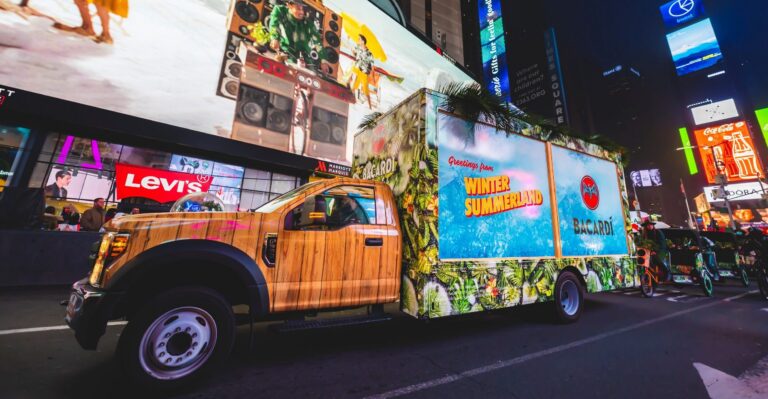
A branded promotional truck on a city street

Merlin AI

See your brand on a promotional truck in 30 secs.

Pick a vehicle, drop in your website, and Merlin AI brings your brand activation to the streets instantly.

Try It Now

Take Your Brand to the Streets.®

David Botbol

Author

David Botbol

EVP, Managing Director @ FTP Agency

David Botbol thrives on turning bold ideas into real-world brand moments. As Executive VP and Managing Director of Food Truck Promotions, and a leader within the New York and Los Angeles Food Truck Associations, he draws on a background in business development and startups to help brands connect with audiences through creative, unforgettable mobile experiences.

More posts
How to Run a Brand Masterclass Activation