How to Choose a Brand Activation Company
Choosing a brand activation company is difficult for a specific reason: every portfolio looks good, and none of them show you the part that…
Read moreBy: David Botbol • • 9 min read
The best experiential marketing examples share one quality: none of them led with a product.
Experiential marketing focuses less on a single product and more on a brand’s message, built around active, in-person engagement. The goal is an emotional connection that turns a one-time interaction into a lasting relationship.
Almost every company uses interactive marketing in some form, but a handful of campaigns stand out for reshaping public perception. The five below did exactly that, and each offers a lesson any brand can apply.
These five span energy drinks, paint, beer, frozen food, and luxury fashion, which is itself the point: the approach works in any category. What they share is a willingness to lead with an idea big enough to change the conversation.
In 2012, Red Bull sent skydiver Felix Baumgartner to the edge of the stratosphere to attempt the highest parachute jump in history, and to become the first person to break the sound barrier in freefall.
The jump, from around 128,000 feet at a top speed near 844 mph, was broadcast live and drew roughly eight million concurrent YouTube viewers, a record at the time.
The campaign did not mention the product once, and it did not need to. By owning the most extreme moment on the internet that year, Red Bull cemented its identity as the brand of pushing human limits.
The lesson: the most powerful experiential marketing sells a feeling the brand stands for, not the product itself.
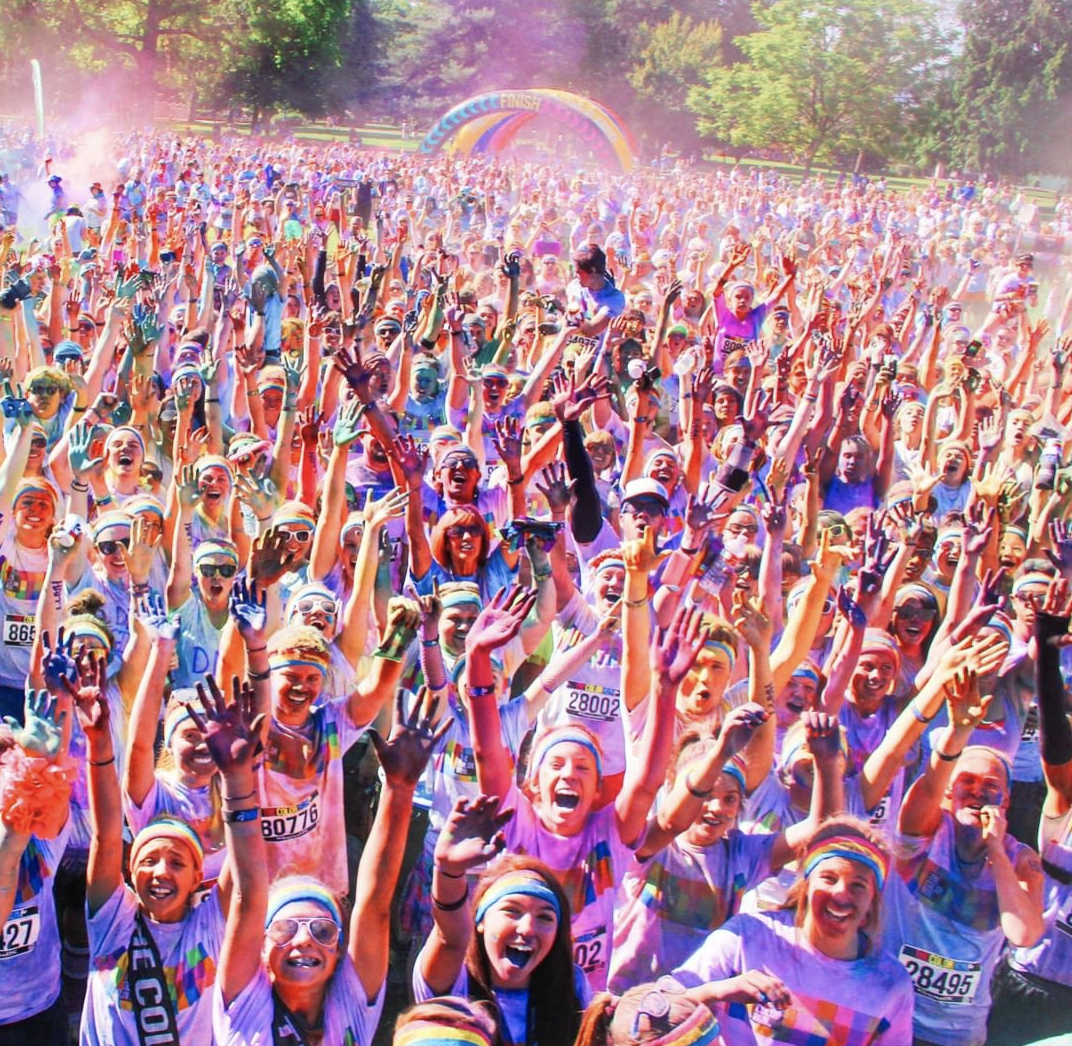
Paint is a hard category to make exciting. Dulux addressed that by attaching itself to The Color Run, an untimed 5K held in cities worldwide where participants start in white and get doused in a different colored powder at each kilometer, finishing at a festival of music and mass color throws.
The event has raised millions for charity and, just as importantly for the brand, repositioned Dulux as vibrant and life-affirming rather than a hardware-store commodity.
The lesson: an experience can attach an emotion to a category that has none, and that emotion becomes the differentiator.
Carlsberg has long claimed to be probably the best beer in the world, and in 2015 it turned that tagline into an activation. On London’s Brick Lane, the brand installed a billboard reading probably the best poster in the world, with one feature that made it exactly that: a working tap dispensing free beer.
The stunt was cheeky, shareable, and impossible to walk past, and it introduced the brand to a wave of new customers who queued for the novelty rather than the product.
The lesson: a single, well-placed interactive moment can turn a slogan into an experience people actively seek out.
Facing years of declining sales and a dated diet-brand image, Lean Cuisine staged an installation in New York’s Grand Central Terminal. Instead of a scale measuring pounds, a gallery of scales invited women to be weighed by what mattered to them: their careers, their families, the goals they had reached.
No products, no samples, no sales pitch. The #WeighThis campaign generated over 200 million impressions and a 428 percent increase in brand conversation, and it helped move Lean Cuisine from a diet label to a brand about self-worth.
The lesson: the right experience can reposition a brand more effectively than any advertising campaign.
In 2019, luxury house Louis Vuitton partnered with Riot Games’ League of Legends, creating a bespoke travel case for the World Championship trophy and a limited-edition LVxLOL clothing collection.
The pairing of French luxury and competitive esports generated enormous attention precisely because it was unexpected, introducing each brand to the other’s large and previously separate audience.
The lesson: an unexpected partnership can unlock a new market and make an established brand feel newly relevant.
The five campaigns above are useful, and they are also enormous. It is worth seeing the same principle at a scale a normal brand can actually commission.
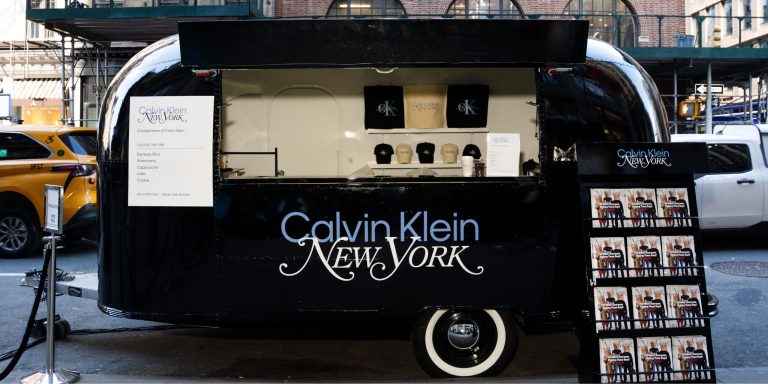
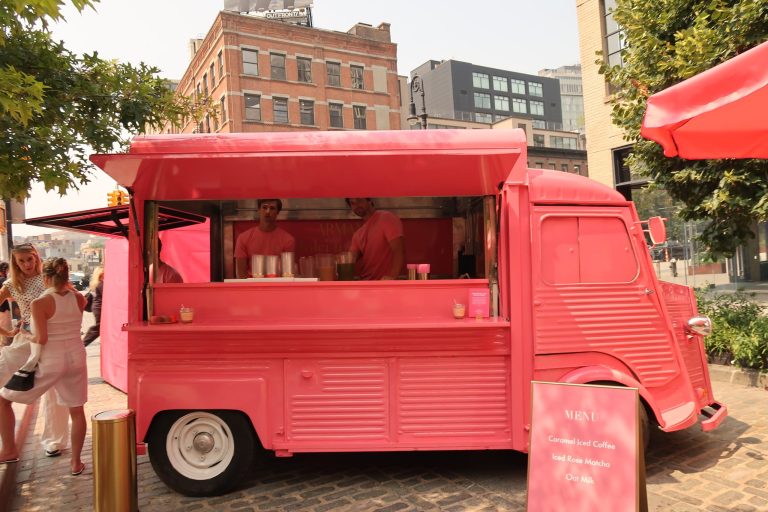
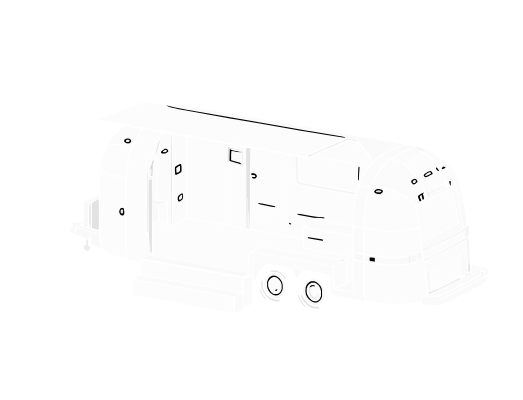
To launch a limited-edition capsule collection with New York Magazine, Calvin Klein worked with us on a mobile activation in SoHo. We transformed a custom Airstream Bambi into a working pop-up cafe, serving espresso drinks and black and white cookies, an understated nod to the city. Guests left with subway-inspired cards redeemable at the Calvin Klein store for a copy of the magazine.
Results across two days: more than 7,500 in foot traffic, 5.1 million social impressions, 2.4 million online impressions, and $410,000 in earned media value.
Why it follows the same rule: nothing on that menu was a Calvin Klein product. For two days the brand was a neighborhood cafe rather than a fashion label, which is the same move Red Bull made with a parachute and Lean Cuisine made with a set of scales, executed at a fraction of the budget. Read the campaign in our Calvin Klein case study, or browse more brand activation case studies.
The temptation with a list like this is to conclude that perception change requires a stratospheric budget. It does not, though it does require the same discipline.
The thread running through all of these is simple: none led with a product. Red Bull sold awe, Dulux sold joy, Carlsberg sold a moment, Lean Cuisine sold self-worth, Louis Vuitton sold relevance, and Calvin Klein sold coffee.
Each built an experience around an idea big enough to change how people saw the brand, then let the audience carry it from there. You do not need the biggest budget to shift perception. You need an idea worth experiencing and the willingness to put it somewhere people can feel it.
If you have a perception to change, we design, build, permit, and staff the activations that do it. Explore our brand activation services or contact our team.
Red Bull Stratos, Dulux and The Color Run, Carlsberg’s beer-dispensing billboard, Lean Cuisine’s #WeighThis installation, and the Louis Vuitton partnership with League of Legends. Each changed how people saw the brand rather than promoting a specific product.
Leading with an idea or emotion rather than a product, designing something worth recording, naming the feeling in advance, keeping the concept simple enough to describe in a sentence, and placing it where the audience already is.
A 2012 campaign in which Red Bull sent skydiver Felix Baumgartner to around 128,000 feet to attempt the highest parachute jump in history. It drew roughly eight million concurrent YouTube viewers and never mentioned the product once.
An installation in New York’s Grand Central Terminal where a gallery of scales invited women to be weighed by what mattered to them rather than by pounds. It generated over 200 million impressions and a 428 percent increase in brand conversation.
No, though you do need the same discipline. Name the perception you want to change, choose the emotion deliberately, lead with something other than the product, and design the shareable moment into the build rather than hoping one emerges.
Because a product-led message asks people to update an opinion they already hold. An idea-led experience gives them something new to associate with the brand, which is a shorter route to changing perception than argument.
Yes, and paint is the proof. Dulux attached itself to a mass participation colour run and became associated with joy and vibrancy rather than with a hardware aisle, which no product advertising had achieved.
It is where the reach comes from. Each of these campaigns was designed so attendees and viewers would carry the message, which turns a physically limited audience into a very large one without additional media spend.
They can be, because the surprise is the story. Louis Vuitton and League of Legends generated attention precisely because luxury fashion and competitive esports had no obvious connection, introducing each brand to the other’s audience.
Write down the perception you want to change and the feeling you want to replace it with, then design the experience backwards from that. A partner can handle concept, build, permits, staffing, and logistics from there.
7 steps, 37 checkpoints, and a one-page brief to plan and launch a mobile pop-up shop that converts.
Instant PDF · No Cost
Author
EVP, Managing Director @ FTP Agency
David Botbol thrives on turning bold ideas into real-world brand moments. As Executive VP and Managing Director of Food Truck Promotions, and a leader within the New York and Los Angeles Food Truck Associations, he draws on a background in business development and startups to help brands connect with audiences through creative, unforgettable mobile experiences.
Choosing a brand activation company is difficult for a specific reason: every portfolio looks good, and none of them show you the part that…
Read more →
The best brand activation ideas are not the most elaborate ones. They are the ones that give a stranger a reason to stop walking.…
Read more →
Brand activation displays are the part of a build that does the selling, and they are usually designed last. The wrap gets rounds of…
Read more →We use and share personal information through cookies and similar technologies on our sites to personalize your shopping experience and ads. Others may use this information for their own marketing and business purposes. . Check our Privacy Policy for more details.
Browser Opt-Out Honored
We use and share your personal information with others to personalize your shopping experience and show you targeted ads on other sites based on your interests and online activities.
Online Info includes cookies, pixel tags, and similar technologies connected to your browser or device. Offline Info includes information associated with your email address based on your other interactions with us.
We use and share your personal information with others to personalize your shopping experience and show you targeted ads on other sites based on your interests and online activities. Information includes cookies, pixel tags, and similar technologies connected to your browser or device (Online Info), as well as information associated with your email address based on your other interactions with us (Offline Info). Others may use this information for their own marketing and business purposes.
You can choose to opt out of sharing one or both types of information.