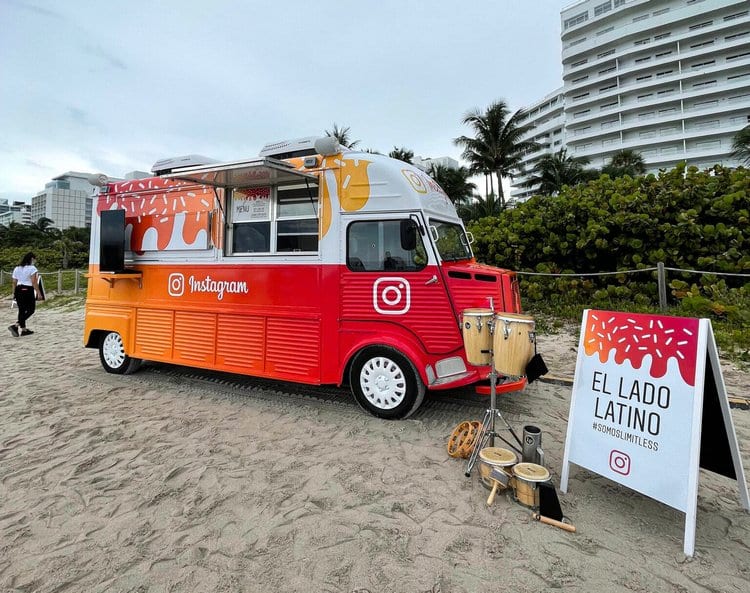
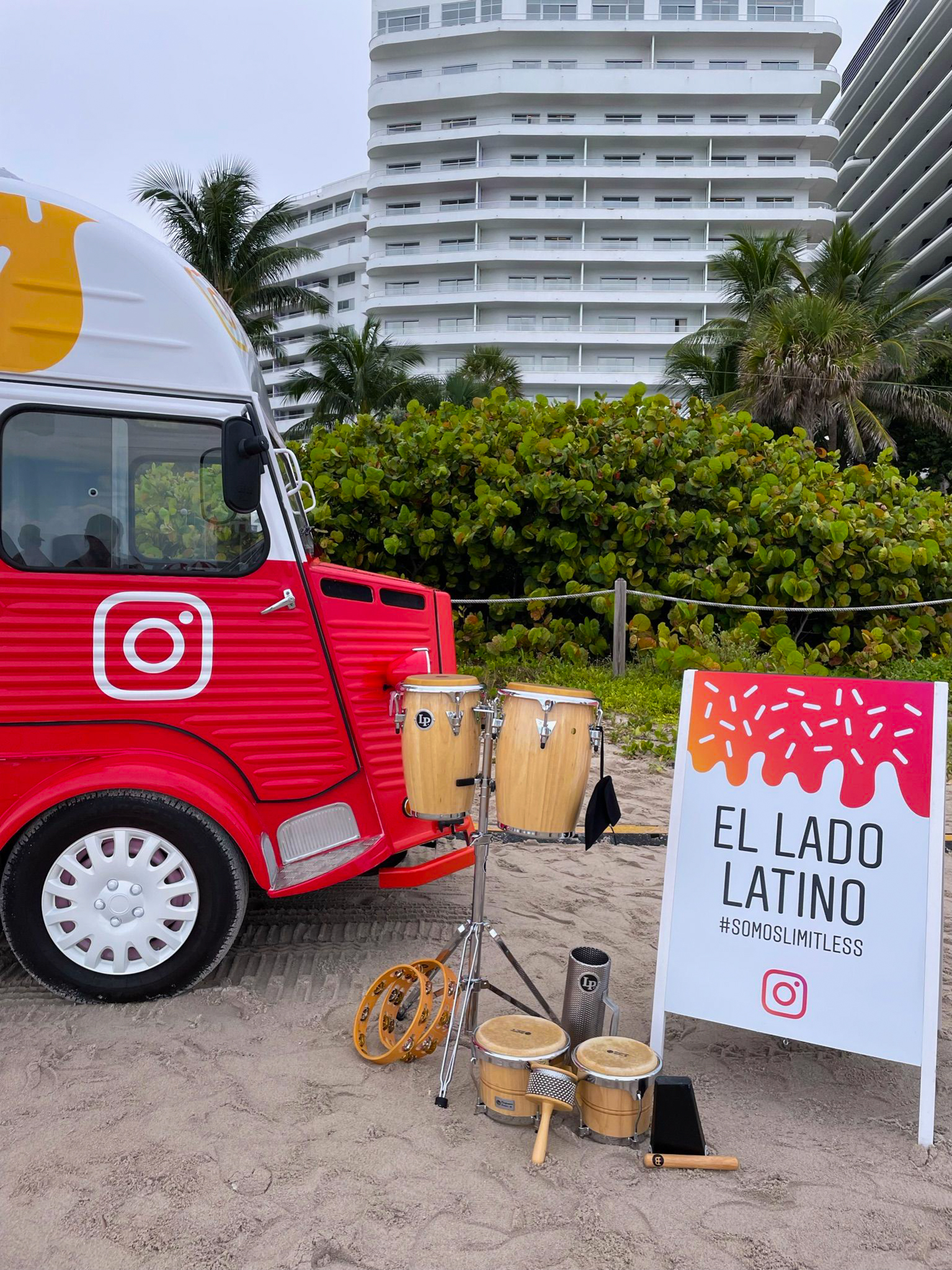
For the final weekend of summer, Instagram wanted to promote its Reels feature to a large audience in a memorable way. That is a difficult brief for a product that exists only on a screen, and an event solved it.
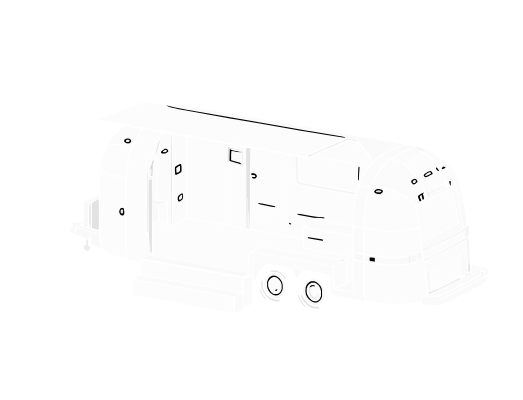
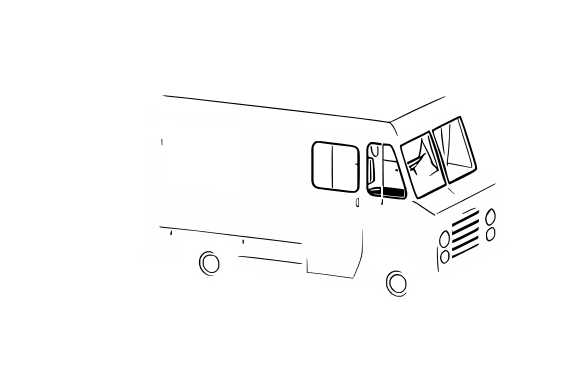
We brought a branded vehicle to Miami Beach during Latin Week, serving fresh complimentary helado to beach-goers, with appearances from artists including Farruko.
Why the event context did the work: the crowd was already assembled, already social, and already documenting the weekend. The activation did not need to persuade anyone to attend or to care about content creation, because everyone present was doing it anyway. A digital product became physical for a day, and the audience turned it back into digital content.
Read the campaign in our Instagram Reels on Wheels case study, or browse more brand activation case studies.
How Big Are These Crowds?
Larger than most brands assume, and the ticketless audience is frequently bigger than the ticketed one.
The 2026 World Cup is the clearest recent illustration. Official attendance across 104 matches reached a record 6,810,966. Meanwhile more than nine million people attended FIFA Fan Festivals across 13 host cities over 39 days, with a single peak day of 543,020.
That gap is the argument for off-site placement in one statistic. The people without tickets outnumbered the people with them, and reaching them required no rights deal at all.
What to Plan For
- Access first, creative second. Sponsorship, vendor status, or off-site changes everything downstream.
- Permits and agreements. Off-site needs city permits or private property agreements, and event grounds need organizer approval.
- Crowd waves. Event traffic peaks at gates opening, set changes, and closing. Staff to the peak, not the average.
- Stock for a compressed window. A festival day can distribute in six hours what a street activation takes three days to move.
- Load-in restrictions. Event sites often permit access only in narrow windows, frequently overnight.
- Weather. Outdoor events are exposed, and a hydration format that is welcome in heat is irrelevant in rain.
How to Measure an Event Activation
- Interactions per hour against event schedule, which shows whether you staffed the waves correctly.
- Samples distributed against forecast, the clearest test of stock planning in a compressed window.
- Sign-ups and scans captured, the conversion that outlasts the weekend.
- Tagged posts, which should be high given event crowds document heavily.
- Cost per interaction against a standard street activation, which is the figure that justifies event access fees.
The Bottom Line
Brand activation events work because the hardest and most expensive part of any activation, assembling an audience, has already been done. What remains is deciding how you get access, respecting the rules that come with it, and staffing for a crowd that arrives in waves rather than a steady trickle.
For most brands, off-site placement near the venue delivers the same audience without rights fees, which is why it has become the default rather than the fallback.
If an event on next year’s calendar looks like yours, we design, build, permit, and staff activations around it. Explore our event marketing services or contact our team.
The management was not. We took the Gerry’s Partisan Pizza tour to five states and nine cities: Raleigh and Greensboro in North Carolina, Annapolis in Maryland, Tallahassee and Orlando in Florida, Harrisburg and Pittsburgh in Pennsylvania, and Appleton and Madison in Wisconsin.
What that involves in practice: nine separate permit processes on nine separate timelines, health approvals in five states with different requirements, transport days between markets that produce no activity but cost money, food volumes forecast city by city, and staff briefed to the same standard in every location so the campaign read as one thing rather than nine.
The concept could be explained in a sentence. The delivery took months. That gap is what brand activation management is. Read the full campaign in our Gerry’s Partisan Pizza case study, or browse more brand activation case studies.
Realistic Lead Times
- Six to eight weeks is the floor for a straightforward single-market activation.
- Longer for custom fabrication, since a built interior cannot be compressed.
- Eight to twelve weeks for peak December placements, where themed builds and prime locations are contested.
- Two to three months for prime summer weekends in major markets.
- Multi-city tours need longer still, because each market runs its own approval process. The pattern across all of them: permits and fabrication set the date, not the concept.
What Goes Wrong, and How It Is Managed
- A permit is refused. Shortlist alternates during scouting so a second permitted location already exists.
- The launch date moves. Confirm early what a change costs and whether the build and permits can be held.
- Weather turns. A wet-weather plan and a covered footprint should exist before the day, not on it.
- Staff drop out. On a multi-week run somebody will. Cover needs to be arranged before it is needed.
- Stock runs out. Forecast with a buffer and hold reserve stock accessible mid-route.
- A location changes conditions late. Property managers add restrictions. Someone has to renegotiate on the day.
What to Ask a Brand Activation Company
Management quality is difficult to assess from a portfolio, because portfolios only show the days that went well. These questions get closer:
- Which cities have you permitted in, and what lead time do you need? Specific answers indicate real experience.
- Who supervises on the day, and who do we call if something changes?
- What happens if our date moves, and what does it cost?
- How do you forecast stock, and what happens if we run out?
- Tell me about an activation that went wrong. Anyone who has run enough has a story, and the answer reveals how they handle it. Our guide to choosing a brand activation company covers the wider evaluation.
How to Measure Management, Not Just the Campaign
- Activation days delivered against days planned, the simplest measure of whether the operation held.
- Permit success rate, meaning locations secured against locations applied for.
- Stock accuracy, comparing forecast against actual distribution per market.
- Staffing consistency, measured by interactions per hour across cities rather than in aggregate.
- Issues escalated to the client, where fewer indicates a partner absorbing rather than forwarding problems.
The Bottom Line
Brand activation management is unglamorous and it is most of the job. Permits determine your calendar, staffing determines your results, stock determines whether the last city gets the same campaign as the first, and contingency determines whether a problem becomes a delay or a cancellation.
When evaluating brand activation services, the creative is the part you can judge from a portfolio. The management is the part you have to ask about.
We handle all of it in house. Explore our brand activation services or contact our team to talk through a campaign.