Top 12 Brand Activation Ideas That Grab Attention
The best brand activation ideas are not the most elaborate ones. They are the ones that give a stranger a reason to stop walking.…
Read moreBy: Ashley Elarde • • 9 min read
Choosing a brand activation company is difficult for a specific reason: every portfolio looks good, and none of them show you the part that goes wrong.
A gallery of finished builds tells you what a company has produced. It tells you nothing about who fabricated it, who pulled the permits, whether the vehicle was owned or rented, or what happened when a launch date moved.
This guide covers the six questions that actually separate brand activation companies, what each answer reveals, and the warning signs worth taking seriously.
A brand activation company designs and produces live, in-person brand experiences. The work usually spans six areas: concept development, design and 3D renderings, fabrication of the vehicle or build, location procurement and permits, staffing with trained brand ambassadors, and running the activation on the day.
The important thing to understand is that companies calling themselves brand activation agencies do very different amounts of that list. Some do all six. Some produce the concept and subcontract everything after it. Both are legitimate businesses, and they carry very different risks for you.
For background on the format itself, see our guide to what a brand activation is.
Here are the questions to ask before selecting a brand activation company.
This is the single most revealing question, and it should be asked first.
In-house fabrication means one team is accountable from rendering to street. If the finished build does not match what you approved, there is nobody to point at. Subcontracting introduces a gap between what was sold and what gets delivered, and that gap is where most disappointment lives.
What a good answer sounds like: specifics about the shop, the team, and what they have built recently. What a weak answer sounds like: we work with trusted partners, without naming who does what.
An owned fleet means availability, real customization, and no third-party scheduling risk. A rented vehicle means the agency is a middleman on the most expensive line item, and your options are limited to whatever is free that week.
Ask what they own, how many, and whether the vehicle you are discussing is one of them.
Permits are the most common cause of a delayed, relocated, or shrunken activation, and they are almost never discussed in a pitch.
The question is not whether an agency can handle permits. Everyone says yes. The question is which cities they have actually permitted in, what lead time they need, and what happens if an application is refused. An agency that has run activations in your target markets knows the answer immediately.
The same build performs very differently depending on who is standing beside it. Ambassadors who know the product convert; ambassadors handed a script distribute.
Ask how staff are sourced, what the brief covers, who supervises on the day, and what happens if someone does not turn up. On a multi-city tour, ask whether staff travel or are hired locally and how consistency is maintained either way.
Our guide to hiring a mobile tour brand ambassador covers what a proper brief contains, which is a useful benchmark when assessing an agency’s answer.
Launch dates slip. Product arrives late, approvals take longer, a retail partner reschedules.
Ask what a date change costs, how much notice is needed, and whether the build and permits can be held. The answer tells you how much risk the agency absorbs versus how much it passes back to you.
If the answer is impressions and footfall, press further. Samples distributed, sign-ups and scans captured, code redemptions, and cost per acquired customer are all trackable, provided the capture mechanic is designed in before the build.
An agency that raises measurement before you do is thinking about your outcome. One that avoids it is thinking about the day.
It helps to see what the in-house question means in practice, because the difference is rarely visible in a photograph.
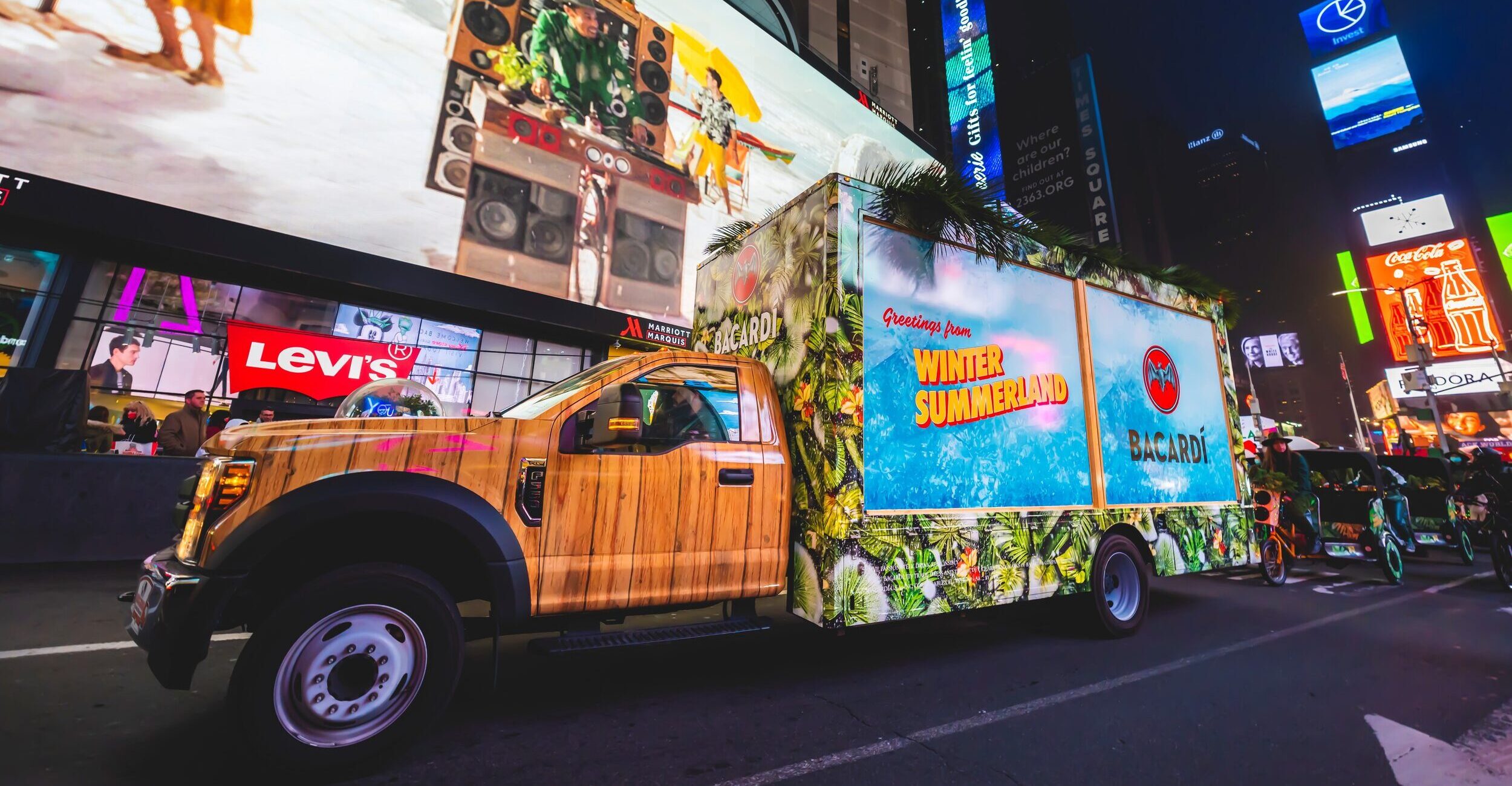
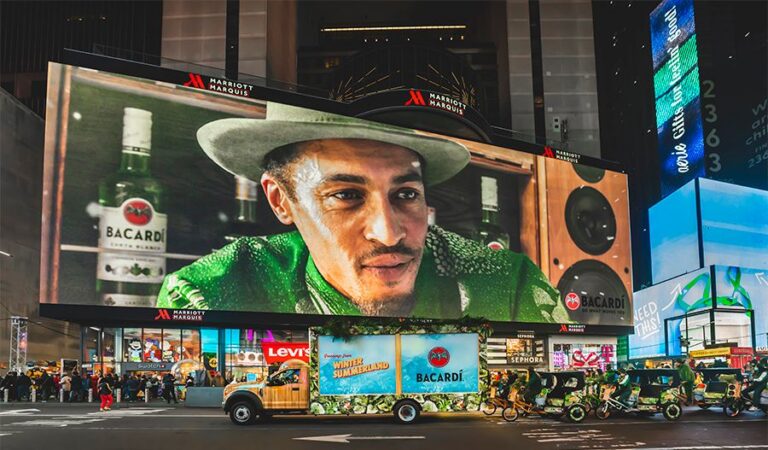
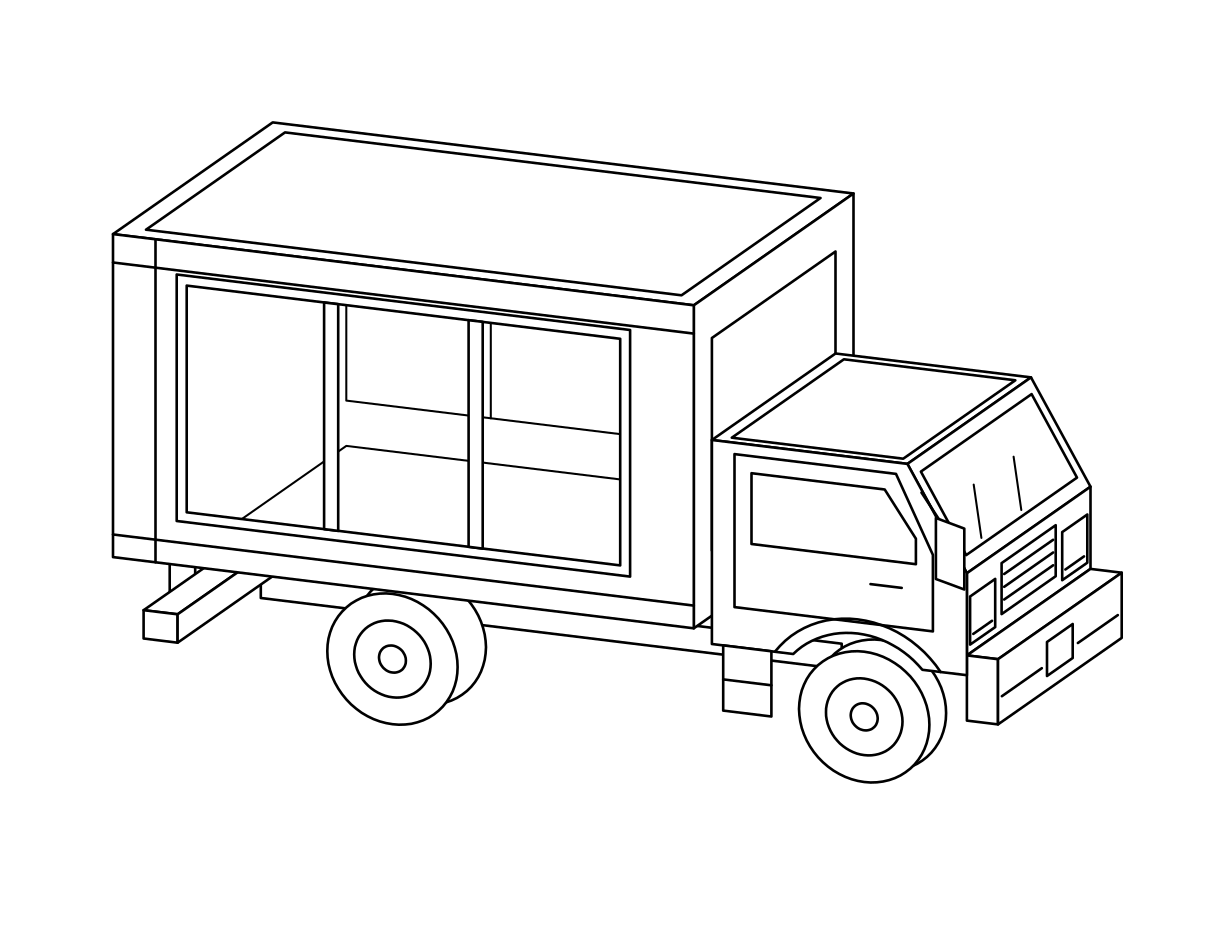
For Bacardi’s Winter Summerland campaign, we parked a branded glass truck in the heart of Times Square, with surprise guests, a merchandise giveaway, a coordinated flashmob, and additional branded pedicabs. Inside the truck, our team built out display shelves, iced bamboo and palms, and set dressing including a full-length mirror to execute the summer-in-winter concept.
Almost none of that is creative work in the advertising sense. It is fabrication, a permit in one of the most restricted locations in the country, staffing, transport, and logistics. That is what a full-service brand activation company actually sells, and it is why the first question on the list matters more than the portfolio.
Browse more of that work in our brand activation case studies.
There is no standard rate, and any company quoting one before understanding the campaign is guessing. Cost is driven by the vehicle and build, the number of days and cities, product volume, staffing, permits, and transport.
Two things are worth knowing. The build is the largest fixed cost, which means longer campaigns and multi-stop tours usually improve cost per interaction rather than worsening it. And a thin build reflects on the brand, so an underfunded activation frequently performs worse than none at all.
Some brands run activations internally. It can work, and it is worth being honest about when it does not.
An internal team is realistic when activations are frequent enough to justify permanent capability, the markets are consistent, and someone owns fabrication and permitting as a job rather than a project. It is rarely realistic for a brand running two or three activations a year in unfamiliar cities, because the permitting knowledge and the vehicle access are the expensive parts to build from scratch.
The right brand activation company is the one that can answer six unglamorous questions clearly: who builds it, who owns the vehicle, who pulls the permits and where, who staffs it, what happens if the date moves, and how it gets measured.
Creative matters, and it is also the thing every agency can show you. The rest is what determines whether the campaign happens on the date you planned, at the standard you approved.
We handle all six in house. Explore our brand activation services or contact our team and ask us the questions above.
A brand activation company designs and produces live, in-person brand experiences. The work typically spans concept development, design and 3D renderings, fabrication, location procurement and permits, staffing with brand ambassadors, and running the activation on the day.
Whether they build in house or subcontract, whether they own or rent vehicles, who handles permits and in which cities, how staff are recruited and briefed, what happens if your date moves, and how the campaign will be measured.
A full-service company designs, fabricates, permits, staffs, and runs the activation with one team accountable throughout. Others develop the concept and subcontract execution, which introduces a gap between what was promised and what is delivered.
An owned fleet means availability, genuine customization, and no third-party scheduling risk. When an agency rents, it is a middleman on the largest line item and your options are limited to whatever happens to be available.
Very. Permits are the most common cause of a delayed or relocated activation. Ask which cities the company has actually permitted in and what lead time they need, rather than whether they can handle permitting in principle.
It depends on the vehicle and build, the number of days and cities, product volume, staffing, permits, and transport. The build is the largest fixed cost, so longer campaigns and multi-stop tours usually improve cost per interaction.
Vagueness about who does the work, no mention of permits until you raise them, a price quoted with no scope attached, reporting described only in impressions, and reluctance to discuss campaigns that have gone wrong.
It can work when activations are frequent, markets are consistent, and someone owns fabrication and permitting as a full-time job. For a brand running two or three activations a year in unfamiliar cities, permitting knowledge and vehicle access are expensive to build from scratch.
Earlier than most brands expect, because permits and fabrication set the timeline rather than creative. Six to eight weeks is a floor for a single market, custom builds need longer, and peak seasons book out months ahead.
7 steps, 37 checkpoints, and a one-page brief to plan and launch a mobile pop-up shop that converts.
Instant PDF · No Cost
Author
Social Media Manager @ FTP Agency
Ashley Elarde is a social media strategist, content creator, and experiential marketing professional with experience bringing brands to life through engaging digital content. She has helped execute campaigns for brands across beauty, fashion, retail, and entertainment, developing campaigns that drive engagement and meaningful consumer connections.
The best brand activation ideas are not the most elaborate ones. They are the ones that give a stranger a reason to stop walking.…
Read more →
Brand activation displays are the part of a build that does the selling, and they are usually designed last. The wrap gets rounds of…
Read more →
What is a brand activation? It is a marketing campaign built around something people can physically participate in, rather than something they watch, scroll…
Read more →We use and share personal information through cookies and similar technologies on our sites to personalize your shopping experience and ads. Others may use this information for their own marketing and business purposes. . Check our Privacy Policy for more details.
Browser Opt-Out Honored
We use and share your personal information with others to personalize your shopping experience and show you targeted ads on other sites based on your interests and online activities.
Online Info includes cookies, pixel tags, and similar technologies connected to your browser or device. Offline Info includes information associated with your email address based on your other interactions with us.
We use and share your personal information with others to personalize your shopping experience and show you targeted ads on other sites based on your interests and online activities. Information includes cookies, pixel tags, and similar technologies connected to your browser or device (Online Info), as well as information associated with your email address based on your other interactions with us (Offline Info). Others may use this information for their own marketing and business purposes.
You can choose to opt out of sharing one or both types of information.