IPO day marketing is the most under-planned part of the most expensive day in a company’s history.
Years of work go into reaching the bell. Bankers, lawyers, auditors, and the roadshow all get months of attention. The morning itself usually gets a press release and a photo of the executive team on the balcony.
That is a missed opportunity, because for one morning your company name is genuinely newsworthy, reporters are already on site, and the financial world is looking directly at you. This guide covers how brands use that window, three real activations we produced on Wall Street, and the logistics nobody warns you about.
Key Takeaways
- The attention is free and it lasts one morning: press are already there for the bell, which makes coverage far easier to earn than on any other day.
- The audience is not consumers: employees, investors, analysts, exchange staff, and financial press are the people on that street.
- Timing is brutal: the bell rings at 9:30am, so an activation has to be set up, permitted, and serving before dawn.
- Food travels further than signage: something handed to a reporter or an employee gets photographed and shared in a way a banner does not.
- The market is in a record window: IPO activity has surged in 2026, which means more competition for attention on any given listing day.
What Is IPO Day Marketing?
IPO day marketing is any brand activity a company runs around its public listing, beyond the required investor communications. It typically includes a physical presence near the exchange, employee and guest hospitality, press and content capture, and social amplification timed to the bell.
It is not investor relations and it is not a substitute for one. The prospectus, the roadshow, and the analyst briefings do the financial work. IPO day marketing does the brand work, and it is aimed at the people who will read about you that morning rather than the institutions that already priced the deal.
Why the Moment Is Worth Marketing
For most companies, an initial public offering is the single largest earned media moment they will ever have. Financial media are already covering the listing, the exchange floor is staffed with photographers, and employees and early investors are gathered in one place for the only time in the company’s history.
The competitive context also matters right now. US listings have surged: the second quarter of 2026 saw 48 IPOs raise a record $104.8 billion, the largest quarter for US listings ever recorded. Through the end of June, traditional IPOs had raised roughly $114.1 billion, more than seven times the same period a year earlier.
More listings means more companies ringing bells and competing for the same financial press attention. A company that does something on the street is considerably easier to write about than one that does not.
Who You Are Actually Marketing To
This is where IPO activations go wrong. The instinct is to treat it as a consumer campaign, but the people physically present that morning are a specific and unusual crowd.
- Employees. Often the most important audience. Many have worked years for this day, and a good number hold equity. What happens on the street becomes the memory of the milestone.
- Financial press. Already on site for the bell, already looking for a visual, and short on color to write about beyond the share price.
- Investors and analysts. Attending the ceremony, and forming an impression of how the company presents itself.
- Exchange staff and the Wall Street workforce. The daily foot traffic in the district, which is dense and reliably interested in free coffee.
- Everyone watching remotely. The largest audience by far, reached entirely through the content produced that morning. Design for those five groups rather than for a general public that is not standing there.
IPO Day Marketing Ideas That Work
Here are some marketing ideas to inspire you ahead of your IPO day.
1. Feed the Street
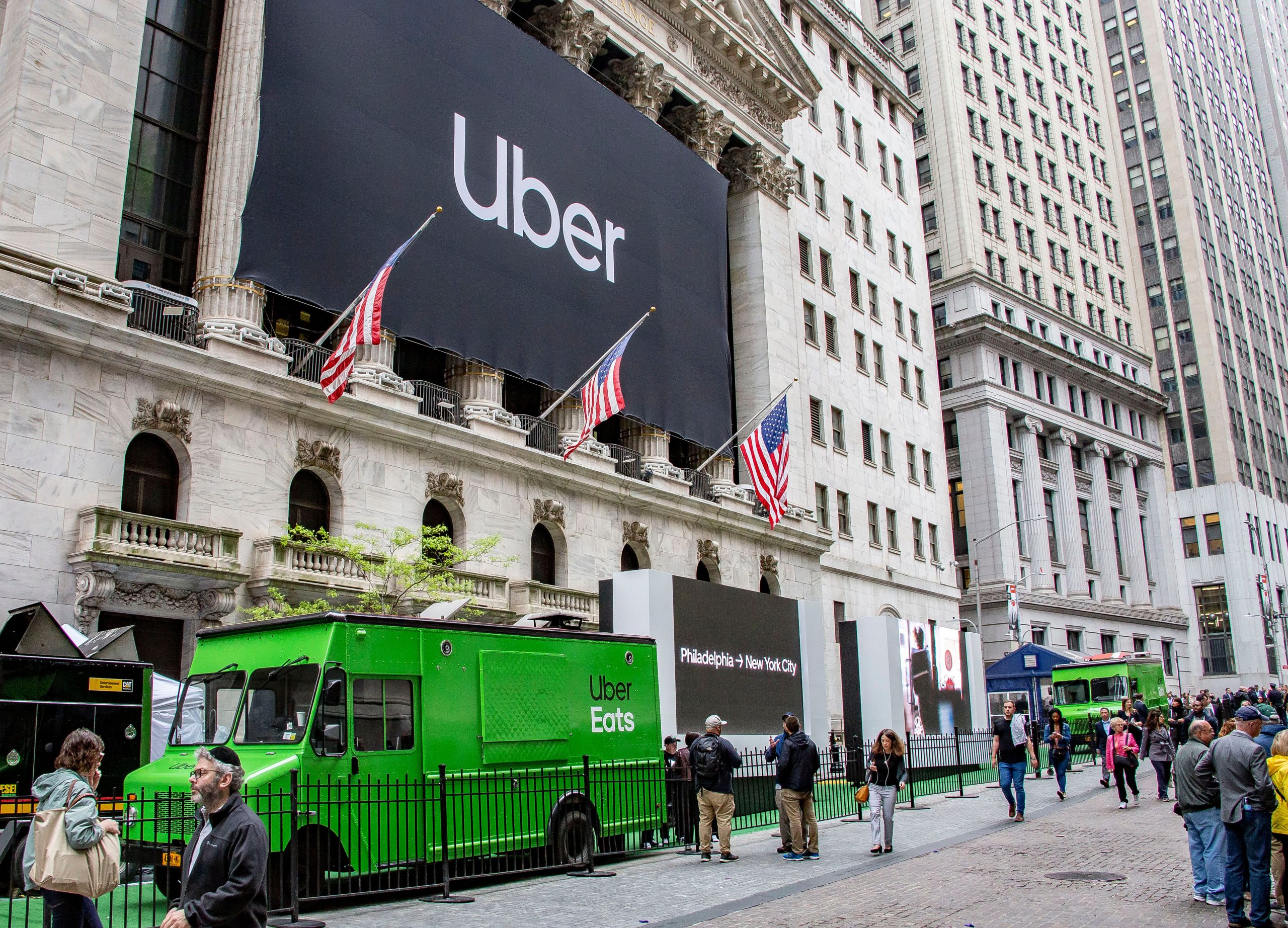
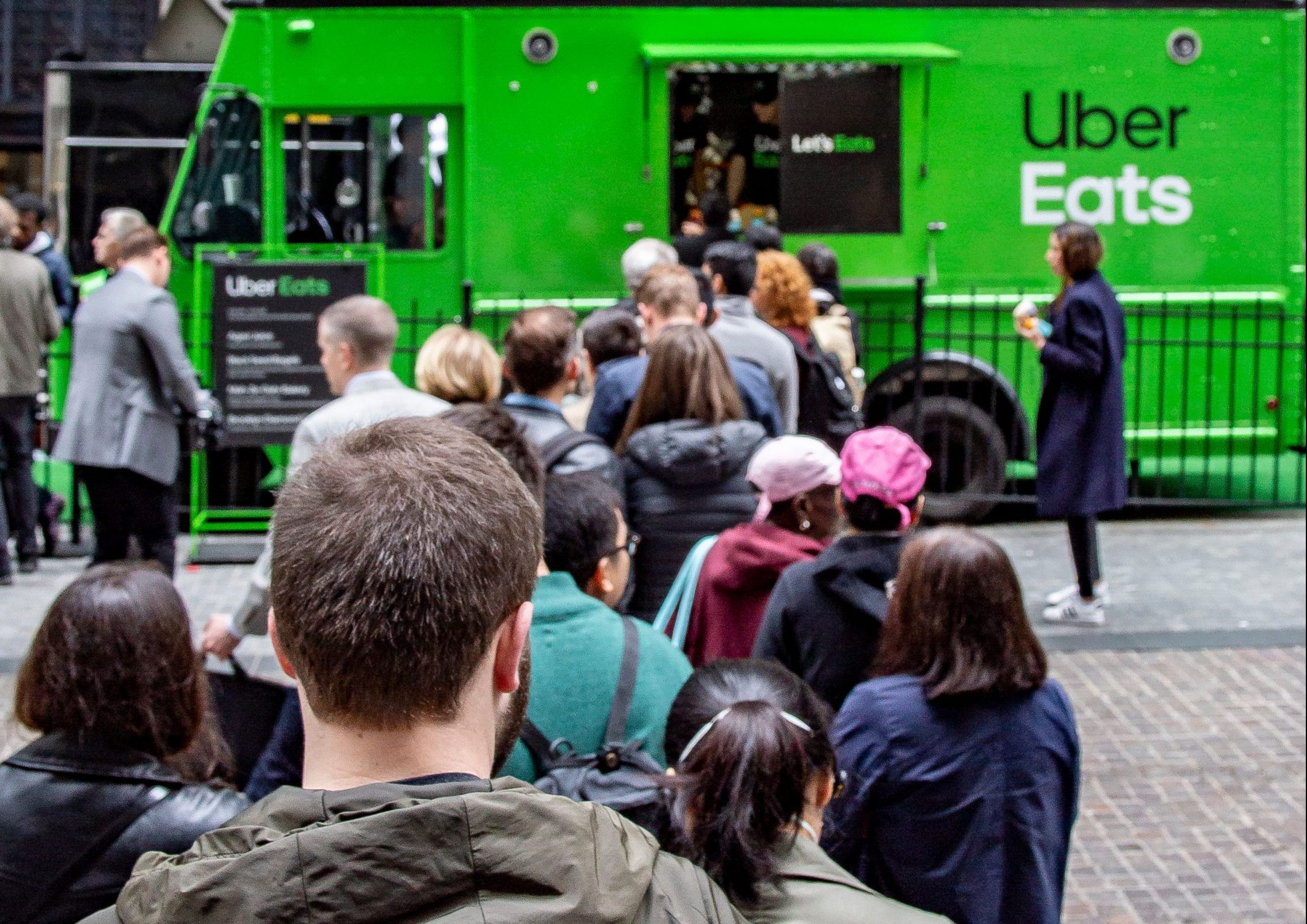
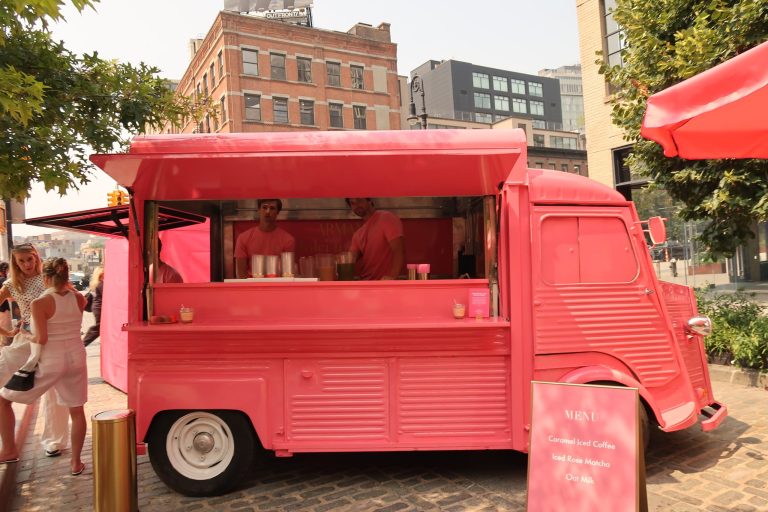
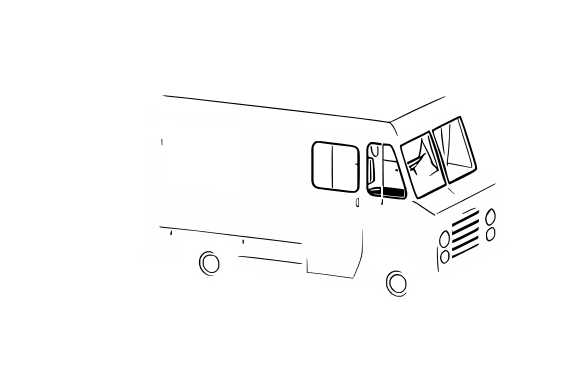
A branded food truck outside the exchange is the format we are asked for most, and it works for a practical reason. Coffee and breakfast at 7am on Wall Street are genuinely welcome, and everyone who takes one is holding your logo when the photographers arrive.
2. Build a Photo Moment for the Team
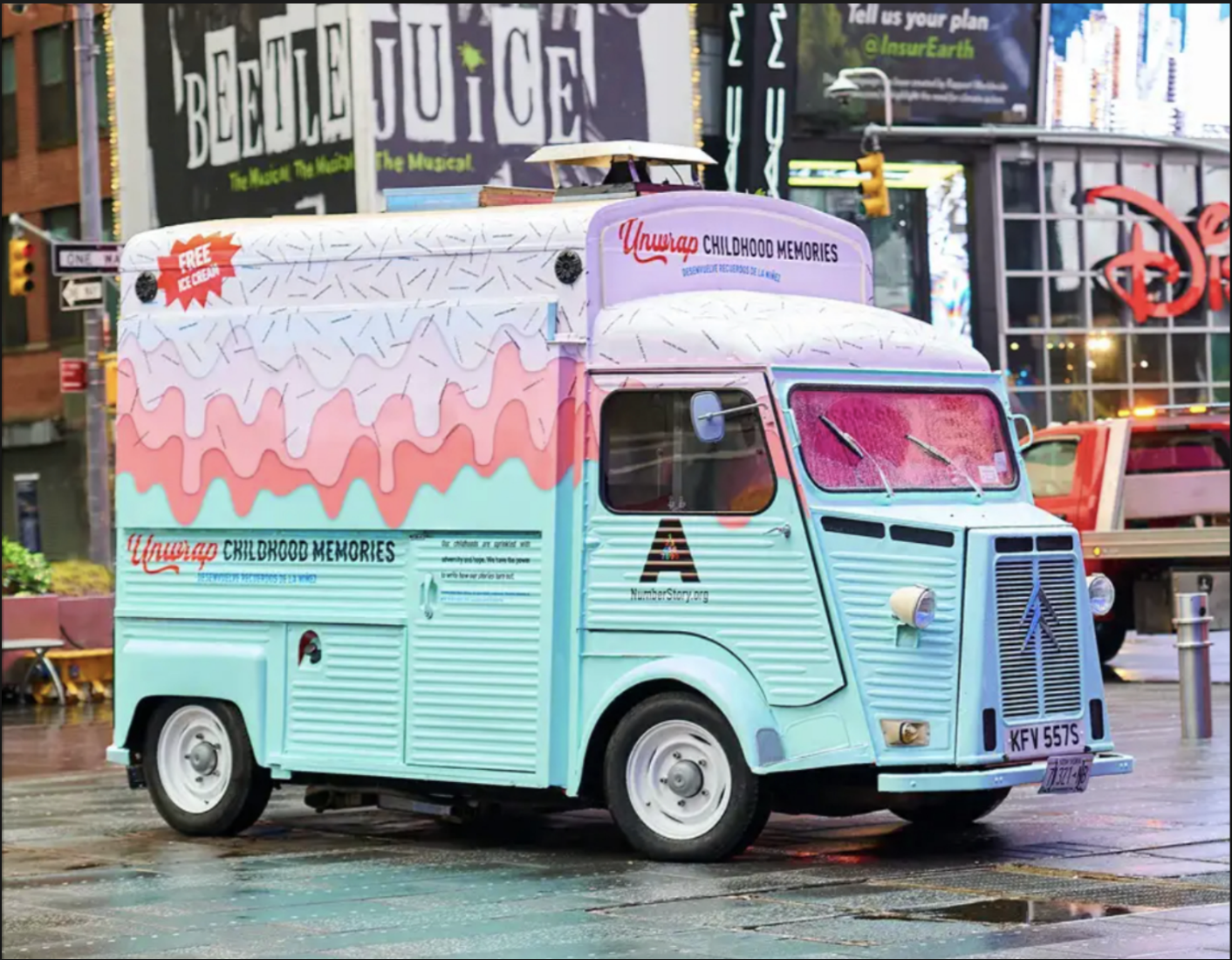
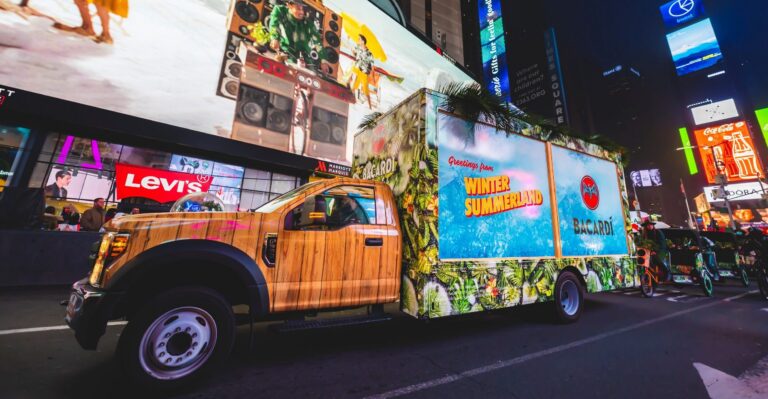
Employees will take photographs that morning whether you plan for them or not. A branded backdrop, a wrapped vehicle, or an installation gives those photos your brand in the frame rather than a generic street corner. A glass box truck works particularly well here, since the display is visible in every shot.
3. Make the Menu Mean Something
The strongest activations connect the giveaway to the company. A food delivery brand serving food from its own partner restaurants makes a point about the business model. A generic coffee cart does not.
4. Extend Beyond the Exchange
Not everyone can be at the bell. Simultaneous activations at headquarters or in other office cities let the wider company participate, which matters when most of your employees are watching a livestream. Our guide to mobile marketing tours covers running one build across several markets.
5. Plan the Content Before the Day
The morning moves fast and does not repeat. Assign photography and video in advance, and decide what the assets are for: recruitment, investor communications, and the anniversary post a year later.
6. Consider the Nasdaq Alternative
A Nasdaq listing puts you in Times Square rather than the financial district, which is a completely different environment with far heavier public foot traffic. The activation should reflect which exchange you are on.
How Uber Eats Fed Wall Street on IPO Day