Mobile experiential marketing solves a problem every fixed activation runs into eventually: you built something good and only one neighborhood saw it.
A pop-up in a rented storefront reaches whoever walks past that address. Put the same experience on wheels and it reaches several audiences in several places, using one build and one budget.
This guide covers what the format is, the main variations, how to choose branding and locations, and what to measure once it is running.
Key Takeaways
- Mobility is the whole advantage: one build reaches multiple markets, so the fixed cost of fabrication spreads across every additional stop.
- Scarcity drives action: a vehicle that leaves tomorrow creates urgency a permanent storefront cannot.
- Design for distance first: a wrap has to read from a moving car, which rules out detail that only works up close.
- Location beats creative: the right block in front of the right audience matters more than how clever the concept is.
- The vehicle earns impressions in transit: the route between stops is itself a media placement, not just travel time.
What Is Mobile Experiential Marketing?
Mobile experiential marketing is a form of brand activation built around direct, physical customer interaction that travels. It takes the tactics of a conventional engagement campaign and adds mobility, so the same promotion can run in several places rather than one.
The practical difference is straightforward. Instead of organizing a single stationary event, you pack the promotion up and move it. That lets one campaign reach different segments of a target audience across a city, a region, or a country, and it means a build that would otherwise serve one location serves ten.
Why Mobile Experiential Marketing Works
Here is why you need to consider launching a mobile experiential marketing campaign for your brand.
It Creates Genuine Scarcity
A fixed pop-up gives people permission to postpone. Someone walks past, notes it, and thinks they will come back tomorrow. A vehicle that will be in another neighborhood tomorrow removes that option, which turns interest into action on the spot.
It Reaches Several Audiences With One Build
Design, fabrication, and wrap are paid once. Every additional location spreads that cost further, which is why cost per interaction generally improves as a route lengthens rather than worsening.
It Advertises While It Travels
A wrapped vehicle is generating impressions between stops, not only during activation hours. Routing through dense traffic corridors turns transport time into reach, which is worth factoring into the plan rather than treating drive time as dead time.
It Puts a Person in Front of a Customer
The format is staffed, which means someone can answer a real question, capture a sign-up, and create the kind of contact no advertisement produces.
How to Launch a Mobile Experiential Marketing Activation
Follow this step-by-step guide to launch your first experiential marketing activation.
Step 1. Choose Your Format
The foundation of the campaign is what houses the experience, and the right choice depends entirely on your goal.
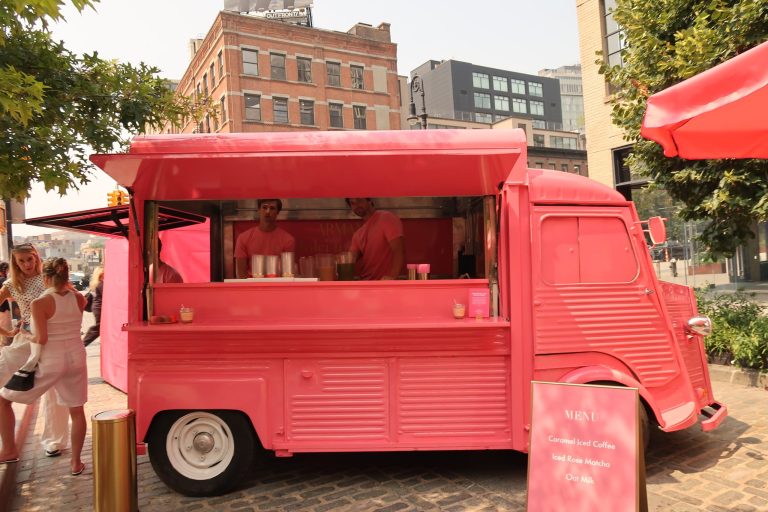
Mobile Pop-Up Shops
Pop-up shops have long been effective at generating engagement. You walk past a space that was empty yesterday and there is suddenly a bright new coffee shop promoting a film. That surprise is naturally enticing.
A mobile pop-up shop adds scarcity to the surprise. It occupies a space for a day rather than a month, so the call to action is immediate. People come now because it will not be there tomorrow.
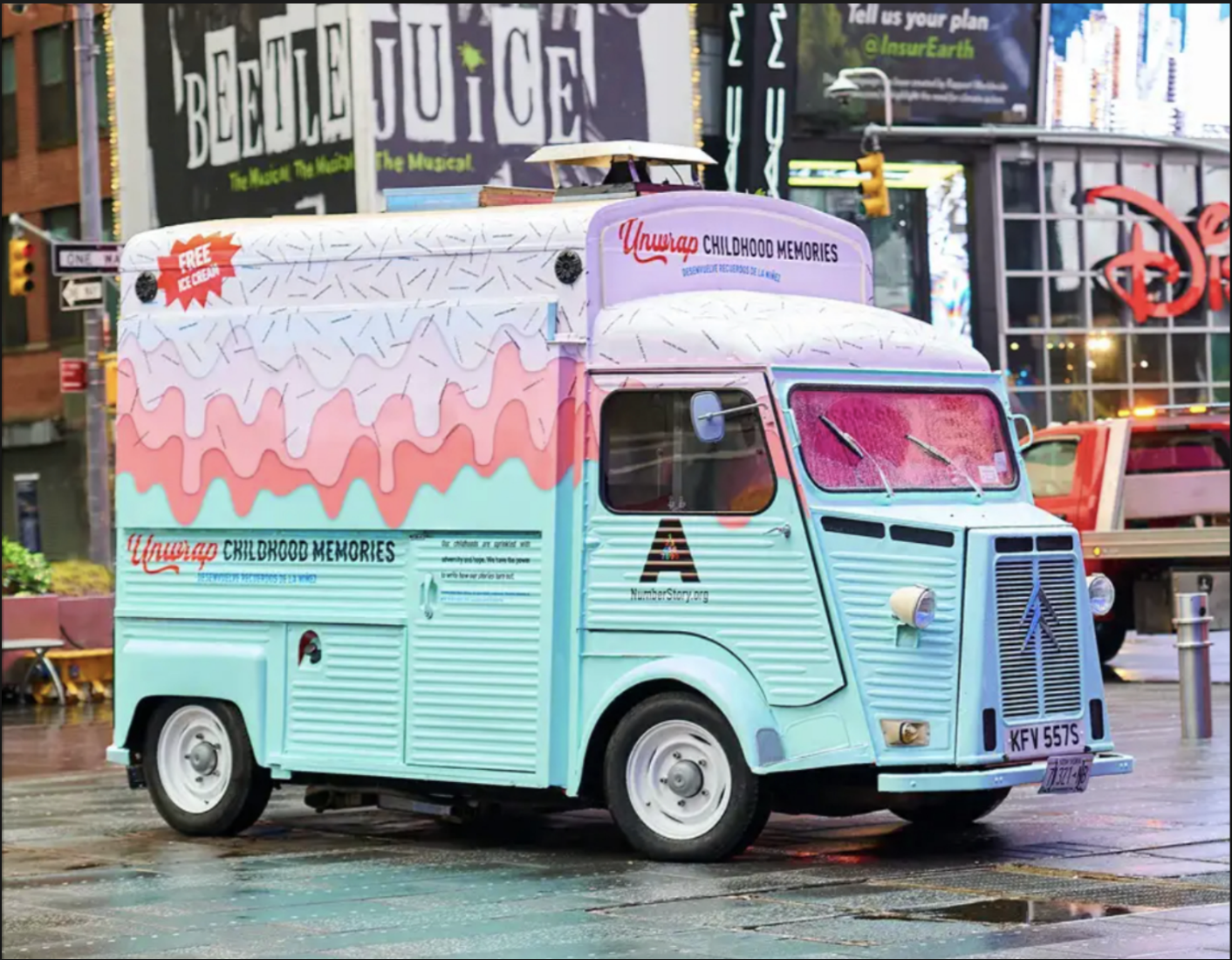
Branded Food Trucks
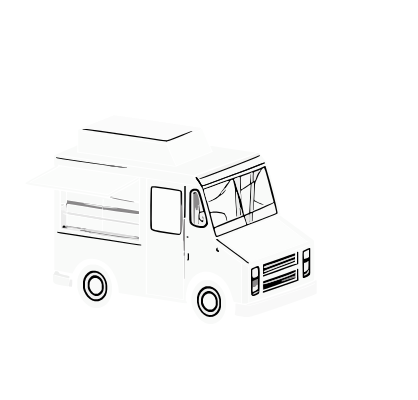
A branded food truck is a food truck wrapped in your identity, where a recognizable logo becomes associated with the positive experience of a good meal. It also puts that logo in front of far more people than a stationary stand would.
Customers are engaged by the food, but that is not the only connection being made. Brand ambassadors are there to represent the company, using QR codes to capture information and offer promotions. Food and a friendly face together create a real connection. Our complete guide to branded food trucks covers the format in depth.
Other Formats Worth Considering
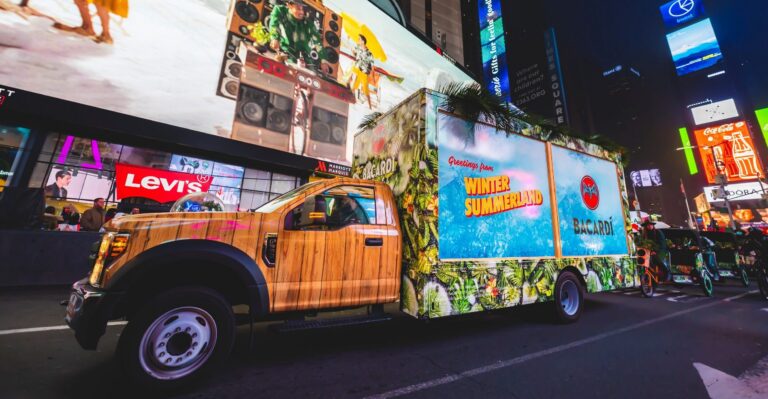
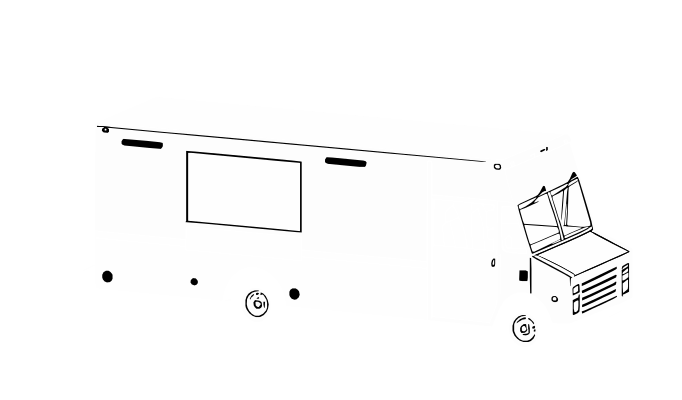
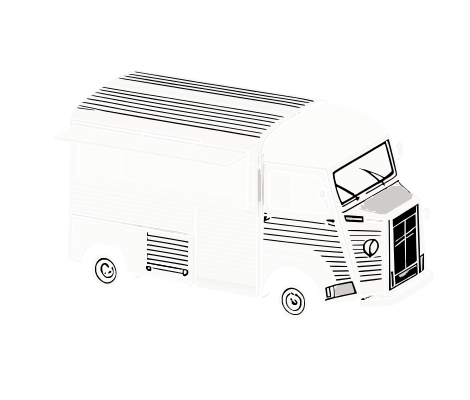
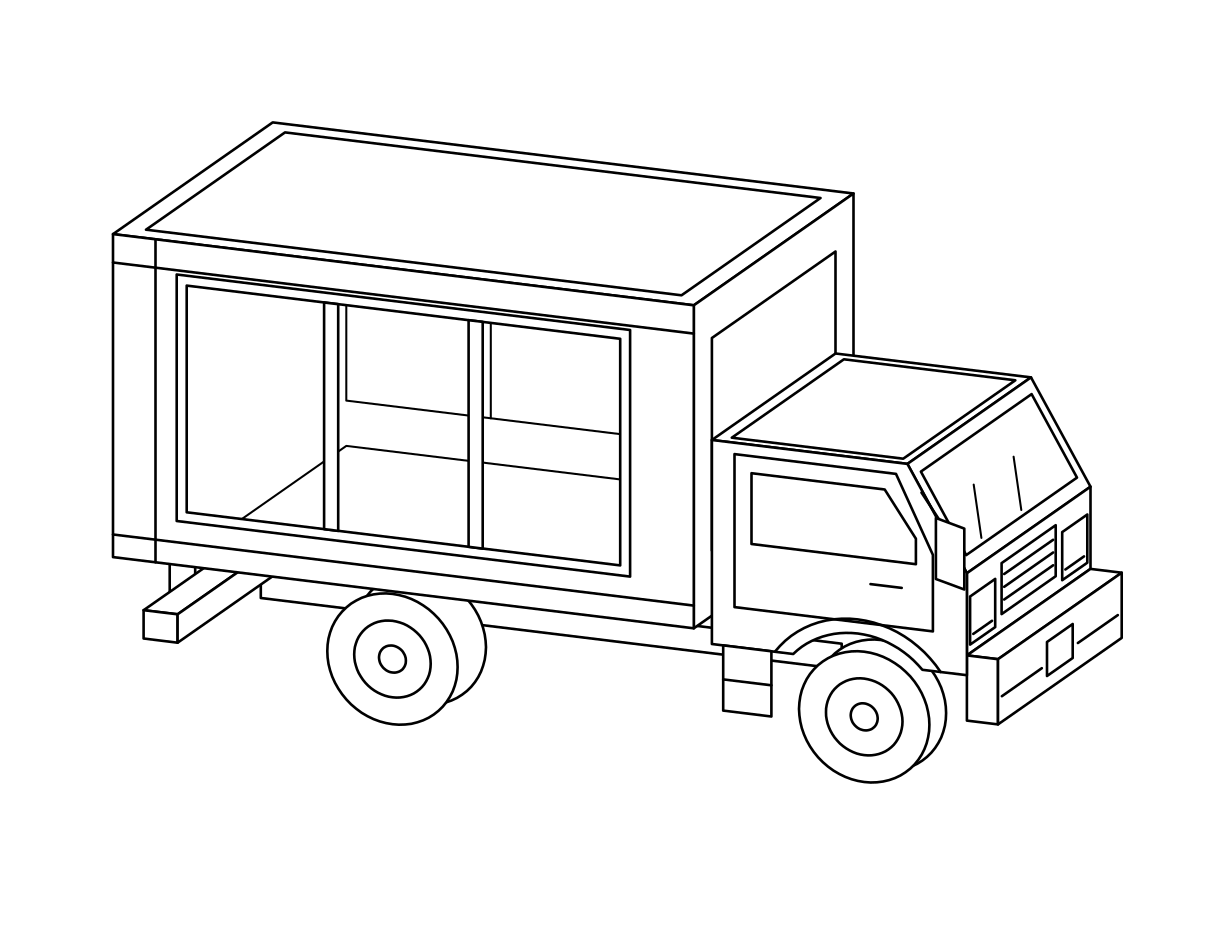
The fleet extends well beyond trucks: glass box trucks for product display, Airstreams for premium hospitality, tuk tuks and carts for dense urban blocks, and vintage vehicles where the aesthetic is the point. Our guide to experiential marketing trucks compares them, and you can build a version of your own in Merlin AI.
Step 2. Decide How to Brand the Vehicle
Once you have chosen a format, decide how the brand appears on it. This is where professional input pays for itself, because the constraints are not obvious until you have made the mistake.
The key question is different from a standard design brief: what grabs someone on the sidewalk, and what registers with someone driving past at speed? Those are two different problems and the wrap has to solve both.
The common error is crowding. Too many words or graphics and the vehicle reads as a blur to anyone in motion. Keep the image simple and striking, and make sure there is a clear route to more information, whether that is a handle, a short URL, or a QR code.
Step 3. Choose Locations Around Your Audience
This step depends entirely on who you are trying to reach. Research where your customers actually spend time and choose accordingly. If you are selling fitness products, the areas around gyms and studios will outperform a generically busy street.
Choosing badly is expensive. An activation placed where nobody in the crowd is interested drains the budget without producing anything, and no amount of creative rescues it. Our locations page covers the markets we operate in, and our roundup of mobile marketing tour examples shows how brands sequence multiple stops.
Permits belong in this step too. Street activations need city approval, private property needs an agreement with the manager, and anything served adds health department sign-off. Requirements vary by city, which is what makes multi-market routing a specialist job.
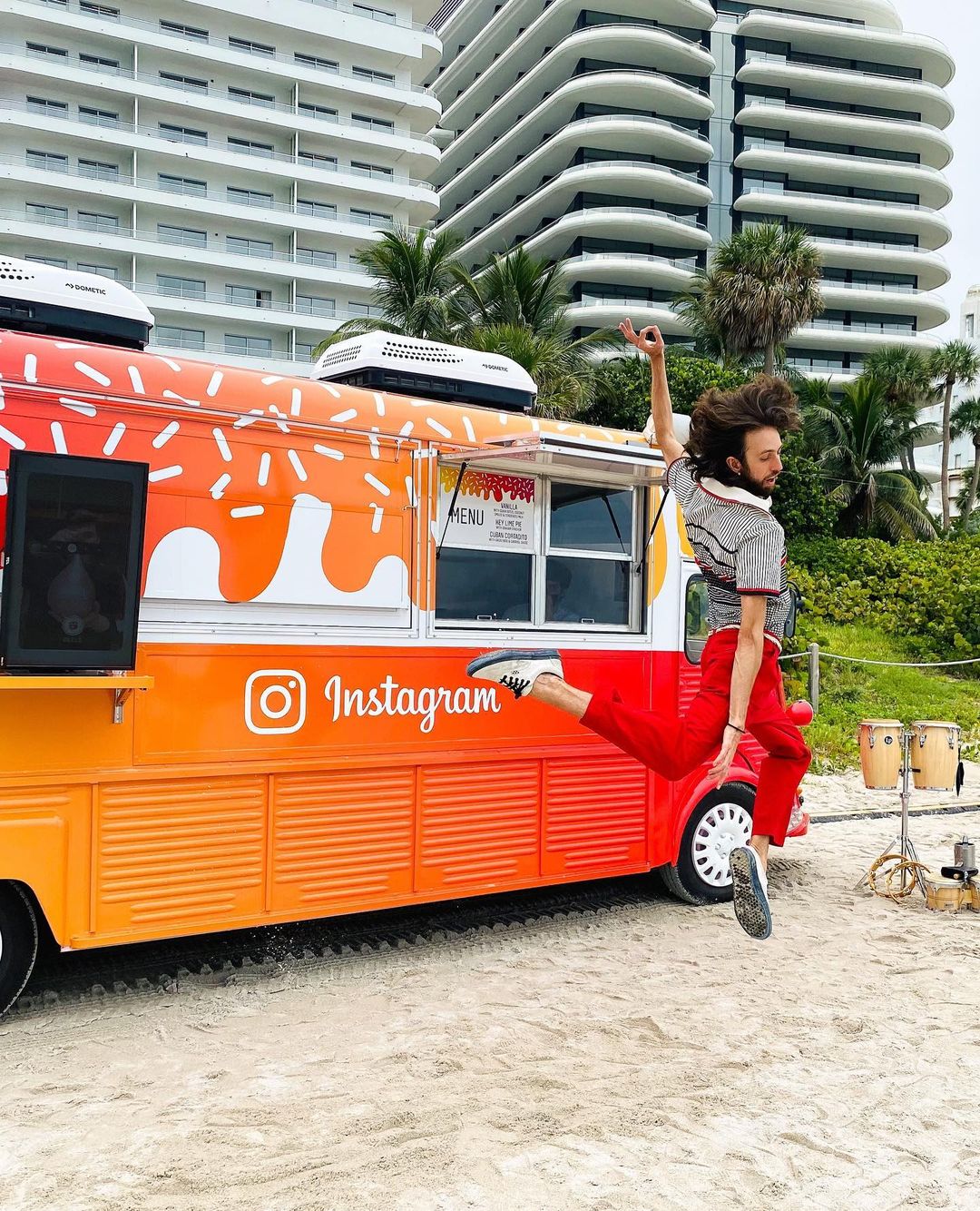
Case Study: How Instagram Took Reels to Miami Beach