How to Choose a Brand Activation Company
Choosing a brand activation company is difficult for a specific reason: every portfolio looks good, and none of them show you the part that…
Read moreBy: Ashley Elarde • • 10 min read
A brand activation photo booth is the cheapest distribution you will ever buy, and most brands treat it as decoration.
The people standing in front of it are about to publish your brand to their own audience, unpaid and unprompted. Whether that happens, and whether your branding is legible when it does, comes down to a handful of design decisions made before the build.
This guide covers the backdrop, the lighting, where branding actually belongs in frame, how to capture data at the booth, and how the image gets delivered.
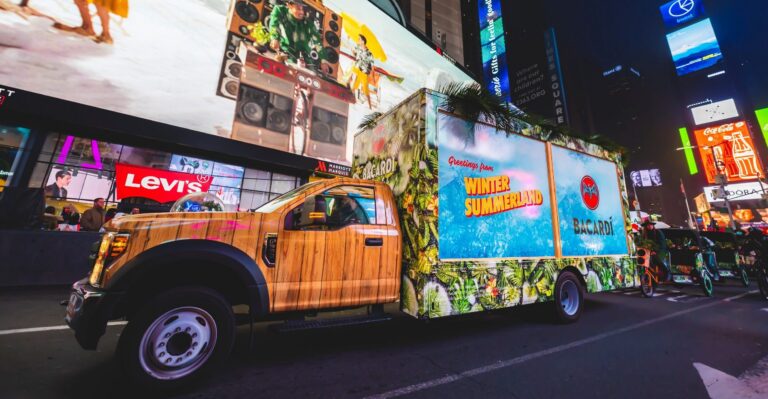
A brand activation photo booth is a designed photo moment built into a live brand experience, ranging from a full enclosed booth with a camera and printer to a branded backdrop, a mirror, a prop, or a vehicle exterior positioned as a frame.
The distinction from an event photo booth matters. At a wedding the booth is entertainment. At a brand activation it is a distribution channel, which means it has a job to do and a result to produce, and it should be designed accordingly.
Three reasons the photo moment earns its place, in order of importance.
An activation reaches the people physically present. The content produced there reaches an audience many times larger, and every attendee who posts is distributing your brand to an audience that trusts them more than it trusts you.
Our guide to creating experiences that drive UGC covers the wider principle, of which the booth is the most concentrated example.
People queue for a photo, take it, look at it, retake it, and share it. That is several minutes during which ambassadors can talk, which is why the booth supports the rest of the activation rather than competing with it.
Asking for an email address is an imposition. Asking where to send the photo is not. That single reframing is the reason booths consistently outperform sign-up tablets on capture rate.
The most common mistake is branding the booth rather than the frame. Logos on the outside of a structure do nothing for the photograph taken inside it.
Branding needs to sit behind and around the subject: on the backdrop, on props people hold, on the vehicle exterior if the vehicle is the backdrop. A useful test is to take a photograph of the design and ask whether anyone seeing it in a feed would know whose activation it was.
Most photographs taken at your activation will be taken on a phone, held vertically, framing a person from the waist up. Design for that crop.
That means a backdrop that reads at close range, texture or dimension rather than a flat printed wall, and a color that flatters skin tones rather than one pulled straight from the brand palette. A saturated brand red behind someone’s face is rarely doing them a favor.
This is the difference between a photograph people post and one they delete, and it is the element most often left to chance.
Even, soft, front-facing light is the goal. Direct overhead sun creates harsh shadows across faces, and a backlit subject in front of a bright sky becomes a silhouette. For evening activations, lighting is not optional, and for indoor or in-vehicle booths it should be built in rather than added.
Props solve the awkwardness that stops people using a booth at all. A signable frame, a themed object, a product held to camera, or a seat that dictates a pose all make participation easier, and each one is another surface for branding.
There are three options and they do different jobs. Instant print produces a physical keepsake and works well as a takeaway, but it produces no data and nothing digital. Digital delivery by email or text captures a contact and gives the guest a shareable file. Both is the strongest and the most expensive.
If you can only choose one, choose digital, because the file is what gets posted and the address is what you keep.
Not on a sign beside the booth, in the shot. A short hashtag on the backdrop travels with every image posted, whereas signage beside the booth is cropped out immediately.
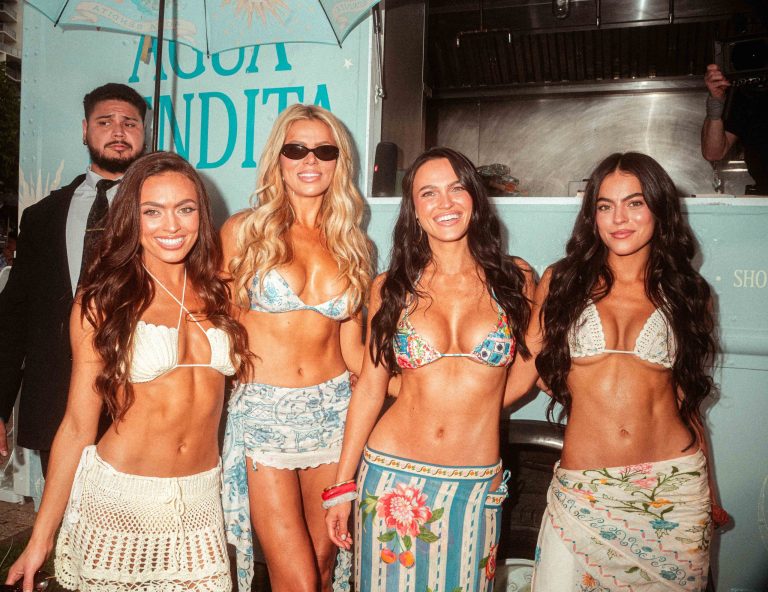
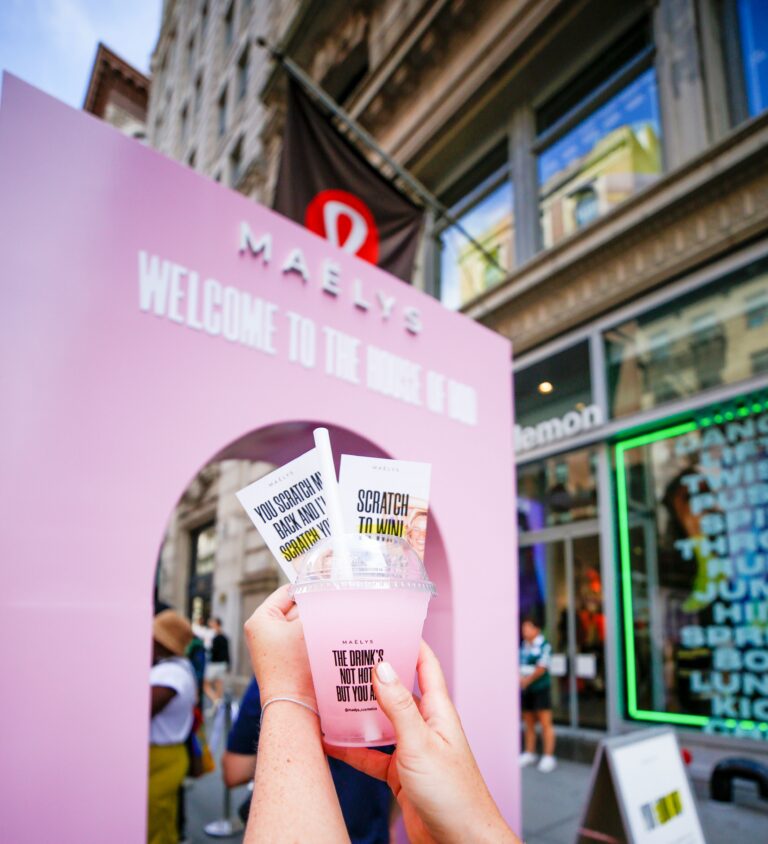
The clearest example we have run of a photo moment doing structural work rather than decorative work was the MAELYS activation.
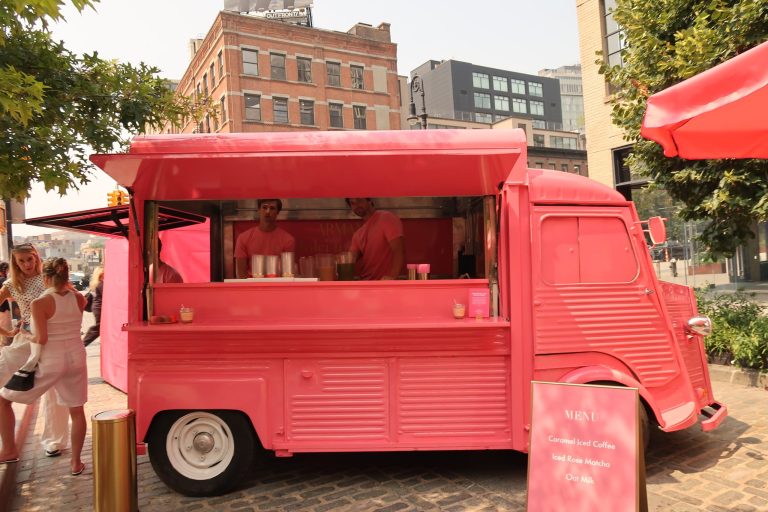
We wrapped a food truck for MAELYS in the brand’s pink and served complimentary pink lemonade to match. Guests received scratch-offs while queueing, sampled the B-Flat, B-Tight, and B-Thicc creams with ambassadors, then redeemed prizes at the truck window.
The final stage was a vanity wall. Guests took a mirror selfie, and a tagged post entered them into a draw for a $199 product bundle.
Prizes across the activation included ULTA Beauty gift cards, which gave the scratch-off stage real pull before anyone reached the wall.
Why it worked: the photo moment was the last step of a designed journey rather than a feature bolted on at the side, so everyone who reached it had already sampled the product and spoken to an ambassador. The prize draw converted a private photograph into a public, tagged one, which is the step most booths skip. Read the full activation in our MAELYS case study, or browse more brand activation case studies.
A brand activation photo booth works when it is treated as a media placement rather than an amenity. Put the branding in the frame, light it so people are happy with how they look, deliver the image digitally so you capture something, and give people a reason to post rather than merely to pose.
Done properly, it is the highest-leverage element in an activation, because every person who uses it distributes your campaign for free. Done as an afterthought, it is a queue with a logo on the wrong side.
If you want a photo moment designed into your next activation rather than added to it, that is what we build. Explore our brand activation services or contact our team.
A designed photo moment built into a live brand experience. It can be a full enclosed booth with a camera and printer, or a branded backdrop, mirror, prop, or vehicle exterior positioned to frame the shot. At an activation it functions as a distribution channel.
Because it turns visitors into distribution. Every attendee who posts reaches an audience that trusts them more than it trusts your advertising. It also extends dwell time and provides the most natural data capture available at an activation.
In the frame, not on the structure. Logos on the outside of a booth do nothing for the photograph taken inside it. Branding belongs on the backdrop, on props people hold, and on any vehicle exterior being used as the backdrop.
For a vertical phone photo framing someone from the waist up. Use texture or dimension rather than a flat printed wall, keep it legible at close range, and choose a color that flatters skin tones rather than one taken straight from the brand palette.
It decides whether people post the photo. Even, soft, front-facing light is the goal. Overhead sun creates harsh shadows and a bright sky behind a subject produces a silhouette. Evening activations require built-in lighting rather than improvised lighting.
Digital, if you have to choose one. A print is a nice keepsake but produces no data and nothing shareable. Digital delivery captures a contact and gives the guest a file they can post. Offering both is strongest and most expensive.
By asking where to send the photo. Requesting an email address is an imposition, while asking how to deliver an image is a natural part of the interaction, which is why booths typically outperform sign-up tablets on capture rate.
Make handles and a short hashtag visible inside the frame rather than on a sign beside it, and add an incentive such as a prize draw for a tagged post. Without a reason to publish, many photos stay in the camera roll.
Yes. Most people will not use a booth unprompted, so someone has to invite them in, explain the mechanic, and help with props. An unstaffed booth at a busy activation is consistently underused.
Track photos taken per hour, contact capture rate as a share of photos, tagged posts, the reach of that tagged content compared against equivalent paid impressions, and entries into any prize mechanic attached to it.
7 steps, 37 checkpoints, and a one-page brief to plan and launch a mobile pop-up shop that converts.
Instant PDF · No Cost
Author
Social Media Manager @ FTP Agency
Ashley Elarde is a social media strategist, content creator, and experiential marketing professional with experience bringing brands to life through engaging digital content. She has helped execute campaigns for brands across beauty, fashion, retail, and entertainment, developing campaigns that drive engagement and meaningful consumer connections.
Choosing a brand activation company is difficult for a specific reason: every portfolio looks good, and none of them show you the part that…
Read more →
The best brand activation ideas are not the most elaborate ones. They are the ones that give a stranger a reason to stop walking.…
Read more →
Brand activation displays are the part of a build that does the selling, and they are usually designed last. The wrap gets rounds of…
Read more →We use and share personal information through cookies and similar technologies on our sites to personalize your shopping experience and ads. Others may use this information for their own marketing and business purposes. . Check our Privacy Policy for more details.
Browser Opt-Out Honored
We use and share your personal information with others to personalize your shopping experience and show you targeted ads on other sites based on your interests and online activities.
Online Info includes cookies, pixel tags, and similar technologies connected to your browser or device. Offline Info includes information associated with your email address based on your other interactions with us.
We use and share your personal information with others to personalize your shopping experience and show you targeted ads on other sites based on your interests and online activities. Information includes cookies, pixel tags, and similar technologies connected to your browser or device (Online Info), as well as information associated with your email address based on your other interactions with us (Offline Info). Others may use this information for their own marketing and business purposes.
You can choose to opt out of sharing one or both types of information.