How Experiential Event Marketing Works

By: corey 9 min read

experiential event marketing

Experiential events put people inside a brand rather than in front of it, which is the whole distinction from every other kind of event.

A conference informs. A launch party celebrates. A trade show displays. An experiential event is built so that the thing people remember is something they did, not something they watched, and that changes how it should be designed, staffed, and measured.

This guide covers what separates an experiential event from a conventional one, the formats that work, how to plan one, and what to track afterwards.

Key Takeaways

  • Participation is the dividing line: if attendees could have got the same thing from a livestream, it is not an experiential event.
  • The format follows the objective: sampling, demonstration, and immersive builds each suit a different job and cost very different amounts.
  • Permits set the calendar: approvals, not creative, determine the earliest date an event can run.
  • Staffing decides the outcome: the same build performs completely differently depending on who is standing in it.
  • Measure actions, not attendance: headcount tells you the promotion worked, and nothing about whether the event did.

What Is an Experiential Event?

An experiential event is a live gathering designed around active participation, where attendees interact with a brand directly rather than watching a presentation about it. The defining test is simple: if someone could have received the same value from a recording, it was not experiential.

That covers a wide range. A sampling activation on a street corner, a multi-room immersive build, a product demonstration tour, and a branded presence at a festival are all experiential events. What they share is that the attendee does something.

How It Differs From Conventional Event Marketing

Traditional event marketing is largely about getting people to attend. Experiential event marketing is about what happens once they are there, and the two require different planning.

  • Conventional events measure attendance. Experiential events measure interactions, because a full room where nobody participated is a failure dressed as a success.
  • Conventional events front-load the promotion. Experiential events front-load the build, since most of the budget is committed to fabrication and staffing before the doors open.
  • Conventional events can be rescheduled. An activation tied to a permit, a season, or a product launch usually cannot.
  • Conventional events sell seats. Experiential events frequently have no ticket at all, because the audience is whoever happens to be passing. Our comparison of experiential events versus brand events covers when to host your own gathering rather than activate at someone else’s.

The Main Formats

Sampling and Trial Events

The most direct form. People taste, try, or handle the product, which resolves the one objection advertising cannot address. Best where the barrier to purchase is doubt rather than awareness.

Demonstration and Education Events

Where the product needs explaining rather than tasting. A short demonstration answers why something works and how to use it, which suits technical, premium, and unfamiliar products. Throughput drops and conversion rises.

Immersive Builds

An environment people step inside and move through. Expensive per head and unmatched for dwell time, which makes it suited to launches where depth matters more than volume.

Mobile and Multi-Market Events

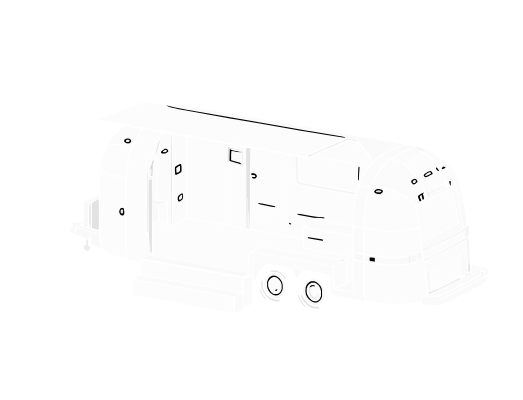
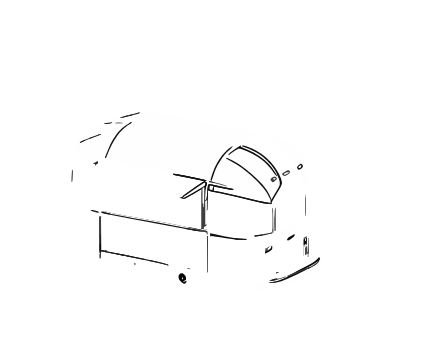
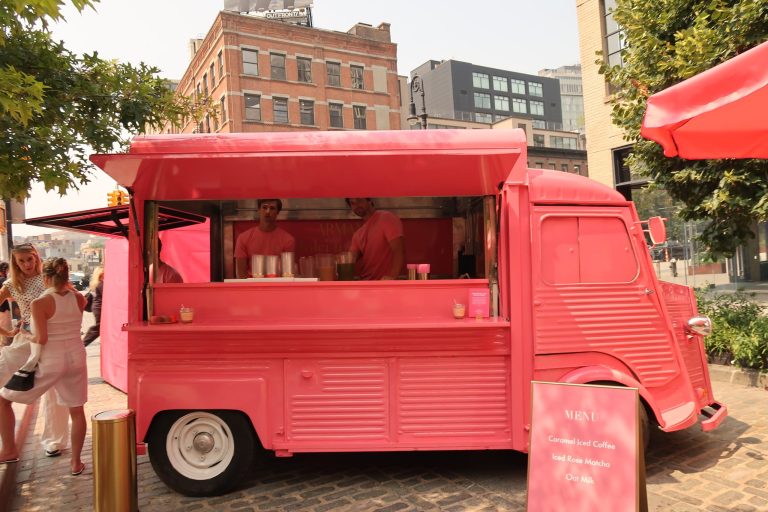
One build travelling between locations, which spreads the fabrication cost across every stop. Our guide to event marketing vehicles covers the formats available.

Activations at Somebody Else’s Event

Festivals, marathons, conventions, and fixtures assemble a crowd you do not have to build. The audience did not come for you, which is harder, and it is also why the cost per person reached is usually far lower.

How to Plan an Experiential Marketing Event

  • Start from the single action. Name the one thing you want each attendee to do: taste, scan, sign up, book, or visit. Everything downstream follows from it.
  • Choose the format from that action, not from a mood board. Sampling, demonstration, and immersive builds answer different questions and cost very different amounts.
  • Settle access early. Public space needs a city permit, private property needs an agreement with the owner, and anything served adds health department sign-off.
  • Design for the queue as well as the counter. People spend more time waiting than interacting, and a queue that entertains converts better than one that only queues.
  • Brief the staff on the product, not a script. Someone who can answer a real question converts. Someone reading a card distributes.
  • Build the capture mechanic in before fabrication. A QR code, a code, or a sign-up cannot be added afterwards and is the difference between a result and an anecdote. Our guide to brand activation ideas covers formats worth starting from.

Case Study: How Instagram Made a Digital Product Physical for a Weekend

Instagram Social Media Marketing

Promoting a feature that exists only on a screen is a hard brief for any event, which makes this a useful illustration of what the format is actually for.

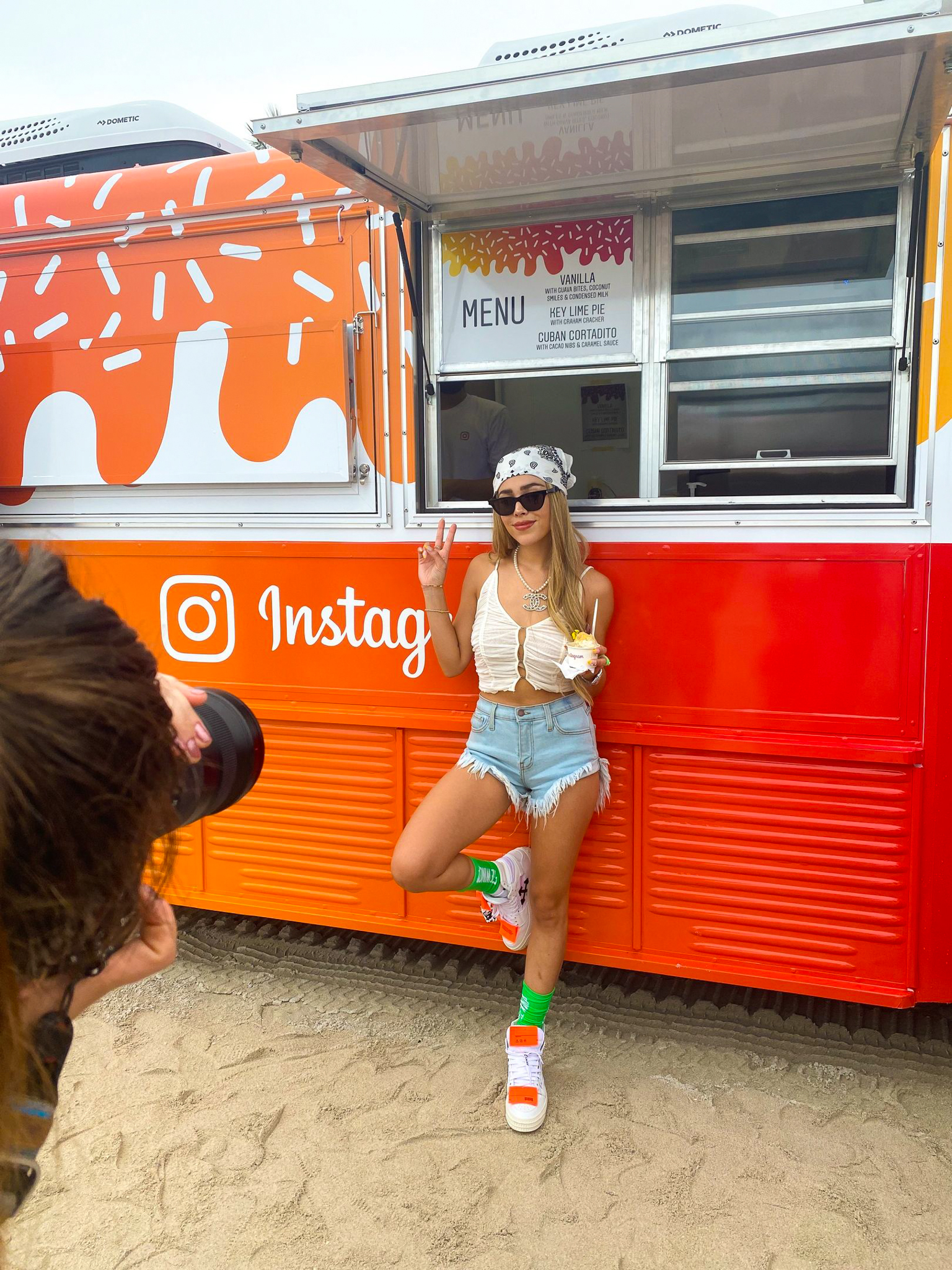
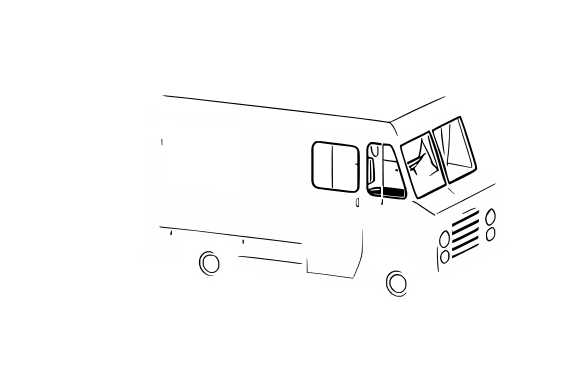
For the final weekend of summer, Instagram wanted people talking about Reels. We brought a branded vehicle to Miami Beach during Latin Week, serving fresh complimentary helado to beach-goers, with appearances from artists including Farruko.

Why it worked as an experiential event rather than an advertisement: the crowd was already assembled, already social, and already documenting the weekend. Nobody had to be persuaded that content creation mattered. The activation gave a digital product a physical location for two days, and the audience turned it straight back into digital content, which is exactly what the product exists to host.

It also shows the access principle. Instagram did not build the crowd, Latin Week did. Crowd scale is the reason this works: the 2026 World Cup drew record official attendance of 6,810,966 across 104 matches, while more than nine million people attended free Fan Festivals across the host cities. 

The ticketless audience outnumbered the ticketed one, which is the argument for activating around an event rather than inside it. Browse more work in our brand activation case studies.

A Second Example With Hard Numbers

Where the objective is a countable conversion rather than reach, the design changes considerably.

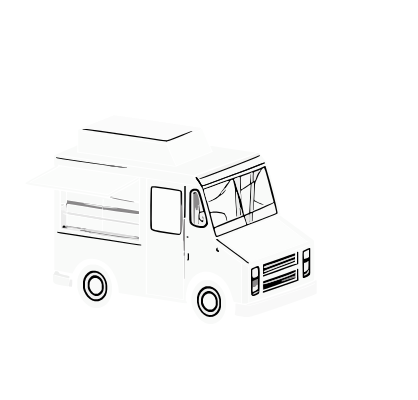
ShopRunner wanted app subscribers. We wrapped a food truck in festive floral vinyl, used the pull of Coach to draw attention, and gave away branded bouquets from a limited-time pop-up on the corner of Prince and Broadway in SoHo. QR codes were built into the pop-up, onto the ambassadors’ necklaces, and onto bounce-back cards, so every interaction produced a record.

The result: more than 2,500 app subscriptions across three days. Not an attendance estimate. Read it in our ShopRunner and Coach case study.

How to Measure an Experiential Event

  • Interactions, not attendance. How many people participated rather than passed through.
  • Dwell time per interaction, which is the advantage the format exists to buy.
  • Sign-ups, scans, and redemptions, the conversion that outlasts the day.
  • Tagged posts and earned reach, since most of the audience experiences the event through somebody else’s phone.
  • Cost per interaction and cost per acquired customer, the figures that make the event comparable to your other channels.

The Bottom Line

Experiential events work because participation is remembered and messaging is not. The format is worth choosing when the barrier to purchase is doubt, unfamiliarity, or a price that needs justifying, and it is the wrong choice when you simply need reach.

Decide the single action first, pick the format from that, get the permits moving early, and build the measurement in before anyone starts fabricating.

If an experiential event is in your plan, we design, build, permit, and staff them. Explore our brand activation services or contact our team.

Frequently Asked Questions

Experiential events are live gatherings designed around active participation, where attendees interact with a brand directly rather than watching a presentation. The test is whether someone could have received the same value from a recording. If they could, it was not experiential.

Experiential event marketing is the practice of planning and running events around participation rather than attendance. It covers the format, the build, the staffing, and the capture mechanic, and it measures interactions rather than headcount.

Conventional event marketing focuses on getting people to attend and measures attendance. Experiential event marketing focuses on what happens once they arrive, front-loads the budget into the build, and measures what people actually did.

Sampling and trial events, demonstration and education formats, immersive builds people move through, mobile events travelling between markets, and activations staged at festivals or fixtures somebody else has organized.

Frequently not. Many are staged in public space where the audience is ordinary foot traffic, which means there is no guest list and the activation has to earn every stop rather than relying on people who already committed to attending.

Measuring attendance. A full room where nobody participated is a failure dressed as a success. The second most common is adding the capture mechanic after the build, by which point it is too late to design around.

It depends on expected footfall, the complexity of the interaction, and the hours. Staff to the peaks rather than the average, since event crowds arrive in waves rather than a steady stream.

Yes, and it is often the better economics. Festivals, marathons, and conventions assemble the crowd for you. Access can be official sponsorship, vendor status, or placement on surrounding streets with city permits instead of rights fees.

Track interactions rather than attendance, dwell time per interaction, sign-ups and redemptions captured, tagged posts and earned reach, and cost per interaction compared against your paid channels.

Earlier than most brands expect, because permits and fabrication set the timeline rather than creative. Six to eight weeks is a floor for a single market, custom builds need longer, and peak seasons book out months ahead.

June is Pride Month, and Pride festivals are among the most energetic, well-attended, and community-driven events of the entire summer. For brands with a genuine, year-round commitment to the community, a Pride activation is a chance to show up in person where it matters. The audience is assembled, celebratory, and paying attention, which makes it one of the strongest event marketing windows on the summer calendar, provided the presence is authentic rather than opportunistic.

FTP Free download

The Mobile Pop-Up Shop Launch Checklist

7 steps, 37 checkpoints, and a one-page brief to plan and launch a mobile pop-up shop that converts.

Instant PDF · No Cost

corey

Author

corey

More posts