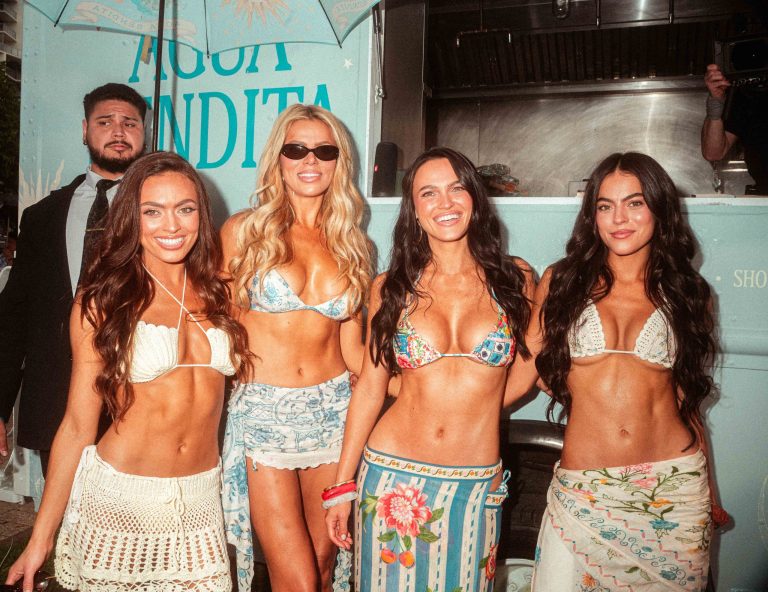
6 Ways Experiential Marketing Vehicles Elevate an Event

By: David Botbol 9 min read

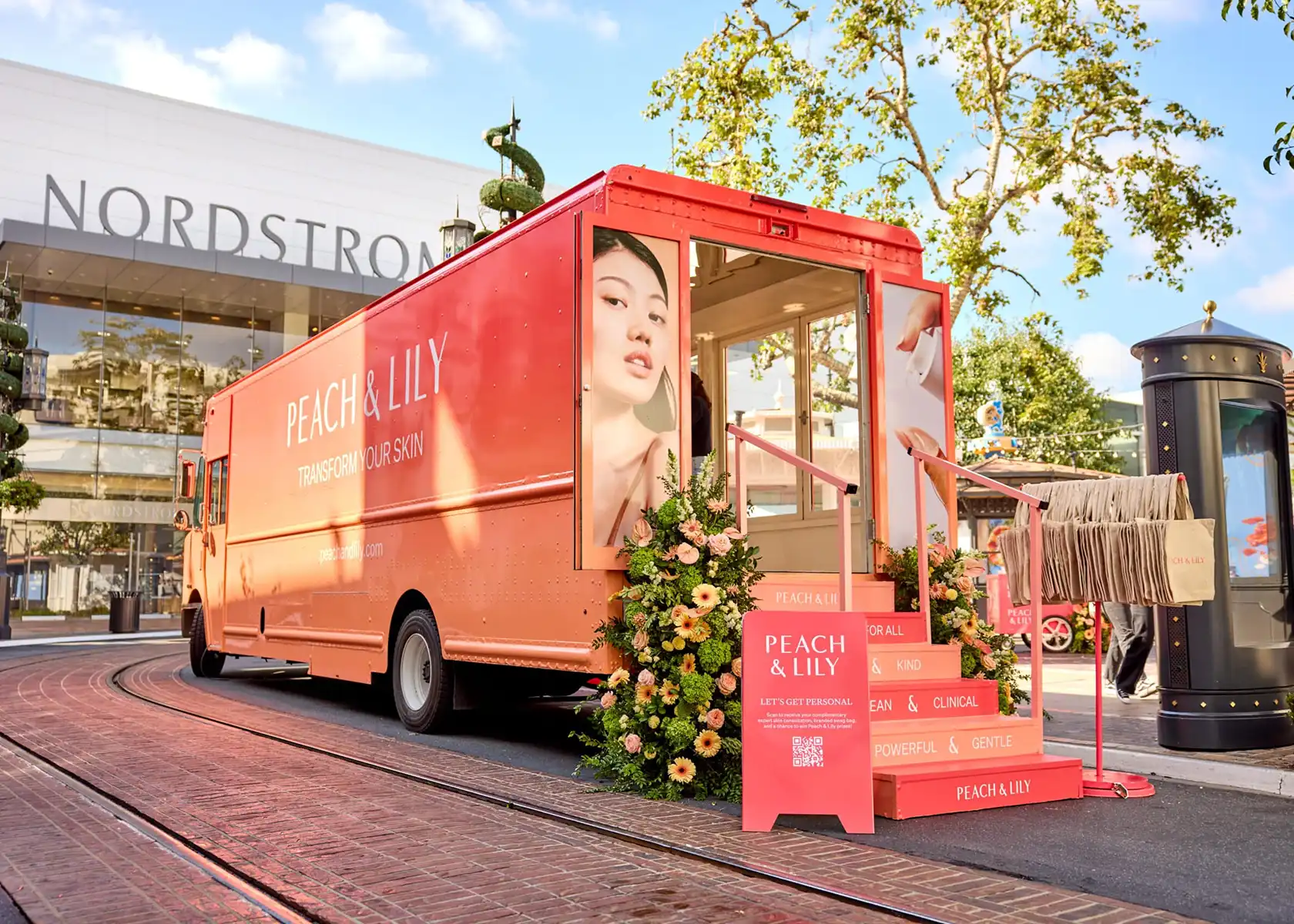
mobile experiential trucks

Key Insights

  • Vehicles do what tents cannot: Experiential marketing vehicles are branded trucks, vans, buses and carts built to deliver a brand experience wherever the audience is. At an event they do what a tent cannot: move, stand out and repeat.
  • Six jobs they do best: Moving the experience to the crowd, maximizing engagement per square foot, driving sales through sampling and demos, reaching audiences outside the venue, standing out visually and flexing across event types.
  • Four formats cover most briefs: Glass trucks for visibility, food trucks for sampling volume, Airstreams for hospitality and tuk tuks for mobility.
  • Build capture into the hand-off: Use a QR, SMS keyword or email for a second sample, or the crowd leaves and the brand keeps nothing.
  • Proof from Gisou: Gisou’s Honey Glow truck reached more than 20 million impressions in three days from one vehicle at one location.

What Are Mobile Experiential Trucks

Mobile experiential trucks are vehicles built to carry a brand experience: a sampling counter, a retail interior, a demo station, a photo moment or a bar. They are the most common type of experiential marketing vehicle, a category that also includes vintage vans, Airstream trailers, tuk tuks, double decker buses and carts.

At an event, the truck is a venue the brand controls. The sponsor tent is a rented square of grass with a logo on it. The truck is a wrapped, lit, staffed, photographable object the brand designed, and when the event ends it drives to the next one. For the full list of formats, see event marketing vehicles.

6 Ways Mobile Experiential Trucks Elevate Your Event

1. They create branded experiences that move

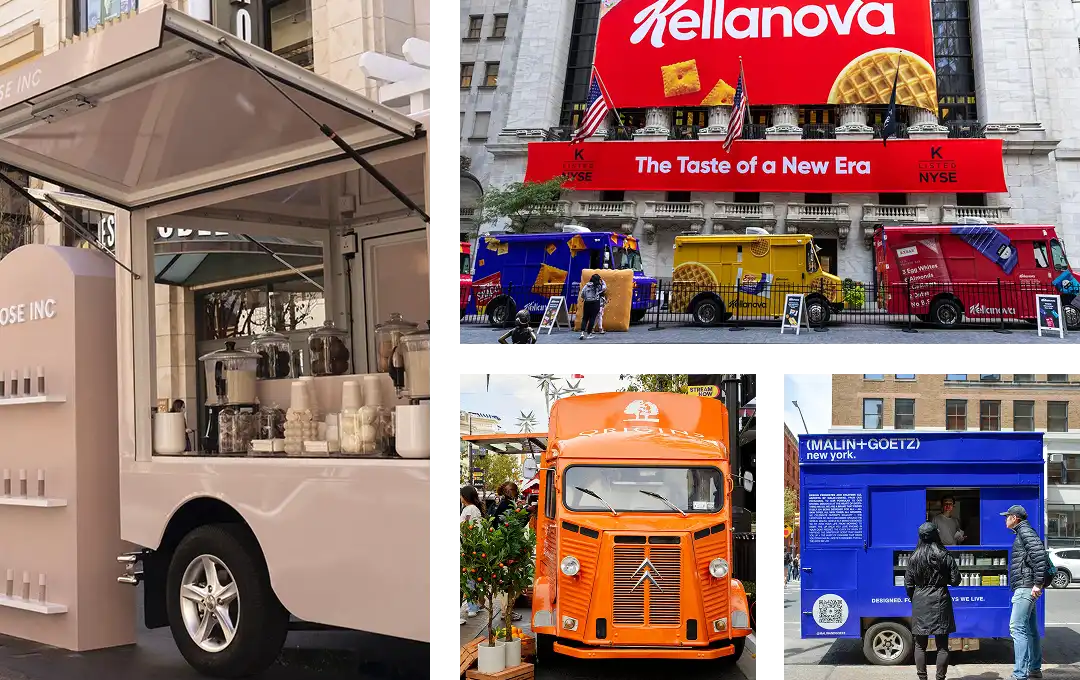
Food trucks, including a coffee truck and vintage van, lined up under a Kellanova sign outdoors.

An experiential marketing vehicle can work the festival gate in the morning, the sponsor village in the afternoon and the after-party street in the evening. Three touchpoints, one build. Over a season the same truck covers a tour of events with the same experience, the same staff script and the same photo, which is what makes a sponsorship report coherent across markets.

2. They maximize consumer engagement

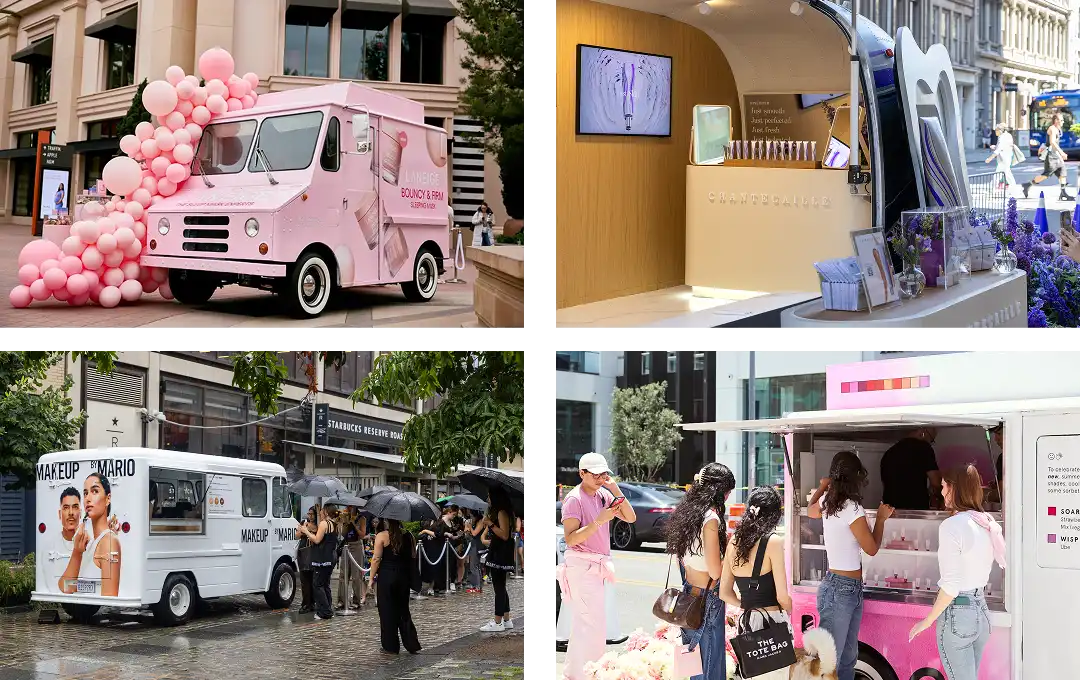
Collage of four branded mobile trucks with product displays and people in different weather.

A truck concentrates the experience. The queue forms at a counter, the hand-off takes a few seconds, the photo happens in front of a wrap designed for it, and the staff can run 300 to 500 interactions an hour at peak. Dwell time is short and intentional, which is the opposite of a tent where people wander in and out without a defined action.

3. They drive sales through sampling and demos

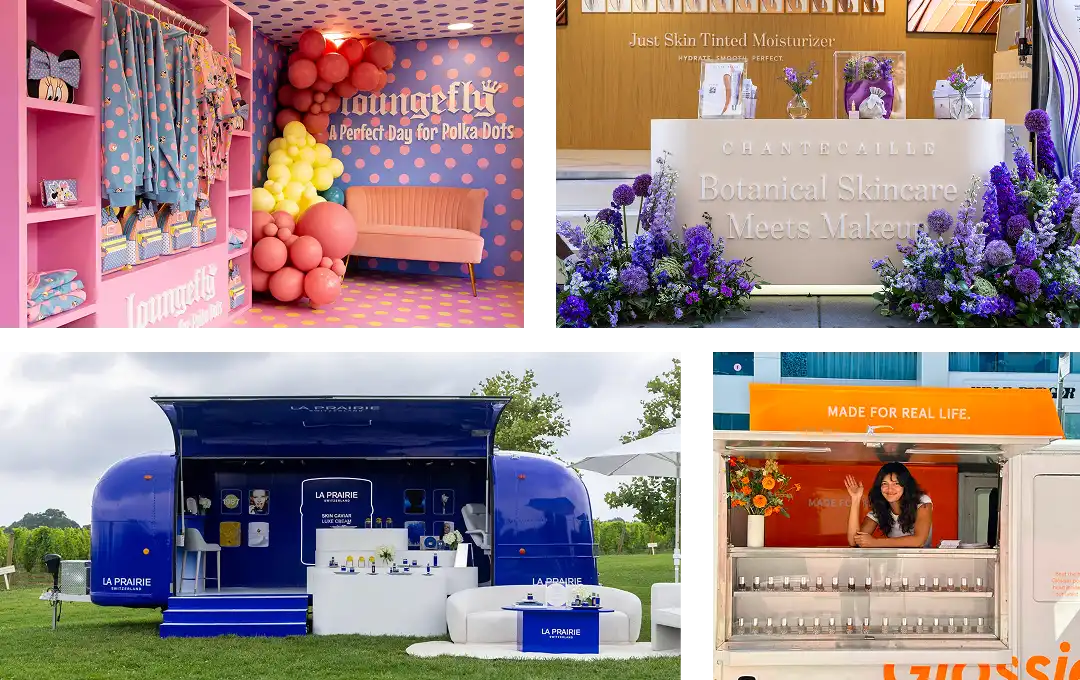
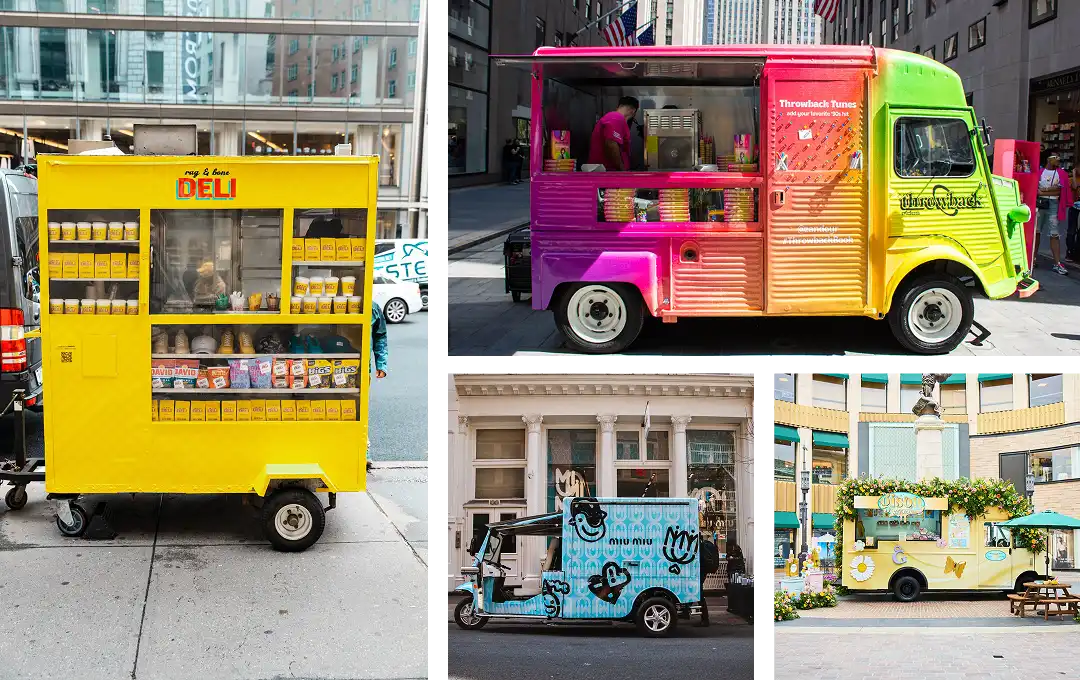
Four pop-up displays: Loungefly pink booth, Chantecaille counter, La Prairie truck, Tula booth.

Trial is the shortest path from awareness to purchase for anything consumed or applied. A food truck can serve a hot or cold product in its final form. A glass truck can run a shade match or a skin consultation. A showroom truck can demo a machine. Attach a redemption mechanic (a QR to the retailer’s shelf, a code for the online store) and the event becomes measurable sales. The mechanics are on our product sampling page.

4. They reach your audience wherever they are

Collage of four mobile trucks—yellow, pink and yellow, blue, and white with flowers—on city streets.

The event is one day. The audience lives in the city around it. A mobile experiential truck can hit the commuter station on the way in, the campus the day before and the neighborhood the day after, extending a one-day sponsorship into a week of local presence at a marginal cost.

5. They stand out with eye-catching design

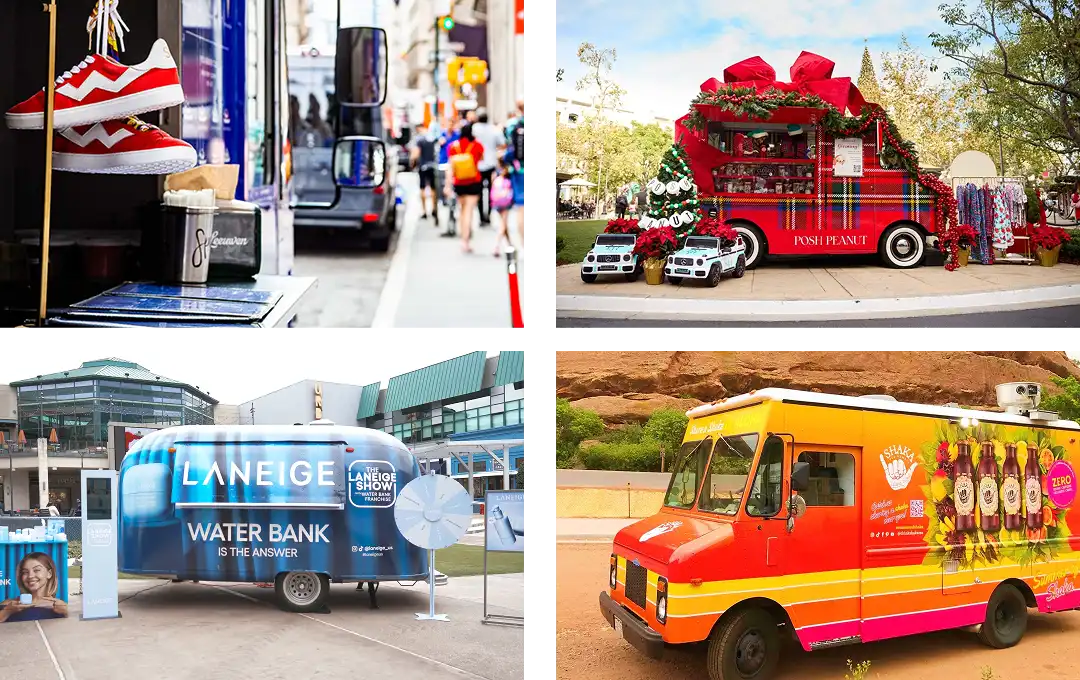
Four mobile trucks: red sneaker, Christmas floral, blue water bank, yellow-red ice cream.

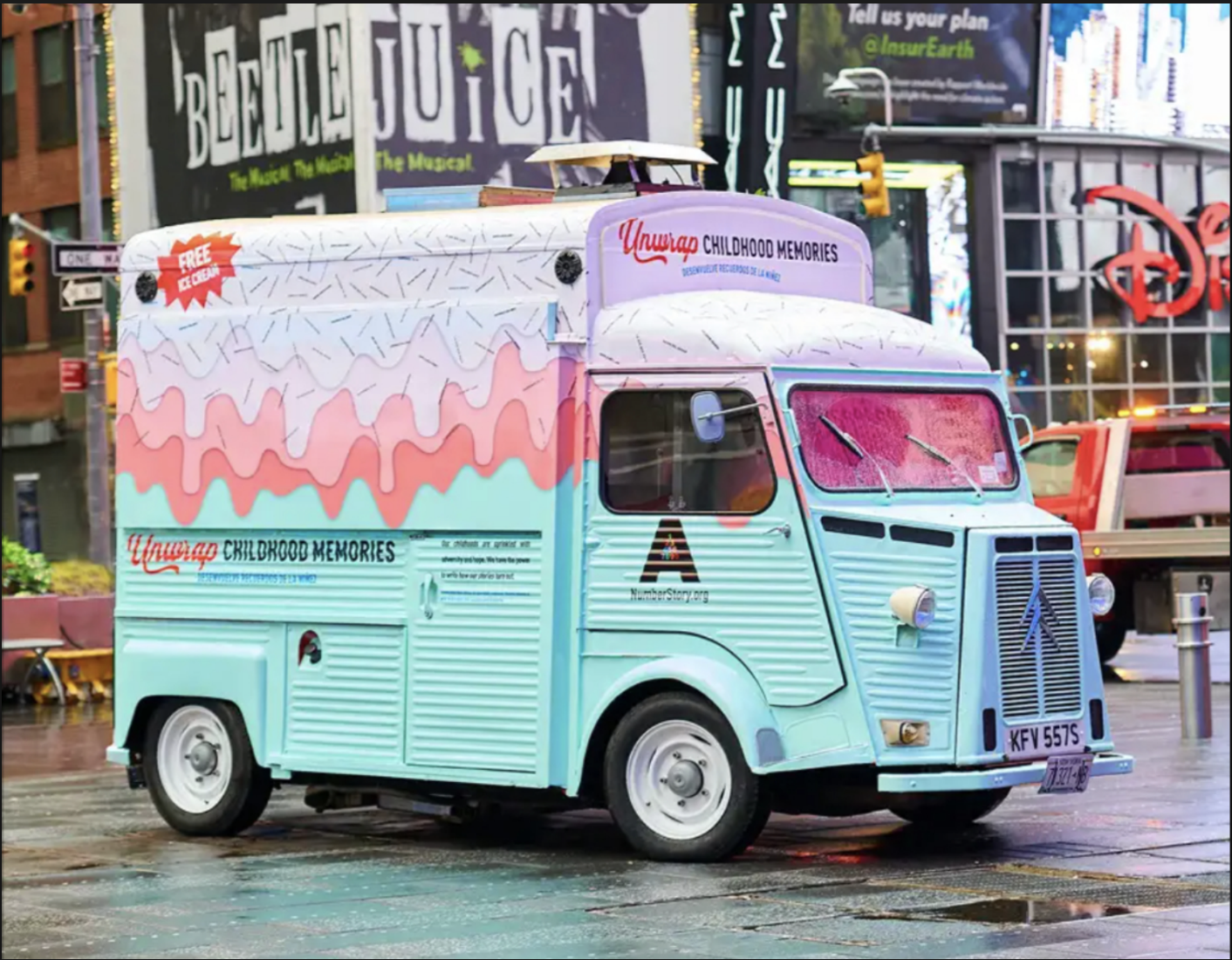
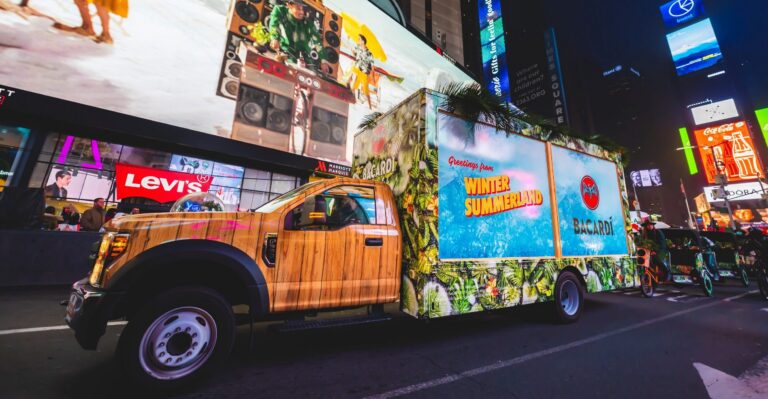
Visibility is the point. A wrapped truck reads from 200 feet. A glass truck shows the experience itself as the signage. A Citroen or Airstream carries heritage that photographs on its own. Design for the wide shot and the selfie at the same time, and the vehicle does the social work for you.

6. They flex for any event or location

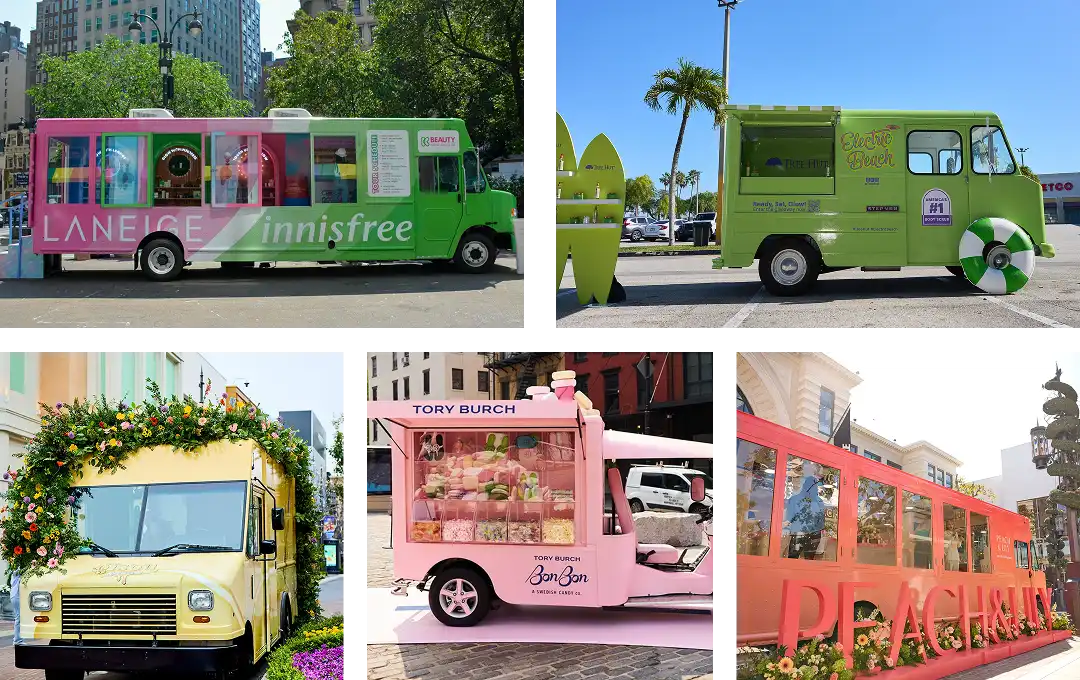
Five decorated mobile trucks with branding, flowers, or surfboards parked outdoors in sunlight.

Music festivals, marathons, conferences, farmers markets, fashion week, college move-in, Pride, holiday markets. Event Marketer covers the sponsorship side of most of them. The same experiential marketing vehicle adapts with a menu change and a new wrap. The only hard constraint is the curb: measure the access route and the parking footprint before choosing the format.

Experiential Marketing Vehicle Formats for Events

Glass trucks

A transparent cube or box body that puts the experience in a display case. The right choice when watching is part of the draw: customization stations, beauty counters, product showcases. Holds two to six staff. See glass cube trucks.

Food trucks

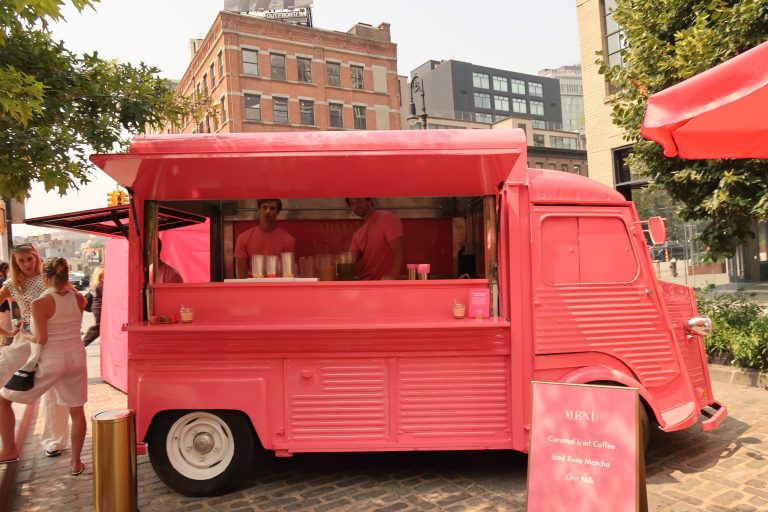
A kitchen or a sampling counter with refrigeration and heat, a serving window and storage for a full day’s product. The right choice for food and beverage brands, branded menu items and any sampling program where volume matters. See branded food trucks.

Airstreams

A full-length Airstream Stage opens into a bar or stage and holds a crowd. The shorter Bambi is a cafe, lounge or fitting room. The right choice for hospitality, panels, consultations and premium brands. See Airstream Stage.

Tuk tuks

A three-wheeled branded cabin, often electric, that goes where trucks cannot: narrow streets, plazas, indoor halls with permission. The right choice for multi-stop days and tight budgets. See tuk tuks.

Mobile Experiential Truck Specs at a Glance

Format Interactions per hour at peak Staff Power Typical event use
Glass cube truck 200 to 400 2 to 4 Generator or shore power Showcases, customization
Food truck 300 to 500 2 to 4 Onboard generator F&B sampling, menu items
Airstream Stage Crowd of 50 to 150 3 to 6 Generator or shore power Hospitality, stages, bars
Airstream Bambi 60 to 120 2 to 3 Shore power Consultations, lounges
Tuk tuk 150 to 300 1 to 2 Battery Multi-stop sampling, drinks

Interaction rates are planning figures from FTP activations and vary with product, location and staffing.

Sampling and Capture: Making the Truck Measurable

A truck at an event produces three kinds of data if you plan for them. Units distributed, counted by the staff or the POS. Contacts, captured at the hand-off by QR, SMS keyword or email in exchange for a second sample or an offer. Redemptions, tracked by a code that only exists at the truck. Add social reach and earned media value from the photos, and the sponsorship report writes itself. Decide the capture mechanic before the wrap is designed so the QR and the call to action are part of the vehicle, not a sign taped on later.

Planning an Experiential Truck for an Event in Eight Weeks

Weeks 1 to 2: concept and vehicle. Set the goal, pick the format from the four above, confirm the event’s vehicle access and footprint, and file the city permit the same week (in New York, through the Citywide Event Coordination and Management office). Permits are the long pole.

Weeks 2 to 3: renderings. Approve 3D renderings of the wrap, counter and footprint before anything is printed. Two revision rounds are normal.

Weeks 3 to 6: build. Wrap production, interior fit-out, menu or sample sourcing, and the capture mechanic (QR, SMS keyword, redemption code) built into the design.

Weeks 6 to 7: staffing and logistics. Brand ambassadors briefed on the product and the permit conditions, routing to and from the event, power and water confirmed, health sign-off for anything consumed.

Week 8: activation. Load in, run the day, count units and contacts, shoot the photos the report needs.

Custom interiors add about three weeks to the build. Festival season and holiday season in New York, Los Angeles and Chicago need the permit filed earlier.

Case Study: Gisou's Honey Glow Truck

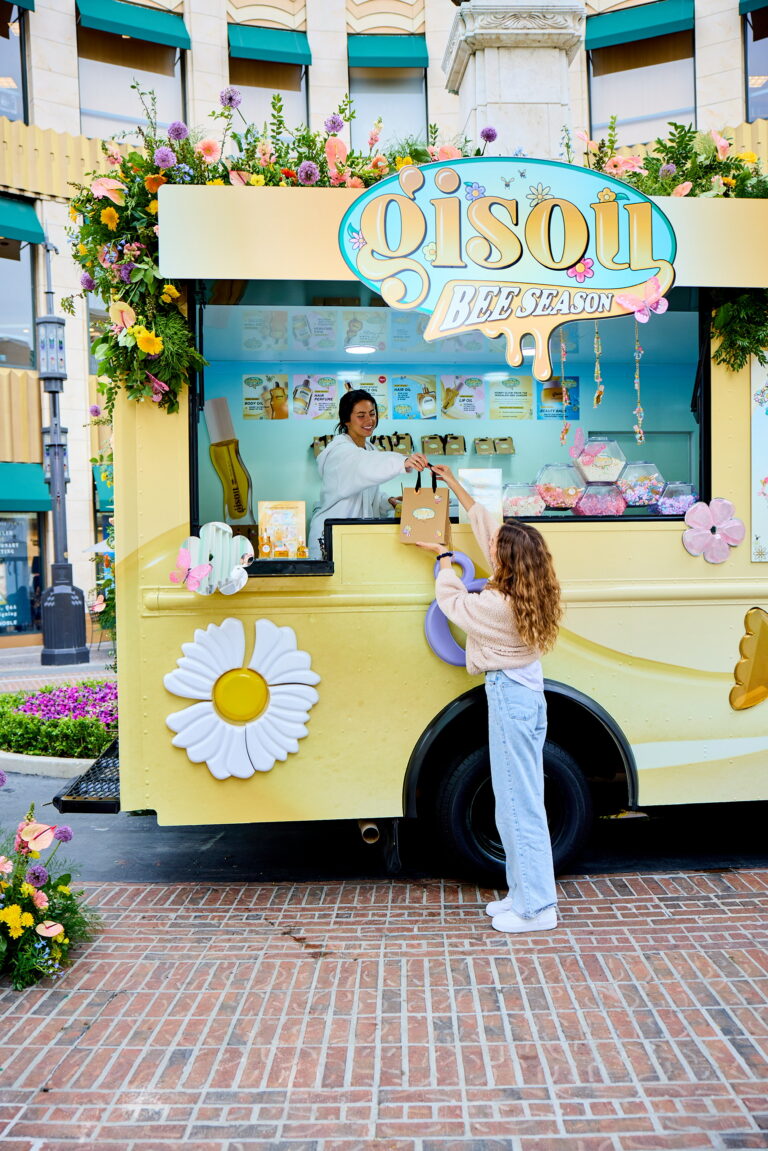
Woman gets a shopping bag from a vendor at a yellow flower-decorated Gisou truck outdoors.

Gisou brought its Honey Infused Hair Oil to The Grove in Los Angeles on a custom glass truck wrapped in honey yellow. Samples went out from the counter while the vehicle itself did the social work. Over three days the Honey Glow Truck generated more than 20 million impressions, with reach far beyond the crowd on the ground and, in the brand’s words, all of LA buzzing. One vehicle, one location, three days. Read the Gisou case study.

The Bottom Line

Experiential marketing vehicles give an event sponsorship a shape people can walk up to and a camera can find, and then they drive to the next one. Choose the format from the goal and the curb, build capture into the hand-off, and plan the truck for a season rather than a day. See the full experiential vehicle lineup or get in touch with your event calendar.

Experiential Marketing Vehicles FAQs

Branded trucks, vans, buses, trailers and carts built to deliver an in-person brand experience such as sampling, retail, demos or hospitality. Mobile experiential trucks are the most common type; the category also includes Citroen vans, Airstreams, tuk tuks and double deckers.

A truck fitted out to carry a brand experience to events, streets and tours: a wrap on the outside, and a sampling counter, retail interior, demo station or bar on the inside. It is a venue the brand controls and can move.

From about $50,000 for a tuk tuk or cart activation in one market to $200,000 and up for a glass truck with a custom interior. Costs include build or wrap, permits, staffing and the activation day. Multi-event programs reuse the build and lower the cost per event.

Six to eight weeks for a wrapped owned vehicle in one US market, set by permits. Custom interiors add about three weeks. Festival season and holiday season in major cities book earlier.

Often, with the organizer’s approval and the right format. Tuk tuks and carts fit indoor halls and tight sponsor villages. Trucks and Airstreams need vehicle access and a footprint on the site plan. Send the site map and we will tell you what fits.

The vehicle is the asset; the pop up is the activation. A mobile pop up shop is one use of an experiential marketing vehicle, usually a short-run retail or sampling event in one location. See mobile pop up shops.

A branded promotional truck on a city street

Merlin AI

See your brand on a promotional truck in 30 secs.

Pick a vehicle, drop in your website, and Merlin AI brings your brand activation to the streets instantly.

Try It Now

Bring Your Brand to the Streets.®

David Botbol

Author

David Botbol

EVP, Managing Director @ FTP Agency

David Botbol thrives on turning bold ideas into real-world brand moments. As Executive VP and Managing Director of Food Truck Promotions, and a leader within the New York and Los Angeles Food Truck Associations, he draws on a background in business development and startups to help brands connect with audiences through creative, unforgettable mobile experiences.

More posts
How to Develop an Experiential Marketing Strategy in 7 Steps